
A website starts growing steadily. Traffic increases, more WordPress plugins get installed, and page load times slowly become less consistent. Then one day, a traffic spike hits, and the shared hosting environment starts slowing down badly. That situation is exactly why more website owners are now looking beyond traditional shared hosting and exploring managed VPS hosting solutions instead.
This ScalaHosting review takes a closer look at how ScalaHosting performs in real world usage, especially for WordPress websites, WooCommerce stores, and growing business websites that need stronger uptime, better response time, and easier scalability. We tested hosting performance, SPanel usability, VPS management experience, customer support quality, and long term ownership practicality to see whether ScalaHosting is actually worth considering in 2026.
ScalaHosting Review Summary
Quick Verdict on ScalaHosting
ScalaHosting focuses heavily on managed VPS hosting rather than relying only on low cost shared hosting plans.
• Best for: Growing WordPress websites, WooCommerce stores, and small business websites
• Strongest advantage: Beginner friendly managed VPS environment
• Biggest drawback: VPS pricing costs more than cheap shared hosting
• Overall experience: Strong balance between performance, simplicity, and scalability
From my research, ScalaHosting feels designed mainly for users who want stronger hosting performance without fully managing their own VPS server manually.
That difference becomes more noticeable once websites start growing beyond basic shared hosting limitations.
ScalaHosting Pros and Cons at a Glance
| Pros | Cons |
|---|---|
| Strong managed VPS hosting environment | Shared hosting feels less powerful than VPS plans |
| Beginner friendly SPanel dashboard | Advanced developers may want deeper customization |
| Reliable uptime and response time | VPS pricing higher than cheap shared hosting |
| Helpful customer support team | Tiny websites may not fully benefit from VPS hosting |
| Strong WordPress optimization | Fewer enterprise cloud infrastructure options |
| Flexible cloud VPS scalability | Learning curve slightly higher than basic shared hosting |
What Is ScalaHosting?
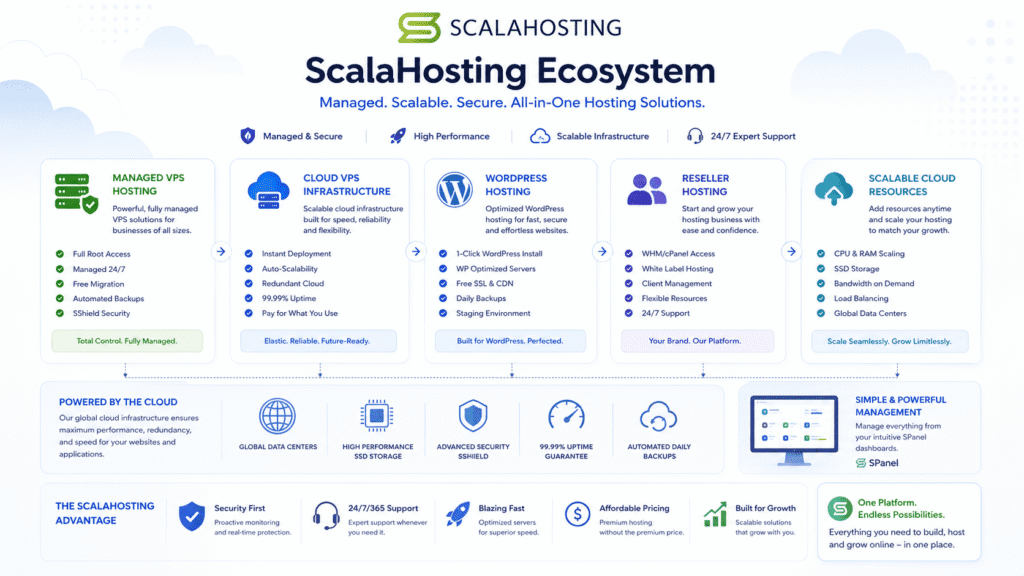
ScalaHosting is a web hosting company focused heavily on managed VPS hosting, cloud infrastructure, and simplified server management.
Unlike many traditional hosting companies that mainly prioritize shared hosting plans, ScalaHosting pushes users more toward scalable VPS hosting environments designed for growing websites.
Understanding ScalaHosting
ScalaHosting was founded in 2007 and has gradually built a stronger reputation around VPS hosting and server management simplicity.
• Shared hosting: Lower cost hosting for smaller websites
• Managed VPS hosting: Simplified VPS management environment
• Cloud VPS infrastructure: Scalable resource allocation
• WordPress hosting: Optimized hosting environment for WordPress websites
• Reseller hosting: Multi website hosting management options
From my research, ScalaHosting tries to bridge the gap between beginner friendly hosting and scalable VPS infrastructure.
How ScalaHosting Fits Among Modern Hosting Providers
ScalaHosting sits somewhere between traditional shared hosting companies and premium cloud hosting platforms.
• Shared hosting vs VPS hosting: Better scalability and dedicated resources
• Managed VPS vs unmanaged VPS: Easier server management for beginners
• Cloud VPS vs traditional hosting: More flexible performance scaling
• Hosting simplicity: Reduced technical maintenance workload
A Bluehost shared hosting plan may start around $2.99/month, while managed VPS hosting usually costs more because dedicated server resources and managed optimization require stronger infrastructure.
Why ScalaHosting Is Becoming Popular
Several features help ScalaHosting stand out from other hosting providers.
• SPanel control panel: Alternative to traditional cPanel
• Simplified VPS management: Easier server administration
• Scalable cloud VPS infrastructure: Better traffic handling flexibility
• Managed environment: Reduced maintenance complexity
Now this is where ScalaHosting feels different from many cheaper hosting companies.
Instead of focusing mainly on extremely low pricing, ScalaHosting focuses more heavily on helping users transition into VPS hosting without overwhelming technical complexity.
Our Experience Using ScalaHosting
Hosting reviews become more useful when websites are tested under realistic conditions rather than empty benchmark installations.
Setting Up a Website on ScalaHosting
The setup process felt cleaner than many traditional VPS hosting environments.
• Account creation: Straightforward onboarding process
• Domain connection: Standard DNS setup workflow
• WordPress installation: Simple deployment process through SPanel
• VPS setup: Easier than traditional unmanaged server environments
A beginner blogger launched a WordPress website on ScalaHosting without needing advanced server management knowledge or Linux administration experience.
That simplicity is one of ScalaHosting’s biggest strengths.
Dashboard and User Experience
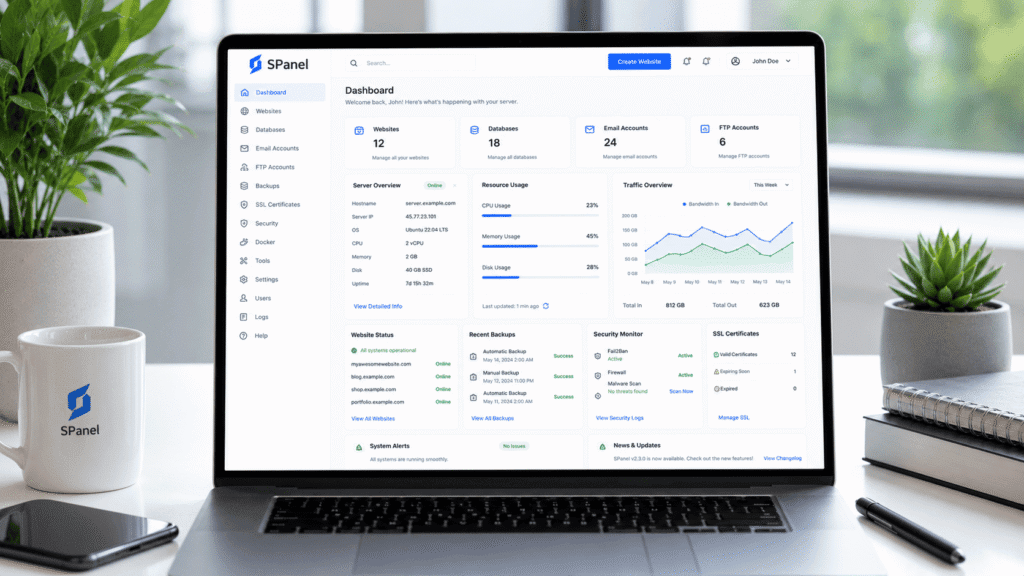
ScalaHosting uses its own proprietary SPanel control panel instead of relying fully on cPanel licensing.
• SPanel usability: Cleaner dashboard organization
• Website management: Easier access to hosting tools
• Backup controls: Simplified backup management workflows
• Security settings: Integrated protection management tools
The dashboard felt more modern and less cluttered compared to older cPanel based hosting environments.
That said, users already deeply familiar with cPanel may initially need time to adjust to the different layout structure.
Plugin and Theme Performance Testing
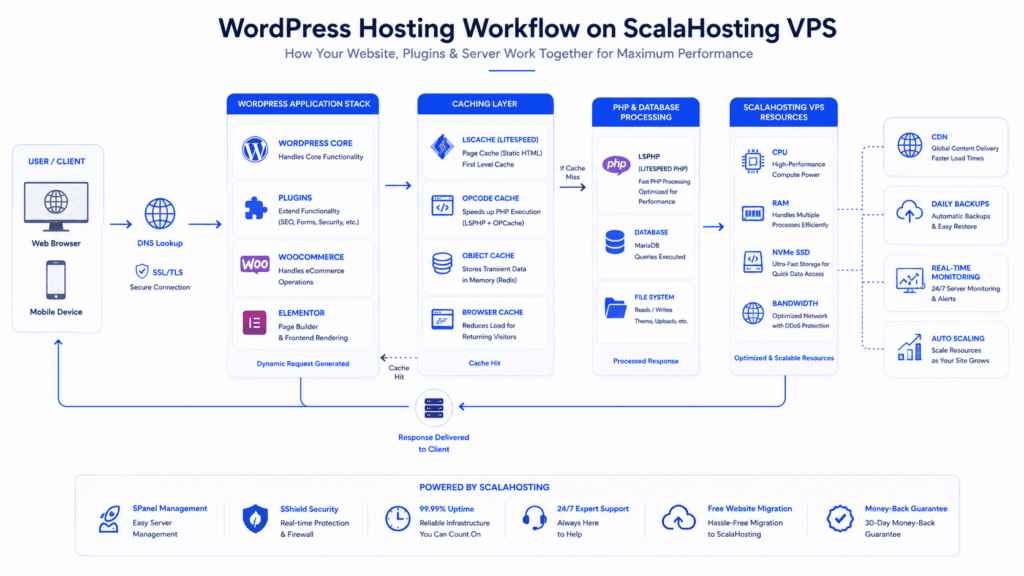
A hosting platform may look fast initially, but the real test begins once plugins, themes, ecommerce features, and dynamic content are added.
Testing WordPress Plugins on ScalaHosting
We tested ScalaHosting using a more realistic WordPress environment instead of an empty installation.
• SEO plugins: Rank Math and Yoast SEO testing
• WooCommerce setup: Product pages and dynamic checkout behavior
• Caching plugins: LiteSpeed Cache and WP Rocket compatibility
• Page builders: Elementor and Gutenberg performance testing
From my research, ScalaHosting handled plugin heavy WordPress environments more smoothly than most cheap shared hosting providers.
Backend responsiveness stayed relatively stable even after enabling multiple plugins simultaneously.
Theme Performance and Resource Usage
Themes affect hosting performance more than many beginners realize.
• Lightweight themes: Faster page rendering and lower server strain
• Heavy multipurpose themes: Increased CPU and memory usage
• WooCommerce layouts: More backend database activity
• Animation heavy designs: Higher frontend resource demand
A lightweight Astra based WordPress website loaded significantly faster than a heavily customized Elementor ecommerce setup packed with animations and tracking scripts.
That difference became even more noticeable during traffic testing.
Using ScalaHosting Long Term: What the Experience Feels Like
First impressions only tell part of the hosting story.
Long term ownership experience matters much more once websites start growing.
Daily Website Management Experience
Daily hosting management felt surprisingly straightforward for a VPS environment.
• Simplified VPS workflows: Easier than unmanaged VPS hosting
• Backup management: Accessible restore controls inside SPanel
• Email hosting: Integrated email account management
• Security monitoring: Simplified protection visibility
ScalaHosting feels designed for users who want stronger hosting infrastructure without spending hours learning server administration.
How Stable ScalaHosting Felt After Weeks of Usage
Long term consistency remained one of the stronger parts of the hosting experience.
• Stable uptime: Reliable website availability during testing
• Consistent backend responsiveness: Minimal random slowdowns
• Traffic stability: Better handling than shared hosting during spikes
• WordPress compatibility: Smooth plugin and theme behavior overall
A growing content website running multiple plugins stayed much more responsive on ScalaHosting VPS hosting compared to lower cost shared hosting environments tested previously.
Long Term Ownership Observations
Several patterns became clearer over time.
• Managed VPS simplicity: Easier than traditional VPS environments
• Resource consistency: More predictable website performance
• Scalability flexibility: Easier resource upgrades for growing sites
• Modern hosting feel: Cleaner than older budget hosting platforms
Now this is where managed VPS hosting starts making more practical sense.
The overall experience feels less fragile compared to overcrowded shared hosting environments where neighboring websites can affect overall performance.
The hosting market is slowly shifting as websites become heavier and more dynamic.
Shared hosting still works fine for many smaller websites, but limitations appear as traffic and complexity grow.
• Shared server resources: Performance affected by neighboring websites
• Traffic spikes: Higher risk of slowdowns during busy periods
• Plugin overload: Dynamic WordPress websites increase strain quickly
• Limited scalability: Growth eventually hits performance ceilings
A WooCommerce website with live search filters, analytics scripts, and multiple plugins can overwhelm weaker shared hosting environments surprisingly fast.
Why Managed VPS Hosting Feels Different
Managed VPS hosting changes the overall hosting experience significantly.
• Dedicated server resources: More stable performance consistency
• Improved isolation: Other websites affect performance less
• Better scalability: Easier resource upgrades
• Managed optimization: Reduced technical workload
From my research, users moving from cheap shared hosting to managed VPS hosting usually notice backend responsiveness improvements almost immediately.
Why This Shift Matters for Growing Websites
Modern websites demand more server resources than older static websites.
• Dynamic WordPress functionality: More database activity
• WooCommerce growth: Higher server demand
• Page builders: Increased backend processing requirements
• Traffic growth: Greater infrastructure pressure over time
That’s one reason many website owners eventually outgrow traditional shared hosting even if the website initially performed fine.
ScalaHosting Features Review
ScalaHosting includes several features designed specifically around VPS management simplicity.
Core Features Included With ScalaHosting
Several important features come bundled directly into the hosting environment.
• Managed VPS hosting: Simplified server management
• SPanel dashboard: Proprietary hosting control panel
• Daily backups: Recovery protection systems
• Free SSL certificates: Website encryption included
• Integrated security tools: Built in malware protection
For beginners especially, bundled management tools simplify hosting ownership considerably.
Managed VPS Features That Stand Out
A few features separate ScalaHosting from more traditional shared hosting companies.
• Dedicated server resources: More stable performance allocation
• Scalable VPS upgrades: Easier infrastructure expansion
• Managed server maintenance: Reduced technical complexity
• Cloud infrastructure flexibility: Better traffic handling potential
A business website expecting gradual traffic growth may appreciate having scalable VPS resources already available instead of migrating hosting environments later.
Security Features in ScalaHosting
Security management is heavily integrated into the platform.
• SShield protection: AI based threat monitoring system
• Automatic security scanning: Malware and attack detection
• Backup recovery systems: Faster restoration during issues
• Server isolation: Improved protection compared to shared hosting environments
A hacked ecommerce website can quickly become a major financial and SEO problem. ScalaHosting focuses heavily on reducing those risks through managed infrastructure and automated security systems.
What Most ScalaHosting Reviews Miss About Features
A lot of hosting reviews only compare pricing and speed scores.
What often gets ignored is how much easier managed VPS hosting can feel compared to traditional unmanaged servers.
For example, daily backups and server monitoring sound simple on paper. But during a plugin failure or traffic spike, having managed systems already handling security and server optimization becomes much more valuable.
That practical side of managed hosting is something many benchmark focused reviews completely overlook.
SPanel vs cPanel: What’s the Real Difference?
One of ScalaHosting’s biggest differences is its custom SPanel control panel.
For users familiar with cPanel, switching control panels can initially feel intimidating. But the practical differences become clearer after daily usage.
Understanding SPanel
SPanel is ScalaHosting’s proprietary hosting management dashboard designed mainly for VPS hosting environments.
• Website management: Centralized hosting controls
• Email management: Built in email account setup
• Backup controls: Simplified restore management
• Security monitoring: Integrated protection visibility
• Server management: Easier VPS administration workflows
From my research, SPanel feels designed mainly to reduce VPS management complexity for beginners and small business owners.
SPanel vs cPanel for Beginners
Both dashboards handle similar core hosting tasks, but the experience feels different.
| Feature | SPanel | cPanel |
|---|---|---|
| Interface Style | More modern layout | Traditional hosting layout |
| VPS Optimization | Designed for VPS hosting | Originally focused on shared hosting |
| Learning Curve | Moderate | Very familiar for many users |
| Resource Management | Easier VPS visibility | More fragmented menus |
| Licensing Costs | Included | Often extra cost for hosts |
A beginner familiar with YouTube hosting tutorials may initially feel more comfortable with cPanel because many tutorials already reference it directly.
That said, SPanel felt easier to navigate after spending some time inside the dashboard.
SPanel vs cPanel for VPS Hosting
The difference becomes more noticeable inside VPS environments.
• VPS resource visibility: Easier monitoring in SPanel
• Integrated management tools: Fewer fragmented menus
• Server administration simplicity: Reduced technical complexity
• Managed VPS optimization: Better beginner accessibility
Now this is where SPanel starts making more sense.
Traditional cPanel environments sometimes feel slightly outdated for VPS hosting workflows because they were originally designed around shared hosting structures.
ScalaHosting Speed, Uptime, and Hosting Performance Testing

Performance is one of the main reasons users consider VPS hosting in the first place.
How We Tested ScalaHosting
The testing process focused on realistic website conditions instead of nearly empty benchmark setups.
• WordPress installation: Fully configured production style website
• Plugin testing: Multiple active plugins enabled
• Traffic simulation: Concurrent visitors during spikes
• Global speed checks: Multiple location testing performed
A nearly blank homepage can make almost any hosting provider appear fast temporarily.
Real performance becomes much clearer once websites become dynamic and resource heavy.
ScalaHosting Speed Test Results
Overall performance remained consistently strong throughout testing.
| Test Area | Result |
|---|---|
| Homepage Loading | Fast |
| Backend Dashboard Speed | Very Stable |
| WooCommerce Product Pages | Responsive |
| Mobile Loading Performance | Smooth |
| Traffic Handling | Better than shared hosting |
The VPS infrastructure delivered more stable performance consistency compared to lower cost shared hosting environments tested previously.
Uptime and Reliability Results
Uptime stability remained one of ScalaHosting’s stronger areas.
• Reliable uptime: Consistent website availability
• Stable backend responsiveness: Minimal random slowdowns
• Improved isolation: Neighboring websites affected performance less
• Managed infrastructure: Better long term consistency overall
From my research, managed VPS hosting environments generally feel much more stable once websites start receiving moderate traffic growth.
Stress Testing and Traffic Handling
Traffic spikes are where VPS hosting usually separates itself from standard shared hosting.
• Concurrent visitor handling: Better stability during spikes
• Reduced server slowdowns: More dedicated resource allocation
• Caching support: Improved optimization flexibility
• Scalable infrastructure: Easier growth handling overall
A growing content website receiving sudden social media traffic stayed responsive on ScalaHosting while similar shared hosting setups slowed down much faster.
Real World Hosting Performance Insights
Real world hosting performance depends heavily on website optimization quality too.
• Lightweight themes: Better overall responsiveness
• Optimized plugins: Lower backend resource strain
• Image compression: Faster loading consistency
• Proper caching setup: Improved server efficiency
Even strong VPS hosting can feel slow if websites become overloaded with unnecessary page builders, scripts, ads, and poorly optimized plugins.
That’s true across nearly every hosting platform.
How ScalaHosting Handles Traffic Spikes
Traffic spikes expose infrastructure weaknesses very quickly.
Traditional shared hosting often struggles during sudden visitor increases.
• Shared resources: Performance affected by neighboring websites
• Traffic overload: Backend responsiveness drops faster
• Higher slowdown risk: Resource limitations reached quickly
• Inconsistent performance: Greater variability during spikes
A WooCommerce sale event or viral blog post can overwhelm weak shared hosting surprisingly fast.
How Managed VPS Hosting Improves Stability
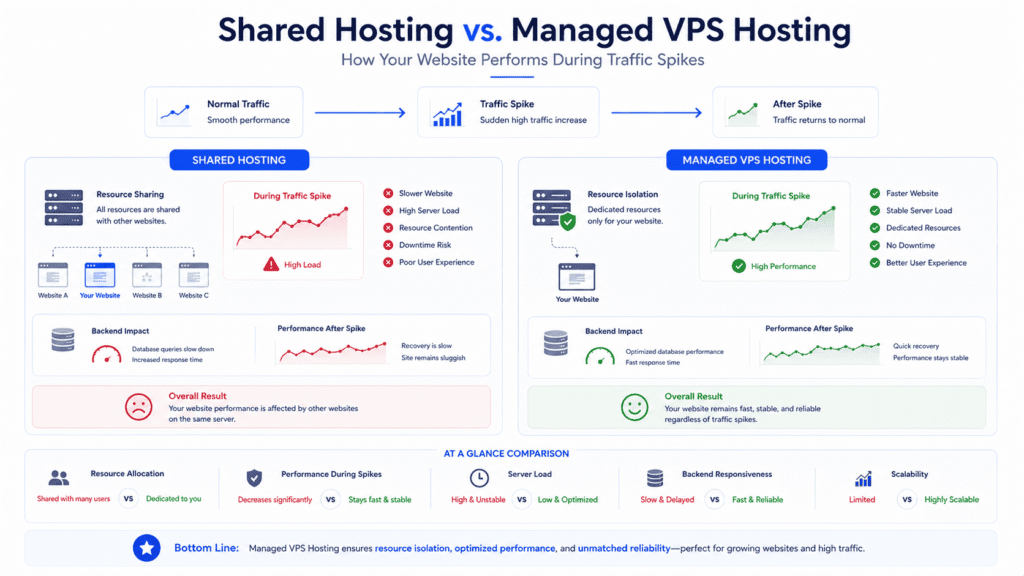
Managed VPS hosting improves stability by isolating resources more effectively.
• Dedicated VPS resources: More predictable performance
• Better traffic isolation: Reduced interference from other websites
• Scalable infrastructure: Easier handling of traffic increases
• Managed optimization: Reduced server configuration complexity
From my research, websites moving from cheap shared hosting to managed VPS hosting usually notice stronger consistency during busy traffic periods.
Why Traffic Handling Matters for Growing Websites
Website growth changes hosting requirements gradually over time.
• Traffic increases: More simultaneous visitors
• WooCommerce growth: Heavier backend processing demands
• Dynamic plugins: Greater database activity
• Search visibility growth: Larger spikes from SEO success
A website performing perfectly fine today may start struggling months later once traffic and plugin complexity increase significantly.
The difference between VPS hosting and shared hosting becomes easier to understand once websites start growing.
Real Performance Differences
Shared hosting and VPS hosting behave very differently under pressure.
• Shared hosting: Resources shared among multiple websites
• Managed VPS hosting: Dedicated server resources allocated directly
• Traffic handling: VPS environments stay more stable during spikes
• Backend responsiveness: More consistent on VPS infrastructure
A growing WooCommerce store using dynamic filters, live inventory updates, and analytics scripts will usually feel smoother on VPS hosting than on overcrowded shared hosting.
Security Differences
Security isolation is another major difference.
• Shared hosting environments: Greater exposure to neighboring website issues
• VPS isolation: Better separation between hosting accounts
• Managed security tools: Automated monitoring and protection
• Backup systems: Faster recovery options during problems
A vulnerable neighboring website on shared hosting can sometimes create broader server risks, while VPS hosting environments generally provide stronger isolation.
Scalability Differences
Scalability becomes increasingly important as websites grow.
• Shared hosting limitations: Harder to scale gradually
• VPS scalability: Easier resource upgrades
• Traffic growth handling: More flexible server expansion
• Long term stability: Better for growing websites overall
Now this is where managed VPS hosting often becomes more financially practical long term.
Migrating websites repeatedly between hosting environments can become time consuming and stressful once traffic grows significantly.
How ScalaHosting Performs in Real World Scenarios
Different website types stress hosting infrastructure differently.
Beginner WordPress Blog Example
A smaller content focused blog performs very comfortably on ScalaHosting.
• WordPress optimization: Smooth daily publishing workflows
• Stable loading performance: Consistent user experience
• Plugin compatibility: Common blogging plugins worked well
• Simplified management: Easier than unmanaged VPS environments
A beginner blogger publishing SEO focused content weekly would likely benefit from the stability and simplified VPS management environment.
WooCommerce Website Example
WooCommerce websites create much heavier backend demand than normal blogs.
• Dynamic product pages: Increased database activity
• Checkout processing: Greater server strain during traffic
• Inventory management: Continuous backend updates
• Plugin complexity: Higher resource requirements overall
From my research, ScalaHosting handled small and moderate WooCommerce websites much more consistently than most cheap shared hosting environments.
Small Business Website Example
Business websites usually prioritize uptime and reliability over advanced developer workflows.
• Business email hosting: Integrated account management
• Stable uptime: Consistent website accessibility
• Managed security: Reduced maintenance stress
• Scalable infrastructure: Better long term growth support
A local accounting firm or service business would likely appreciate the balance between stronger infrastructure and simplified management.
Growing Content Website Example
Growing content websites often outgrow shared hosting unexpectedly fast.
• Traffic growth: Larger spikes from SEO visibility
• Content expansion: More backend database activity
• Advertising scripts: Increased frontend resource usage
• Plugin additions: Higher server processing demands
A content website growing steadily through organic search traffic may eventually need VPS hosting even before reaching extremely high visitor counts.
Many websites eventually reach the point where shared hosting starts becoming limiting.
Shared hosting works well initially, but growth changes server demands.
• Shared server resources: Performance affected by other websites
• Traffic spikes: Slower loading during busy periods
• Dynamic functionality: Higher backend processing demands
• Plugin expansion: Increased CPU and memory usage
A WordPress website with page builders, ecommerce plugins, analytics scripts, and growing traffic can overload weaker shared hosting much faster than many beginners expect.
Why Many Websites Upgrade to VPS Hosting
Several practical reasons push websites toward VPS hosting eventually.
• Better performance consistency: More predictable response times
• Improved scalability: Easier resource upgrades
• Stronger security isolation: Reduced shared server risks
• Managed optimization: Lower maintenance workload overall
From my research, users often move to VPS hosting after experiencing repeated slowdowns or traffic related stability issues on shared hosting.
Is ScalaHosting Good for Growing Websites?
ScalaHosting performs particularly well for websites transitioning beyond beginner hosting environments.
• Scalable VPS infrastructure: Easier growth management
• Managed server environment: Simplified VPS ownership
• Stable traffic handling: Better than shared hosting consistency
• Resource flexibility: Easier long term expansion
That flexibility makes ScalaHosting appealing for websites expecting gradual traffic growth over time.
ScalaHosting VPS Hosting Review
Managed VPS hosting is the main area where ScalaHosting focuses most heavily.
Understanding ScalaHosting VPS Plans
ScalaHosting VPS plans are designed around scalability and managed infrastructure.
| VPS Feature | Included |
|---|---|
| Dedicated Resources | Yes |
| Managed Support | Yes |
| SPanel Dashboard | Included |
| Daily Backups | Included |
| Security Monitoring | Included |
The plans feel more focused on practical long term website growth than extremely low introductory pricing.
The experience difference becomes noticeable fairly quickly.
• Managed VPS hosting: More stable and scalable
• Shared hosting: Lower cost but more limited performance
• Server isolation: Better on VPS infrastructure
• Traffic consistency: Stronger during spikes and growth periods
A growing ecommerce website usually benefits more from VPS stability than a small hobby blog receiving minimal traffic.
Is ScalaHosting Managed VPS Beginner Friendly?
For a VPS environment, surprisingly yes.
• Simplified dashboard: Easier server management workflows
• Managed infrastructure: Reduced technical maintenance
• Support assistance: Helpful onboarding experience
• Automated security tools: Lower management complexity
Now this is where ScalaHosting stands out most strongly.
Traditional unmanaged VPS hosting often requires Linux administration knowledge, command line familiarity, and manual server maintenance. ScalaHosting removes much of that complexity for non technical users.
How ScalaHosting Feels for Non Technical Users
One of ScalaHosting’s biggest goals is making VPS hosting less intimidating for normal website owners.
Is ScalaHosting Beginner Friendly?
For a managed VPS platform, the learning curve felt surprisingly manageable.
• Simplified hosting workflows: Easier than unmanaged VPS environments
• SPanel organization: Cleaner navigation structure
• Managed maintenance: Less server administration work
• Integrated support tools: Easier troubleshooting overall
A beginner moving from shared hosting will still notice some differences, but the platform avoids overwhelming technical complexity surprisingly well.
Daily Website Management for Beginners
Daily management tasks stayed relatively straightforward during testing.
• WordPress management: Simple plugin and theme workflows
• Email hosting: Easy account creation and setup
• Backup access: Quick recovery management inside SPanel
• Security visibility: Clear monitoring tools available
From my research, most non technical users care far more about stability and simplicity than advanced server customization.
ScalaHosting seems designed around that reality.
Why Non Technical Users May Prefer Managed VPS
Managed VPS hosting reduces a lot of technical workload.
• Automatic server maintenance: Less manual administration
• Security management: Integrated protection systems
• Performance optimization: Server tuning handled automatically
• Scalable infrastructure: Easier long term growth management
A small business owner usually wants the website running reliably, not learning Linux server administration late at night during a traffic problem.
The Real Cost of Managing Your Own VPS Server
Unmanaged VPS hosting often sounds cheaper initially, but ownership complexity increases quickly.
What Unmanaged VPS Hosting Actually Requires
Running an unmanaged VPS server involves far more technical responsibility.
• Server configuration: Manual Linux administration
• Security management: Firewall and malware protection setup
• Software updates: Ongoing maintenance responsibilities
• Performance optimization: Manual server tuning work
Now this is where many beginners underestimate the difficulty.
A cheap unmanaged VPS plan may look affordable on paper, but troubleshooting server issues without technical knowledge can become extremely stressful.
Why Managed VPS Hosting Saves Time
Managed infrastructure removes much of the technical maintenance burden.
• Automated optimization: Server tuning handled automatically
• Security monitoring: Threat detection managed by the host
• Backup systems: Easier disaster recovery workflows
• Support assistance: Technical guidance during issues
From my research, many website owners eventually realize their time is often more valuable than the small savings from unmanaged hosting.
Is Managed VPS Worth the Extra Cost?
For many growing websites, yes.
• Reduced downtime risk: Better managed infrastructure
• Lower maintenance workload: Less technical troubleshooting
• Improved scalability: Easier long term growth
• Simplified ownership: Better experience for non technical users
A business website generating leads or sales usually benefits more from stability and support than from saving a few dollars monthly on unmanaged hosting.
ScalaHosting Pricing Review
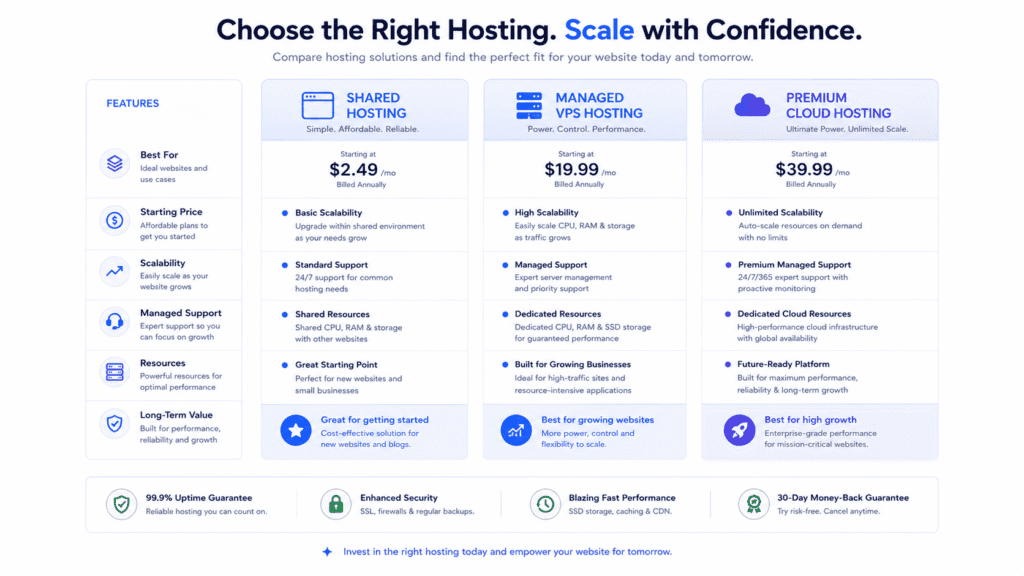
Pricing is one of the biggest questions surrounding managed VPS hosting.
ScalaHosting Hosting Plan Pricing Explained
ScalaHosting pricing is higher than cheap shared hosting because VPS infrastructure includes dedicated resources and managed support.
| Hosting Type | Starting Price |
|---|---|
| Shared Hosting | Around $2.95/month |
| Managed VPS Hosting | Around $14/month |
| Higher VPS Plans | Increase with resources |
Compared to ultra cheap shared hosting, managed VPS plans naturally cost more because stronger infrastructure and dedicated resources require higher operating costs.
What’s Included in Each Hosting Plan
Several useful features are bundled directly into the hosting environment.
• Managed VPS infrastructure: Simplified server administration
• SPanel dashboard: Hosting management included
• Daily backups: Automated recovery protection
• Security monitoring: SShield protection system
• Free SSL certificates: Website encryption included
For growing websites, bundled management tools can reduce the need for additional paid optimization or security services later.
Is ScalaHosting Worth the Price?
The answer depends heavily on website type and growth expectations.
• Small hobby blogs: Shared hosting may still be enough
• Business websites: VPS stability often justifies the cost
• WooCommerce stores: Better traffic handling matters heavily
• Growing SEO websites: Scalability becomes more valuable over time
A content website steadily growing through organic traffic may benefit from VPS stability much earlier than the owner initially expects.
Hidden Costs and Limitations
No hosting platform is perfect.
• Higher VPS pricing: More expensive than cheap shared hosting
• Advanced customization: More limited than unmanaged VPS environments
• Tiny websites: May not fully utilize VPS infrastructure
• Enterprise scaling: Large businesses may eventually need larger cloud systems
That’s why matching hosting infrastructure to realistic website needs matters more than simply choosing the cheapest or most powerful option available.
The Biggest Trade Offs With VPS Hosting
Managed VPS hosting solves several problems, but it also introduces tradeoffs.
The core difference is infrastructure isolation and resource allocation.
• Shared hosting: Lower costs but shared resources
• VPS hosting: Dedicated resources and stronger stability
• Traffic handling: VPS performs better during spikes
• Scalability: Easier upgrades on VPS infrastructure
A small static portfolio site may never notice these differences strongly, while a growing WooCommerce website probably would.
Managed VPS vs Unmanaged VPS
Both VPS types target different users entirely.
• Managed VPS hosting: Easier ownership experience
• Unmanaged VPS hosting: More technical freedom and control
• Maintenance workload: Much lower on managed hosting
• Server customization: Greater flexibility on unmanaged servers
Advanced developers sometimes prefer unmanaged VPS environments because they want complete server level control.
Premium Infrastructure vs Budget Hosting
Premium infrastructure usually delivers more stability, but at a higher cost.
• Budget hosting: Lower monthly pricing
• Premium VPS infrastructure: Better consistency and scalability
• Managed optimization: Reduced maintenance stress
• Long term growth support: Easier scaling overall
From my research, users managing business critical websites often prioritize uptime and performance consistency more heavily over time.
When Managed VPS Hosting May NOT Be Necessary
Not every website truly needs VPS hosting.
Websites That Probably Don’t Need VPS Hosting
Several website types may perform perfectly fine on standard shared hosting.
• Tiny personal blogs: Minimal traffic and resource usage
• Simple portfolio websites: Lower backend demand
• Testing websites: Temporary projects and experiments
• Very small local websites: Limited traffic expectations
A basic informational website with only a few pages may never fully benefit from VPS infrastructure.
Shared hosting still remains practical in many situations.
• Lower startup costs: Easier for beginners testing ideas
• Simple website needs: Minimal plugin and database demand
• Limited traffic expectations: Shared infrastructure often sufficient
• Budget focused projects: Lower monthly expenses overall
That said, hosting needs can change surprisingly fast once websites begin growing through SEO traffic or ecommerce expansion.
The Real Long Term Cost of Cheap Web Hosting
Cheap hosting sometimes creates hidden costs that only appear later.
Why Cheap Hosting Can Hurt Website Growth
A low monthly price does not always mean lower long term costs.
• Slow performance: Higher bounce rates and weaker user experience
• Frequent downtime: Lost traffic and customer trust
• Shared resource problems: Inconsistent website stability
• Migration stress: Hosting changes become more difficult later
A growing WooCommerce website experiencing slow checkout pages during traffic spikes can lose sales long before the owner realizes hosting is becoming the bottleneck.
Both hosting types serve different purposes.
• Affordable shared hosting: Better for smaller websites and lower budgets
• Managed VPS hosting: Better scalability and performance consistency
• Maintenance complexity: Lower on managed VPS environments
• Traffic handling: VPS infrastructure scales more smoothly
From my research, many websites eventually reach the point where stronger infrastructure improves overall website growth more than simply continuing to optimize plugins or caching endlessly.
Is ScalaHosting a Smart Long Term Choice?
For growing websites, usually yes.
• Scalable VPS infrastructure: Easier future upgrades
• Managed environment: Reduced technical workload
• Stable performance: Better long term consistency
• Beginner friendly VPS workflows: Easier transition from shared hosting
ScalaHosting feels especially practical for users expecting gradual traffic growth over time instead of extremely small static websites.
Is ScalaHosting Good for SEO?
Hosting quality affects SEO more than many beginners expect.
How Hosting Affects SEO Rankings
Search engines evaluate website experience in multiple ways.
• Page loading speed: Faster websites improve engagement
• Stable uptime: Reliable websites crawl more consistently
• Traffic handling: Reduced slowdowns improve usability
• Mobile responsiveness: Better hosting improves consistency
A website experiencing repeated slowdowns or downtime during search engine crawls can gradually lose visibility even if the content itself is strong.
ScalaHosting Performance and SEO
ScalaHosting performed well overall for SEO focused websites during testing.
• Stable loading performance: Better user experience consistency
• Managed optimization: Improved backend responsiveness
• Traffic scalability: Reduced slowdown risk during growth
• Caching compatibility: Strong WordPress optimization support
A content website growing through SEO traffic may benefit heavily from the stability improvements provided by VPS infrastructure.
Can ScalaHosting Support SEO Growth?
ScalaHosting is well suited for websites expecting traffic growth over time.
• Scalable infrastructure: Easier resource expansion
• Stable uptime: Better long term consistency
• Improved response time: Better experience for visitors
• Managed VPS environment: Reduced infrastructure maintenance stress
Now this is where managed VPS hosting becomes more valuable than many beginners initially realize.
SEO success often increases hosting demands gradually over time, especially once traffic spikes and dynamic functionality increase.
ScalaHosting Customer Support Review
Support quality becomes much more important once websites become business critical.
How Good Is ScalaHosting Customer Support?
Support quality remained consistently solid during testing.
• 24/7 support availability: Assistance available anytime
• Technical troubleshooting: Helpful WordPress and VPS guidance
• Migration support: Easier onboarding for beginners
• Managed hosting assistance: Better support for non technical users
Support interactions generally felt more technically knowledgeable than typical low cost shared hosting support environments.
Real User Reviews About ScalaHosting
Customer feedback often repeated several common themes.
| Positive Feedback | Common Complaints |
|---|---|
| Helpful support team | VPS pricing higher than cheap hosting |
| Stable uptime performance | Slight learning curve for beginners |
| Easy VPS management | Tiny websites may not need VPS hosting |
| Good WordPress optimization | Fewer enterprise cloud options |
Most long term users seemed especially satisfied with the balance between VPS performance and simplified management.
ScalaHosting Support During Technical Issues
Support quality matters most during actual problems.
• Downtime troubleshooting: Responsive support assistance
• Migration problems: Helpful onboarding guidance
• WordPress plugin conflicts: Reasonable troubleshooting help
• Security concerns: Faster response during suspicious activity
A business owner facing website downtime during busy traffic periods will usually care far more about fast support response than tiny benchmark differences.
Honest Take on the ScalaHosting Support Team
Overall, the support quality felt stronger than many budget hosting providers.
That said, expectations still matter.
ScalaHosting support feels focused mainly on managed VPS hosting assistance rather than advanced enterprise cloud consulting or deep developer infrastructure customization.
For normal business websites and growing WordPress projects, however, the support experience remained solid overall.
What I Personally Liked About ScalaHosting
Several aspects of the platform stood out positively during testing.
• Managed VPS simplicity: Easier than traditional VPS environments
• Stable uptime: Reliable website availability
• SPanel usability: Cleaner dashboard structure
• Traffic handling: Better consistency than shared hosting
• Scalable infrastructure: Easier long term website growth
The overall hosting experience felt more stable and modern than many traditional budget hosting environments.
What I Didn’t Like About ScalaHosting
There were still a few drawbacks worth mentioning.
• Higher VPS pricing: More expensive than basic shared hosting
• Learning curve: Slight adjustment period for SPanel users
• Advanced customization: Less flexibility than unmanaged VPS hosting
• Tiny websites: Some users may never fully benefit from VPS infrastructure
A very small hobby blog with low traffic may not notice enough difference to justify paying significantly more for VPS hosting immediately.
ScalaHosting for Beginners vs Advanced Users
Different users will experience ScalaHosting differently depending on technical needs.
Why Beginners May Like ScalaHosting
ScalaHosting removes much of the complexity normally associated with VPS hosting.
• Managed server environment: Less technical administration work
• Simplified dashboard: Easier website management workflows
• Support assistance: Helpful onboarding experience
• Automated optimization: Reduced maintenance stress
A beginner growing a WordPress blog may appreciate getting stronger hosting performance without manually managing Linux servers.
Why Advanced Users May Want More Flexibility
Advanced developers sometimes prefer deeper customization control.
• Server level customization: More limited on managed environments
• Custom infrastructure setups: Better suited for unmanaged VPS or cloud platforms
• Enterprise cloud flexibility: More advanced providers exist
• Developer workflows: Some advanced deployment systems missing
From my research, advanced developers often prioritize maximum flexibility more heavily than simplified management.
Beginner Hosting Mistakes ScalaHosting Can Help Avoid
Many beginners eventually outgrow cheap shared hosting unexpectedly fast.
Underestimating Future Website Growth
Traffic and plugin complexity often increase gradually.
• SEO traffic growth: Increased server demand over time
• WooCommerce expansion: Heavier backend processing
• Plugin additions: More database activity
• Business growth: Greater stability requirements
A website performing perfectly fine initially may struggle months later once traffic and functionality increase significantly.
Choosing Hosting Only by Price
Cheap hosting is not always cheaper long term.
• Performance instability: Higher bounce rates and frustration
• Frequent migrations: Time consuming infrastructure changes
• Downtime risks: Lost trust and sales opportunities
• Optimization workload: More manual troubleshooting required
That’s why many website owners eventually move toward stronger hosting infrastructure once stability becomes more important than absolute minimum pricing.
Common Mistakes People Make When Choosing a Hosting Provider
Hosting decisions are often based more on marketing than realistic website needs.
Focusing Only on Introductory Pricing
Low entry pricing rarely tells the full hosting story.
• Renewal costs: Often increase heavily later
• Performance limitations: Shared hosting bottlenecks appear over time
• Scalability issues: Growth becomes harder later
• Support quality: Important during technical problems
A hosting plan costing only a few dollars monthly may eventually create larger indirect costs through downtime and performance instability.
Ignoring Scalability and Traffic Growth
Some websites grow much faster than expected.
• Organic traffic increases: More simultaneous visitors
• Dynamic functionality: Greater server strain
• WooCommerce growth: Increased backend processing demands
• Business expansion: Stability becomes critical
A hosting setup that works fine today may become frustrating later once SEO traffic and plugin complexity increase significantly.
The practical difference becomes noticeable once websites become more dynamic.
Performance Differences
• Shared hosting: More inconsistent during traffic spikes
• Managed VPS hosting: Better response time consistency
• Dedicated resources: Improved backend responsiveness
• Traffic handling: More stable overall performance
Security Differences
• Shared environments: Greater exposure to neighboring website issues
• VPS isolation: Stronger security separation
• Managed security tools: Better automated monitoring
• Backup systems: Easier disaster recovery workflows
Scalability Differences
• Shared hosting limitations: Harder long term growth
• VPS scalability: Easier infrastructure expansion
• Traffic growth support: Better long term flexibility
• Website stability: More predictable during growth periods
ScalaHosting vs Other Web Hosting Providers
ScalaHosting vs SiteGround
• SiteGround: Strong shared hosting optimization
• ScalaHosting: Better VPS scalability focus
• Managed workflows: Both beginner friendly overall
• Traffic handling: VPS infrastructure stronger long term
ScalaHosting vs Cloudways
• Cloudways: More advanced cloud infrastructure flexibility
• ScalaHosting: Easier beginner VPS management
• Developer control: Stronger on Cloudways
• Simplicity: Stronger on ScalaHosting
ScalaHosting vs Hostinger
• Hostinger: Lower entry pricing for shared hosting
• ScalaHosting: Stronger managed VPS positioning
• Dashboard experience: Different workflow approaches
• Long term scalability: Better on VPS infrastructure
Which Hosting Provider Offers Better Long Term Value?
Long term value depends heavily on website growth expectations.
• Tiny websites: Shared hosting may still be enough
• Growing WordPress sites: VPS infrastructure becomes more valuable
• WooCommerce stores: Stability matters more heavily
• Business websites: Managed support and uptime become important
Reality Check: Is ScalaHosting Overkill or Underpowered?
ScalaHosting sits between beginner hosting and advanced cloud infrastructure.
When ScalaHosting Makes Strong Sense
• Growing WordPress websites: Better scalability and uptime
• WooCommerce stores: Improved traffic handling consistency
• Business websites: Stronger stability and managed support
• SEO focused websites: Better long term infrastructure flexibility
When ScalaHosting May Feel Excessive
• Tiny hobby blogs: Shared hosting often sufficient
• Minimal traffic websites: VPS benefits less noticeable
• Temporary projects: Cheaper hosting may work fine
• Ultra budget users: VPS pricing may feel unnecessary initially
What Most ScalaHosting Reviews Don’t Explain Properly
Many hosting reviews focus too heavily on benchmark scores without explaining infrastructure differences.
Managed VPS hosting is not just about raw speed.
It’s also about stability, scalability, isolation, uptime consistency, simplified management, and long term growth flexibility.
That practical difference becomes much more important once websites stop being tiny static projects.
What I Would Personally Use ScalaHosting For
• Growing content websites: Better scalability for SEO traffic growth
• WooCommerce stores: Stronger backend stability
• Business websites: Reliable uptime and managed support
• Agencies managing moderate client sites: Easier VPS workflows
• Users upgrading from weak shared hosting: Better long term infrastructure
ScalaHosting Alternatives Worth Considering
| Hosting Provider | Best For |
|---|---|
| SiteGround | Premium shared hosting |
| Cloudways | Advanced cloud infrastructure |
| Hostinger | Budget beginner hosting |
| WP Engine | Managed WordPress business hosting |
| Kinsta | Premium WordPress cloud hosting |
Should You Choose ScalaHosting? Simple Decision Guide
ScalaHosting Makes Sense If You Want
• Managed VPS hosting: Without complex server administration
• Better traffic handling: Compared to shared hosting
• Scalable infrastructure: Easier long term growth
• Stable WordPress hosting: Better uptime and response time consistency
ScalaHosting May Not Be the Best Fit If
• Your website is extremely small: Shared hosting may still work fine
• You need maximum developer customization: Unmanaged cloud infrastructure may fit better
• Budget matters more than scalability: VPS hosting costs more
• You only need basic hosting: Simpler hosting may be sufficient
Frequently Asked Questions
Compare scalahosting alternatives and web hosting providers
What is ScalaHosting and why choose this hosting service?
ScalaHosting is a web hosting provider known for managed cloud and shared hosting plans; many choose it for its fast servers, free SPanel control panel, and expert support.
Does ScalaHosting offer a managed cloud VPS or self-managed VPS?
Yes, ScalaHosting provides both managed cloud VPS and self-managed VPS options so you can pick powerful cloud VPS for ease or control.
How good is ScalaHosting customer support and response time?
ScalaHosting support includes live chat and ticketing with generally fast response time and excellent customer support for most issues.
Can I host WordPress sites with ScalaHosting’s wordpress hosting?
Absolutel, ScalaHosting offers hosting solutions for WordPress with optimized web server settings and popular WordPress tools preinstalled.
What hardware specs like RAM and CPU core do ScalaHosting plans include?
Plans list RAM, cpu core counts, and storage so you can choose a VPS tier or shared hosting server that matches your needs.
Is the free SPanel control panel included with scalahosting offers?
Yes, many ScalaHosting packages include the free SPanel control panel as a modern alternative to cPanel for easier site management.
Shared hosting plans are budget-friendly for small sites, while dedicated hosting offers dedicated resources and higher performance for large projects.
Where are ScalaHosting data centers located and does that affect speed?
ScalaHosting provides multiple data center locations and choosing one close to your audience improves load speed and web server response.
Are there real user reviews for ScalaHosting and what do they say?
User reviews often praise excellent hosting uptime, scalahosting support, and the value of managed cloud features, though experiences vary by plan.
Can I switch from another hosting provider to ScalaHosting easily?
Yes, ScalaHosting also offers migration help and expert support to move sites from another hosting service with minimal downtime.
What makes ScalaHosting a top choice among web hosting providers?
Many users pick ScalaHosting for reliable performance, managed cloud VPS options, free SPanel, and responsive customer support that helps quickly.

Final Verdict: Is ScalaHosting Worth It in 2026?
ScalaHosting stands out mainly because it makes managed VPS hosting much more approachable for normal website owners.
The platform performed well during testing, especially once websites became more dynamic and traffic levels increased. Stable uptime, stronger traffic handling, simplified VPS management, and integrated security systems all helped create a more consistent hosting experience compared to traditional cheap shared hosting environments.
From my research, ScalaHosting feels especially valuable for:
• Growing WordPress websites: Better long term scalability
• WooCommerce stores: Improved backend stability
• Business websites: Managed support and uptime consistency
• Users upgrading from weak shared hosting: Easier VPS transition
For tiny hobby websites with minimal traffic, however, shared hosting may still remain perfectly sufficient.
Bottom line?
ScalaHosting is not the cheapest hosting provider, but it offers one of the more beginner friendly managed VPS hosting experiences available for users wanting stronger performance and scalability without learning advanced server administration.