
Relying solely on social media is a huge mistake. Building an email list for affiliate marketing isn’t just a good idea; it’s your most reliable asset for long-term success. Algorithms change, platforms rise and fall, but your email list remains a direct line to your audience, a powerful tool for promoting affiliate offers and driving consistent revenue.
You’re here because you want proven, actionable strategies to grow an email list specifically for affiliate promotions, and that’s exactly what we’ll cover. This guide will walk you through the essential foundational setup, specific list-building tactics, and how to nurture subscribers for maximum conversions. We’ll cut through the noise and show you how to build an email list that reliably generates affiliate sales, turning casual visitors into loyal customers.
The Foundational Setup for Your Affiliate Email List
Before you even think about attracting your first subscriber, you need to lay a solid groundwork. This isn’t just about picking any tool; it’s about choosing the right infrastructure that supports your affiliate marketing goals and ensures long-term compliance and profitability. Many new affiliate marketers skip these crucial steps, only to hit roadblocks later when their chosen platforms restrict their activities or their lead magnets fail to convert.
> Critical Warning: Many popular email service providers (ESPs) have strict policies against direct affiliate link promotion, which can lead to account suspension. Always check their terms of service regarding affiliate marketing before committing.
Choosing an Email Marketing Platform That’s Affiliate-Friendly
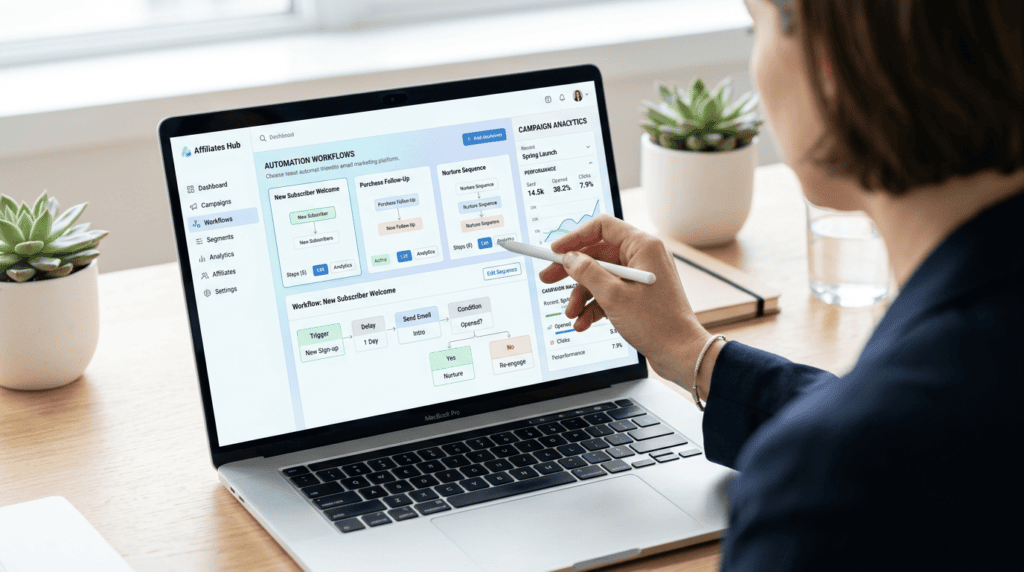
Not all email service providers (ESPs) are created equal, especially when you’re focused on how to build an email list for affiliate marketing. Some platforms are notoriously strict about affiliate links, while others are more accommodating. You need an ESP that not only allows affiliate marketing but also provides the features necessary for effective campaigns. Look for robust automation capabilities, allowing you to set up welcome sequences and follow-up emails that run on autopilot.
Segmentation is also key; it lets you group subscribers based on their interests or actions, so you can send highly targeted offers. Finally, integrated landing page builders or easy integrations with external tools can save you a lot of hassle. Platforms like ConvertKit, ActiveCampaign, and GetResponse are generally more affiliate-friendly and offer the advanced features you’ll need to scale.
I once helped a client migrate from a free ESP that suddenly banned their account due to affiliate links; moving to a more flexible provider like ConvertKit immediately resolved their deliverability issues and allowed them to continue promoting relevant affiliate products without fear of shutdown.
Creating a High-Value Lead Magnet Your Audience Actually Wants
A lead magnet is the incentive you offer in exchange for an email address. For your email list to grow, this incentive needs to be genuinely valuable and directly relevant to your niche and the affiliate offers you plan to promote. It shouldn’t just be “free stuff”; it should solve a specific problem or provide a quick win for your target audience. Think about what your ideal subscriber struggles with.
Are they trying to lose weight? Offer a “7-Day Meal Plan for Busy Professionals.” Are they looking to start a blog? A “Beginner’s Checklist for Launching Your First Blog” or a “Resource Library of Essential Blogging Tools” would be perfect. The goal is to provide so much value upfront that they eagerly hand over their email. A well-crafted lead magnet is the engine of your subscriber list growth.
Designing a Simple, High-Converting Squeeze Page
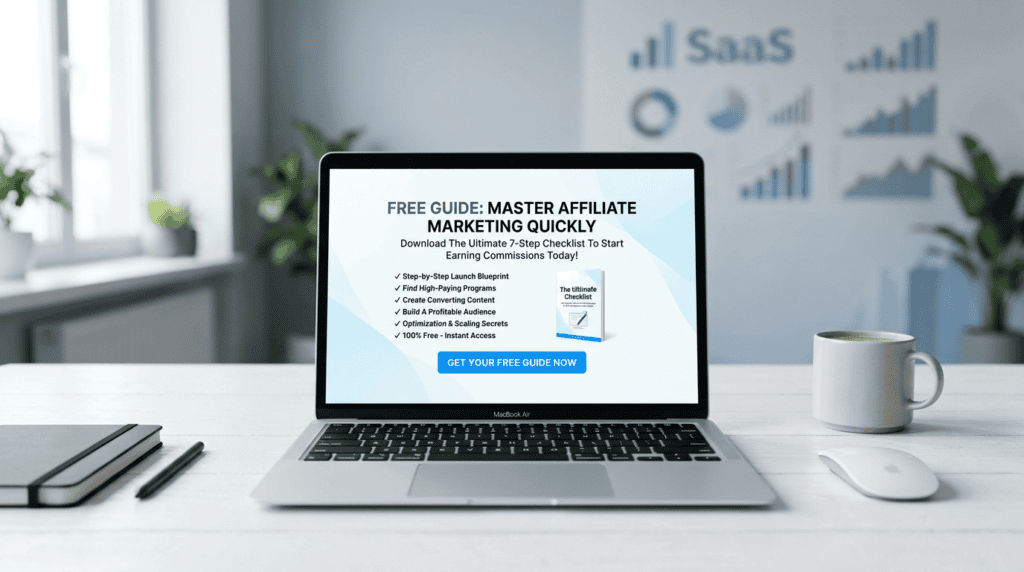
Once you have your email service provider and a compelling lead magnet, you need a place to present it and collect emails: a squeeze page, often called a landing page. This page has one job: to get visitors to opt-in. Keep it simple and focused. A powerful, benefit-oriented headline that grabs attention is crucial.
Follow this with bullet points that highlight the key benefits of your lead magnet – what problem does it solve, and what outcome can they expect? Include a clear call-to-action (CTA) button, like “Get Your Free Guide Now” or “Download the Checklist.” While not always essential for a basic squeeze page, adding a touch of social proof, like a testimonial or a number of downloads, can significantly boost your conversion rates. The less clutter, the better; remove all distractions like navigation menus.
Strategy 1: Using Your Blog Content as a List-Building Engine
Your blog isn’t just for attracting readers; it’s a powerful engine for growing your email list. By integrating strategic `opt-in` opportunities directly into your content, you can capture highly engaged `subscribers` who are already interested in your `niche`. This method leverages the `traffic` you’re already generating, turning passive readers into active `leads`.
How to Create Content Upgrades for Targeted Opt-ins
Content upgrades are bonus resources offered within a specific blog post, directly related to that post’s topic. For example, if you have an article about “10 Best AI Writing Tools for Bloggers,” a content upgrade could be a downloadable checklist comparing features or a mini-guide on “How to Prompt AI for Better Blog Posts.” This approach works because readers are already invested in the topic, making them more likely to exchange their email for additional value. The key is to make the upgrade a natural extension of the content they’re already consuming.
> A well-crafted content upgrade can significantly boost your `conversion` rates by offering immediate, hyper-relevant value to your readers.
Think about what problem your blog post solves and then create a `lead magnet` that offers an even deeper solution or a practical tool. This could be a PDF version of the article, a template, a resource list, or even a short video tutorial.
Placing Strategic Opt-in Forms for Maximum Visibility
Once you have compelling content upgrades, you need to place your `opt-in forms` where they’ll be seen without disrupting the reading experience. Effective `opt-in form placement` is crucial for maximizing `subscriber` growth.
Consider these locations:
- Within the content: Embed a call-to-action (CTA) and a form directly into the body of your blog post, especially after a section that naturally leads to your content upgrade.
- At the end of the post: After readers have consumed your valuable `content`, they’re often looking for the next step. A clear CTA here can capture their interest.
- Sidebar: A static sidebar form ensures your `lead magnet` is always visible as readers scroll through your `blog`.
- Non-aggressive pop-up: An exit-intent pop-up (appearing when a user is about to leave) or a timed pop-up (after a reader has spent a certain amount of time on the page) can be very effective without being overly intrusive.
The goal is to make it easy and natural for interested readers to join your `email list`.
Leveraging “About” and “Resources” Pages for Sign-ups
Your “About Us” and “Resources” pages are often high-traffic areas where visitors are actively seeking more information about you or helpful tools. These pages present excellent opportunities to invite people to join your `newsletter` or download a `lead magnet`. On your “About” page, you can share your journey and then offer a way for people to stay connected by `subscribing` to your `email list`. For a “Resources” page, which typically lists tools and services you recommend, you can create a dedicated section or banner promoting your primary `lead magnet` or `newsletter`. Visitors to these pages are often looking to build a deeper `relationship` or find solutions, making them prime candidates for becoming `subscribers`.
Strategy 2: Leveraging Social Media to Funnel Followers to Your List
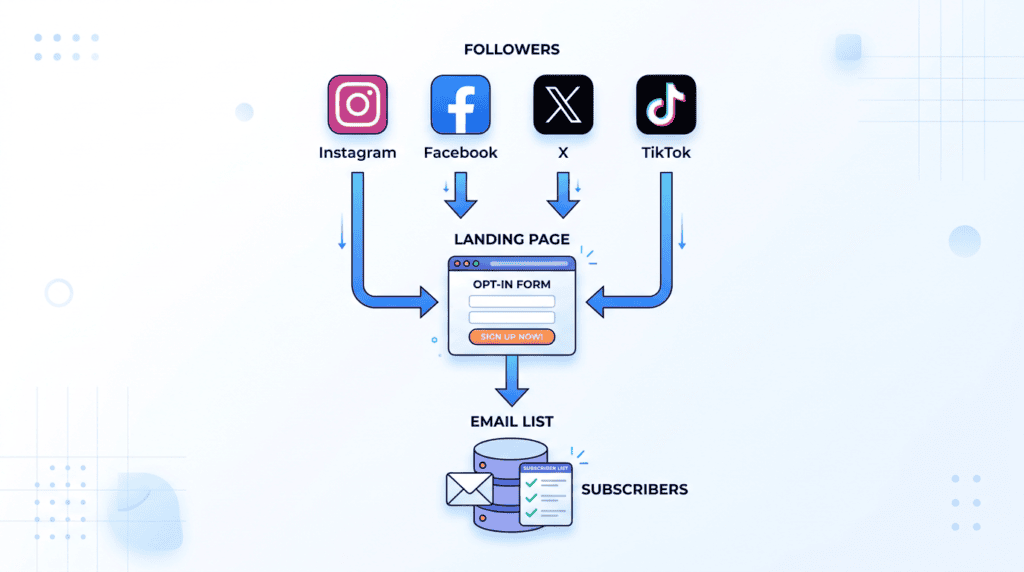
Social media platforms are excellent for building an `audience` and driving `traffic`, but they’re rented land. To truly own your `audience` and ensure long-term `affiliate marketing success`, you need to move those followers onto your `email list`. This strategy focuses on converting social media engagement into valuable `leads`.
Optimizing Your Social Media Bios with a Clear Call-to-Action
Your social media bio is prime real estate. Most platforms offer a single “link in bio” spot, and you should use it to direct followers to your most compelling `lead magnet` or `landing page`. Instead of just linking to your homepage, create a specific `high-converting landing page` for your best `freebie lead magnet`. Your bio’s text should include a clear `call-to-action` like “Get my free [Niche] Checklist!” or “Download the Ultimate [Topic] Guide.” I’ve seen my own `conversion` rates jump when I stopped linking generally and started linking to a specific, irresistible `incentive` in my Instagram bio. This direct approach makes it clear what followers will get by clicking, increasing the likelihood of them becoming `subscribers`.
Running a Giveaway or Contest to Drive Sign-ups
Giveaways and contests are powerful tools for rapid `subscriber` growth on social media. The core idea is simple: to enter, participants must provide their email address. The trick is to ensure the prize is highly relevant to your `niche` and `audience`. Don’t give away an iPad if you’re in the `affiliate marketing` space; give away a year’s subscription to a premium SEO tool, a course on `affiliate marketing strategies`, or a bundle of relevant digital products. This ensures you attract `leads` who are genuinely interested in your `offers` and not just free stuff. Promote the giveaway heavily across all your `social media` channels, directing `traffic` to a dedicated `landing page` where they can enter by `subscribing`.
Using Pinned Posts and Stories to Promote Your Lead Magnet
Social media platforms offer features designed for high visibility, and you should leverage these to consistently promote your `lead magnet`.
- Pinned Posts: On platforms like X (formerly Twitter) or Facebook, you can “pin” a post to the top of your profile. Use this to showcase your best `lead magnet` with a compelling visual and a direct link to your `landing page`.
- Instagram/Facebook Stories & Highlights: Create engaging stories that highlight the benefits of your `lead magnet` and use swipe-up links (if available) or direct people to your “link in bio.” Save these stories as “Highlights” on your profile so new visitors can always find them.
By using these features, you ensure that your `lead magnet` is always front and center for anyone visiting your profile, turning `social media traffic` into `email list` growth.
Strategy 3: Creating Simple Tools and Quizzes as Lead Magnets
Beyond traditional guides and checklists, interactive `lead magnets` like simple tools and quizzes can be incredibly effective for `building an email list`. They offer a unique, engaging experience that often leads to higher `conversion` rates and provides valuable data for `segmentation`.
How a Simple Calculator or Template Can Attract Subscribers
People love practical solutions that save them time or help them solve a specific problem. A simple calculator or template can be an incredibly powerful `freebie lead magnet`. For instance, if you’re an `affiliate` in the personal finance `niche`, a “Debt Payoff Calculator” or a “Monthly Budget Template” could attract hundreds of `subscribers`. In the `make money online` space, a “Profit Projection Spreadsheet” for a new online business idea or a “Content Calendar Template” for bloggers would be highly sought after. These aren’t just downloads; they’re functional assets that provide immediate `value`. They demonstrate your expertise and build `trust` with your `audience` even before they receive their first `newsletter`.
Using an Interactive Quiz to Segment Your Audience from Day One
Interactive quizzes are fantastic for engagement and can be a goldmine for `email list segmentation`. Imagine an `affiliate` promoting various software tools for online businesses. A quiz like “Which Business Software is Right for You?” could ask questions about their business stage, budget, and specific needs. At the end, to get their personalized results, they enter their email address. The magic here is that based on their answers, you can automatically tag them (e.g., “Beginner Entrepreneur,” “Scaling Business,” “Budget-Conscious”). This allows you to send highly `targeted` `email automation sequences` from the very first email, promoting `relevant affiliate products` and building a stronger `relationship`. This early `segmentation` is a huge advantage for future `promotion` efforts.
Strategy 4: Partnering with Others to Accelerate Growth
Growing your email list doesn’t have to be a solo mission. Collaborating with other creators in your niche can expose you to new audiences and significantly accelerate your subscriber list growth. This strategy is particularly effective for how to build an email list for affiliate marketing because you’re tapping into pre-qualified audiences who already trust another expert.
How to Organize a Bundle or Summit with Other Creators
Organizing a bundle or virtual summit involves teaming up with several other creators or businesses in your niche to offer a collection of valuable digital products (like e-books, courses, templates) or a series of expert presentations. The core idea is that each partner contributes something of value, and everyone promotes the collective offer. Typically, there’s a shared landing page where visitors can opt-in with their email address to gain access to all the resources.
This approach creates a massive incentive for people to subscribe. Instead of getting just one lead magnet, they get a whole library of resources. Each partner promotes the bundle to their existing audience, effectively cross-pollinating subscriber lists. I’ve personally seen these types of collaborations generate hundreds, sometimes thousands, of new, highly targeted subscribers in a short period. The key is to find partners whose audiences are complementary to yours but not directly competitive, ensuring everyone benefits from the increased exposure and shared traffic.
Guest Posting on Relevant Blogs with a Link to Your Lead Magnet
Guest posting on established blogs within your niche is a classic yet powerful strategy for how to build an email list for affiliate marketing. It allows you to leverage an existing audience that is already interested in your topic. The process involves writing high-quality, valuable content for another blog, and in return, you get an author bio at the end of the article.
This author bio is your golden ticket. Instead of just linking to your homepage, strategically include a clear call-to-action (CTA) that directs readers to your specific lead magnet landing page. For example, “John Doe is an expert in [Niche Topic]. Grab his free [Lead Magnet Name] to learn how to [Benefit] at [YourWebsite.com/LeadMagnet].” This direct link funnels interested readers from the guest post directly into your email marketing funnel, turning them into potential leads for future affiliate offers. Make sure the content you provide for the guest post is top-notch, as it reflects on your expertise and encourages readers to seek out more from you.
The “Honest Take”: What Most Beginners Get Wrong
Building an email list for affiliate marketing isn’t just about collecting as many email addresses as possible. There are common pitfalls that can derail your efforts and lead to a disengaged, unprofitable list. Understanding these mistakes upfront can save you significant time and resources.
The Mistake of Focusing on List Size Over List Quality
Many beginners obsess over the sheer number of subscribers, believing that a larger list automatically means more sales. This couldn’t be further from the truth. A list of 500 highly engaged, targeted subscribers who actively open your emails and click your links is far more valuable than a list of 5,000 disengaged contacts who never open anything. Unengaged subscribers not only cost you money (as most email service providers charge based on list size) but can also hurt your email deliverability, pushing your legitimate emails into spam folders. Focusing on quality ensures your messages reach people genuinely interested in your affiliate offers.
> A small, engaged email list is a long-term asset; a large, unengaged list is a costly liability.
Promoting Too Hard, Too Soon: The Welcome Sequence Rule
One of the quickest ways to alienate new subscribers and increase unsubscribes is to hit them with a hard sell immediately after they opt-in. People subscribe for value, not an instant sales pitch. The “know, like, and trust” factor is crucial in affiliate marketing. Your welcome email sequence is your first opportunity to build this relationship. Skipping this vital step or rushing to promote affiliate products before establishing trust is a major mistake. A well-structured welcome sequence should prioritize delivering the promised lead magnet, introducing yourself, sharing valuable content, and setting expectations for future emails, *before* gently introducing any promotional content.
The Hidden Cost of “Free” Email Marketing Platforms
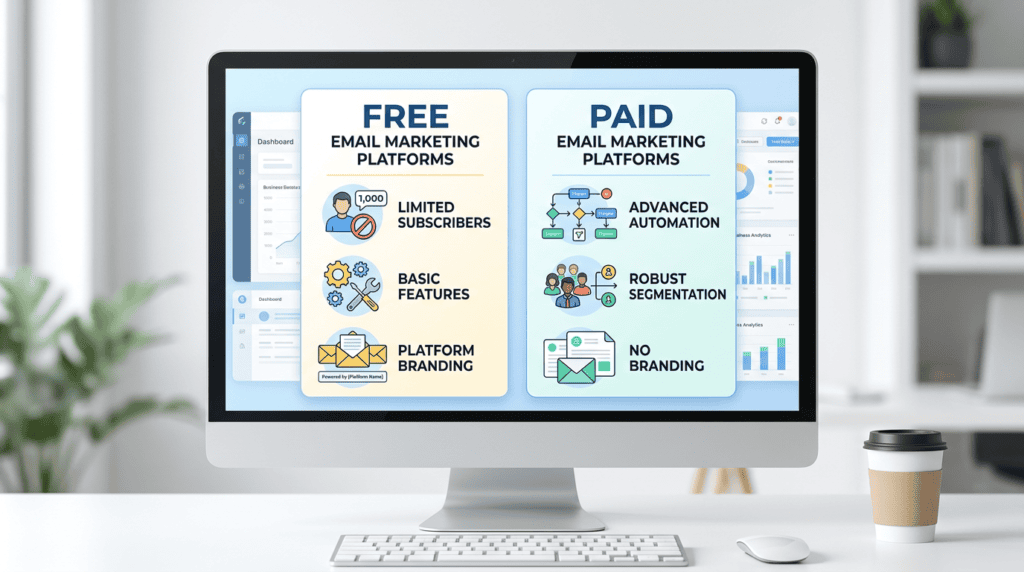
While starting with a free email marketing platform can be tempting, many beginners overlook the hidden costs and limitations that can hinder their affiliate marketing success. Free plans often come with significant restrictions, such as:
- Limited Subscribers: Capped at a low number (e.g., 500-1,000).
- Restricted Features: No advanced automation, A/B testing, or segmentation tools.
- Branding: Often include the ESP’s branding in your emails.
- Deliverability: Sometimes have lower priority for email delivery.
As your list grows and your affiliate marketing strategies become more sophisticated, these limitations quickly become roadblocks. You’ll find yourself needing features like advanced email automation sequences, detailed analytics, and robust segmentation to effectively monetize your email list. Upgrading to a paid plan, which can start around $15-$49 per month for entry-level options, becomes essential for serious growth and higher conversion rates.
Turning Subscribers into Affiliate Sales: The Nurturing Process
Once you’ve successfully built an email list, the real work begins: nurturing those subscribers into loyal customers who trust your recommendations and purchase through your affiliate links. This involves a strategic approach to communication that balances value delivery with smart promotion.
Structuring Your Welcome Sequence for Trust and Engagement
Your welcome sequence is arguably the most critical part of your email marketing funnel. It’s your chance to make a strong first impression, deliver on your promise, and begin building a relationship. Here’s a proven structure for a 3-5 day welcome series:
- Day 1: Deliver the lead magnet and set expectations. Immediately send the freebie they signed up for. Thank them for joining, briefly introduce yourself, and tell them what kind of content they can expect from you and how often.
- Day 2: Share your story or a valuable tip. This email is about connecting. Share a personal anecdote related to your niche or offer a quick, actionable tip that provides immediate value. This builds rapport and demonstrates your expertise.
- Day 3-4: Address a common pain point and offer a solution. Identify a key problem your audience faces. Provide valuable content that helps them understand or overcome this challenge. This could be a link to a blog post, a short video, or a mini-tutorial.
- Day 5: Introduce a relevant affiliate product softly. Now that you’ve built some trust and delivered value, you can gently introduce a relevant affiliate product as a solution to the pain point discussed previously. Frame it as a helpful recommendation, not a hard sell.
I’ve personally refined my welcome sequences over time, and I’ve found that focusing on delivering immense value in the first few emails dramatically increases engagement and the likelihood of future affiliate sales. It’s about earning the right to promote.
Balancing Value and Promotions in Your Regular Emails
After the welcome sequence, your regular email broadcasts need to maintain a healthy balance between providing value and promoting affiliate offers. A good rule of thumb is the 3:1 ratio: for every three emails that deliver pure value (tips, tutorials, insights, free resources), you can send one promotional email.
This balance prevents subscriber fatigue and keeps your audience engaged. When they know your emails consistently provide helpful information, they’ll be more likely to open them, even when they suspect a promotion might be coming. This approach builds a loyal audience who sees you as a trusted resource, making them more receptive when you do recommend relevant affiliate products. Consistently providing valuable content also helps improve your email open rates and click-through rates (CTR).
Using Segmentation to Send Hyper-Relevant Offers
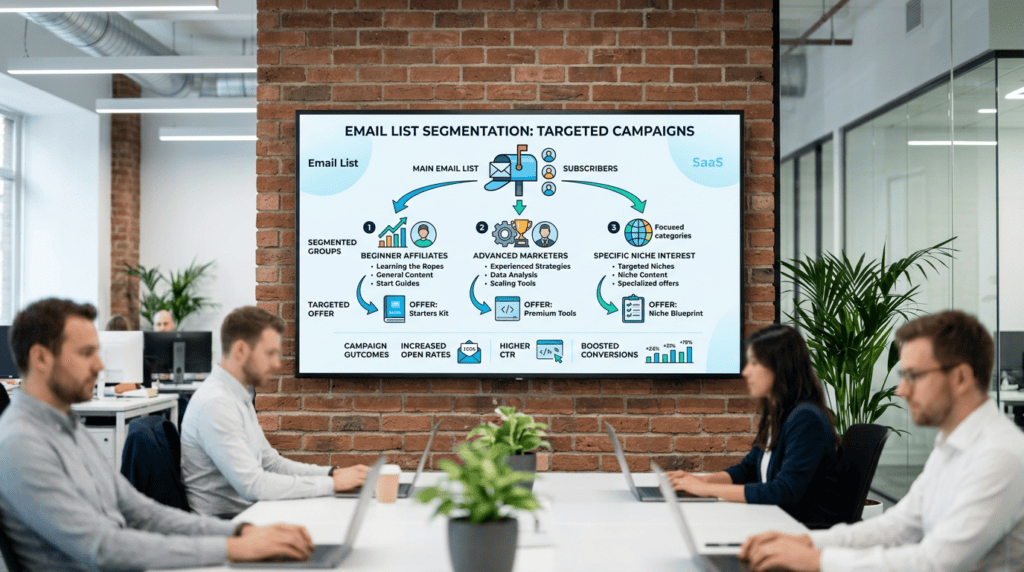
Segmentation is the practice of dividing your email list into smaller, more targeted groups based on specific criteria. This allows you to send highly relevant offers and content, which dramatically increases engagement and conversion rates. Instead of sending every email to everyone, you tailor your messages to specific interests.
You can segment your subscribers based on various factors:
- Lead Magnet Choice: What freebie did they sign up for? This indicates their initial interest.
- Click Behavior: Which links have they clicked in past emails? This shows what topics or products they’re interested in.
- Survey Responses: Ask them about their biggest challenges or goals.
- Purchase History: If you sell your own products, you can segment based on what they’ve bought.
By using email list segmentation, you can ensure that when you promote an affiliate product, it’s highly relevant to the specific segment receiving the email. For example, if someone clicked on a link about “AI writing tools,” you can send them an email promoting an affiliate offer for a specific AI writing software. This targeted approach makes your affiliate offers feel less like spam and more like a personalized recommendation, leading to higher affiliate sales and a more engaged audience.
Final Recommendations: Your First 90-Day Action Plan
Building an email list for affiliate marketing isn’t a “set it and forget it” task; it’s an ongoing strategy that evolves with your audience and business growth. To help you get started or scale up, here’s a clear action plan based on your current subscriber count. Delaying these steps means missing out on building a consistent, predictable revenue stream and a valuable long-term business asset.
For the Complete Beginner (0-100 Subscribers)
Your primary goal right now is to establish the core foundation and get those first few subscribers. Don’t get bogged down in complex automation or advanced segmentation. Focus on creating one high-value lead magnet that genuinely solves a problem for your target audience. This could be a simple checklist, a short guide, or a resource list. Then, set up a straightforward landing page for it using your chosen email service provider. Promote this lead magnet consistently through your blog content, adding clear calls-to-action within relevant posts, and optimize your social media bios with a direct link to your opt-in page. The key is consistent effort in getting those initial sign-ups and delivering on your promise.
For the Growing Affiliate (100-1,000 Subscribers)
With your foundational list-building in place, it’s time to refine your strategy and expand your reach. You should now be experimenting with content upgrades within your most popular blog posts. These are highly targeted incentives that capture leads directly interested in specific topics. Consider your first guest post on a relevant blog, ensuring your author bio includes a compelling link back to your lead magnet. This taps into an established audience and can significantly accelerate your subscriber list growth. Start thinking about a basic welcome email sequence to nurture these new leads, as discussed earlier.
For Scaling Your Efforts (1,000+ Subscribers)
Once you have a solid base, you can explore more advanced and efficient ways to build an email list for affiliate marketing. This is where interactive quizzes can shine, not just for lead generation but also for segmenting your audience from day one. Consider hosting a webinar or a small virtual summit with other creators in your niche, pooling resources and audiences for a bigger impact. If your budget allows, start experimenting with paid traffic campaigns, directing targeted ads to your high-converting landing pages. At this stage, focus on optimizing your conversion rates and leveraging automation to maximize your affiliate marketing success.
> The biggest mistake you can make is not starting or not consistently nurturing your email list; it’s your most direct path to sustainable affiliate revenue.
Frequently Asked Questions (FAQs)
How many subscribers do I need to make money with affiliate marketing?
You don’t need a massive list to make money with affiliate marketing; quality trumps quantity. Even a highly engaged list of a few hundred subscribers can generate significant commissions if they trust your recommendations and you provide relevant offers.
Can I use a free email marketing service for affiliate marketing?
Yes, you can start with a free email marketing service for affiliate marketing, especially when you’re just beginning. However, free plans often have limitations on features like automation and subscriber caps, which you’ll likely outgrow as your list grows and your affiliate marketing strategies become more sophisticated.
What’s the best type of lead magnet for an affiliate marketer?
The best type of lead magnet for an affiliate marketer is one that directly solves a problem for your target audience and is relevant to the affiliate products you plan to promote. Examples include checklists, mini-guides, templates, or resource lists that offer immediate value and build trust.
How often should I email my list?
You should email your list consistently, typically 1-3 times per week, to maintain engagement without overwhelming your subscribers. The exact frequency depends on your niche and audience’s preferences, but always prioritize delivering value over just sending promotional emails.
Is it legal to send affiliate links in emails? (Briefly mention disclosure requirements)
Yes, it is legal to send affiliate links in emails, but you must clearly disclose that you are using affiliate links and may earn a commission. This transparency builds trust with your audience and complies with regulations like the FTC guidelines in the US. I’ve personally found that being upfront about affiliate relationships always leads to better long-term engagement and sales.