
Your email list isn’t growing fast enough. Many online businesses struggle to attract quality subscribers, often because their free opt-in incentive misses the mark. This guide provides a step-by-step process for creating a free opt-in incentive that genuinely attracts and converts your ideal audience. We’ll move beyond generic ideas and focus on a practical framework for developing, designing, and delivering a lead magnet that builds your email list with engaged subscribers.
The common mistake? Offering something generic that doesn’t solve a specific problem. A truly effective free opt-in incentive isn’t just “free content”; it’s a strategic asset designed to pre-qualify leads and accelerate your audience’s journey toward becoming customers. We’ll explore how to craft valuable content that resonates deeply, ensuring your efforts translate into a robust, responsive email list.
What is a Free Opt-in Incentive and Why Does it Matter?
Defining the “Ethical Bribe”: Moving Beyond a Simple Freebie
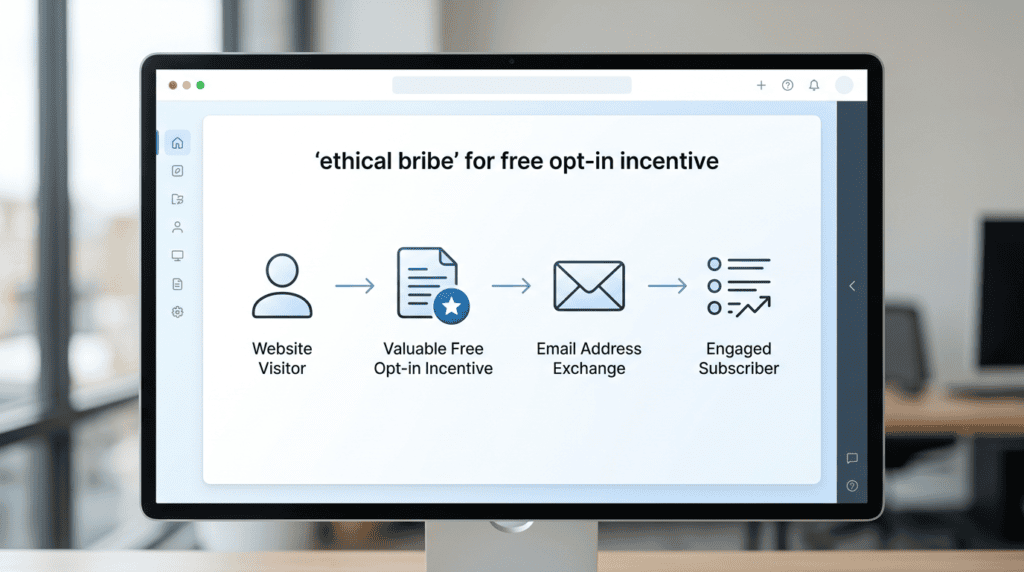
At its core, a free opt-in incentive is a piece of valuable content or a resource you offer to your website visitors in exchange for their email address. While some call it a “freebie” or a “lead magnet,” the most effective ones act as an “ethical bribe.” It’s not about tricking people; it’s about offering something so compelling and useful that giving up an email address feels like a fair trade. This could be a comprehensive guide, a handy checklist, a useful template, or even a short video series. The goal is to provide immediate value that addresses a specific pain point for your target audience.
The Core Goal: Trading High-Value Content for an Email Address
The primary purpose of any free opt-in incentive is to grow your email list. However, it’s not just about collecting email addresses; it’s about collecting the *right* email addresses. You want subscribers who are genuinely interested in your niche, your content, and potentially your paid offerings. By creating a free opt-in incentive that delivers significant value, you attract individuals who are already seeking solutions you provide. This exchange of valuable content for an email address forms the foundation of a strong email marketing strategy, allowing you to nurture leads and build trust over time.
> A well-crafted free opt-in incentive acts as a powerful filter, ensuring you attract future customers, not just casual browsers.
How a Strong Incentive Impacts List Quality and Engagement
A strong free opt-in incentive directly impacts the quality and engagement of your email list. When your lead magnet solves a real problem or provides a clear benefit, the people who sign up for your list are more likely to be engaged. They’ve already demonstrated a need and a willingness to take action. This means higher open rates, better click-through rates, and ultimately, more conversions down the line. For example, when I launched a detailed PDF checklist for optimizing blog post traffic, my opt-in conversion rate on relevant articles jumped from 2% to over 8% within a month, because it directly addressed a pressing need for my readers. This kind of targeted value builds a foundation of trust and positions you as an authority.
The Risk of a Weak Incentive: Attracting Freebie-Seekers vs. Future Customers
On the flip side, a weak or generic free opt-in incentive can do more harm than good. If your freebie is low-effort, easily found elsewhere, or doesn’t speak directly to your target audience’s needs, you risk attracting “freebie-seekers.” These individuals might sign up for any free download, but they’re unlikely to open your subsequent emails, engage with your content, or ever become paying customers. This inflates your email list with unengaged subscribers, hurting your sender reputation and wasting your marketing efforts. It’s far better to have a smaller, highly engaged list built through a valuable lead magnet than a large, unresponsive one.
Step 1: Identify Your Audience’s Most Pressing Problem
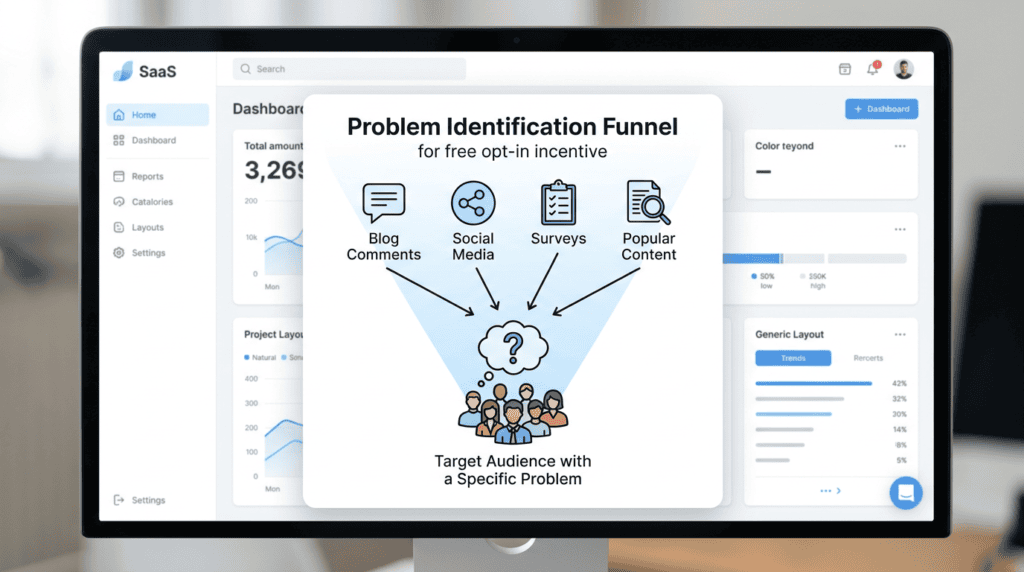
Creating a free opt-in incentive that genuinely attracts the right subscribers starts with understanding their deepest needs. It’s not about guessing; it’s about research. Your goal is to pinpoint a specific pain point your target audience faces regularly. When you solve that problem, even a small one, you create immense value, making them eager to sign up for your email list.
How to Find Pain Points Your Audience Will Pay to Solve (Even with Their Email)
The most effective free opt-in incentive isn’t just “free”; it’s a solution. Think of it as an ethical bribe: you’re offering a piece of valuable content that directly addresses a frustration or desire, and in return, they offer their email address. This exchange builds trust and ensures you’re attracting people who are genuinely interested in what you offer. To create a high-converting opt-in, you need to dig into what keeps your audience up at night. What questions do they constantly ask? What tasks do they struggle with? What results do they want but can’t achieve on their own?
> Focus on the specific, tangible problem your audience wants to overcome right now, not a vague, long-term aspiration.
For instance, when I was building my first niche site, I noticed many aspiring affiliate marketers struggled with keyword research. Instead of a general “SEO guide,” I created a “Beginner’s Keyword Research Checklist” as a free opt-in incentive. It directly addressed their immediate struggle, leading to a much higher opt-in conversion rate than my previous, broader lead magnet.
Mining Your Blog Comments and Social Media for Clues
Your existing content and online communities are goldmines for free opt-in incentive ideas. Look through the comments on your blog posts. What questions do readers ask? What topics generate the most discussion or disagreement? On social media, pay attention to the questions posed in groups related to your niche. What problems are people complaining about? What solutions are they seeking? These direct interactions reveal the real-world struggles of your audience.
Using Audience Surveys to Uncover Hidden Needs
Sometimes, the best way to find out what your audience wants is simply to ask them. A short, focused survey sent to your existing email list or promoted on social media can uncover hidden needs. Ask open-ended questions like, “What’s your biggest challenge with [topic] right now?” or “What’s one thing you wish you knew about [topic]?” The responses can provide clear direction for your next lead magnet ideas.
Analyzing Your Most Popular Content for Incentive Ideas
Your top-performing blog posts or videos already tell you what resonates with your readers. If a particular piece of content gets a lot of traffic, shares, or comments, it indicates a strong interest in that topic. You can then expand on that popular content, offering a deeper dive, a practical tool, or a step-by-step guide related to it as your free opt-in offer. This strategy leverages proven interest to build your email list more effectively.
Step 2: Choose the Right Opt-in Incentive Format for Your Audience
Once you know your audience’s problem, the next step is to choose the best format to deliver the solution. The right format makes your free opt-in incentive easy to consume and highly valuable, encouraging more signups. Different problems and audience preferences call for different types of lead magnets.
Quick Wins: Checklists, Cheatsheets, and Resource Guides
These formats are perfect for delivering immediate value and actionable steps. They’re easy to create and even easier for subscribers to use. They work well for audiences looking for shortcuts, reminders, or a consolidated list of tools.
- *Example:* A “10-Point Blog Post Pre-Publish Checklist” for new bloggers. This helps them avoid common mistakes and ensures their content is ready to go live.
In-Depth Solutions: Ebooks, Whitepapers, and Mini-Guides
When your audience needs a more comprehensive understanding or a detailed explanation of a complex topic, an ebook or mini-guide is ideal. These formats establish your authority and provide significant value, making them excellent for attracting highly engaged subscribers.
- *Example:* An “Ultimate Guide to Starting a Podcast” for aspiring creators. This offers a full roadmap from concept to launch.
Interactive & Visual: Video Workshops, Webinars, and Email Courses
For topics that benefit from visual demonstration, step-by-step instruction over time, or direct engagement, interactive formats shine. These can build a stronger connection with your audience and deliver a rich learning experience. An email course, for example, delivers content in digestible chunks, keeping subscribers engaged over several days.
- *Example:* A 5-day email course on “Mastering Your First Facebook Ad Campaign.” This breaks down a complex process into manageable daily lessons.
Practical Tools: Templates, Scripts, and Calculators
These are highly sought-after because they save your audience time and effort. If your audience needs to perform a specific task repeatedly, a template or script can be an invaluable free opt-in incentive. They provide a tangible resource that can be used immediately.
- *Example:* A “Content Calendar Template” for small business marketers. This helps them plan and organize their content strategy efficiently.
Quick Reference Table: Matching Incentive Format to Audience Need
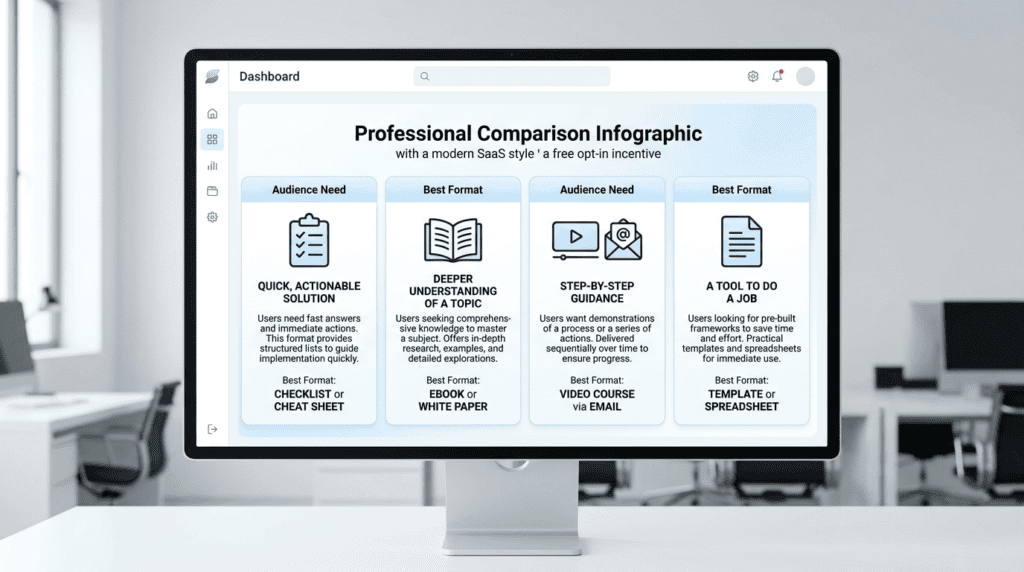
| Audience Need | Best Format | Why It Works |
|---|---|---|
| Quick, actionable solution | Checklist, Cheatsheet | Easy to consume and implement immediately. |
| Deeper understanding of a topic | Ebook, Mini-Guide | Provides comprehensive value and establishes authority. |
| Step-by-step guidance | Email Course, Video Workshop | Guides the user through a process over time. |
| A tool to do a job | Template, Calculator | Offers a practical, reusable resource. |
Step 3: Create the Content for Your High-Value Incentive
With your problem identified and your format chosen, it’s time to create the actual content for your free opt-in incentive. This is where you deliver on the promise you’ve made to your potential subscribers. The goal is to make it so valuable that they’re glad they signed up.
The “One Problem, One Solution” Rule for Maximum Impact
When creating your freebie, resist the urge to cram too much information into it. The most effective lead magnets adhere to the “one problem, one solution” rule. Your free opt-in incentive should focus on solving a single, specific problem for your audience. This makes it highly actionable and prevents overwhelm. If you try to solve five problems, you’ll likely solve none effectively. A focused approach ensures maximum impact and a higher perceived value, which is crucial for increasing your opt-in conversion rate.
How to Outline Your Incentive for Clarity and Action
Even a simple checklist benefits from a clear structure. Before you start writing, create an outline. For a guide or ebook, this might involve chapters or sections. For a checklist, it’s a list of steps. For a template, it’s defining the key fields or components. A well-structured outline ensures your content flows logically and guides the reader toward the desired outcome. Think about the journey your reader will take from problem to solution.
Writing Tips: Focus on Outcomes, Not Just Information
Your free opt-in incentive isn’t just about providing information; it’s about delivering a tangible outcome. When writing, always ask: “What will the reader be able to *do* or *achieve* after consuming this content?” Use clear, concise language. Break down complex ideas into simple steps. Focus on benefits and results. For example, instead of just listing tools, explain *how* those tools will help them save time or make more money. This outcome-oriented approach makes your lead magnet truly valuable.
Repurposing Existing Content into a Powerful Lead Magnet
You don’t always have to start from scratch. Repurposing existing content is a smart strategy for creating a free opt-in incentive efficiently. Do you have a series of blog posts on a related topic? Combine them, refine them, and add new insights to create an ebook or a comprehensive guide. A popular video tutorial could be transcribed and turned into a checklist or a step-by-step PDF. This not only saves time but also leverages content that you already know resonates with your audience, making the creation process faster and more effective.
Step 4: Design and Package Your Incentive for High Perceived Value
Once you’ve created the valuable content for your free opt-in incentive, the next step is to make it look professional and appealing. The design isn’t just about aesthetics; it significantly impacts the perceived value of your offering. A well-designed freebie feels more substantial and trustworthy, encouraging more sign-ups and downloads.
Simple Design Tools for Non-Designers (e.g., Canva, Visme)
You don’t need to be a graphic designer to create a polished-looking freebie. Tools like Canva and Visme are incredibly user-friendly and offer a vast library of templates specifically for ebooks, checklists, workbooks, and guides. These platforms allow you to drag and drop elements, choose from pre-designed layouts, and easily incorporate your brand colors and fonts. I’ve personally used Canva for years to quickly design a PDF checklist template or a simple ebook cover, and it consistently delivers professional results without a steep learning curve. The goal here is efficiency and impact.
Key Design Elements: Cover Page, Branding, and Clear Layout
A strong cover page is your incentive’s first impression. It should feature a compelling title, your logo (if applicable), and an image that hints at the value inside. Consistent branding throughout your freebie, using your website’s colors and fonts, reinforces your identity and builds recognition. Inside, focus on a clear layout. Use headings, subheadings, bullet points, and ample white space to make the content easy to read and digest. Avoid dense blocks of text. The design should enhance readability, not detract from it.
Creating a Compelling Title That Screams “Download Me!”
Your incentive’s title is a crucial piece of marketing copy. It needs to be clear, benefit-driven, and intriguing enough to make visitors want to sign up for your list. Instead of generic titles, focus on the specific outcome or solution your freebie provides. For example, instead of “Blogging Tips,” try “The 7-Step Checklist to Write Blog Posts That Convert Readers into Buyers.” Use action verbs and numbers where appropriate. A great title can significantly boost your opt-in conversion rate.
Saving and Optimizing Your File for Easy Delivery (PDF Best Practices)
For most digital downloads, a PDF is the best format. It’s universally accessible and preserves your design. Before saving, ensure your file size is optimized. Large files can be slow to download and might deter subscribers. Compress images within your document to reduce the overall file size without sacrificing quality. When naming your file, use a clear, descriptive name (e.g., “YourBrand-BlogPostChecklist.pdf”) rather than a generic one. This makes it easy for subscribers to find and reference later.
> Tactical Takeaway: Always prioritize readability and ease of consumption in your design. A beautiful but hard-to-read freebie defeats the purpose of providing value and solving a specific problem for your audience.
Step 5: Set Up the Technical Delivery System
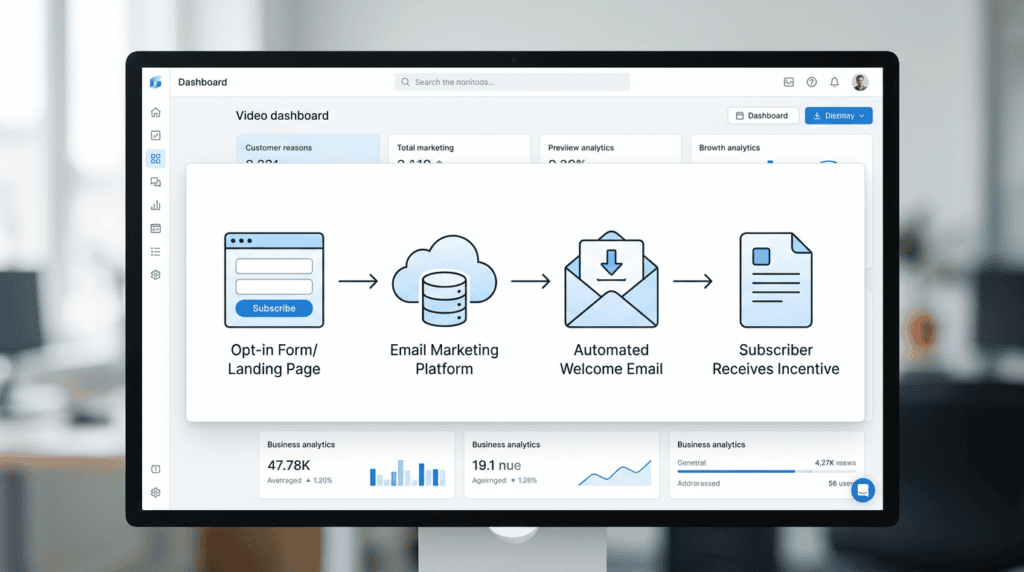
Creating a fantastic free opt-in incentive is only half the battle; you also need a reliable system to deliver it automatically to new subscribers. This technical setup ensures a smooth experience for your audience and allows you to grow your email list efficiently.
Choosing an Email Marketing Platform (e.g., ConvertKit, MailerLite)
An email service provider (ESP) is essential for managing your subscribers and automating the delivery of your freebie. Platforms like ConvertKit and MailerLite are popular choices for creators and small businesses. They allow you to create sign-up forms, build landing pages, segment your audience, and set up automated email sequences. Your ESP will host your email list and handle the crucial task of sending out your welcome email and the digital download delivery.
Creating the Landing Page or Opt-in Form
You’ll need a way for people to sign up. This usually involves either a dedicated landing page or an embedded opt-in form on your blog or website. A landing page is a standalone web page focused solely on promoting your free opt-in offer, minimizing distractions and maximizing landing page conversion. An opt-in form can be embedded directly into blog posts, sidebars, or pop-ups. Both should clearly state the benefits of your incentive and include fields for the subscriber’s name and email address.
Writing Compelling Copy for Your Opt-in Form
The copy on your opt-in form or landing page needs to be persuasive. It should reiterate the core benefit of your freebie and explain why someone should sign up for your list. Use concise, benefit-driven language. For instance, instead of “Sign up for my newsletter,” try “Get instant access to my ‘Blog Post Checklist’ and write better content today!” A clear call to action button, like “Download Now” or “Get My Free Guide,” is also vital. This copy is your last chance to convince visitors to become subscribers.
Configuring the Welcome Email to Automatically Deliver Your Incentive
This is where the magic happens. Within your email marketing platform, you’ll set up an automation rule: when someone signs up through your opt-in form, they immediately receive a welcome email. This welcome email should contain a direct link to download your incentive. I always make sure the download link is prominent and easy to find. Beyond the download, use this welcome email to briefly introduce yourself, set expectations for future emails, and perhaps ask a question to encourage engagement. This is the start of your relationship with new subscribers.
Testing the Entire Flow: From Sign-up to Delivery
Before promoting your free opt-in incentive, you absolutely must test the entire system. Sign up for your list yourself using a different email address. Check that the opt-in form works, the welcome email arrives promptly, and the download link functions correctly. Verify that the file downloads without issues and opens properly. I can’t stress this enough: a broken delivery system is a quick way to lose trust and potential subscribers. Test it multiple times, from different devices if possible.
Common Mistakes to Avoid When Creating Your Opt-in Incentive
Even with the best intentions, it’s easy to fall into common traps when creating a free opt-in incentive. Avoiding these pitfalls will help you attract the right subscribers and build a more engaged email list.
The “Too Broad” Problem: Creating an Incentive That Appeals to No One
One of the biggest mistakes is trying to appeal to everyone. A freebie that’s too general or covers too many topics often ends up appealing to no one specific. Your incentive should solve a specific problem for a defined target audience. If your blog is about healthy eating for busy moms, a “General Guide to Wellness” is too broad. A “5-Minute Meal Prep Checklist for Busy Moms” is much more effective because it directly addresses a clear pain point for your ideal reader.
The “Too Complicated” Trap: Overwhelming New Subscribers
While you want to provide value, your freebie shouldn’t feel like a chore. An overly long ebook or a workbook requiring hours of effort can overwhelm new subscribers. The goal is often a “quick win” – something they can consume or implement relatively easily to see immediate results. If your incentive is too complicated, people might download it but never actually use it, diminishing its perceived value and your authority. Keep it digestible and actionable.
This mistake attracts the wrong kind of subscribers. If your blog is about affiliate marketing strategies, but your freebie is a “Delicious Dessert Recipes” ebook, you’ll get sign-ups from people interested in baking, not business. These subscribers are unlikely to engage with your core content or become future customers. Your free opt-in incentive must be directly relevant to your niche and the products or services you eventually want to offer. I once offered a freebie that was slightly off-topic from my main content, and while it got sign-ups, the engagement rate for subsequent emails was abysmal. It taught me the importance of strict alignment.
Forgetting the Follow-Up: What to Send After They Download
The freebie is just the beginning of your relationship with a new subscriber. A common mistake is to deliver the incentive and then go silent, or only send generic broadcast emails. Instead, plan a welcome email sequence that nurtures your new subscribers. This sequence can introduce more of your valuable content, share your story, and gently guide them towards your paid offerings. An effective email marketing strategy uses the freebie as a gateway to building a long-term connection, not a one-off transaction.
Final Thoughts: Your Opt-in is the First Step in a Relationship

Your free opt-in incentive is more than just a list-building tool; it’s the first promise you make to a new subscriber. By focusing on solving a specific, urgent problem with a high-quality, well-packaged solution, you set the stage for a long-term, profitable relationship built on trust and value. A well-crafted free opt-in can significantly grow your email list and attract the right audience, ensuring your email marketing strategy starts strong. Delivering real value upfront builds credibility.
Frequently Asked Questions (FAQs)
How long should my free opt-in incentive be?
Your free opt-in incentive should be as long as it needs to be to effectively solve the specific problem you’re addressing for your target audience. Focus on delivering concise, actionable value rather than a specific word count or page number. A short checklist or a detailed guide can both be highly effective lead magnets if they meet a clear need.
Can I offer more than one free opt-in incentive?
Yes, you can offer several free opt-in incentives, especially if you have diverse content topics or cater to different segments of your audience. Creating multiple lead magnet ideas allows you to attract a wider range of subscribers and tailor your offer to specific blog posts or content categories, improving your opt-in conversion rate.
Do I need a dedicated landing page for my opt-in?
A dedicated landing page is highly recommended for your free opt-in incentive because it minimizes distractions and focuses visitors solely on signing up for your list. This dedicated page helps increase your opt-in conversion rate by clearly communicating the value of your freebie and making the signup process straightforward.
What’s the best way to promote my new opt-in incentive?
Promote your new free opt-in incentive across all your relevant channels, including your blog posts, social media, email signature, and even paid traffic campaigns. Embed opt-in forms strategically within your content and create clear calls to action to encourage visitors to download your valuable lead magnet.
How do I know if my opt-in incentive is working? (Key Metrics to Track)
You can determine if your free opt-in incentive is working by tracking key metrics such as your opt-in conversion rate, the growth rate of your email list, and the engagement of new subscribers with your welcome email sequence. Monitor how many visitors sign up for your list compared to how many view the offer, and pay attention to open rates and click-through rates on subsequent emails to gauge subscriber quality.