
One mistake website owners often make is assuming every hosting plan performs the same. At first everything seems fine. The site launches, pages load, and traffic is low. But as visitors increase, problems often start appearing. Pages slow down, the server struggles to respond, and sometimes the website briefly goes offline.
That’s why fastest web hosting matters in 2026. Hosting speed directly affects SEO rankings, user experience, and conversion rates. If a wordpress site loads slowly, visitors usually leave before the page finishes loading. Search engines also consider load times when ranking websites, which means server performance can influence long-term visibility.
The web host you choose determines how stable your website remains during busy periods. Some hosting companies rely on shared hosting environments where multiple websites use the same server, which can limit performance compared to dedicated WordPress hosting plans. Others use cloud hosting, vps hosting, or dedicated hosting infrastructure designed for better performance and reliability. In this guide, we’ll explore several fastest web hosting providers built to deliver strong speed, uptime, and performance for wordpress websites and small businesses.
What Makes the Fastest Web Hosting in 2026
Website speed depends heavily on the server infrastructure behind the hosting platform. A powerful server environment can deliver faster page loading, better uptime, and improved reliability.
Fast web hosting providers focus on modern infrastructure, global data centers, and optimized server technology to offer the best web hosting service. These elements work together to reduce load times and maintain stable performance, making them essential for the best web hosting service.
Server Infrastructure and Performance
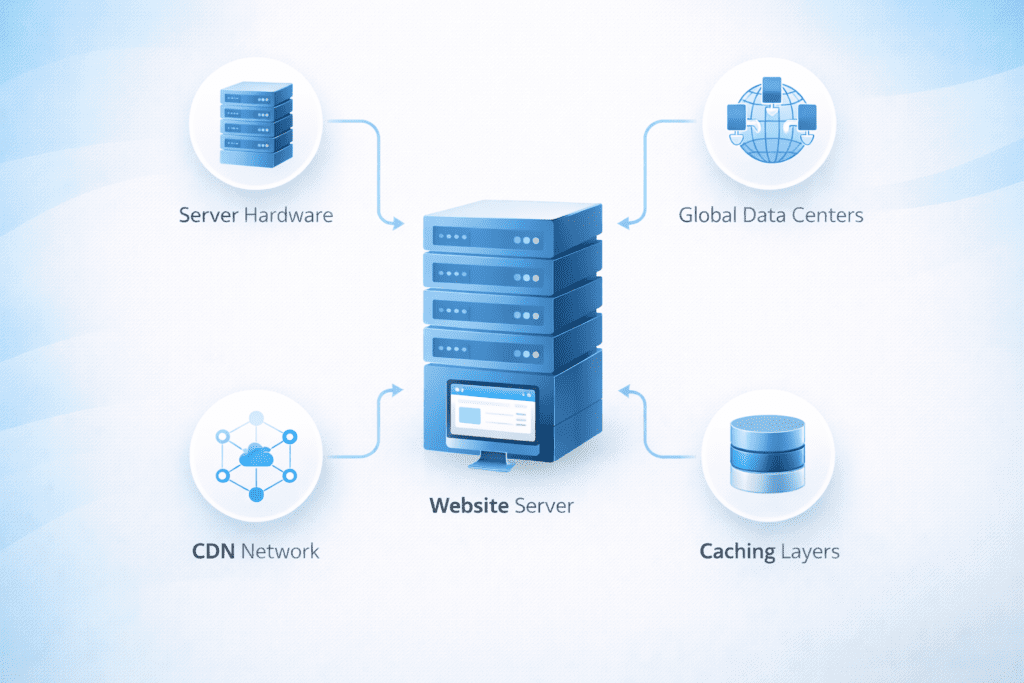
Server hardware plays a major role in determining how fast a website loads. Modern hosting providers invest in high-performance servers, faster storage systems, and optimized network infrastructure.
• Powerful server hardware: Faster processors and memory improve the ability to handle website requests quickly.
• Global data center networks: Hosting companies operate data centers in multiple locations to reduce latency.
• CDN integration: Content delivery networks distribute website files across global servers for faster loading.
These improvements help a web host deliver faster response times and more consistent uptime.
Why Hosting Speed Matters for WordPress Websites
WordPress is a powerful platform, but it relies heavily on database queries and server processing. When a wordpress site loads a page, the server retrieves content, processes plugins, and delivers the final page to the visitor.
If the server is slow, the entire website feels slow.
• WordPress performance: Faster servers improve the overall speed of a wordpress website.
• Database response speed: Efficient database handling helps pages load faster.
• SEO benefits: Faster load times improve search engine rankings and user engagement.
A fast wordpress hosting environment helps maintain stable performance even as traffic grows.
Key Technologies Used by Fast Web Hosting Providers
Many of the fastest web hosting providers rely on advanced technologies designed to improve server efficiency and page loading speed.
• NVMe SSD storage: NVMe drives provide faster data access than traditional storage systems.
• Edge caching systems: Caching technologies store website content closer to visitors.
• Server optimization tools: Advanced server configurations help process website requests more efficiently.
These technologies help reduce load times and improve the overall hosting experience.
When combined with optimized server infrastructure, they allow web hosting providers to deliver faster performance for wordpress sites and business websites.
How Web Hosting Speed Is Measured
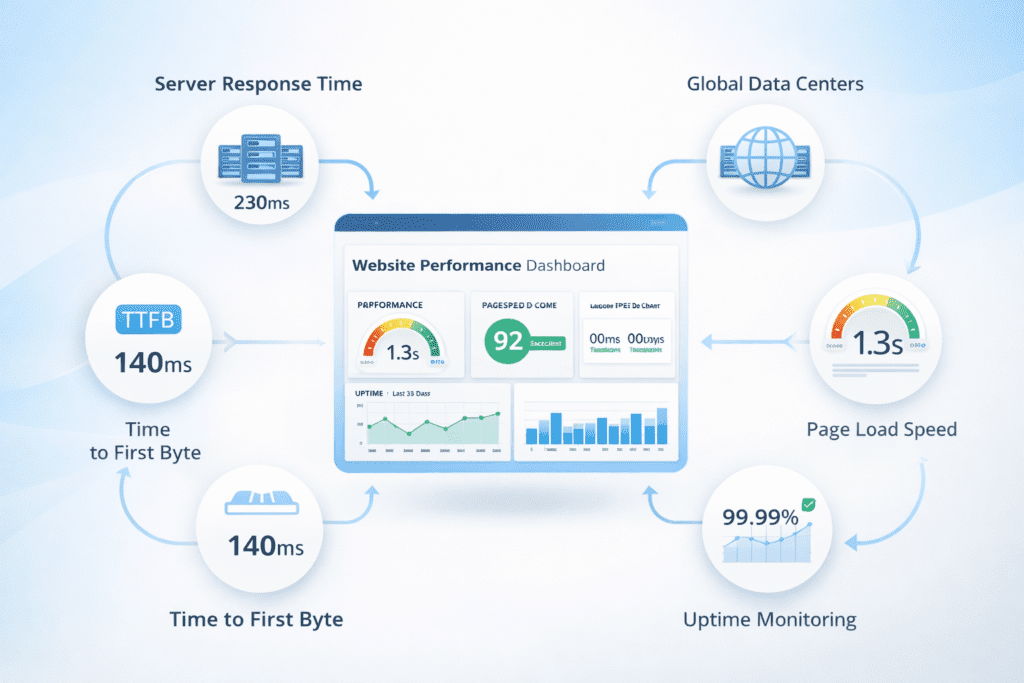
Website speed is not determined by a single metric. Several technical factors influence how quickly a wordpress site loads and how responsive the server remains when visitors arrive.
Hosting providers often evaluate server performance using multiple benchmarks. These measurements help determine whether a hosting plan can maintain stable performance for websites in 2026.
Understanding these metrics can help website owners compare hosting providers more effectively.
Server Response Time
Server response time measures how quickly the server reacts when a visitor requests a page, a critical factor for email hosting services. When a user opens a website, the server must process the request and begin delivering the page content.
If the server response is slow, the website may feel sluggish even before the page starts loading.
• Server processing speed: Faster server hardware reduces response delays.
• Server workload: When many websites share the same server, response times may increase.
• Optimized hosting environment: Managed hosting platforms often tune server settings for wordpress performance.
A responsive server environment usually leads to faster page delivery and better load times.
Time to First Byte (TTFB)
Time to First Byte measures how long it takes for the server to send the first piece of data after receiving a request. This metric is commonly used when evaluating hosting providers.
A lower TTFB usually indicates faster server infrastructure and better performance.
Several factors influence this measurement.
• Server configuration: Efficient server settings reduce processing delays.
• Database performance: Faster database queries improve response times.
• Caching systems: Cached content allows the server to deliver pages faster.
Hosting providers that focus on performance typically optimize their servers to reduce TTFB.
Page Load Speed
Page load speed refers to how long it takes for the entire webpage to appear in a visitor’s browser. This includes images, scripts, style files, and content generated by WordPress.
Page speed can vary depending on several factors.
• Server performance is crucial for selecting the fastest WordPress hosting. Faster servers deliver website content more quickly.
• Caching technologies: Caching systems store frequently accessed content.
• Content delivery networks: CDN systems distribute website files across global servers.
Fast page load speeds are important for both user experience and SEO rankings.
Uptime Reliability
Speed alone is not enough. A hosting provider must also maintain reliable uptime.
Uptime refers to the percentage of time a website remains accessible online. Most hosting providers aim for uptime levels close to 99.9 percent.
Frequent downtime can affect website performance, search rankings, and visitor trust.
Reliable uptime often depends on strong server infrastructure, stable data centers, and proactive monitoring systems.
Global Data Centers
The physical location of server infrastructure also influences website speed. Data centers located closer to visitors usually deliver faster page loading times.
Many hosting providers operate global data center networks to reduce latency for international websites.
• Multiple server locations: Global infrastructure reduces distance between visitors and servers.
• Faster content delivery: Nearby data centers improve load times, which is vital for the best web hosting service.
• Improved reliability: Distributed infrastructure helps maintain uptime during traffic spikes.
For websites targeting global audiences, hosting providers with multiple data centers can deliver better performance and stability.
Types of Web Hosting That Affect Speed

The type of hosting you choose has a direct impact on website performance. Different hosting environments allocate server resources in different ways.
Some hosting plans share server resources with many websites. Others provide dedicated resources designed for higher performance.
Understanding these hosting options helps explain why some websites load faster than others.
Shared hosting is one of the most common hosting options for new websites. In this setup, multiple websites operate on the same server and share resources like CPU, memory, and storage.
For small projects, this type of hosting can work well.
• Basic infrastructure: Shared hosting plans run many websites on a single server.
• Lower cost hosting plan: Entry level pricing makes shared hosting accessible.
• Suitable for beginners: Small blogs and small businesses often start here.
The downside is performance limitations. When several websites use the same server resources, heavy activity on one site can affect the load times of others.
VPS Hosting
VPS hosting provides a virtual private server within a physical server. Each hosting account receives dedicated resources, which improves stability and performance compared to shared web hosting.
This hosting type is often chosen when websites begin growing.
• Dedicated server resources: CPU and memory are allocated to a single hosting account.
• Improved performance: VPS hosting environments reduce resource competition.
• Better scalability: Websites can upgrade server resources when needed.
Many website owners upgrade to VPS hosting after outgrowing shared hosting plans.
Dedicated Hosting
Dedicated hosting gives a website full control of an entire physical server. All server resources are reserved for one website or application.
This hosting environment delivers strong performance for demanding websites.
• Full server access: The dedicated server runs a single hosting account.
• High performance: Dedicated hosting environments handle large workloads efficiently.
• Advanced configuration: Developers can optimize the server environment for specific needs.
Dedicated hosting is often used by large websites, online stores, and platforms that receive significant traffic.
Cloud Hosting
Cloud hosting uses distributed infrastructure rather than relying on a single server. Instead of storing website data on one machine, cloud hosting distributes resources across multiple servers.
This architecture helps improve reliability and performance.
• Scalable infrastructure: Resources increase when traffic grows.
• Improved availability: If one server fails, another server continues processing requests.
• Better performance: Distributed servers reduce bottlenecks.
Cloud hosting has become increasingly popular because it allows websites to maintain stable performance during traffic spikes.
Managed Hosting vs Unmanaged Hosting
Another factor that affects speed is whether the hosting plan is managed or unmanaged.
Managed hosting services include server optimization, maintenance, and monitoring handled by the hosting provider. This often results in a more optimized hosting environment.
Unmanaged hosting provides greater control but requires the user to manage server configuration.
• Managed hosting: Hosting providers handle server updates, performance optimization, and maintenance.
• Unmanaged hosting: Users manage server configuration and optimization themselves.
For many wordpress websites, managed hosting environments provide a smoother hosting experience and more consistent performance.
Minimum Server Requirements for Fast Website Performance
A fast website depends heavily on the resources available on the server. Even the best website design can feel slow if the server hardware is limited.
Modern wordpress websites rely on dynamic content, plugins, and database queries. That means the server must process multiple requests quickly, which is a key aspect of the fastest WordPress hosting.
Most hosting providers recommend certain minimum requirements to maintain good load times.
• CPU power: A faster processor helps the server handle multiple visitors at the same time.
• Memory allocation: More RAM allows the server to process website requests efficiently, enhancing the overall web hosting plan.
• NVMe storage: Faster storage reduces the time needed to retrieve website files.
• Optimized server software: Modern server stacks improve processing efficiency.
When these components work together, a hosting environment can deliver better performance and stable uptime.
Data Center Location and Its Impact on Website Speed
The physical location of a data center affects how quickly visitors receive website content. When a visitor opens a webpage, the request travels from the user’s device to the server and back.
The longer this distance, the higher the latency.
Hosting providers operate data centers in different regions to improve performance for global audiences.
For example, if a wordpress site targets visitors in the United States, hosting the server in a nearby region usually results in faster load times.
Many web hosting providers operate multiple data centers around the world. This helps websites maintain consistent performance for visitors from different locations.
How CDN Improves Web Hosting Speed for Global Websites
A content delivery network helps distribute website content across multiple global servers. Instead of loading content from a single server location, visitors receive files from the closest server in the network.
This significantly improves page loading speed.
CDN services store copies of website assets such as images, scripts, and style files. When a visitor loads a page, these files are delivered from a nearby location rather than the primary server.
For wordpress websites serving international visitors, CDN integration often improves both load times and reliability.
Caching Technologies That Improve Web Hosting Speed
Caching is one of the most effective ways to improve website performance. Without caching, the server must generate every page request from scratch.
This process can slow down websites during heavy traffic.
Caching systems store pre generated versions of web pages. When a visitor loads the page, the server delivers the cached version instead of rebuilding it again.
Several caching layers are commonly used by hosting providers.
• Server level caching: Stores frequently requested pages on the server.
• Object caching: Improves database performance for dynamic websites.
• Edge caching: Delivers cached content from servers closer to the visitor.
These technologies reduce server workload and improve page loading speed.
Comparison Table Fastest Web Hosting Providers
| Provider | Starting Price | Hosting Type | Best For | Performance Focus |
|---|---|---|---|---|
| InMotion Hosting | $2.99/month | Shared and VPS hosting | Business websites | Optimized server infrastructure |
| Liquid Web | $19/month | Managed and dedicated hosting | Enterprise websites | High performance servers |
| A2 Hosting | $2.99/month | Shared and VPS hosting | Speed focused websites | Turbo server technology |
| Cloudways | $11/month | Managed cloud hosting | Scaling websites | Cloud infrastructure |
| SiteGround | $3.99/month | Managed wordpress hosting | Bloggers and small sites | Built in caching |
| Bluehost | $2.95/month | Shared wordpress hosting | New websites | WordPress optimized servers |
| Hostinger | $2.49/month | Shared hosting | Budget websites | LiteSpeed servers |
7 Fastest Web Hosting Providers in 2026
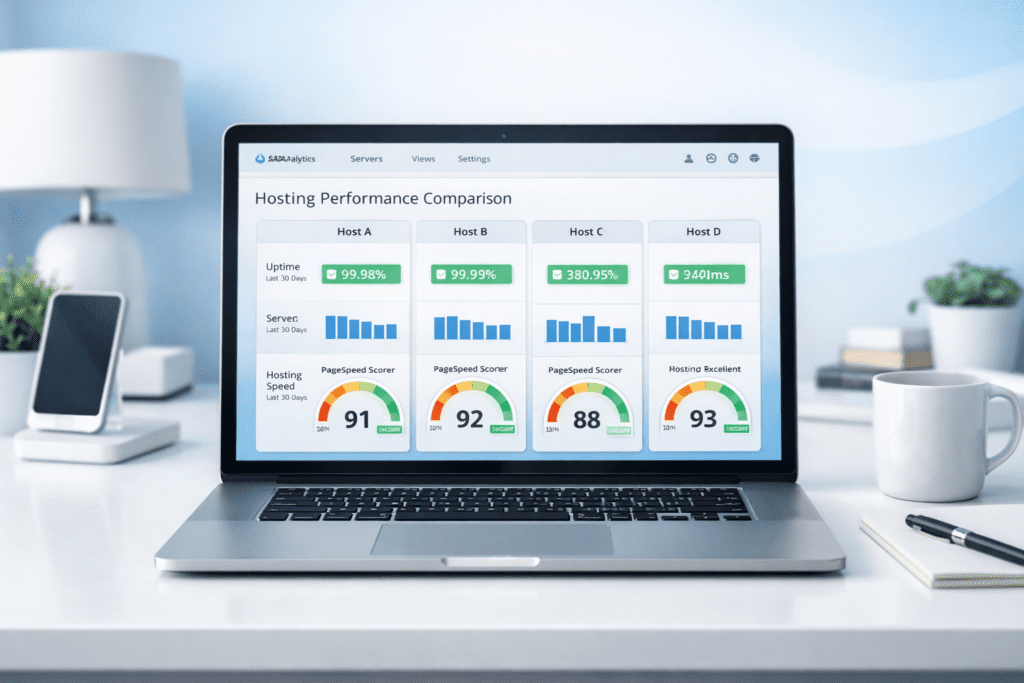
Choosing the fastest web hosting provider depends on several factors. Server infrastructure, caching technology, and global data centers all influence how quickly a website loads.
Some hosting companies focus on enterprise infrastructure, while others offer balanced performance for WordPress websites and small businesses, including various web hosting services for 2026.
Below are several hosting providers known for delivering strong performance and reliable uptime.
InMotion Hosting Fast Business Hosting Solution
InMotion Hosting is a long established web host known for reliable infrastructure and stable performance. The platform focuses on business hosting environments designed for professional websites and wordpress projects.
The hosting provider operates multiple data centers and optimized server infrastructure to maintain strong load times.
Key Speed Features
• Optimized server infrastructure: Performance tuned servers improve response times.
• Advanced caching systems: Caching reduces server workload and speeds up page delivery.
• Data center optimization: Strategic data center locations improve global access speed.
Pricing
Starting Price: $2.99/month
Pros
• Reliable uptime for business websites
• Good wordpress hosting performance
• Balanced hosting environment for growing sites
Cons
• Renewal pricing can be higher than initial hosting costs
Best For
Small businesses and business websites that need stable hosting performance.
Liquid Web Premium Managed Hosting for Performance
Liquid Web focuses on high performance hosting environments designed for demanding websites. Unlike many budget hosting companies, this platform targets professional businesses and enterprise platforms.
Liquid Web offers managed hosting services, VPS hosting, and dedicated hosting solutions designed to support large workloads.
Key Speed Features
• High performance managed hosting: Optimized infrastructure improves server performance.
• Dedicated infrastructure: Dedicated server resources provide strong stability.
• Enterprise server stack: Advanced server configuration improves load times.
Pricing
Starting Price: $19/month
Pros
• Excellent uptime reliability
• Powerful dedicated hosting environments
• Strong server performance for demanding websites
Cons
• Higher price compared to entry level hosting plans
Best For
Businesses that require powerful infrastructure and stable performance often seek the best web hosting service tailored to their needs.
A2 Hosting Turbo Servers for Fast Web Hosting
A2 Hosting has built a reputation around speed focused hosting environments. The platform provides several hosting options including shared hosting, VPS hosting, and dedicated hosting.
Its Turbo server technology is designed to improve website loading performance through optimized hardware and caching systems.
Key Speed Features
• Turbo server technology: Enhanced servers improve page processing speed.
• Optimized WordPress hosting plans are designed to maximize performance for WordPress websites. Server configuration designed for wordpress websites.
• NVMe storage: Faster storage improves data access and response time.
Pricing
Starting Price: $2.99/month
Pros
• Fast server response times
• Developer friendly hosting environment
• Flexible upgrade path between hosting plans
Cons
• Control panel may feel complex for beginners
Best For
Website owners focusing on speed and performance optimization.
Cloudways Flexible Cloud Hosting Platform
Cloudways provides managed cloud hosting environments built on major cloud infrastructure providers. Instead of operating its own hardware, the platform connects websites to cloud infrastructure such as Amazon Web Services and other cloud providers.
This allows websites to scale server resources when traffic grows.
Key Speed Features
• Cloud infrastructure: Scalable server resources improve website performance.
• Server optimization: Performance tuning improves application speed.
• Easy scalability: Resources can increase as website traffic grows.
Pricing
Starting Price: $11/month
Pros
• Scalable hosting infrastructure is essential for modern website builders to accommodate growth.
• Flexible hosting environment for growing websites
• Strong performance tuning
Cons
• Requires basic understanding of server management
Best For
Agencies and websites expecting steady traffic growth.
SiteGround Optimized WordPress Hosting
SiteGround is a well known wordpress hosting provider with infrastructure designed for website performance. The platform focuses on managed wordpress hosting environments with built in caching systems.
Many website owners choose SiteGround for its balance of speed and ease of use.
Key Speed Features
• Built in caching system: Improves page loading speed.
• CDN integration: Global CDN improves performance for international visitors.
• Optimized server stack: Server configuration designed for wordpress performance.
Pricing
Starting Price: $3.99/month
Pros
• Beginner friendly hosting platform
• Reliable performance for wordpress sites
• Built in performance tools
Cons
• Limited scalability for very high traffic websites
Best For
Bloggers and smaller wordpress sites that need reliable hosting.
Bluehost Reliable Web Hosting Provider
Bluehost is one of the most widely recognized web hosting providers. The platform offers shared hosting plans and wordpress hosting environments designed for beginner websites.
Its hosting plans include integrated tools that simplify website setup and management.
Key Speed Features
• WordPress optimized servers: Server configuration designed for wordpress performance.
• Integrated caching tools: Improves page load times.
• Simple hosting environment: Easy to manage for new website owners.
Pricing
Starting Price: $2.95/month
Pros
• Beginner friendly hosting platform
• Easy wordpress website setup
• Reliable hosting environment
Cons
• Performance lower than premium hosting providers
Best For
New website owners launching their first wordpress site.
Hostinger Cheap Web Hosting With Good Speed
Hostinger is widely known for affordable hosting plans that still deliver decent performance. The platform focuses on budget friendly hosting options suitable for small websites and beginner projects.
Despite its lower pricing, Hostinger uses modern server infrastructure designed to maintain stable load times.
Key Speed Features
• LiteSpeed servers: Faster processing compared with traditional server environments.
• CDN integration: Global content delivery improves loading speed.
• Optimized infrastructure: Designed for balanced performance.
Pricing
Starting Price: $2.49/month
Pros
• Affordable hosting plans
• Good value for performance
• Reliable infrastructure for small websites
Cons
• Limited advanced features for larger projects
Best For
Budget websites and beginner wordpress projects.
Server Technologies Used by the Fastest Web Hosts
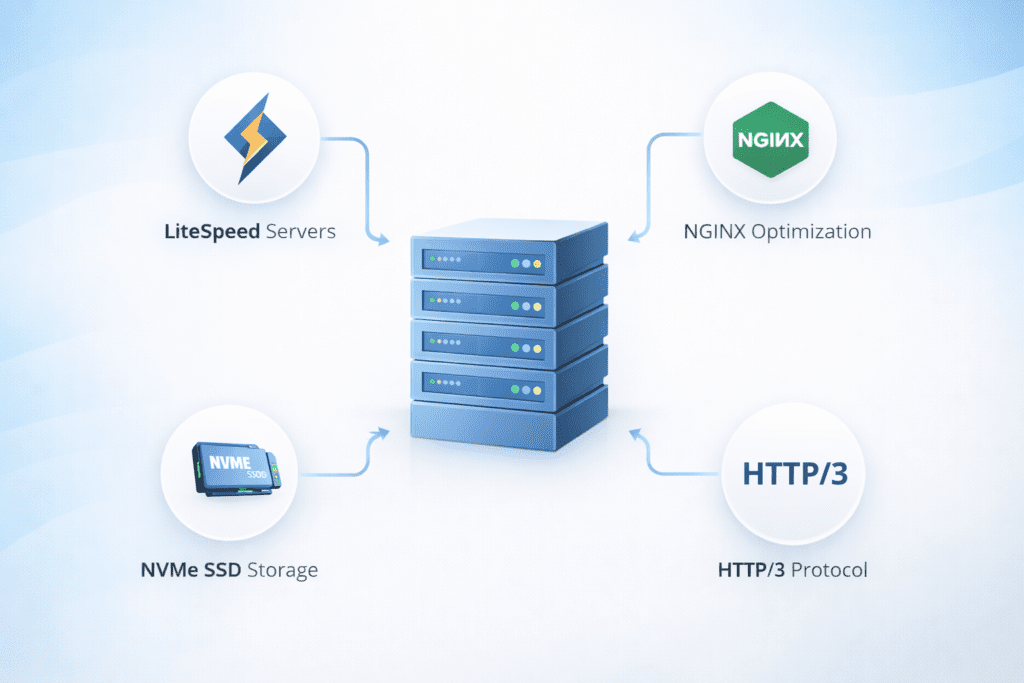
Fast web hosting providers rely on modern server technologies to improve website performance. These technologies help reduce load times, process requests faster, and deliver website content more efficiently.
When a web host invests in optimized server infrastructure, the overall hosting experience usually improves.
LiteSpeed Servers
LiteSpeed is a modern web server technology designed to process website requests efficiently. Compared with traditional server software, LiteSpeed can handle higher workloads while maintaining fast response times.
For wordpress websites, LiteSpeed servers often improve page delivery and caching performance.
NGINX Optimization
NGINX is another server technology used by many hosting providers. It is designed to manage large numbers of concurrent connections efficiently.
This makes NGINX useful for busy wordpress sites that receive frequent traffic.
NVMe SSD Storage
Storage speed plays an important role in website performance. NVMe SSD drives offer faster data access compared with traditional storage systems.
Faster storage helps the server retrieve website files and database content quickly, which improves page loading speed.
HTTP/3 Protocol
HTTP/3 is a modern web protocol designed to improve connection performance between browsers and servers.
This protocol reduces connection delays and improves website loading performance for visitors.
Fastest Web Hosting for High Traffic Websites
Websites receiving heavy traffic require stronger server infrastructure. Basic shared hosting environments may struggle to maintain consistent performance when many visitors access the website at the same time.
Hosting providers that use scalable infrastructure are better equipped to handle these situations.
Cloud hosting platforms distribute traffic across multiple servers, which reduces the risk of server overload. Dedicated hosting environments also provide strong performance because the server resources are reserved for a single website.
For high traffic websites, scalable hosting infrastructure often helps maintain stable load times and uptime reliability.
Fastest Web Hosting for WordPress Websites
WordPress websites rely heavily on server processing, database queries, and plugin functionality. Because of this, server performance has a direct impact on how quickly a wordpress site loads.
Why WordPress Needs Fast Hosting
WordPress is a flexible platform, but it generates dynamic pages that require server processing.
• Database heavy platform: WordPress retrieves content from a database for each page request.
• Plugin processing: Plugins add functionality but also increase server workload.
• Page caching benefits: Caching systems reduce the need to rebuild pages repeatedly.
Fast wordpress hosting environments reduce delays and improve the overall website experience.
Best Hosting Infrastructure for WordPress
Certain hosting environments are more suitable for wordpress websites.
• Managed wordpress hosting: Managed hosting services optimize server settings for wordpress performance.
• Cloud hosting infrastructure: Cloud hosting allows websites to scale resources when traffic increases.
• Optimized server stack: Performance tuned server configurations improve speed and stability.
These hosting environments often provide stronger performance for wordpress websites compared with basic shared hosting plans.
Best Fast Web Hosting for Small Businesses
Small businesses often need reliable hosting that balances speed, cost, and scalability. The hosting provider should deliver stable performance while allowing the website to grow.
Hosting Needs for Small Business Websites
Small business websites usually require dependable uptime and fast loading pages.
• Reliable uptime: Websites should remain accessible to customers at all times.
• Fast loading pages: Quick page delivery improves visitor experience.
• Scalable hosting service: Hosting plans should allow businesses to expand as traffic grows.
Recommended Hosting Types
Certain hosting types are commonly used by small businesses.
• Business hosting environments: Designed for professional websites.
• Managed hosting platforms: Hosting providers handle server optimization and maintenance.
• Cloud based hosting providers: Scalable infrastructure supports growing websites.
These hosting environments often deliver better performance compared with basic shared hosting plans, especially for businesses using website builders.
Shared hosting works well for smaller websites, but there are limits to how much traffic a shared server can handle.
Shared hosting plans place multiple websites on the same server. This means all websites share the same resources.
• Shared server resources: CPU and memory are divided between multiple hosting accounts.
• Performance bottlenecks: Heavy activity from one website can affect others.
When traffic increases, these limitations may slow down website performance.
When VPS Hosting Is Needed
VPS hosting provides dedicated resources within a physical server environment.
Websites often upgrade to VPS hosting when traffic grows or when server performance becomes inconsistent.
When Dedicated Hosting Becomes Necessary
Dedicated hosting environments allocate an entire server to a single website. This hosting type is typically used by large websites that require strong server resources.
Fast Web Hosting vs Cheap Web Hosting
Cheap web hosting often focuses on affordability rather than performance. While these hosting plans can be useful for small websites, they may not provide the fastest server infrastructure.
Fast web hosting environments usually rely on stronger hardware, optimized servers, and advanced caching systems.
These improvements often lead to faster load times and better uptime reliability.
Free Web Hosting vs Paid Hosting Services
Free web hosting services may appear attractive for beginners. However, they usually include limitations related to server resources, storage, and performance.
Paid hosting services typically provide stronger infrastructure, better uptime reliability, and improved performance.
For websites that require stability and growth potential, paid hosting environments are usually more reliable.
How to Test Web Hosting Speed Before Choosing a Provider
Testing hosting performance before selecting a provider can help avoid performance issues later.
Several tools are commonly used to measure website speed and server performance.
Website owners often evaluate server response time, page load speed, and uptime statistics when comparing hosting providers.
Running these tests provides a clearer understanding of how the hosting environment performs under real conditions.
What Most Blogs Miss About Fast Web Hosting
Many hosting reviews focus on pricing or marketing features. However, real hosting performance usually depends on infrastructure details.
Server location, resource allocation, and data center quality all affect how quickly a website loads.
Understanding these technical factors helps website owners make more informed hosting decisions.
Common Mistakes When Choosing the Fastest Web Hosting
Selecting a hosting provider without understanding server infrastructure can lead to performance problems, especially when considering shared and WordPress hosting options.
Some common mistakes include focusing only on pricing or selecting a hosting type that cannot support future growth.
Choosing the right hosting provider requires evaluating server resources, scalability, and long term reliability.
Frequently Asked Questions
What is the fastest web hosting in 2026?
The fastest web hosting providers typically use modern server infrastructure, optimized caching systems, and global data centers. Platforms such as InMotion Hosting, Liquid Web, and A2 Hosting are often recognized for strong performance.
Which fastest web hosting providers are best for WordPress?
WordPress websites usually perform best on hosting platforms optimized for WordPress environments. Managed wordpress hosting and cloud hosting platforms are commonly recommended.
Cloud hosting environments often deliver better performance because resources are distributed across multiple servers. Shared hosting plans rely on a single server that hosts multiple websites.
What is the best web host for small businesses?
Small businesses often choose hosting providers that balance performance and cost. Platforms offering business hosting environments and managed hosting services are commonly used.
VPS hosting generally provides better performance because server resources are allocated to a specific hosting account.
Should I choose VPS or dedicated hosting for speed?
VPS hosting works well for medium sized websites, while dedicated hosting environments are typically used by larger websites that require maximum performance.
Do fastest web hosts improve SEO?
Website speed can influence SEO performance because search engines consider page loading speed when ranking websites.

Final Thoughts on the Fastest Web Hosting
Choosing the fastest web hosting provider can significantly improve website performance and reliability. Server infrastructure, caching technology, and global data centers all influence how quickly a website loads.
Some hosting providers focus on high performance infrastructure designed for demanding websites, while others provide balanced hosting solutions for smaller websites and businesses.
Platforms such as InMotion Hosting, Liquid Web, and A2 Hosting are known for strong server performance. For wordpress websites, hosting providers that optimize server environments for WordPress often deliver better results.
The right hosting solution depends on the needs of the website. Some businesses prioritize scalability and infrastructure, while others focus on affordability.
Understanding the differences between hosting providers helps website owners choose a hosting environment that supports speed, uptime, and long term growth.