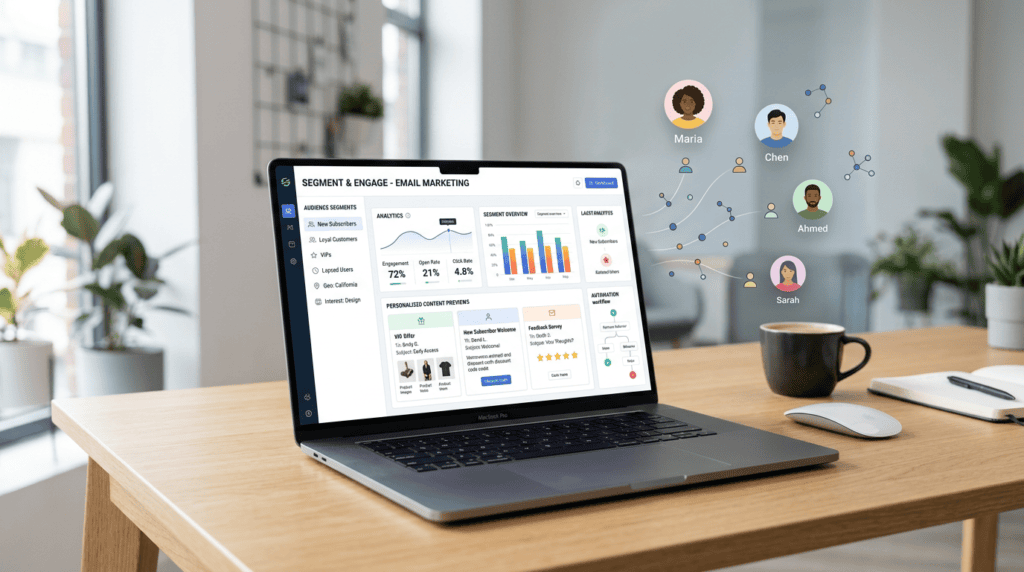
Generic emails annoy subscribers and kill sales.
In today’s crowded inboxes, sending a one-size-fits-all message is a fast track to the spam folder or, worse, the unsubscribe button. This guide will cut through the noise, explaining exactly what email segmentation is, why it’s no longer optional for genuine engagement, and how to implement it effectively. We’ll cover actionable strategies, common pitfalls to avoid, and real-world examples so you can start segmenting your email list and seeing better results today.
The truth is, many businesses treat their email list as a single, homogenous blob. They blast the same promotion to everyone, regardless of their interests, past purchases, or how long they’ve been a subscriber. This approach doesn’t just lead to low open rates; it actively damages your sender reputation and makes your email campaigns less effective over time. Smart email segmentation is about respecting your audience enough to send them content that actually matters to them.
What Is Email Segmentation (And Why Does It Matter)?
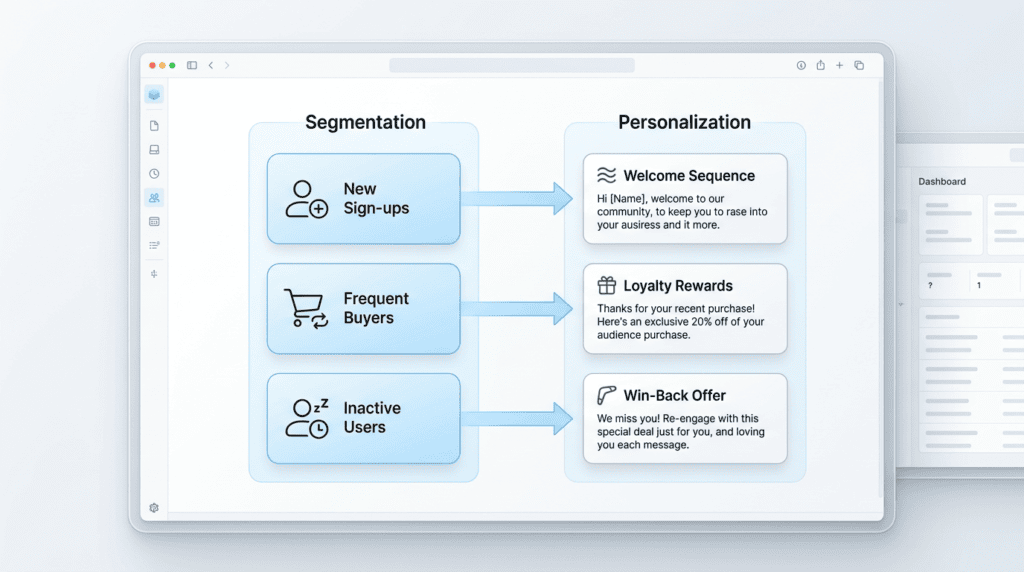
Email segmentation is the process of dividing your email list into smaller, more specific groups based on shared characteristics, behaviors, or preferences. Think of it as organizing your audience into relevant buckets. This is different from email marketing personalization, which involves tailoring the content *within* an email for an individual subscriber (like using their first name or showing specific product recommendations). Segmentation is the foundation; personalization is the next layer. You segment your list *first*, then personalize the content for each segment.
Defining Email Segmentation vs. Personalization
At its core, email segmentation is about grouping. You’re taking your entire list of subscribers and breaking it down into smaller, more manageable lists. These smaller lists, or segments, share common traits. For example, one segment might be “new subscribers,” another “customers who bought X product,” and a third “subscribers who clicked on blog posts about AI tools.” Email marketing personalization, on the other hand, is about customizing the actual message, subject line, or even images within an email based on what you know about the individual recipient. While segmentation creates the target groups, personalization crafts the message for those targets. Both are crucial for effective email campaigns, but segmentation comes first.
The Core Goal: Sending the Right Message to the Right Person
The central purpose of email segmentation is simple: to ensure your subscribers receive content that is highly relevant to them. When you send relevant emails, your audience feels understood and valued. This relevancy is the key to improving engagement. Instead of guessing what your entire list wants, you’re making informed decisions based on data. This strategy helps you avoid sending irrelevant promotions to people who aren’t interested, which can lead to unsubscribes and complaints.
> Sending generic emails to your entire list is like shouting into a crowd; segmenting allows you to have a meaningful conversation with specific individuals.
How Segmentation Directly Impacts Open Rates, Clicks, and Conversions
Targeted email campaigns powered by segmentation have a profound impact on your key email metrics. When an email’s subject line and content speak directly to a subscriber’s interests or stage in their customer journey, they are far more likely to open it. This directly improves open rates. Once opened, if the content continues to be relevant, the subscriber is more inclined to click through to your website or an offer, boosting your click-through rate optimization.
Ultimately, this leads to higher conversion rates, whether that’s a purchase, a download, or a sign-up. I’ve personally seen client campaigns where simply segmenting a list by purchase history and sending tailored offers increased conversion rates by over 20% compared to their previous blanket promotions. It’s not just about getting more opens; it’s about getting more *meaningful* engagement that drives revenue.
The Long-Term Benefit: Building Stronger Subscriber Relationships
Beyond immediate metric improvements, email segmentation is a powerful tool for building lasting relationships with your audience. When subscribers consistently receive valuable, relevant content, they begin to trust your brand. This trust fosters loyalty and reduces churn. It shifts the dynamic from a transactional interaction to a genuine connection. Over time, this leads to a higher customer lifetime value (CLV) because your subscribers are more engaged, more likely to make repeat purchases, and more inclined to recommend your brand to others. It’s about nurturing your leads and turning them into loyal customers through consistent, thoughtful communication.
Foundational Segmentation: The Four Core Types to Start With
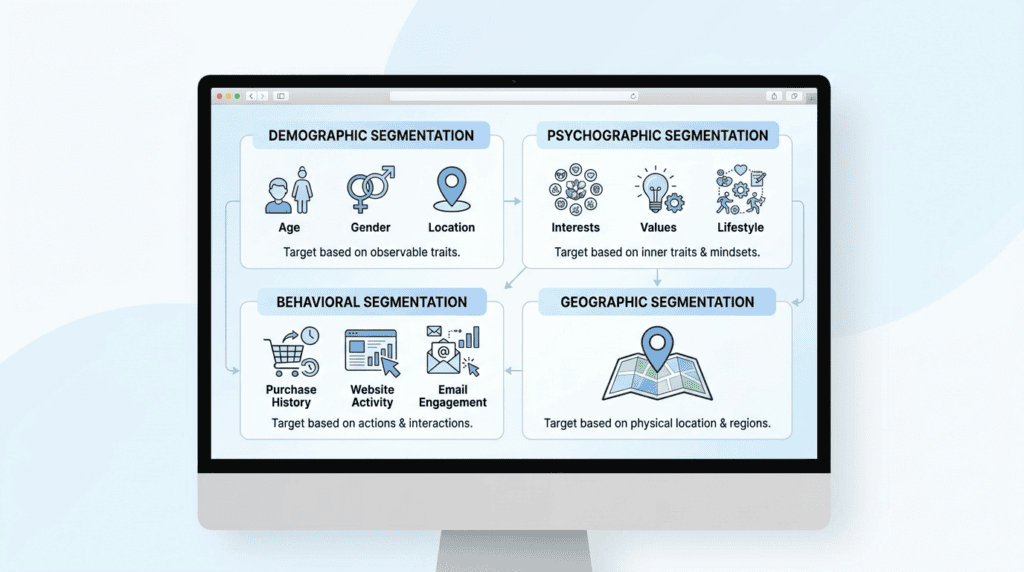
Effective email segmentation starts with understanding the different ways you can categorize your audience. Think of these as the building blocks for any successful email marketing personalization strategy. When I first started segmenting my email list, I realized how much time I’d wasted sending generic emails. Focusing on these core types really clarified my strategy and helped me see my subscribers as individuals, not just a single, undifferentiated group.
1. Demographic Segmentation: The Who (Age, Gender, Location)
Demographic segmentation involves dividing your email list based on characteristics like age, gender, income, education, or even job title. This is often the most straightforward type of data to collect, sometimes gathered during the initial opt-in process or through progressive profiling. For instance, an apparel brand might send different product recommendations to subscribers based on their gender, or a financial advisor might tailor content based on age groups and their life stages. While useful for broad targeting, demographic data alone doesn’t always tell the full story of a subscriber’s interests or needs.
2. Psychographic Segmentation: The Why (Interests, Values, Lifestyle)
Moving beyond basic demographics, psychographic segmentation dives into the “why” behind your subscribers’ actions. This includes their interests, values, attitudes, opinions, and lifestyle choices. Understanding these deeper motivations allows for highly relevant content. For example, if you run a fitness blog, knowing a subscriber is interested in marathon training versus weightlifting allows you to send them specific training plans or nutrition tips. Gathering this data often requires more direct input, such as surveys, quizzes, or analyzing past content consumption and purchases to infer preferences. This type of segmentation is crucial for building a strong connection and increasing engagement.
3. Geographic Segmentation: The Where (Country, City, Climate)
Geographic segmentation categorizes your audience based on their physical location. This can be as broad as a country or as specific as a city or even a climate zone. The power of geographic targeting lies in its ability to make your email campaigns hyper-local and timely. A retail chain might announce store openings to subscribers in a specific city, or an online store could promote winter clothing to customers in colder regions. Event organizers frequently use this to promote local gatherings, while service-based businesses can target potential leads within their operational areas. It’s a simple yet effective way to ensure relevancy based on where your audience lives.
4. Behavioral Segmentation: The What (Actions, Inactions, Engagement)
Behavioral segmentation is arguably the most powerful type, focusing on the actions (or inactions) your subscribers take. This includes their purchase history, website activity, email engagement, and how they interact with your brand. Unlike demographics or psychographics, which often rely on self-reported data or inferences, behavioral data is concrete. It tells you exactly what a subscriber has done, giving you direct insights into their current stage in the customer journey and their level of interest. Because of its direct impact on conversion and revenue, behavioral segmentation forms the backbone of advanced email personalization strategies.
How to Implement Behavioral Segmentation for Maximum Impact
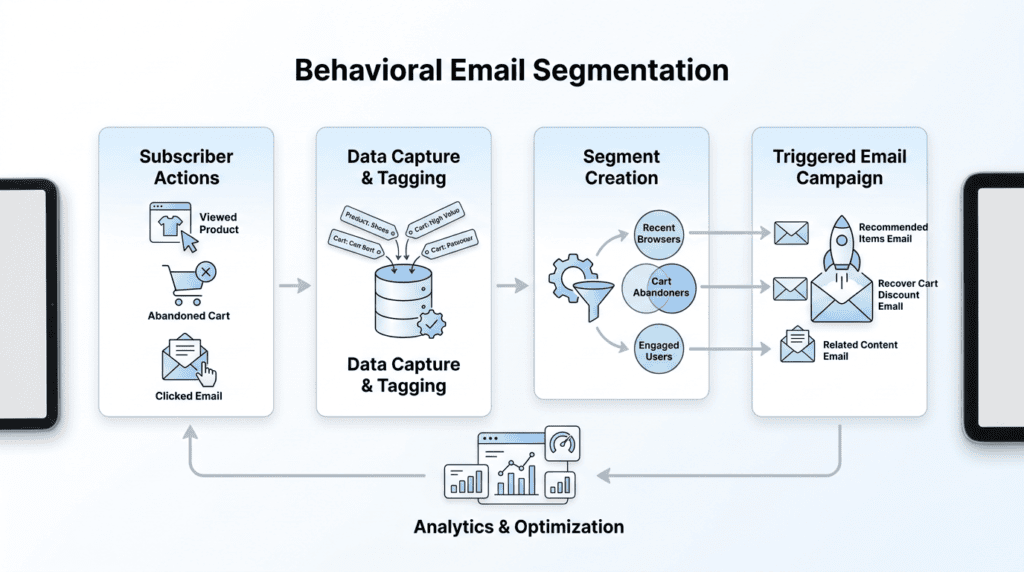
Behavioral segmentation takes the guesswork out of sending relevant emails. By tracking what your subscribers do, you can anticipate their needs and deliver highly targeted email campaigns that resonate. This approach significantly boosts engagement, open rates, and ultimately, conversion.
> Focusing on behavioral data allows you to move beyond assumptions, delivering content and offers that directly respond to a subscriber’s demonstrated actions and interests.
Segmenting by Purchase History (First-Time Buyers, Repeat Customers, High-Spenders)
Your subscribers’ purchase history offers a goldmine of information for effective email segmentation. You can categorize them into various groups:
- First-Time Buyers: Send a welcome series that educates them about your brand, offers post-purchase support, and encourages a second purchase.
- Repeat Customers: Reward their loyalty with exclusive discounts, early access to new products, or personalized recommendations based on past purchases.
- High-Spenders (VIPs): Create a special loyalty program or send exclusive offers to nurture these valuable customers and increase their customer lifetime value.
- Lapsed Customers: Design re-engagement email campaigns with incentives or surveys to understand why they haven’t purchased recently and encourage them to return.
This level of purchase history segmentation ensures that every email feels like it’s speaking directly to their relationship with your brand, driving both retention and revenue.
Segmenting by Website Activity (Viewed Products, Abandoned Carts, Visited Pages)
Tracking website activity provides real-time insights into a subscriber’s current interests and buying intent. This is where marketing automation workflows truly shine.
- Abandoned Carts: This is a critical area. When a subscriber adds items to their cart but doesn’t complete the purchase, a triggered email sequence can remind them of their items, offer a small incentive, or address common objections. I’ve seen firsthand how a well-crafted abandoned cart sequence can recover thousands in lost sales. It’s not just theory; it’s a direct revenue driver.
- Viewed Products/Categories: If a subscriber repeatedly views a specific product or category, you can send them personalized product recommendations, reviews, or related content.
- Visited Pages: For content creators or SaaS businesses, tracking visited blog posts or feature pages can indicate specific interests or pain points, allowing you to send follow-up content or tutorials.
User behavior analysis from website interactions allows for incredibly precise targeting, moving subscribers further down your sales funnel.
Segmenting by Email Engagement (Active Subscribers, Inactive Subscribers, Clicked Specific Links)
How subscribers interact with your emails is a strong indicator of their interest and loyalty. This data helps you maintain a clean list and optimize your email deliverability.
- Active Subscribers: These are your most engaged audience members, regularly opening and clicking your emails. They should receive your most valuable content and offers.
- Inactive Subscribers: Subscribers who haven’t opened or clicked an email in a set period (e.g., 90 days) can be segmented for re-engagement email campaigns. This might involve a special offer or a “we miss you” message. If they still don’t engage, it might be time to consider removing them to protect your sender reputation.
- Clicked Specific Links: If a subscriber clicks a link related to a particular topic, product, or service, you can tag them with that interest and send more personalized email content in the future. This is a powerful way to infer preferences and refine your targeting.
Monitoring these metrics helps you understand subscriber engagement rates and adapt your email frequency and content strategy accordingly.
Using Lead Magnets and Quizzes to Self-Segment New Subscribers
One of the most effective ways to gather psychographic and behavioral data right from the start is through self-segmentation. This involves offering choices that allow subscribers to tell you what they’re interested in.
- Lead Magnets: When someone opts in for a specific lead magnet (e.g., “Guide to SEO for Beginners” vs. “Advanced Link Building Strategies”), they’re immediately telling you their current knowledge level and interests. This allows you to place them into appropriate lead nurturing strategies.
- Quizzes/Surveys: A short quiz during the opt-in process or in a welcome email can ask about their biggest challenges, goals, or preferences. For example, a coach might ask, “What’s your biggest struggle: time management, motivation, or goal setting?” The answers provide valuable zero-party data, enabling you to send highly targeted messaging from day one.
These methods empower subscribers to define their own journey, leading to higher relevancy and better overall email engagement.
Real-World Email Segmentation Examples in Action
Seeing how these segmentation strategies play out in real businesses can help clarify their practical application. These examples demonstrate how different industries leverage data to create more impactful email campaigns.
Ecommerce Example: The Abandoned Cart Recovery Sequence
Imagine an online clothing store. A customer browses, adds a pair of jeans and a shirt to their cart, but then leaves the site without purchasing. This triggers an automated abandoned cart email sequence.
- Email 1 (30-60 minutes later): A friendly reminder showing the exact items left in the cart, perhaps with a compelling image. The subject lines might be “Did you forget something?” or “Your cart is waiting!”
- Email 2 (24 hours later): A follow-up that might include customer reviews of the items, social proof, or highlight benefits like free shipping or easy returns.
- Email 3 (48-72 hours later): A final nudge, possibly with a small discount code (e.g., 10% off) to overcome any price hesitation.
This `triggered email sequence` is a prime example of `behavioral segmentation` driving `increasing conversion rates` and `revenue`.
SaaS Example: Segmenting Users by Feature Adoption and Plan Type
A SaaS company offering project management software can use segmentation to guide users through their product and encourage upgrades.
- Onboarding: New users are segmented based on their initial setup choices or the features they first interact with. If a user hasn’t used the “team collaboration” feature, they might receive a `personalized email content` tutorial on it.
- Feature Adoption: Users who frequently use basic features but haven’t explored advanced ones could receive emails highlighting the benefits of those advanced features, perhaps with case studies.
- Plan Type: Free trial users get emails focused on converting them to a paid plan. Basic plan users might receive content showcasing premium features, leading to upsell `campaigns`. Enterprise plan users receive updates on new integrations or dedicated support resources.
This `customer journey mapping` and `marketing automation workflows` ensure users get the most out of the software and encourage upgrades.
Blogger/Creator Example: Delivering Content Based on Topic Interest
A blogger or online course creator often covers multiple topics. Sending every subscriber every piece of content can lead to unsubscribe fatigue.
- Preference Center: During opt-in or at any time, subscribers can choose their `interests` from a list (e.g., “SEO,” “Content Marketing,” “Email Marketing,” “Affiliate Marketing”).
- Click-Through Data: If a subscriber consistently clicks on articles about “AI writing tools,” they are tagged with that interest.
- Targeted Content: When a new article or course related to “AI writing tools” is released, only subscribers tagged with that interest receive the email announcement.
This `subscriber preference centers` approach ensures `highly targeted messaging`, improving `open rates` and overall `engagement` because the `content` is always relevant.
B2B Example: Nurturing Leads Based on Industry and Job Role
For a B2B software company, `lead nurturing strategies` are crucial. Generic emails won’t cut it when dealing with diverse business needs.
- Initial Data Collection: During lead capture, forms ask for industry and job role.
- Industry-Specific Content: A lead from the healthcare industry receives case studies and whitepapers demonstrating how the software benefits healthcare providers. A lead from the finance sector receives content tailored to financial compliance and data security.
- Job Role-Specific Messaging: A marketing manager receives emails focused on lead generation and campaign analytics, while an IT director gets information on integration capabilities and data security.
This `B2B email segmentation` ensures that `leads` receive `personalized email content` that addresses their specific pain points and helps them see the value of the solution within their unique context.
Choosing the Right Tools for Your Segmentation Strategy
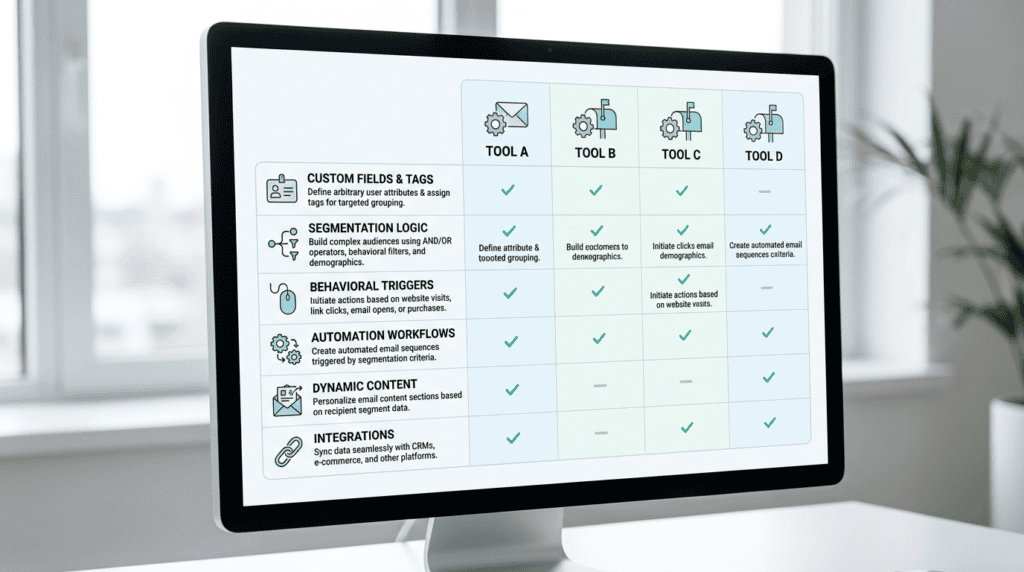
Selecting the right email marketing platform is crucial for putting your email segmentation strategy into action. It’s not just about sending emails; it’s about how effectively you can organize your audience and deliver targeted messages. The capabilities of your chosen tool will directly impact the sophistication and success of your segmentation efforts.
Essential Features to Look For in an Email Marketing Platform
When evaluating email marketing software, look beyond just basic sending features. For effective email segmentation, certain capabilities are non-negotiable.
- Custom Fields and Tags: These allow you to collect and categorize specific data points about your subscribers, forming the basis for your segments. Think about interests, purchase history, or lead magnet downloads.
- Automation Workflows: The ability to set up automated sequences based on subscriber behavior (e.g., welcome series, abandoned cart reminders, re-engagement campaigns) is key for scaling personalized communication.
- Segmentation Logic: The platform should offer flexible ways to combine different criteria (AND/OR logic) to create precise segments.
- A/B Testing: To optimize your segmented campaigns, you’ll need to test subject lines, content, and calls to action.
- Analytics and Reporting: Robust analytics help you understand how your segments are performing, allowing you to refine your strategy and improve engagement metrics.
- Integrations: Your email tool should connect with other platforms you use, like your CRM, e-commerce store, or website analytics, to pull in valuable behavioral data.
When Basic Tagging and Lists Are Enough
For many small businesses or those just starting with email marketing, you don’t need the most expensive, feature-rich platform right away. If your email list is relatively small (under a few thousand subscribers) and your segmentation needs are straightforward, basic tagging and list management features can get you far. You might segment by initial opt-in source, general interest categories, or whether someone is a customer or a prospect. In these cases, a tool that offers simple list creation and tagging functionality, often found in entry-level plans, is perfectly adequate. Don’t overcomplicate things if your audience isn’t complex yet.
When You Need Advanced Automation and Dynamic Content
As your audience grows and your marketing strategy matures, you’ll likely hit a point where basic tools feel limiting. This is when you need to invest in platforms that offer advanced automation and dynamic content capabilities. If you’re looking to:
- Trigger specific email sequences based on detailed behavioral data (e.g., viewing certain product pages multiple times, downloading a specific whitepaper).
- Personalize email content blocks based on a subscriber’s segment (e.g., showing different product recommendations to men vs. women, or different industry news to B2B segments).
- Manage complex customer journeys with multiple touchpoints and decision trees.
- Integrate deeply with e-commerce platforms to leverage purchase history segmentation for highly targeted email campaigns.
This level of sophistication requires a more powerful email marketing platform.
> Critical Warning: Choosing a tool that’s too basic will quickly bottleneck your growth, but picking one that’s overly complex for your current needs can lead to wasted money and a steep, frustrating learning curve.
Popular Tools and Their Segmentation Strengths (e.g., Mailchimp, ConvertKit, Klaviyo)
Different platforms shine in different areas, making them suitable for various business models and segmentation needs.
- Mailchimp: Often a go-to for beginners and small businesses, Mailchimp offers solid basic segmentation with tags and groups, along with user-friendly automation. It’s great for getting started with email segmentation without a huge upfront investment.
- ConvertKit: Popular with creators, bloggers, and online course sellers, ConvertKit excels at tagging and subscriber-centric segmentation. It’s fantastic for understanding individual subscriber interests and delivering highly personalized email content based on what they’ve clicked or purchased. I’ve personally found ConvertKit’s visual automation builder incredibly intuitive for setting up complex funnels based on subscriber actions.
- Klaviyo: This platform is a powerhouse for e-commerce businesses. Klaviyo’s strength lies in its deep integration with online stores, allowing for incredibly granular behavioral data tracking, purchase history segmentation, and sophisticated marketing automation workflows like abandoned cart emails and post-purchase follow-ups. It’s built for maximizing customer lifetime value through hyper-targeted messaging.
Common Segmentation Mistakes and How to Avoid Them
Even with the best intentions and tools, it’s easy to stumble when implementing email segmentation. Avoiding these common pitfalls can save you time, improve your results, and maintain a healthy sender reputation.
The “Over-Segmentation” Trap: Creating Too Many Tiny, Unmanageable Groups
While the goal is to be specific, there’s a point of diminishing returns. Creating dozens or even hundreds of tiny segments can become an administrative nightmare. You might end up with segments that are too small to be statistically significant, or you’ll spend more time managing segments than creating valuable content for them. The key is to find a balance. Start with broader segments and only refine them further if you see a clear opportunity for increased engagement or conversion. Focus on segments that represent meaningful differences in subscriber behavior or needs.
Using Outdated or Inaccurate Data for Your Segments
Your email segmentation strategy is only as good as the data it’s built upon. If your data is old, incomplete, or incorrect, your targeted email campaigns will miss the mark. Sending personalized product recommendations based on a purchase from five years ago, or targeting someone with a “new customer” offer when they’ve been a loyal buyer for years, can be frustrating for subscribers and damage your brand. Regularly review and update your subscriber data. Use surveys, preference centers, and behavioral data tracking to keep your information fresh.
Forgetting to Re-evaluate and Clean Your Segments Regularly
Your audience isn’t static. Interests change, purchase behaviors evolve, and subscribers become more or less engaged over time. A segment that was highly effective six months ago might be stale today. It’s crucial to regularly re-evaluate your segments. Are they still relevant? Are there new opportunities for segmentation? This also ties into email list hygiene; routinely removing inactive subscribers or re-engaging them ensures your segments are active and responsive, which helps with email deliverability best practices.
Creating Segments but Sending the Same Generic Content Anyway
This is perhaps the most frustrating mistake. You’ve put in the effort to segment your email list, but then you send the exact same email to every segment, perhaps just changing the subject line. This defeats the entire purpose of email segmentation. If you’re going to segment, you must tailor the content. This means crafting personalized email content, offers, and calls to action that are specifically relevant to each segment’s unique characteristics, interests, or behaviors. Otherwise, you’re just adding complexity without gaining any of the benefits of increased relevancy and engagement.
Honest Take: The Hidden Challenges of Advanced Segmentation
Let’s be real: while the benefits of advanced email segmentation are huge, it’s not a “set it and forget it” solution. There’s a significant upfront investment of time and effort. Setting up sophisticated behavioral data tracking, mapping out complex customer journeys, and configuring dynamic content blocks in your email marketing software requires a learning curve. It’s not just about checking a few boxes; it demands strategic thinking, technical understanding, and ongoing optimization.
I’ve seen many businesses get excited about the idea of hyper-personalization only to get bogged down in the data clean-up and workflow setup. The biggest challenge isn’t the technology, but the commitment to consistently manage and refine your segmentation strategy. My advice? Start simple. Master one or two core segments, like active vs. inactive subscribers or first-time buyers vs. repeat customers. Once you see results and understand the process, then gradually add layers of complexity. Trying to do everything at once often leads to overwhelm and abandonment.
How to Measure the Success of Your Segmentation Efforts
Measuring the impact of your email segmentation strategy goes far beyond just looking at open and click rates. While those are important indicators of initial engagement, true success ties back to your business goals. You need to dig deeper into your analytics to understand the full picture.
Key Metrics to Track Beyond Open and Click Rates
To truly gauge the effectiveness of your email segmentation, focus on metrics that reflect subscriber behavior and revenue impact. For instance, track the conversion rate per segment to see which audience groups are most responsive to your offers and personalized email content. A high conversion rate from a specific segment indicates your targeting is spot on. Conversely, monitor the unsubscribe rate per segment; a spike in a particular group might signal irrelevant content or too frequent emails. Also, pay attention to list growth quality, not just quantity. Are you attracting subscribers who engage and eventually convert, or just adding names to your lists? These metrics provide a clearer view of your segmentation ROI.
Using A/B Testing to Refine Your Segments and Messaging
A/B testing is crucial for optimizing your email segmentation efforts. Don’t just set up segments and forget them; continuously test different subject lines, calls to action, and even personalized product recommendations within your segmented campaigns. For example, you might test two different welcome email series for new subscribers based on their acquisition source. This iterative process of testing allows you to refine your messaging and improve open rates and click-through rates, ensuring your personalized email content resonates more effectively with each audience.
Tying Segmentation Performance to Business Goals (e.g., Revenue, Customer LTV)
Ultimately, your email segmentation strategy should contribute directly to your business’s bottom line. Connect your segmentation performance to key business goals like increasing conversion rates, boosting overall revenue, or improving customer lifetime value (LTV). By analyzing how different segments contribute to purchases or repeat business, you can identify your most valuable subscribers and tailor future campaigns to maximize their potential. This data-driven approach helps you understand the real impact of segmenting your email list and justifies the effort involved.
Final Recommendation: Your First Three Steps to Better Segmentation

Implementing email segmentation doesn’t have to be an overwhelming task. Instead of trying to segment every single subscriber from day one, focus on a strategic, phased approach.
Step 1: Identify Your Most Obvious High-Value Segment (e.g., New Subscribers, Recent Buyers)
Start by picking one clear, high-impact segment. This could be your new subscribers who are eager to learn more, or recent buyers who are primed for a post-purchase follow-up or complementary product recommendations. These groups often have distinct needs and behaviors, making them ideal candidates for your first targeted email campaigns. Don’t overthink it; the goal is to get started with a manageable audience.
Step 2: Create One Targeted Campaign for That Segment
Once you’ve identified your initial segment, craft a single, highly relevant email campaign specifically for them. For new subscribers, this might be a welcome email series that introduces your brand and offers valuable content. For recent buyers, it could be a triggered email sequence providing product usage tips or asking for feedback. Focus on personalized email content that directly addresses their specific interests or recent actions. This focused effort will yield clearer results than a broad, generic campaign.
Step 3: Measure the Results and Build Your Next Segment from There
Launch your targeted campaign and meticulously track its performance using the key metrics discussed earlier. Pay close attention to open rates, click-through rates, and especially conversion rates for that specific segment. The data you gather will inform your next move. Did the campaign perform well? Great, now identify another high-value segment and repeat the process. If not, use A/B testing to refine your approach. The cost of inaction here is significant; every day you send generic emails is a missed opportunity for higher engagement and revenue. By delaying, you’re leaving money on the table and allowing your audience to disengage.
> Start small, measure diligently, and let your data guide your segmentation strategy for continuous improvement.
I’ve seen firsthand how even simple email segmentation can dramatically improve subscriber engagement rates and drive tangible business results. It’s not about complex software initially; it’s about understanding your audience and delivering relevancy.
Frequently Asked Questions (FAQs)
How many segments should I have in my email list?
There’s no magic number for how many segments you should have; it depends entirely on the size and diversity of your audience and your marketing goals. Start with a few broad segments and expand as you gather more data and identify distinct needs within your subscriber base.
Can I segment my list without an expensive tool?
Yes, you can absolutely start segmenting your email list without an expensive tool, as many basic email marketing software tools offer fundamental tagging and list-based segmentation features. Even simple manual tagging based on opt-in source or survey responses can be a powerful starting point for personalized email content.
What’s the difference between a segment and a tag?
A segment is a dynamic group of subscribers that meet specific criteria you define, often updated automatically, while a tag is a static label you manually or automatically apply to individual subscribers. Tags can be used as criteria to build segments, making them a foundational element for effective email segmentation.
How often should I clean or update my email segments?
You should aim to clean and update your email segments regularly, ideally quarterly or at least twice a year, to ensure your data remains accurate and your targeting relevant. This process helps maintain good email deliverability and prevents sending emails to inactive subscribers, which can harm your sender reputation.
Does email segmentation help with deliverability and avoiding the spam folder?
Yes, email segmentation significantly helps with deliverability and avoiding the spam folder by ensuring you send highly targeted messaging that resonates with your audience. When subscribers consistently open and click your emails, it signals to email providers that your content is valuable, improving your sender reputation and reducing the likelihood of being flagged as spam.