Many businesses pour time and effort into email marketing, only to see lukewarm results. The truth is, simply sending emails isn’t enough to build a thriving audience or drive consistent sales. The real magic happens when you strategically deploy the right types of email marketing campaigns at the right time.
Without a clear strategy, your emails can feel random, overwhelming, or simply irrelevant to your subscribers. This often leads to low open rates, minimal engagement, and missed opportunities for connection and revenue. This guide will clarify *when* and *why* to use specific campaign types, helping you move beyond basic broadcasts to a sophisticated, results-driven approach.
7 Essential Types of Email Marketing Campaigns
While the world of email marketing offers countless creative avenues, a core set of campaign types forms the backbone of any successful strategy. These seven foundational campaigns are crucial for nurturing leads, engaging your audience, and driving conversions. Mastering them will give you a significant edge.
Quick Picks: The 3 Most Impactful Campaigns to Start With
- For New Subscribers: The Welcome Series
- For Driving Sales: The Promotional Campaign
- For Building Loyalty: The Newsletter
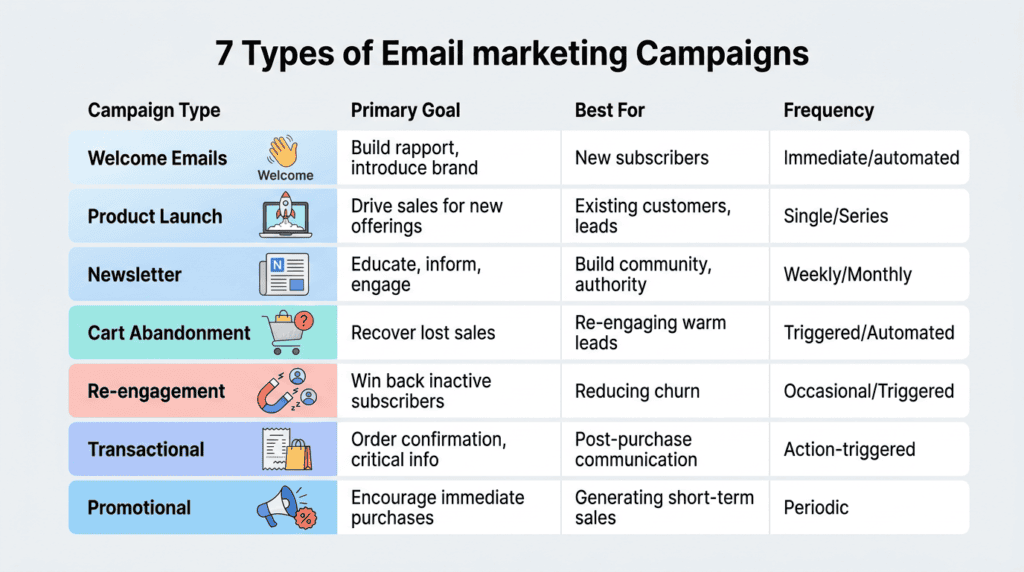
Email Campaign Types: Quick Comparison
| Campaign Type | Primary Goal | Best For | Frequency |
|---|---|---|---|
| Welcome Series | Nurture & Onboard | New subscribers | Automated sequence |
| Promotional Campaign | Drive Sales | Product launches, sales events | As needed |
| Newsletter | Build Relationships | Ongoing engagement | Weekly/Monthly |
| Lead Nurturing | Educate & Convert | Qualified leads | Automated sequence |
| Re-Engagement | Win Back Subscribers | Inactive contacts | As needed |
| Post-Purchase | Increase Loyalty | Recent customers | Automated sequence |
| Abandoned Cart | Recover Sales | Shoppers who left items | Automated sequence |
Campaign 1: The Welcome Series (Your First Impression)
The welcome series is arguably the most critical automated email sequence you’ll ever set up. It’s your chance to make a fantastic first impression, introduce your brand, and guide new subscribers toward their first meaningful interaction or purchase. Think of it as rolling out the red carpet for someone who just walked into your digital store.
This initial interaction capitalizes on peak subscriber engagement. When someone opts into your list, they’re actively interested in what you offer. That’s a golden opportunity you can’t afford to waste with a single, generic “Thanks for subscribing” email. Instead, a well-crafted series builds trust, provides value, and gently nudges them further down your sales funnel. I remember one client who saw their initial conversion rate for new subscribers jump by 15% just by optimizing their welcome series from a single email to a well-structured three-part sequence. It really hammered home how crucial that first impression is.
Why a Welcome Series is Non-Negotiable
A welcome series isn’t just a nice-to-have; it’s a fundamental component of a healthy email marketing strategy. New subscribers are at their most engaged immediately after signing up. They’re curious, open to learning more, and often ready to take the next step. A well-designed welcome sequence taps into this initial enthusiasm, setting the tone for a long-term relationship. It helps reduce buyer’s remorse, clarifies your brand’s value proposition, and can significantly improve subscriber retention rates over time. Without it, you’re essentially letting interested prospects wander off without direction.
Anatomy of a High-Converting Welcome Sequence
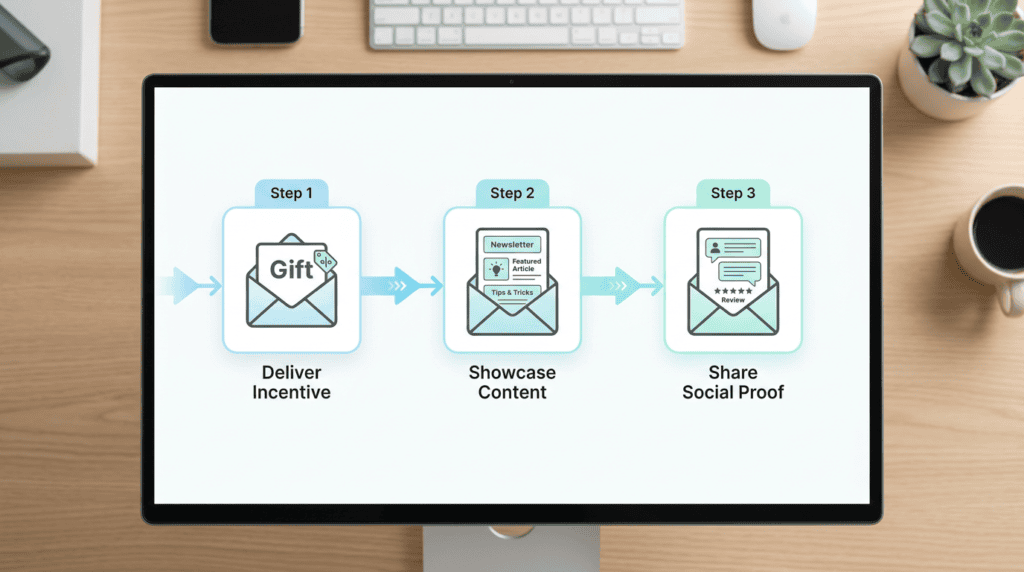
Crafting an effective welcome sequence involves more than just sending a few emails. Each message should have a specific goal, building on the last to move your new subscriber closer to becoming a loyal customer.
- Email 1: Deliver the incentive & introduce your brand story. This email should land in their inbox almost instantly. If you promised a lead magnet, a discount code, or exclusive content, deliver it here. Beyond that, share a concise version of your brand’s origin story or mission. Why do you exist? What problem do you solve? This helps new subscribers connect with you on a deeper, more human level. Keep it warm, friendly, and value-focused.
- Email 2: Showcase your most popular products or content. Once they’ve received their initial value, it’s time to show them what else you’ve got. This isn’t a hard sell. Instead, highlight your best-selling products, most-read blog posts, or top-performing services. Frame it as helping them discover more value or solve another related problem. Use compelling visuals and clear calls to action.
- Email 3: Share social proof (reviews, testimonials) and address a common pain point. By the third email, your goal is to build further trust and overcome any lingering doubts. Feature glowing customer testimonials, case studies, or user-generated content. You can also subtly address a common objection or pain point your target audience faces, positioning your brand as the solution. This email often includes a stronger call to action, perhaps a limited-time offer, to encourage that first conversion.
Real-World Example: A SaaS company’s welcome series that guides new sign-ups toward their “aha!” moment.
Imagine a SaaS company offering project management software. Their welcome series might look like this:
- Email 1 (Immediate): “Welcome to [Software Name]! Here’s your free 14-day trial link. We built [Software Name] because we were tired of scattered tasks and missed deadlines. Our mission is to make project management effortless for teams like yours.”
- Email 2 (Day 2): “Ready to get started? Check out our ‘Quick Start Guide’ video – it’s helped thousands of users set up their first project in under 10 minutes. Plus, see how other teams are using our Kanban boards to boost productivity.”
- Email 3 (Day 4): “Still exploring? Don’t just take our word for it. ‘Since switching to [Software Name], our team’s project completion rate improved by 25%!’ – Sarah M., Marketing Director. Need help? Book a free 15-minute demo with one of our experts.”
Campaign 2: The Promotional Campaign (Driving Revenue)
Promotional campaigns are often what people think of first when they hear “email marketing.” These are the emails designed to drive immediate sales, announce new products, or highlight special offers. However, there’s a fine line between an effective promotional email and one that just feels like spam. The goal isn’t just to sell, but to sell strategically, maintaining your brand’s value while encouraging purchases.
Moving Beyond “20% Off”:
While discounts certainly have their place, relying solely on “20% off” can devalue your brand and train your audience to only buy when there’s a sale. Smart marketers look for creative angles that generate excitement and urgency without always slashing prices. Think about flash sales with a strict time limit, “buy one, get one” (BOGO) offers that move inventory, or giving VIP subscribers early access to new products or upcoming sales. Holiday-themed promotions, like a “Summer Essentials” bundle or a “Black Friday Sneak Peek,” also tap into existing consumer mindsets. These approaches create a sense of exclusivity or a unique value proposition that goes beyond a simple price cut.
How to Structure a Promotional Email That Converts:
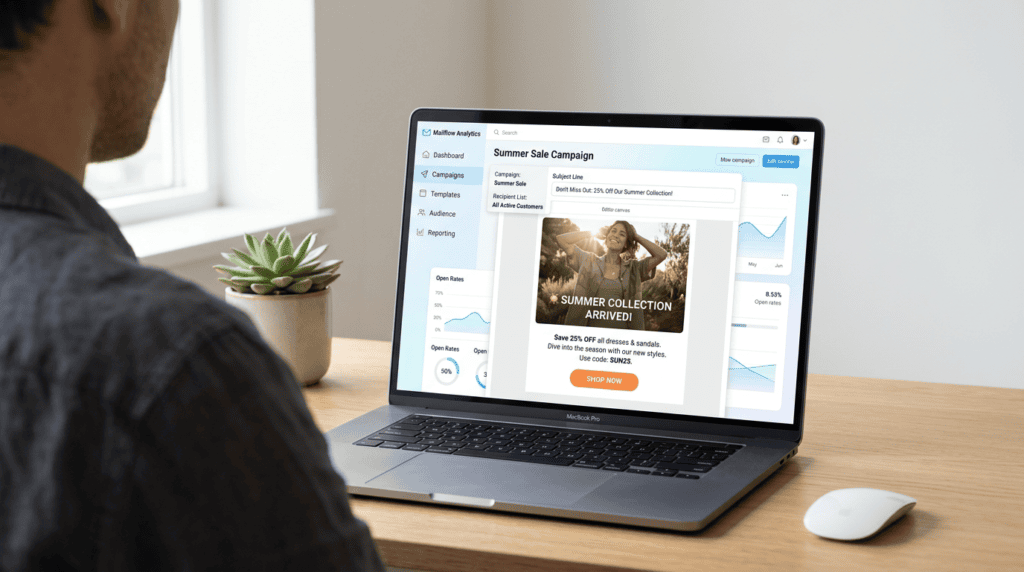
An effective promotional email needs to cut through the noise and clearly communicate its value. It starts with a compelling subject line. This isn’t just about urgency; it’s about hinting at the benefit or exclusivity. For instance, “Your Early Access Pass: New Collection Inside!” often performs better than “Shop Our New Collection.” Inside the email, the message should be concise, highlighting the offer’s benefits, not just its features.
The most crucial element is a clear call-to-action (CTA). This should be a prominent button or link that tells the subscriber exactly what to do next, like “Shop Now,” “Claim Your Offer,” or “Get Your Bundle.” Don’t make them search for it.
Crucially, segmenting your list for targeted offers is a game-changer. Sending a generic “20% off everything” email to your entire list might work, but imagine the impact of sending a specific offer for a related product to past purchasers. For example, if someone bought a coffee maker from you last month, an email promoting a new line of gourmet coffee beans or cleaning supplies for their machine will resonate far more. This level of personalization shows you understand their needs and preferences, leading to much higher conversion rates. I’ve seen clients double their click-through rates on promotional emails just by segmenting their audience based on past purchase behavior or expressed interests. It turns a broadcast into a conversation.
Ecommerce Example:
Consider a clothing brand’s “New Collection Launch” email. Instead of just announcing new items, they might send an email with a captivating hero image of a model wearing key pieces, a brief story about the collection’s inspiration, and a clear “Shop the Collection” CTA. For their most loyal customers, they might send a “VIP Early Access” email a day before the public launch, offering a small exclusive discount or a bonus item with purchase. This builds hype, rewards loyalty, and drives immediate sales for the new line.
Campaign 3: The Newsletter (Building Community & Authority)
The newsletter has evolved significantly. It’s no longer just a weekly digest of your latest blog posts. Today, a successful newsletter is a powerful relationship-building tool, positioning you as an authority in your niche and fostering a loyal community around your brand. It’s about delivering consistent value that keeps you top-of-mind, even when subscribers aren’t actively looking to buy.
The Goal of a Modern Newsletter:
The primary goal of a modern newsletter isn’t direct sales; it’s engagement and authority. Think of it as your direct line to your most interested audience members. You’re not just pushing products; you’re sharing insights, educating, entertaining, and building trust. This consistent, value-driven approach helps you stand out in crowded inboxes. When subscribers consistently find value in your newsletter, they’re more likely to open your emails, engage with your content, and eventually, consider your products or services when they’re ready to make a purchase.
What to Include in Your Newsletter:
A great newsletter balances various types of content to keep things fresh and engaging. Curated content is a staple – this could be links to your latest blog posts, YouTube videos, podcast episodes, or even relevant articles from other reputable sources in your industry. Sharing behind-the-scenes insights, like a peek into your workflow, a challenge you’re overcoming, or a personal story related to your business, can build a deeper connection with your audience. Company news or updates, such as new hires, milestones, or upcoming events, also keep your community informed.
The key is to include a “soft” call-to-action. This isn’t a hard sell, but rather an invitation to engage further. It might be “Read more on our blog,” “Watch the full video,” “Join the discussion in our Facebook group,” or even “Reply to this email with your thoughts.” This encourages interaction without making subscribers feel pressured to buy. For example, I often include a question at the end of my weekly newsletter, asking readers for their biggest challenge or a specific opinion. The responses not only provide valuable feedback but also foster a sense of community and direct connection that’s hard to replicate elsewhere.
Blogger/Creator Example:
Imagine a weekly newsletter from a popular productivity blogger. Each week, it might feature a short, exclusive tip not found on their blog, a link to their latest article on time management, a quick personal update about their own productivity experiments, and a “reader question of the week” section where they answer a subscriber’s query. The soft CTA might be “Check out my favorite productivity tools” or “Join my private community for more tips.” This approach consistently delivers value, reinforces their expertise, and keeps their audience engaged.
Campaign 4: The Lead Nurturing Sequence (From Prospect to Customer)
A lead nurturing sequence is a strategic series of emails designed to guide a prospect who has shown initial interest – perhaps by downloading a lead magnet or attending a webinar – but isn’t quite ready to make a purchase. It’s about building trust, educating them on their problem and your solution, and gently moving them closer to a conversion.
How Nurturing Differs from Welcoming:
While a welcome series introduces new subscribers to your brand, a lead nurturing sequence is far more targeted. It’s triggered by a specific action that indicates a higher level of intent, even if they’re not ready to buy. For example, someone who downloads an “Ultimate Guide to SEO” is likely interested in improving their search rankings. The nurturing sequence then focuses on that specific problem, providing deeper insights and positioning your SEO software or services as the ideal solution. It’s not for *all* new subscribers, but for a segmented audience with a defined need. The content is tailored to address their specific pain points and objections, moving them through the sales funnel.
Mapping a Lead Nurture Flow:
Designing an effective lead nurture flow requires careful planning. It’s not just a random series of emails; it’s a strategic progression.
- Email 1: Deliver the resource and frame the problem. This email immediately delivers the promised lead magnet (e.g., the guide, the checklist) and then subtly reinforces the problem it helps solve. You’re not selling yet, but you’re establishing yourself as an expert who understands their challenge.
- Email 2: Provide a case study or success story. This email builds credibility. Show, don’t just tell. Share a story of how someone similar to your lead achieved success using your methods or a related product. This helps the lead visualize their own potential success.
- Email 3: Address common objections or questions. Anticipate what might be holding your lead back. Is it cost? Complexity? Time commitment? Dedicate an email to proactively addressing these concerns, perhaps through an FAQ format or by debunking common myths. This helps clear mental hurdles before they even arise.
- Email 4: Introduce your solution with a clear, low-friction offer. Now that you’ve built trust, educated them, and addressed objections, it’s time to present your solution. The offer should be low-friction – a free trial, a demo, a consultation call, or a small introductory product. The goal is to get them to take the next small step, not necessarily to close the big sale immediately. I’ve spent hours mapping out lead nurturing sequences in tools like ActiveCampaign, trying to anticipate every possible user action. It’s a lot of upfront work, but seeing a cold lead convert into a paying customer after a well-crafted 4-email flow is incredibly satisfying.
B2B/SaaS Example:
Imagine a user downloads a “Guide to Boosting Your Website Traffic” from a SaaS company that offers an SEO analytics tool. The nurturing sequence might look like this:
- Email 1: Delivers the guide, thanks them, and briefly mentions the common struggles businesses face with traffic generation.
- Email 2: Shares a case study of a small business that significantly increased its organic traffic using the company’s software.
- Email 3: Addresses common misconceptions about SEO, like “it’s too expensive” or “it takes too long,” showing how their tool simplifies the process.
- Email 4: Offers a free 14-day trial of their SEO analytics software, highlighting its key benefits for traffic growth.
Campaign 5: The Re-Engagement Campaign (Winning Back Inactive Subscribers)
Even the best email lists gather dust. Subscribers move on, change interests, or simply get overwhelmed by their inbox. That’s where re-engagement campaigns come in. These are specific types of email marketing designed to either bring inactive subscribers back into the fold or, failing that, gracefully remove them from your list.
Why You Can’t Ignore Inactive Subscribers
Ignoring inactive subscribers is like carrying dead weight. A large percentage of unengaged subscribers can seriously hurt your email deliverability rates. Email service providers (ESPs) notice when your emails aren’t being opened or clicked. This signals that your content might not be relevant, and they might start sending your emails straight to the spam folder for *all* your subscribers, even the active ones. This damages your sender reputation and wastes money if you’re paying per subscriber.
Crafting a “Win-Back” Sequence That Works
A good win-back sequence isn’t just one email; it’s a short series designed to grab attention and prompt action.
- Email 1: The “We Miss You” email with a compelling offer. This first email should be friendly and direct. Remind them of the value you offer and include a clear, enticing offer – maybe an exclusive discount, early access to new content, or a free resource. The goal is to reignite their interest.
- Email 2: A final chance email asking if they still want to hear from you. If the first email doesn’t work, this one gets serious. Clearly state that you’ll remove them from the list if they don’t click a link to confirm their interest. This is crucial for list hygiene.
- The “Sunset” Policy: Explain the importance of removing subscribers who don’t engage. After your win-back sequence, if a subscriber still hasn’t opened or clicked anything for a set period (say, 6-12 months), it’s time to let them go. This isn’t about being mean; it’s about maintaining a healthy, engaged list that performs well. I’ve seen businesses dramatically improve their open rates and reduce their email marketing costs by regularly “sunsetting” inactive subscribers. It feels counterintuitive to remove people, but it’s a powerful optimization tactic.
Real-World Example:
A brand offering a significant, exclusive discount to subscribers who haven’t opened an email in 90 days.
Imagine a fitness apparel brand sending an email with the subject line: “Still crushing your goals? Here’s 25% off to help!” Inside, they offer a time-sensitive, exclusive discount code for inactive subscribers, reminding them of new product drops and community events. This specific type of email marketing campaign targets a segment that needs a little extra push to come back.
Campaign 6: The Post-Purchase Drip (Turning Buyers into Fans)
Many businesses focus heavily on getting the first sale and then drop the ball. The post-purchase drip is a series of automated emails sent *after* a customer buys something. Its purpose is to enhance the customer experience, reduce buyer’s remorse, and build loyalty, turning a one-time buyer into a repeat customer and even a brand advocate.
Beyond the Transactional Receipt
Sure, you need to send an order confirmation and shipping updates. But those are just the bare minimum. The real opportunity lies in the emails that follow. These messages show you care beyond the transaction and help customers get the most out of their purchase. This builds trust and strengthens the relationship.
Key Emails in a Post-Purchase Sequence
- Order confirmation (with a personal touch). Make it more than just a receipt. Thank them, maybe include a fun fact about your brand, or hint at what’s coming next.
- Shipping confirmation. Provide tracking info, but also reiterate excitement for their delivery.
- “How to get the most out of your purchase” (educational content). This is where you add serious value. If they bought software, send quick tips. If it’s a physical product, share usage guides, care instructions, or complementary product suggestions.
- A request for a review or feedback. Timing is key here. Ask after they’ve had a chance to use and enjoy the product. Make it easy for them to leave a review or provide feedback, perhaps with a direct link to the product page or a short survey.
Small Business Example:
An artisan coffee seller sending brewing tips a week after the customer’s beans have been delivered.
A small, independent coffee roaster might send an email a few days after delivery with the subject: “Your beans have arrived! Here’s how to brew the perfect cup.” The email could include a link to a blog post or video demonstrating different brewing methods (pour-over, French press), storage tips, and maybe even a suggestion for their next coffee blend. This thoughtful approach builds a community around the product.
Campaign 7: The Abandoned Cart Sequence (Recovering Lost Sales)
Abandoned carts are a fact of online business, but they don’t have to be lost sales. The abandoned cart sequence is one of the highest ROI types of email marketing campaigns you can implement. It’s an automated series designed to remind shoppers about items they left behind and encourage them to complete their purchase.
The Psychology of Cart Abandonment
People abandon carts for many reasons: unexpected shipping costs, getting distracted, wanting to compare prices, or simply not being ready to buy right then. An abandoned cart email acknowledges these possibilities and provides a gentle nudge or incentive to overcome the hurdle.
Anatomy of a High-Impact Abandoned Cart Email
Timing and content are critical for these emails.
- Email 1 (sent ~1 hour later): A gentle reminder (“Did you forget something?”). This first email should be soft. Assume they got distracted. Show them the items they left and a clear link back to their cart. No pressure, just a helpful reminder.
- Email 2 (sent ~24 hours later): Introduce urgency or social proof (“Items are selling fast!”). If the first email didn’t work, the second can add a bit more persuasion. Highlight limited stock, popular items, or include a testimonial about the product they almost bought.
- Email 3 (sent ~48-72 hours later): A final attempt, possibly with a small incentive (e.g., free shipping). This is your last shot. Offer a small incentive like free shipping, a minor discount, or a bonus item. Be careful not to train customers to always abandon their cart to get a discount, so use this sparingly and strategically.
Ecommerce Example:
A visual email showing the exact product left in the cart with a direct link to checkout.
An online shoe store sends an email with the subject line: “Your sneakers are waiting!” The email visually displays the exact pair of shoes the customer added to their cart, along with their size and color. Below the image, there’s a prominent “Complete Your Order” button that takes them directly back to the checkout page, making it incredibly easy to finish their purchase.
Honest Take: Which Email Campaigns Should You Prioritize?

It’s easy to feel overwhelmed by all the different types of email marketing campaigns you *could* be sending. The truth is, you don’t need to launch every single one at once. Smart businesses prioritize based on their current resources and biggest goals.
- If You’re a Beginner: Start with the Welcome Series and a consistent Newsletter. These two campaigns build your foundational relationship with new subscribers and keep your brand top-of-mind. They’re about establishing trust and delivering value before you push for sales.
- If Your Goal is Immediate Sales (Ecommerce): Prioritize the Abandoned Cart Sequence and Promotional Campaigns. These have the highest direct return on investment (ROI) because they target people already close to buying or ready for a deal.
- If You Have a Long Sales Cycle (B2B/SaaS): Focus on the Lead Nurturing Sequence. Your audience needs education and trust-building over time. This sequence helps guide prospects through their decision-making process, making them sales-ready when the time is right.
Final Recommendation
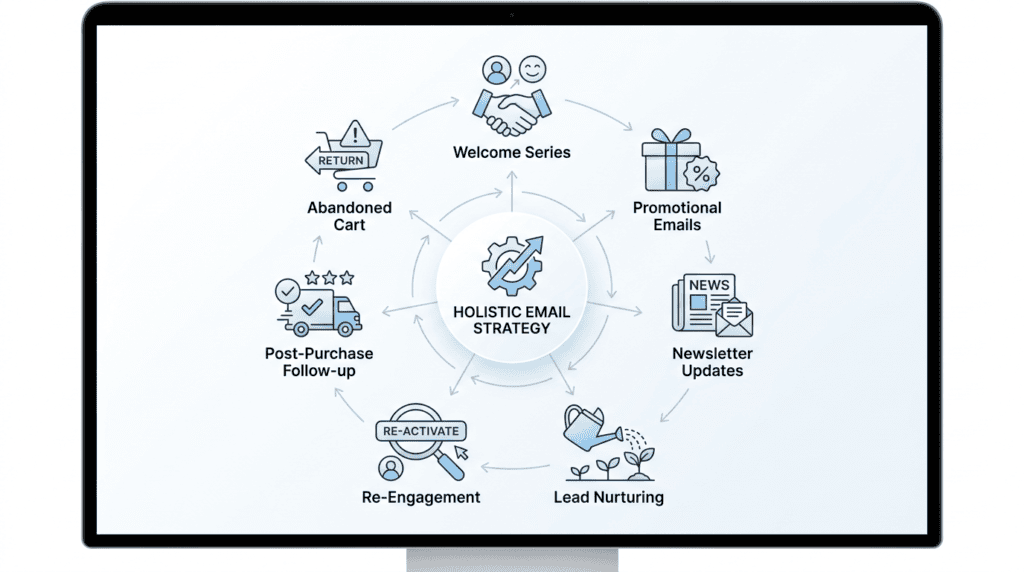
A truly successful email marketing strategy isn’t about picking just one type of email. It’s about using a smart mix of automated sequences and timely, one-off campaigns. This approach guides your subscribers through their entire journey, from first impression to loyal customer.
For any business looking to build a robust email program, you absolutely must start with these three core types of email marketing campaigns:
- The Welcome Series: This is your first handshake, setting the tone and delivering immediate value.
- The Promotional Campaign: This drives direct revenue through targeted offers and sales.
- The Newsletter: This builds community, authority, and keeps your audience engaged long-term.
Who should prioritize these three?
Anyone serious about sustainable online growth. If you’re a content creator, a small business owner, or an affiliate marketer, these campaigns form the backbone of your communication.
Who should expand beyond these?
Businesses with specific needs. E-commerce stores *must* add Abandoned Cart sequences. B2B companies *need* Lead Nurturing. Those focused on customer retention *will benefit* from Post-Purchase drips.
Who should avoid email marketing altogether?
Frankly, no one. Email remains one of the most powerful and cost-effective digital marketing channels available. Neglecting it means leaving money and customer relationships on the table.
Frequently Asked Questions (FAQs)
How many types of email marketing campaigns should I use?
You should start with the core three: Welcome Series, Promotional Campaigns, and Newsletters. Once those are running smoothly, you can gradually add more specialized types like Abandoned Cart or Lead Nurturing sequences to optimize specific parts of your customer journey.
What’s the difference between a lead nurturing and a welcome series?
A welcome series is for *all* new subscribers, introducing them to your brand. A lead nurturing sequence, however, targets *specific leads* who’ve shown deeper interest (e.g., downloaded a guide) and aims to educate them further before presenting a solution.
How often should I send promotional emails?
The ideal frequency for promotional emails varies by audience and industry, but generally, you shouldn’t send them daily. Test different schedules, segment your audience, and monitor engagement metrics like open rates and unsubscribes to find the sweet spot that maximizes sales without causing fatigue.
Can I use one email for multiple campaign types?
While you *could* technically combine elements, it’s generally less effective. Each campaign type has a distinct goal and audience segment. Mixing them often dilutes your message and reduces conversion rates. Focus on clear, single-purpose emails for better results.
What tools do I need to set up these email campaigns?
You’ll need a reliable Email Service Provider (ESP) to set up and manage these campaigns. Platforms like ConvertKit, ActiveCampaign, or Mailchimp offer features for automation, segmentation, analytics, and template design, making it easy to implement various types of email marketing strategies.