
Why aren’t your website visitors converting? Many online businesses struggle to turn casual browsers into loyal customers. If you’re looking to How to Build an Email List from scratch, you’ve landed on the right guide. We’ll walk through a step-by-step framework, moving past generic advice to offer actionable strategies for attracting high-quality email subscribers, even if you’re starting with zero audience.
The truth is, simply adding a signup form to your website won’t move the needle. True email list growth comes from a deliberate, interconnected strategy. This isn’t just about collecting addresses; it’s about cultivating a direct line to your target audience, building trust, and creating a powerful asset for your online business.
The 4 Foundational Pillars of a Successful Email List
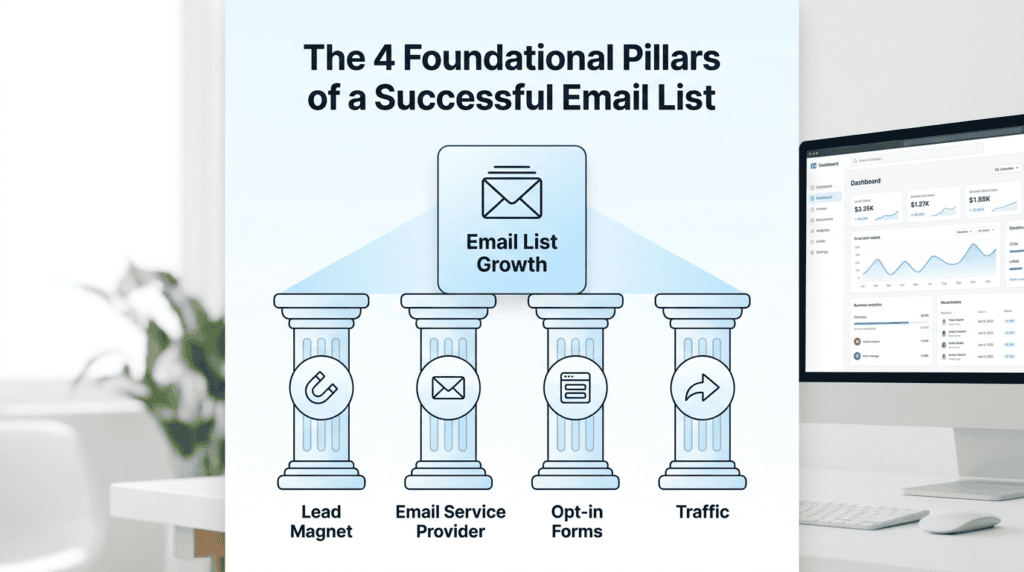
Before diving into specific tactics, it’s crucial to understand the core components that make an email marketing strategy effective. Think of these as the non-negotiables. Without these four pillars firmly in place, any effort you put into getting new signups will likely fall flat, leading to low engagement and wasted time. Success in building an email list requires a robust system, not just a collection of individual tricks.
> Don’t chase vanity metrics; focus on attracting subscribers who genuinely want to hear from you. A smaller, engaged email list is always more valuable than a massive, unresponsive one.
I’ve seen countless entrepreneurs get caught up in the latest popup tool or giveaway campaign, only to realize their email list isn’t generating any revenue or engagement. Often, the problem wasn’t the tactic itself, but a missing piece in their foundational setup. We once ran an A/B test for a client where simply improving the clarity of their lead magnet’s value proposition on the landing page, without changing the traffic source, boosted their daily signups by 35%. It wasn’t about more traffic; it was about better alignment of their offer.
Pillar 1: A Compelling Reason to Subscribe (Your Lead Magnet)
Nobody hands over their email address for nothing. You need to offer something valuable in return, something that solves a problem or provides immediate benefit to your target audience. This “something” is your lead magnet. It could be a free download, an exclusive content piece, a discount code, a mini-course, or a template. The key is that it must be highly relevant to your niche and appealing to the people you want on your email list. Without a strong incentive, your opt-in rates will remain low.
Pillar 2: A High-Quality Email Service Provider (Your ESP)
An Email Service Provider (ESP) is the software that allows you to manage your email list, create email marketing campaigns, send newsletters, and automate sequences. This isn’t something you can skip. Trying to manage subscribers manually or through a regular email client is a recipe for disaster, leading to deliverability issues and a lack of critical analytics. Your ESP handles everything from storing subscriber data and managing signups to ensuring your emails actually land in inboxes. Popular options include ConvertKit, ActiveCampaign, MailerLite, and AWeber, with plans often starting around $9–$15/month for smaller lists.
Pillar 3: A Simple Way to Sign Up (Your Opt-in Forms)
Once you have a compelling lead magnet and an ESP, you need an easy way for people to actually subscribe. This is where opt-in forms come in. These are the fields on your website or landing page where visitors enter their email address. Effective opt-in forms are clear, concise, and strategically placed. They can take many forms: inline forms within blog posts, sidebar widgets, exit-intent popups, or dedicated landing pages. The goal is to make the subscribing process as frictionless as possible.
Pillar 4: A Consistent Source of Traffic (Your Audience Channels)
Even the best lead magnet and opt-in form are useless without visitors to see them. You need a consistent flow of traffic to your website or landing pages where your sign-up forms reside. This is how you get people in front of your offer. Traffic can come from various sources: organic traffic from search engine optimization (SEO), social media channels, paid advertising, guest blogging, or even podcast appearances. The more relevant traffic you drive, the more opportunities you create for new email subscribers.
Step 1: Crafting a Lead Magnet Your Audience Actually Wants
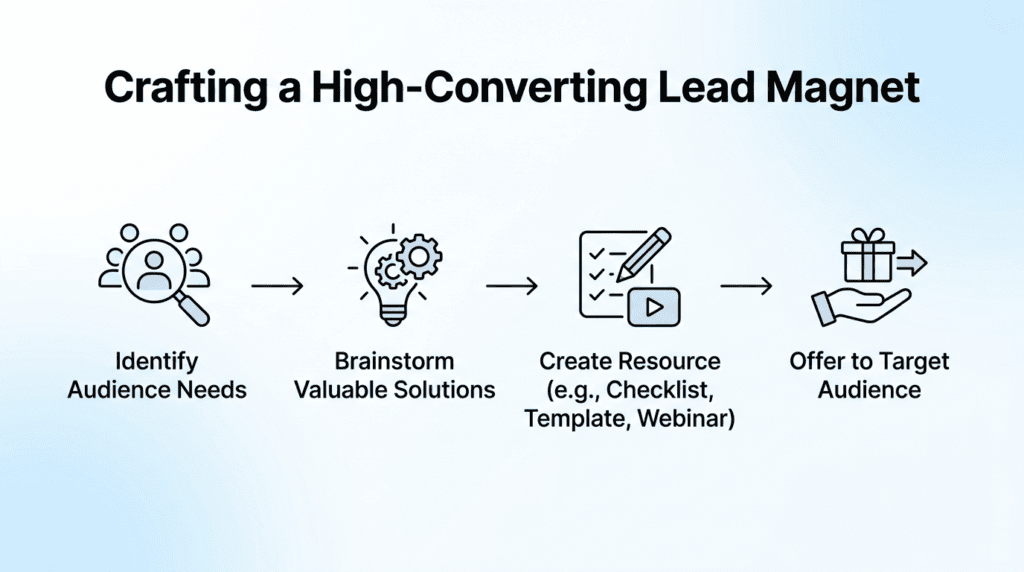
Moving past the idea of just “giving something away,” a truly effective lead magnet is a strategic asset. It’s the first value exchange you offer, designed to solve an immediate problem or provide a quick win for your ideal subscriber. Think of it as a highly targeted solution that makes saying “yes” to your email list an easy decision. When we build an email list, this initial offer is crucial for attracting quality signups.
What Makes a High-Converting Lead Magnet?
A lead magnet isn’t just any freebie; it needs specific qualities to genuinely attract your target audience and encourage signups. It should be:
- Highly Specific: It solves one particular problem or answers one burning question. Vague offers rarely convert.
- Immediately Actionable: Your audience should be able to consume it quickly and apply its insights right away.
- High Perceived Value: Even though it’s free, it should feel like something people would pay for.
- Relevant to Your Niche: It directly relates to your core content or product, ensuring you attract the right leads.
- Easy to Consume: Short guides, checklists, or templates often outperform lengthy ebooks for initial opt-ins.
> A high-converting lead magnet isn’t just free; it’s a valuable, targeted solution that offers immediate utility to your ideal subscriber.
5 Lead Magnet Examples for Different Business Types
Different online businesses thrive on different types of incentives to grow their email list. Here are a few examples tailored to common business models:
- For Bloggers: The “Content Upgrade” Checklist
If you run a blog, a content upgrade is a powerful way to get email signups. This isn’t just a generic checklist; it’s a specific, downloadable resource that expands on a particular blog post. For example, if you have a post on “10 SEO Tips,” your content upgrade could be a “Printable SEO Checklist for Bloggers” or a “Google Analytics Setup Guide.” It leverages existing traffic and provides valuable content directly related to what readers are already interested in.
- For SaaS: The “Free Tool or Template”
Software as a Service (SaaS) companies can offer a free, simplified version of their tool, a useful template, or a calculator. Imagine a project management SaaS offering a “Free Project Planning Template” or a marketing automation platform providing a “Social Media Content Calendar Template.” This gives potential users a taste of the value your software provides, encouraging them to join your email list for updates and future offers.
- For Coaches/Consultants: The “Free Webinar or Workshop”
For those in coaching or consulting, a free webinar or workshop is an excellent lead magnet. It allows you to demonstrate your expertise live, build rapport, and offer actionable advice. A “Free 30-Minute Workshop on Overcoming Procrastination” or a “Live Q&A Session on Launching Your First Online Course” can attract highly engaged leads interested in your services.
- For Ecommerce: The “First-Time Buyer Discount”
Ecommerce stores often use discount codes as an incentive. Offering “10% Off Your First Order” or “Free Shipping on Orders Over $50” in exchange for an email address is a direct way to encourage both a signup and an immediate purchase. This strategy focuses on driving revenue while simultaneously building your email list.
- For Creators: The “Free Email Course”
Creators, whether artists, writers, or educators, can offer a free email course. This involves delivering a series of valuable lessons directly to subscribers’ inboxes over several days. For instance, a photographer might offer a “5-Day Email Course: Mastering Your DSLR Camera” or a writer could provide a “7-Day Challenge: Write Your First Short Story.” This builds engagement and positions you as an authority.
Common Mistake: Creating a Lead Magnet Before Defining Your Target Audience
One of the biggest pitfalls I’ve seen when people try to build an email list is creating a lead magnet they *think* is good, without first understanding their target audience. If you don’t know who you’re trying to attract, what their pain points are, or what solutions they’re actively seeking, your lead magnet will likely fall flat. Always start with your audience’s needs, then craft the incentive. This ensures your lead magnet resonates and brings in the right kind of subscribers.
Step 2: Choosing the Right Email Marketing Platform (ESP)

Once you have a compelling lead magnet, you need the right tools to manage your growing email list. An Email Service Provider (ESP) is the backbone of your email marketing strategy. It handles everything from collecting signups to sending out your newsletter and automated email sequences. Choosing the right one early on can save you a lot of headaches as your audience grows.
Key Features to Look For in Your First ESP
When you’re just starting to build an email list, you don’t need every advanced feature, but some are non-negotiable for effective email marketing:
- User-Friendly Interface: You’ll be spending a lot of time here, so it needs to be intuitive, especially for beginners.
- List Management & Segmentation: The ability to organize your subscribers into different groups based on their interests or actions is vital for targeted marketing.
- Email Editor: A drag-and-drop editor for creating professional-looking emails and templates without coding.
- Automation Capabilities: Basic automation for welcome email sequences and simple follow-ups is a must.
- Opt-in Forms & Landing Pages: Integrated tools to create sign-up forms and simple landing pages for your lead magnet.
- Analytics & Reporting: To track open rate, click-through rates, and overall campaign performance.
- Deliverability: Ensuring your emails actually land in inboxes and don’t get flagged as spam.
> Prioritize an ESP that offers intuitive list management, robust automation for welcome sequences, and reliable deliverability to ensure your messages reach your subscribers.
When to Use a Free Plan vs. a Paid Plan
Many ESPs offer free plans, which can be a great starting point for those looking to build an email list from scratch without upfront costs.
- Free Plans: These are ideal when you’re just beginning and have a small number of subscribers (often up to 1,000 or 2,000). They typically include basic features like email sending, list management, and simple forms. The trade-off is usually limited features, branding on your emails, and sometimes slower support. Use a free plan to test the waters, learn the ropes, and validate your email marketing strategy.
- Paid Plans: As your email list grows and your needs become more complex, upgrading to a paid plan becomes essential. Paid plans unlock advanced automation, more sophisticated segmentation, A/B testing, custom branding, priority support, and often higher sending limits. The cost usually scales with your number of subscribers or email volume. The decision to upgrade often comes when you hit subscriber limits on a free plan or realize you need more powerful tools to effectively engage your audience and monetize your list.
Our Top 3 Recommended ESPs for Beginners (2026)
Based on ease of use, features for beginners, and scalability, these three email marketing platforms stand out:
- Best for Simplicity & Creators: ConvertKit
ConvertKit is renowned for its clean interface and creator-focused features. It excels at managing subscribers, tagging them based on their interests, and setting up powerful visual automation workflows. For bloggers, YouTubers, podcasters, and other content creators, its focus on audience segmentation and personalized email sequences makes it incredibly effective for building an email list and fostering engagement. Plans start around $9/month for up to 300 subscribers, with a generous free plan for up to 1,000 subscribers (limited features).
- Best for All-in-One Features: MailerLite
MailerLite offers a fantastic balance of features and affordability, making it a strong contender for small businesses and those who want more than just basic email sending. It includes a drag-and-drop editor, landing page builder, website builder, and advanced automation, all within an intuitive platform. It’s an excellent choice if you want a comprehensive tool without the steep learning curve of some enterprise solutions. MailerLite has a free plan for up to 1,000 subscribers (12,000 emails/month) and paid plans starting around $10/month.
- Best for Advanced Automation: ActiveCampaign
While it has a steeper learning curve than ConvertKit or MailerLite, ActiveCampaign is unmatched for its advanced automation capabilities. If your goal is to build highly sophisticated, personalized email marketing campaigns based on user behavior, purchase history, or specific actions, ActiveCampaign is the platform to grow into. It’s ideal for businesses with complex sales funnels or those planning extensive segmentation and targeting from the outset. Pricing starts around $29/month for 1,000 contacts, with a 14-day free trial available.
When I first started building my email list, I went with a free plan from a well-known provider. It was great for getting started, but once I hit a few thousand subscribers and wanted to implement more complex automated email sequences, I quickly realized the limitations. Upgrading to a paid plan, specifically one with robust segmentation, was a game-changer for my conversion rates and overall engagement.
Step 3: Designing and Placing High-Converting Opt-in Forms

Having a great lead magnet and an ESP is only half the battle. You also need effective ways for people to actually sign up. This is where opt-in forms come in. The goal isn’t just to have a form, but to design and place it strategically to maximize your signups and grow your email list.
Where to Place Your Email Sign-up Forms for Maximum Visibility
Strategic placement of your opt-in forms is critical for capturing leads. You want them to be visible without being overly intrusive.
- Website Header or Navigation Bar: A subtle, always-present link or button in your website’s header or navigation bar can lead to a dedicated landing page for your lead magnet. This ensures it’s accessible from any page.
- Within Relevant Blog Posts (Content Upgrades): As mentioned earlier, placing an opt-in form directly within a blog post that offers a content upgrade is highly effective. The reader is already engaged with the topic, making them more likely to opt-in for a related, deeper resource. These inline forms blend naturally with your valuable content.
- In the Website Footer: While less prominent, the footer is a common place for sign-up forms. Many users instinctively look there for contact information or to subscribe to a newsletter. It’s a low-friction placement that can still capture interested readers.
- As a Timed or Exit-Intent Pop-up Form: Pop-ups, when used correctly, can be incredibly effective. A timed pop-up appears after a user has spent a certain amount of time on your site, indicating engagement. An exit-intent popup triggers when a user’s mouse movement suggests they are about to leave your website. These can capture signups that might otherwise be lost, often by offering a last-chance incentive like a discount or exclusive content.
Writing a Call to Action (CTA) That Drives Action
Your call to action (CTA) is the text on your button or link that prompts users to subscribe. A weak CTA can significantly reduce your conversion rate, even with a great lead magnet.
- Be Specific: Instead of “Submit” or “Sign Up,” use action-oriented language that highlights the benefit.
- Create Urgency (where appropriate): Phrases like “Get Instant Access” or “Download Your Free Guide Now” can encourage immediate action.
- Focus on the Benefit: What will the subscriber *get*? “Get My Free Checklist,” “Send Me the Course,” or “Unlock Your Discount” are much more compelling than generic terms.
- Keep it Concise: CTAs should be short and to the point, typically 2-5 words.
For example, instead of a button that says “Subscribe,” a better option might be “Download the SEO Checklist” or “Get Your 10% Off Coupon.” This clarity helps drive signups.
The Double Opt-in vs. Single Opt-in Debate: A 2026 Perspective
The choice between single opt-in and double opt-in affects your email list quality and deliverability.
- Single Opt-in: When a user fills out your sign-up form, they are immediately added to your email list. This is faster and generally leads to a higher number of initial subscribers. However, it can also lead to more spam signups, typos in email addresses, and a higher bounce rate, potentially impacting your sender reputation and deliverability.
- Double Opt-in: After filling out the form, the user receives a confirmation email and must click a link within that email to verify their subscription. This process ensures that every subscriber genuinely wants to be on your list and that their email address is valid. While it might result in fewer total subscribers (as some won’t complete the second step), those you do get are typically more engaged and less likely to mark your emails as spam. This also helps with GDPR compliance and maintaining a healthy email list.
In 2026, with increasing scrutiny on data privacy and the importance of maintaining high deliverability, double opt-in is generally the recommended best practice. It builds a more engaged and higher-quality email list, which is more valuable in the long run, even if the initial growth rate appears slower. It helps avoid the spam folder and ensures you’re building a list of active subscribers who genuinely want your content.
Step 4: Driving Your First 1,000 Subscribers with Proven Strategies
Once you have your lead magnet, email service provider (ESP), and opt-in forms set up, the next step is to get people to actually see them. This is where your traffic generation and promotion strategies come into play. Building an email list isn’t just about having the right tools; it’s about actively putting your offer in front of your target audience. Think of it as inviting people to a party – you’ve set up the venue and the snacks, now you need to send out the invitations.
> Tactical Takeaway: Don’t wait for subscribers to find you. Actively promote your lead magnet across all your owned and controlled channels to kickstart your email list growth.
Strategy 1: Turn Your Website into a List-Building Machine
Your website is often the first place potential subscribers encounter your brand. Optimizing it for email capture is crucial for building an email list effectively.
- Optimizing Your Homepage for Email Capture: Your homepage is prime real estate. Make sure your primary lead magnet is prominently displayed, ideally above the fold. This could be a clear call to action (CTA) button leading to a dedicated landing page, or an embedded opt-in form. The goal is to make it impossible for visitors to miss your offer.
- Using Content Upgrades in Your Top 3 Blog Posts: Content upgrades are highly effective. These are bonus pieces of content related to a specific blog post that readers can get by providing their email address. For example, if you have a popular blog post about “10 SEO Tips,” offer a downloadable “SEO Checklist” as an upgrade within that post. This strategy leverages existing organic traffic and provides valuable content directly relevant to what readers are already interested in.
- Creating a Dedicated Landing Page for Your Primary Lead Magnet: While forms on your site are good, a dedicated, high-converting landing page focused solely on your lead magnet can significantly boost signups. This page should have no distractions (like navigation menus) and a clear, persuasive message explaining the benefits of your offer. Drive traffic to this page from all your promotional efforts.
Strategy 2: Leveraging Social Media Platforms (Without Being Spammy)
Social media can be a powerful channel for email list growth, but it requires a strategic approach to avoid looking like you’re just begging for signups.
- Promoting Your Lead Magnet in Your Bio Link: This is a simple yet effective tactic. Whether it’s Instagram, TikTok, or Twitter, your bio link should point directly to your lead magnet’s landing page. Update it regularly to reflect your best offer.
- Running a Giveaway or Contest: Giveaways are excellent for rapid list growth. Offer a valuable prize related to your niche, and require an email signup for entry. Promote the giveaway across all your social media channels. Just ensure the prize attracts your target audience, not just freebie seekers.
- Using Social Media Stories with a “Swipe Up” or Link Sticker: Platforms like Instagram and Facebook Stories offer interactive features. Use these to create engaging content that teases your lead magnet and includes a direct link for people to “swipe up” or click to subscribe. This is a great way to capture attention from your existing social media audience.
Strategy 3: Using Content Marketing and SEO to Attract Subscribers
Content marketing and search engine optimization (SEO) are long-term strategies that bring in highly qualified traffic, making them ideal for building an email list with engaged subscribers.
- How Guest Blogging Can Build Your List and Authority: Writing guest posts for other websites in your niche exposes you to a new, relevant audience. In your author bio, include a compelling call to action to your lead magnet. This not only drives signups but also builds your authority and backlinks, which helps your own site’s SEO.
- Creating “Lead Magnet” Hubs with SEO in Mind: Develop comprehensive content hubs or resource pages on your website that naturally integrate your lead magnets. For example, if your lead magnet is an “Ultimate Guide to Podcasting,” create several blog posts around podcasting topics that link to and promote that guide. Optimize these posts for relevant keywords to attract organic traffic searching for solutions your lead magnet provides.
Strategy 4: Exploring Paid Ads for Rapid List Growth
While organic strategies are vital, paid advertising can significantly accelerate your email list growth, especially when you’re looking to scale quickly.
- When to Consider Using Facebook or Google Ads: Paid ads are best when you have a clear understanding of your target audience and a high-converting lead magnet. If you’re struggling to get initial organic traffic or want to reach a larger audience faster, platforms like Facebook Ads or Google Ads can put your lead magnet directly in front of interested prospects. I’ve personally seen Facebook Ads deliver incredible results for list building, often at a lower cost per lead than other channels, especially when targeting is precise.
- A Simple Retargeting Ad Scenario for Website Visitors: Not everyone who visits your website will sign up immediately. Retargeting ads allow you to show specific ads to people who have already visited your site but didn’t convert. You can create a simple retargeting campaign on Facebook or Google that reminds these visitors about your valuable lead magnet, encouraging them to return and subscribe. This is a highly efficient way to capture leads from traffic you’ve already earned.
What to Do After Someone Subscribes: The Welcome Email Sequence
Getting someone to subscribe is just the first step. What happens next is critical for building a relationship and ensuring long-term engagement. This is where your welcome email sequence comes in.
The Goal of Your Welcome Email
The primary goal of your welcome email sequence is to confirm the subscription, deliver the promised lead magnet, and begin building a relationship with your new subscriber. It’s your chance to make a great first impression, set expectations for future communication, and introduce your brand’s unique value. A well-crafted welcome sequence can significantly impact open rates, click-through rates, and overall subscriber engagement down the line.
A 3-Part Welcome Sequence You Can Steal
This sequence is a proven framework that you can adapt for almost any niche. I’ve used variations of this for years, and it consistently helps turn new signups into engaged readers and customers.
- Email 1: Deliver the Goods & Introduce Yourself:
- Subject Line: “Here’s Your [Lead Magnet Name] + Welcome!”
- Content: Immediately deliver the lead magnet (link to download or access). Briefly introduce yourself and your brand. Thank them for subscribing and reiterate the value they’ll get from your email list. Keep it concise and friendly.
- Email 2: Tell a Story & Set Expectations:
- Subject Line: “My Story: How I [Achieved X] (and how you can too!)” or “What to Expect Next from [Your Brand]”
- Content: Share a personal story related to your niche or the problem your audience faces. This builds connection and trust. Then, clearly outline what kind of content they’ll receive, how often, and what benefits they can expect. Include a soft call to action, perhaps to read a popular blog post or follow you on social media.
- Email 3: Provide More Value & Segment Your Audience:
- Subject Line: “One More Thing: A Free Resource Just For You!” or “Quick Question: How Can I Help You Best?”
- Content: Offer another piece of valuable content (e.g., a link to a helpful article, a free template, a video). Crucially, this email is also an opportunity to segment your audience. Ask a simple question that helps you understand their biggest challenge or interest, and provide clickable links that tag them in your ESP. For example, “Are you interested in [Topic A], [Topic B], or [Topic C]?” This allows for personalized emails later on.
Honest Take: The Reality of Building an Email List from Scratch
Let’s be real for a moment. Building an email list, especially from scratch, isn’t always a walk in the park. It takes consistent effort, strategic thinking, and patience.
How Long Does It *Really* Take to Get 1,000 Subscribers?
The truth is, there’s no single answer. It depends heavily on your niche, your traffic sources, the quality of your lead magnet, and your promotional efforts. Some people hit 1,000 subscribers in a few months with aggressive paid ad campaigns. Others might take a year or more relying solely on organic traffic and content marketing. Expect it to take longer than you think, but know that consistent effort pays off. Don’t get discouraged if you’re not seeing overnight success. Focus on steady, sustainable growth rather than chasing viral spikes.
Why Quality Subscribers Matter More Than List Size
It’s easy to get caught up in the numbers game, but a large email list of disengaged subscribers is far less valuable than a smaller list of highly engaged ones. A list of 100 active subscribers who open your emails, click your links, and buy your products is worth infinitely more than 10,000 people who never open anything. Focus on attracting your target audience with relevant lead magnets and valuable content. These are the people who will eventually become loyal customers and advocates for your brand.
The Biggest Mistake New Marketers Make (And How to Avoid It)
The single biggest mistake new marketers make when trying to build an email list is treating it as a one-time setup rather than an ongoing relationship. They create a lead magnet, set up a form, and then forget about it, only sending emails when they have something to sell. This quickly leads to low open rates, high unsubscribe rates, and poor deliverability. To avoid this, commit to consistently providing valuable content to your subscribers, even when you’re not promoting a product. Nurture the relationship, listen to their needs, and use segmentation to send personalized emails. Your email list is a community, not just a database.
Final Recommendation: Your 30-Day Email List Building Plan
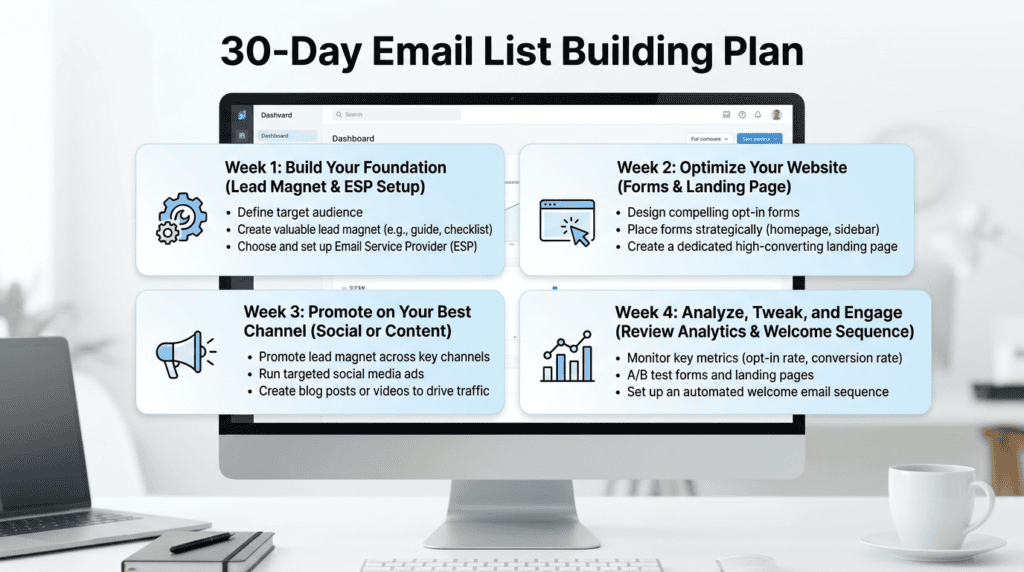
Building an email list isn’t a one-time task; it’s an ongoing process that requires consistent effort and optimization. To help you get started and see real traction, here’s a focused 30-day plan that consolidates the strategies we’ve discussed. This isn’t just about getting subscribers; it’s about building a valuable asset for your online business.
Week 1: Build Your Foundation (Lead Magnet & ESP Setup)
Your first week is all about setting up the core infrastructure. Revisit the ideas for a compelling lead magnet and choose one that genuinely solves a problem for your target audience. This incentive is crucial for attracting initial signups. Simultaneously, select and set up your email marketing platform (ESP). Focus on getting your account configured, understanding the basics of creating forms, and setting up your welcome email sequence. Ensure you enable a double opt-in process for better list quality and compliance.
Week 2: Optimize Your Website (Forms & Landing Page)
With your lead magnet ready and ESP configured, dedicate Week 2 to making it easy for people to subscribe. Design and strategically place your opt-in forms across your website, including inline forms within blog posts, a prominent sidebar widget, and potentially an exit-intent popup. Create a dedicated, high-converting landing page for your primary lead magnet. Pay close attention to your call to action (CTA) – it should be clear, concise, and compelling, telling visitors exactly what they’ll get by joining your email list.
Week 3: Promote on Your Best Channel (Social or Content)
Now it’s time to drive traffic and get those initial subscribers. Instead of trying to do everything at once, pick one or two of your strongest channels from the strategies discussed earlier. If you have an active social media presence, promote your lead magnet in your bio link and through engaging posts. If your blog gets organic traffic, focus on optimizing existing valuable content with content upgrades. The goal is to get your lead magnet in front of your target audience and start seeing your first sign-ups. This initial promotion is key to email list growth.
Week 4: Analyze, Tweak, and Engage (Review Analytics & Welcome Sequence)
The final week of your initial push is for analysis and engagement. Dive into your email analytics to see which forms and channels are performing best. Look at your welcome email sequence: are people opening the emails? Are they clicking through? Use these insights to tweak your forms, CTAs, and even your lead magnet if needed. Start thinking about segmenting your list based on initial interactions to send more personalized emails down the line.
> The biggest mistake you can make now is delaying action; every day you wait is a day you miss out on connecting with potential customers and building a valuable asset for your business.
I’ve seen firsthand how a well-executed 30-day plan can kickstart an online business, turning casual visitors into engaged subscribers ready for your offers.
Frequently Asked Questions (FAQs)
How much does it cost to build an email list?
Building an email list can range from nearly free to several hundred dollars per month, depending on your chosen email marketing platform, advertising spend, and lead magnet creation costs. Many ESPs offer free plans for your first 500-1,000 subscribers, making it accessible to start building an email list from scratch.
How to Build an Email List without a website?
Yes, you can build an email list without a traditional website by using dedicated landing page builders, social media platforms with direct sign-up links, or even through content platforms like YouTube or podcasts. While a website offers more control and long-term stability, these alternatives allow you to start collecting subscribers immediately.
What is a good conversion rate for an opt-in form?
A good conversion rate for an opt-in form typically ranges from 1% to 5%, though highly optimized forms with compelling lead magnets can achieve 10% or even higher. Factors like traffic quality, the value of your incentive, form placement, and the clarity of your call to action significantly impact your conversion rate.
How often should I email my list?
The ideal frequency for emailing your list depends on your audience’s expectations and the type of valuable content you provide, but consistency is key. Many businesses find success emailing weekly or bi-weekly for a newsletter, while others might send daily updates or less frequent broadcast emails.
What are the legal requirements for an email list (GDPR, CAN-SPAM)?
Yes, you must comply with legal requirements such as GDPR (General Data Protection Regulation) for European audiences and the CAN-SPAM Act in the United States. Key requirements include obtaining clear consent (double opt-in is highly recommended), providing an easy unsubscribe option, including your physical address, and having a clear privacy policy.