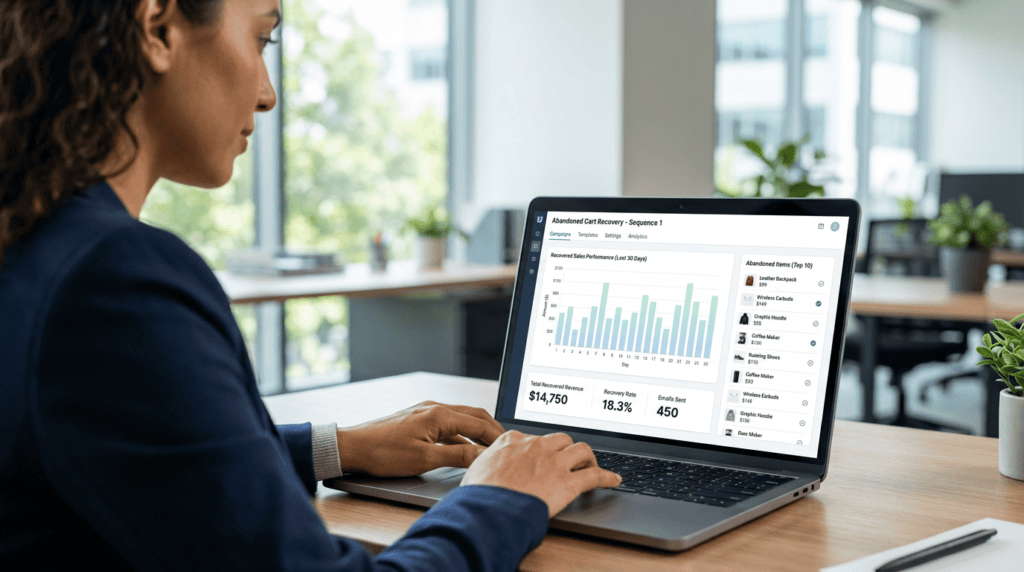
Your checkout page is leaking money. Most ecommerce store owners focus heavily on driving traffic, yet overlook the massive revenue potential sitting in abandoned carts. An effective abandoned cart email sequence isn’t just about sending a quick reminder; it’s a sophisticated strategy to re-engage shoppers, understand their hesitations, and guide them back to purchase. Many assume a simple discount email will fix everything, but that often undervalues the true power of this automation.
The real game-changer isn’t just recovering a sale, but using each email in your sequence to build trust and gather insights into why customers hesitate. This guide will show you how to move beyond basic templates, crafting a profitable automation that truly resonates with your customers. You’ll learn what to send, when to send it, and how to optimize your sequence for maximum impact, ultimately protecting your revenue and boosting your conversion rate.
The Strategic Role of an Abandoned Cart Sequence in Ecommerce
Why Shoppers Abandon Carts (And How Emails Solve It)
It’s a common scenario: a customer adds items to their cart, gets to the checkout, and then vanishes. This isn’t always a sign of disinterest. Often, shoppers abandon carts for very solvable reasons. Understanding these triggers is the first step in crafting an effective abandoned cart email sequence.
Common reasons for shopping cart abandonment include:
- Unexpected Costs: High shipping fees or taxes appearing late in the checkout process can surprise buyers and make them reconsider.
- Just Browsing: Many people use carts as wishlists or to compare prices, without immediate purchase intent.
- Complex Checkout Process: Too many steps, mandatory account creation, or confusing forms create friction.
- Payment Issues: Declined cards, lack of preferred payment options, or security concerns.
- Distractions: Life happens. A phone call, a delivery, or a sudden interruption can pull a shopper away mid-purchase.
Your abandoned cart emails become a direct line to address these issues. A well-timed first recovery email can clarify shipping costs, offer a free shipping incentive, or remind them of a discount. Later emails can offer customer support, simplify the purchase process, or simply provide a gentle reminder of the items they loved. This targeted communication helps reduce friction and guides customers back to complete their purchase.
Quantifying the Financial Impact: How Much Revenue Can You Recover?
The numbers don’t lie: the average cart abandonment rate across industries hovers around 70%. That means for every 100 potential sales, 70 are walking away at the last minute. For an ecommerce store owner, this represents a significant chunk of lost sales and untapped revenue. Imagine if you could recover even a fraction of those.
Let’s put this into perspective. If your average order value is $50 and you get 1,000 visitors who add items to their cart each month, you’re looking at $50,000 in potential monthly sales. With a 70% abandonment rate, $35,000 of that is slipping through your fingers. Even a modest 10% recovery rate from your abandoned cart email sequence would bring in an extra $3,500 in revenue each month, or $42,000 annually. This isn’t just theoretical; it’s a tangible boost to your bottom line.
> Many businesses underestimate the cumulative impact of a well-tuned abandoned cart email sequence; even a 1% improvement in recovery can translate to thousands in lost sales recovered annually.
This isn’t just about immediate sales; it’s about optimizing your entire marketing automation workflow to capture customer purchase intent that’s already been expressed.
Setting Realistic Expectations for Your Recovery Rate
While the potential for lost sales recovery is huge, it’s crucial to set realistic expectations. You won’t recover 100% of abandoned carts, and that’s okay. Industry benchmarks for abandoned cart email sequence recovery rates typically range from 5% to 15%. Some highly optimized sequences might push higher, but starting with a realistic goal helps you measure success and avoid discouragement.
The key is continuous improvement through split testing and optimization. For instance, I once worked with a client who initially saw an 8% recovery rate. By segmenting their abandoned cart emails based on cart value and personalizing the first recovery email with specific product recommendations, we were able to increase that to 14% within three months. It wasn’t a magic bullet, but consistent testing of subject lines, email delivery timing, and discount code incentives made a significant difference. Don’t chase perfection from day one; aim for steady, data-driven gains.
How This Automation Builds Customer Trust and Reduces Friction
Beyond just recovering revenue, an effective automated email sequence for abandoned carts plays a vital role in building customer trust and reducing future friction. Think of these emails not as nagging reminders, but as helpful customer service touchpoints. When a shopper receives a polite, well-designed email that addresses potential concerns or offers assistance, it shows you care about their experience, not just their money.
Personalization is key here. By referencing the exact items left in their cart and offering relevant support, you demonstrate attentiveness. This can include offering a direct link to customer support, clarifying return policies, or even providing social proof elements like reviews of the abandoned products. This approach transforms a potentially frustrating experience into an opportunity to strengthen the buyer-brand relationship. It makes the customer feel valued and understood, which can lead to higher lifetime value and repeat purchases down the line.
Building Your 3-Part Abandoned Cart Email Sequence: A Step-by-Step Guide
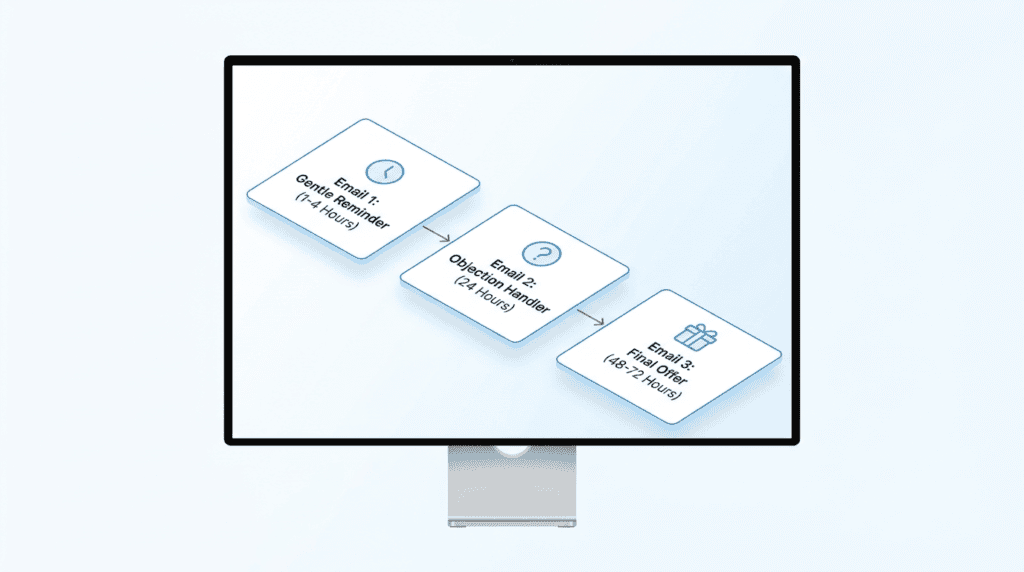
Crafting an effective abandoned cart email sequence is less about sending a single email and more about a strategic, multi-touch workflow. This section details the structure and content for a proven three-email sequence designed to maximize recovery and boost your overall sales. Each email has a distinct purpose and timing, building on the last to gently guide shoppers back to their purchase.
Email 1: The Gentle Reminder (Sent 1-4 Hours After Abandonment)
The first recovery email in your sequence is all about timing and simplicity. Its primary goal is to overcome technical issues, like a browser crash, or simple distractions that pulled the shopper away. Many times, customers simply get sidetracked and genuinely forget they left items in their cart.
Your subject line strategy here should be clear and helpful, not pushy. Think along the lines of “Did you forget something?” or “Your order at [Brand Name] is waiting.” The content focus needs to be straightforward: a simple reminder with a prominent picture of the cart items. This visual cue helps shoppers instantly recall what they were considering. Crucially, include a clear Call-to-Action (CTA) button that says “Return to Cart” or “Complete Your Order.” At this stage, avoid offering a discount. You don’t want to train customers to abandon their carts just to get a coupon.
> The most effective first abandoned cart email acts as a helpful nudge, not a sales pitch, focusing on convenience and reminding the customer of their intent.
For example, a snippet might read: “It looks like you left a few things in your cart. We’ve saved them for you when you’re ready to come back.” I’ve seen this first email alone recover a significant portion of abandoned carts, sometimes as much as 10-15% of lost revenue, simply because it catches people before they move on to other tasks. The quick trigger is key here.
Email 2: The Objection Handler (Sent 24 Hours After Abandonment)
If the first email didn’t bring them back, the second email in your abandoned cart sequence needs to address potential objections. Shoppers might have concerns about shipping costs, product fit, trust in your brand, or simply have questions they couldn’t find answers to. This email aims to tackle those head-on.
Your subject line strategy can introduce a subtle sense of urgency or highlight a benefit. Phrases like “Your [Product Name] is waiting” or “Questions about your order?” work well. The content focus should reinforce the value of the items and your brand. This is where you can strategically include social proof, such as glowing customer reviews or testimonials related to the products in their cart. Highlight your clear return policy to build confidence and provide easy access to customer support through a live chat link or an FAQ page. This shows you’re available to help resolve any hesitations.
An example snippet could be: “Still thinking it over? Here’s what other customers are saying about [Product Name]…” This approach helps to build trust and overcome common reasons for shopping cart abandonment without resorting to price cuts.
Email 3: The Final Offer (Sent 48-72 Hours After Abandonment)
This third and final email is your last chance to convert price-sensitive shoppers or those who needed an extra push. Its goal is to create a compelling, time-sensitive incentive.
The subject line strategy for this email should clearly state the offer. Something like “A special offer for you” or “10% off to complete your order” immediately grabs attention. The content focus must present a clear, time-sensitive discount. This could be 10% off, free shipping, or a small bonus item. The key is to include a clear expiration date for the offer to create urgency and scarcity. Reiterate the items still in their cart and include a prominent CTA button. This discount code incentive is often the trigger that pushes customers to complete their purchase.
For instance, a snippet might say: “We don’t do this often, but we’d love for you to join our community. Use code SAVE10 for 10% off your order in the next 24 hours.” This email automation workflow is a powerful tool for recovering abandoned carts and boosting conversion rates.
Key Elements Every Abandoned Cart Email Must Include
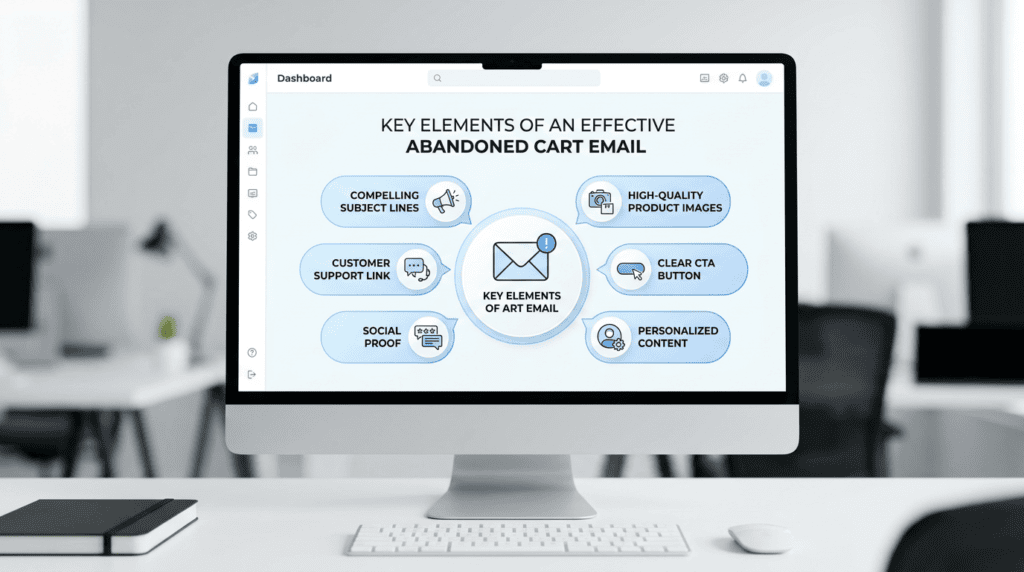
Beyond the timing and general purpose of each email, certain elements are crucial for the success of any abandoned cart email sequence. These components ensure clarity, build trust, and effectively guide the customer back to their purchase.
Compelling Subject Lines That Get Opened
A great abandoned cart email is useless if it never gets opened. Your subject line is the gatekeeper. It needs to be concise, relevant, and intriguing enough to stand out in a crowded inbox. Avoid generic phrases. Instead, use personalization, create a sense of curiosity, or clearly state the email’s purpose. For instance, “Your cart is waiting, [Customer Name]!” or “A quick question about your recent visit.” Split testing subject lines is a continuous optimization strategy that can significantly improve your open and click-through rates.
High-Quality Product Images from the User’s Cart
Visuals are powerful. Including high-quality images of the exact products the customer left in their cart serves as an immediate, clear reminder. It helps them visualize the items again and rekindles their desire. This isn’t just about showing a picture; it’s about making the email feel personalized and directly relevant to their shopping experience. Make sure these images link directly back to the product pages or the cart itself.
A Clear, Unmistakable Call-to-Action (CTA) Button
Every abandoned cart email needs a single, prominent call to action. This button should be easy to spot, clearly worded, and lead directly to the customer’s pre-filled shopping cart. Phrases like “Return to Cart,” “Complete Your Order,” or “Shop Now” are effective. The goal is to remove any friction from the recovery process. A strong call to action is the direct path back to a completed purchase.
Personalized Content (Using the Customer’s Name)
Personalization goes beyond just using the customer’s name in the subject line. It means dynamically pulling in the specific items they abandoned, referencing their recent activity, and even suggesting related products based on their browsing history. This level of personalized product recommendations makes the email feel less like an automated message and more like a helpful, tailored interaction. It shows you understand their customer purchase intent.
Social Proof: Customer Reviews and Testimonials
Building brand trust is vital. Including social proof elements like short customer reviews or star ratings for the products in their cart can significantly influence a shopper’s decision. People trust the opinions of other buyers. If someone is hesitant, seeing positive feedback from others who purchased the same item can be the reassurance they need to complete their order. This is especially effective in the second reminder email.
A Link to Your Customer Support or FAQ Page
Sometimes, a shopper abandons a cart because they have a question or concern that wasn’t addressed during their browsing. Providing an easy-to-find link to your customer support or FAQ page within your abandoned cart emails shows you’re available to help. This proactive customer support outreach can resolve issues quickly and prevent lost sales recovery. It demonstrates that you value their business and are ready to assist with any queries about shipping, returns, or product details.
Common Mistakes to Avoid When Setting Up Your Sequence
Even with the best intentions, it’s easy to make missteps that can hurt your abandoned cart email sequence’s effectiveness. Avoiding these common pitfalls is crucial for maximizing your recovery efforts and maintaining a positive customer experience.
Sending Too Many Emails or Being Too Aggressive
While persistence is key, there’s a fine line between a helpful reminder and an annoying barrage. Sending too many emails in a short period, or using overly aggressive language, can lead to unsubscribes and a negative perception of your brand. Most successful sequences stick to 2-3 emails over a 48-72 hour period. Beyond that, the conversion rate drops significantly, and the risk of alienating potential customers rises.
Offering a Discount in the Very First Email
This is a classic mistake that can train your customers to abandon their carts intentionally. If shoppers learn they’ll always get a discount just by leaving items behind, they’ll game your system. As discussed, your first recovery email should be a gentle reminder, not an immediate incentive. Save the discount for the third, final offer email, where it serves as a last-ditch effort to convert price-sensitive shoppers.
> Never offer a discount in your first abandoned cart email. This trains shoppers to abandon their carts just to get a deal, eroding your profit margins and the perceived value of your products.
Forgetting to Exclude Customers Who Complete a Purchase
This might seem obvious, but it’s a surprisingly common automation oversight. There’s nothing more frustrating for a customer than receiving an abandoned cart email *after* they’ve already completed their purchase. It makes your brand look disorganized and can damage trust. Ensure your email automation platform is set up to immediately remove customers from the abandoned cart sequence once their order is placed. I’ve seen countless businesses accidentally send abandoned cart emails to customers who already completed their purchase. It’s a quick way to annoy people and make your brand look disorganized.
Using Generic, Uninspiring Email Copy and Design
Your abandoned cart emails are still a reflection of your brand. Generic templates with bland copy and poor design won’t capture attention or convey value. Invest time in crafting compelling subject lines, engaging copy that speaks to your customer’s purchase intent, and a clean, mobile-responsive design. Personalization, high-quality product images, and a clear call-to-action button are non-negotiables for boosting conversion rates.
Hiding Shipping Costs or Other Unexpected Fees
One of the top reasons for shopping cart abandonment is unexpected costs at checkout. If your abandoned cart emails don’t address this, or worse, if your checkout process still has hidden fees, you’re fighting an uphill battle. Be transparent about shipping costs and any other charges early in the shopping journey. Your recovery emails can even highlight free shipping thresholds or clear return policies to alleviate these common concerns.
How to Measure the Success of Your Abandoned Cart Automation
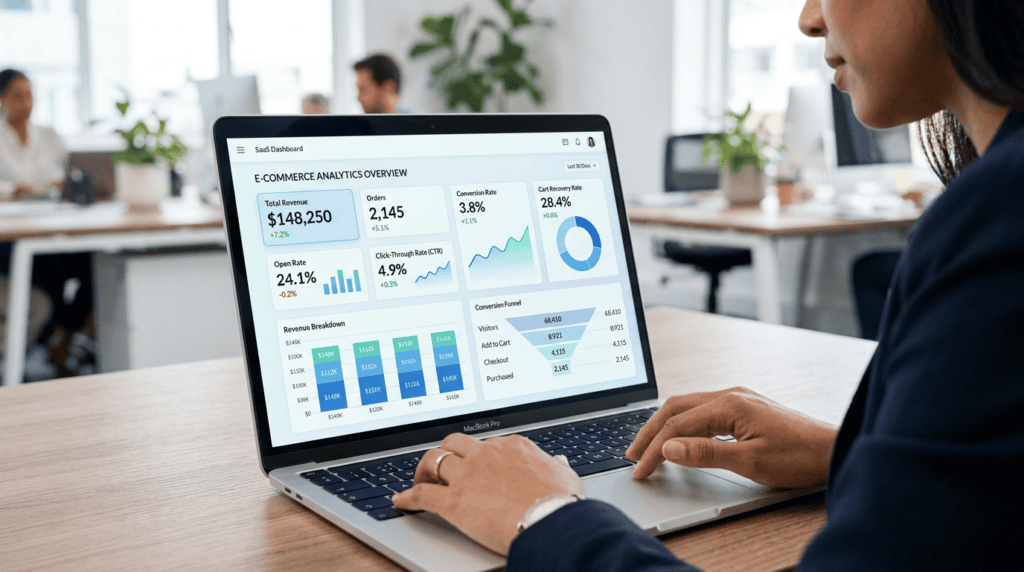
Setting up an abandoned cart email sequence is only half the battle; the other half is knowing if it’s actually working. Measuring performance is critical for optimizing your strategy and ensuring you’re recovering lost sales effectively.
Key Metrics to Track: Open Rate, Click-Through Rate, and Conversion Rate
To understand your sequence’s health, you need to monitor several key email marketing metrics:
- Open Rate: This tells you how many people are opening your emails. A low open rate often points to weak subject lines or poor sender reputation.
- Click-Through Rate (CTR): This measures how many people clicked on a link within your email, usually the “Return to Cart” button. A low CTR might indicate unengaging email copy or a non-obvious call-to-action.
- Conversion Rate: This is the most important metric for an abandoned cart sequence. It shows the percentage of recipients who completed a purchase after opening and clicking through one of your recovery emails. This directly reflects the sequence’s ability to boost sales.
Calculating Your Cart Recovery Rate and Revenue Recovered
Beyond individual email metrics, you need to look at the overall impact on your business.
- Cart Recovery Rate: This is the percentage of abandoned carts that were successfully converted into purchases thanks to your email sequence. Calculate it by dividing the number of recovered purchases by the total number of abandoned carts, then multiply by 100. For example, if 100 carts were abandoned and 15 were recovered, your recovery rate is 15%.
- Revenue Recovered: This is the total dollar amount of sales generated directly from your abandoned cart automation. This metric clearly demonstrates the financial value of your efforts and helps justify the time and resources invested.
> Your cart recovery rate is the ultimate indicator of success. Focus on improving this metric above all others, as it directly translates to recaptured revenue.
A/B Testing Your Subject Lines, Offers, and Email Copy
Optimization is an ongoing process. A/B testing (or split testing) allows you to compare two versions of an email element to see which performs better. You can test:
- Subject Lines: Does “Did you forget something?” perform better than “Your items are waiting!”?
- Offers: Does 10% off convert better than free shipping?
- Email Copy: Does a longer, more descriptive email outperform a short, punchy one?
- Call-to-Action Buttons: Which button text or design gets more clicks?
By continuously testing and refining, you can significantly improve the performance of your abandoned cart email sequence. When I first started optimizing these sequences, I was amazed at how much a simple subject line tweak could boost open rates and, ultimately, sales recovery.
Using UTM Parameters to Track Performance in Google Analytics
To get a complete picture of your abandoned cart automation’s impact, use UTM parameters. These are short text codes you add to URLs to track where website traffic comes from. By adding unique UTMs to the links in each of your abandoned cart emails, you can see exactly which email in the sequence, and even which specific link, led to a purchase in Google Analytics. This provides granular data for understanding customer purchase intent and optimizing your email automation workflow.
Advanced Strategies for High-Value Carts and Repeat Customers
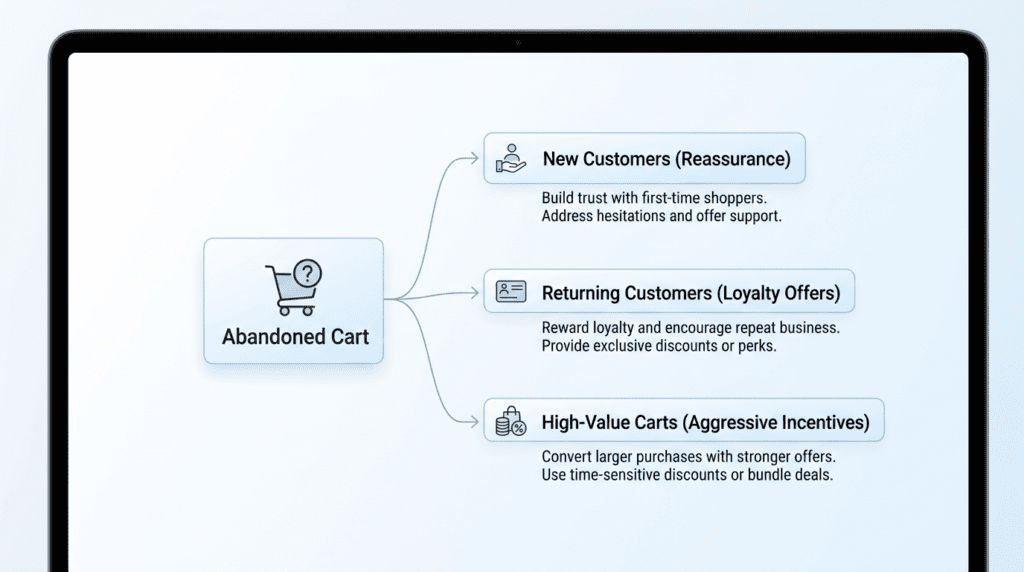
Once you have a solid, basic abandoned cart email sequence in place, you can explore more advanced strategies to further boost your recovery rate and maximize revenue. These tactics involve deeper personalization and leveraging additional communication channels.
Segmenting Your Audience: Different Sequences for Different Shoppers
Not all abandoned carts are created equal, and treating every shopper the same is a missed opportunity. Segmenting your audience allows you to tailor your messaging and offers for maximum impact.
- New vs. Returning Customers: A first-time shopper might need more reassurance about your brand, like social proof or a strong return policy. A returning customer, however, might respond better to a loyalty-based offer or a reminder of past positive experiences. Your tone can also be more familiar with repeat buyers.
- Cart Value: For high-value carts (e.g., over $100 or $200), you might consider a more aggressive discount, a free gift, or even a personalized outreach from customer support. For lower-value carts, a simple reminder might suffice, or a smaller incentive like free shipping.
- Specific Products: If certain products are frequently abandoned, or if they require more explanation, you can customize your email copy to address common questions or highlight specific benefits. For example, an abandoned cart for a complex electronic device might benefit from an email linking to a detailed product video or FAQ.
> Segmentation is not just a ‘nice-to-have’ feature; it’s a revenue multiplier. Treating all abandoned carts the same leaves significant money on the table, especially with repeat customers or high-value items.
Incorporating SMS into Your Abandoned Cart Workflow
SMS (text message) marketing offers incredibly high open rates and immediate delivery, making it a powerful addition to your cart recovery strategy. After obtaining proper consent, you can send a concise, friendly text message as a follow-up to an abandoned cart. This could be a simple reminder or a quick offer.
For example, a text message might say: “Hey [Customer Name], still thinking about your [Product Name]? We saved your cart! [Link to Cart]” or “Your [Brand Name] cart expires soon! Use code SAVE10 for 10% off. [Link to Cart]”. Remember to keep SMS messages short, direct, and always include a clear call-to-action.
Personalizing Offers Beyond a Simple Percentage Discount
While a percentage discount code incentive is effective, it’s not the only tool in your arsenal. For advanced cart recovery, consider personalizing offers based on customer behavior or cart contents:
- Free Shipping Offer: Often more appealing than a small percentage discount, especially for lower-priced items.
- Free Gift with Purchase: A small, relevant gift can be a powerful incentive, particularly for higher-value carts.
- Extended Warranty or Service: For electronics or appliances, offering an extended warranty can address buyer hesitation.
- Personalized Product Recommendations: If a customer abandoned a specific item, suggest complementary products they might also like, or alternatives if the original item is out of stock.
- Loyalty Points or Rewards: For existing customers, offering bonus loyalty points for completing their purchase can be a strong motivator.
I’ve personally seen how segmenting high-value carts for a more personalized outreach, sometimes even a direct phone call for truly massive orders, can dramatically increase recovery. These tailored approaches show customers you understand their needs, building brand trust and boosting conversion rates.
Final Recommendations

An effective abandoned cart email sequence is one of the highest-ROI automations you can implement for an online store. Start with the foundational 3-part sequence outlined above, ensuring each email has a distinct purpose. Focus on being helpful first and foremost, addressing potential customer concerns before resorting to a discount. Continuously monitor your key metrics and test different elements to refine your approach. By implementing this strategy, you can turn abandoned carts from a frustrating leak into a consistent source of recovered revenue.
Every ecommerce store owner should implement a well-structured abandoned cart email sequence. This strategy is particularly crucial for businesses with a high cart abandonment rate, as it directly addresses lost sales and customer purchase intent. If you’re already sending basic abandoned cart emails but seeing low conversion rates, it’s time to optimize your sequence with personalization, social proof, and strategic timing. Ignoring this powerful cart recovery strategy means leaving significant revenue on the table, missing opportunities to build customer relationships, and ultimately facing higher customer acquisition costs as you constantly chase new shoppers instead of converting existing ones.
> Mastering your abandoned cart email sequence isn’t just about recovering sales; it’s about building a more resilient and profitable ecommerce business.
From my own experience running online stores, a finely tuned abandoned cart email sequence has consistently delivered some of the best returns on time invested. It’s a fundamental piece of the puzzle for sustainable growth.
Frequently Asked Questions (FAQ)
How many emails should be in an abandoned cart sequence?
A sequence of 2-3 emails is the standard best practice for an abandoned cart email sequence. This provides enough touchpoints to be effective without overwhelming the shopper or appearing too aggressive.
When is the best time to send the first abandoned cart email?
The first recovery email should be sent within 1-4 hours of abandonment. This timing is ideal for catching shoppers who were simply distracted or experienced a technical glitch during their checkout process.
Should I always offer a discount in my abandoned cart emails?
No, you should avoid offering a discount in the first email of your abandoned cart sequence. Save any discount code incentive for the second or third email as a final offer to convert price-sensitive shoppers, preventing customers from learning to abandon carts just to get a deal.
What is a good abandoned cart recovery rate?
A good cart recovery rate can range from 5% to 15%, depending on your industry, product, and the quality of your automated email sequence. Even a 5% recovery rate can have a significant impact on your overall sales and revenue.
How do I stop the sequence if a customer makes a purchase?
Your email marketing platform’s automation workflow should be configured to immediately remove a contact from the abandoned cart sequence as soon as they complete an order. This is a critical step to avoid sending irrelevant and annoying emails to new customers.