
Writing product launch emails from scratch is a conversion killer. Many entrepreneurs and marketers struggle to craft messages that genuinely resonate, often leading to disappointing sales and wasted effort. It’s not enough to just announce a new product; you need a strategic sequence of email copywriting templates that guides your audience from curiosity to purchase. The hard truth is, even a fantastic product can flop if your launch communication falls flat or relies on generic, uninspired messages.
This guide cuts through the noise, providing 7 proven, fill-in-the-blank email copywriting templates specifically designed for high-impact product launches. You’ll get actionable frameworks you can adapt immediately to build anticipation, drive sales, and maximize your launch revenue. Stop guessing what to write and start using proven formulas that turn subscribers into customers.
1. The “Problem, Agitate, Solve” (PAS) Template for Early-Bird Lists
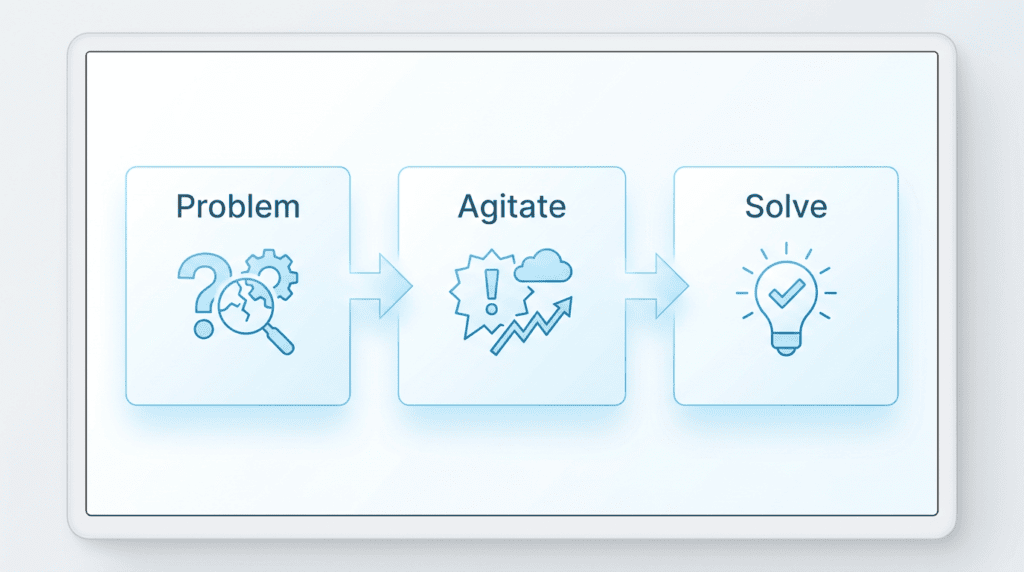
This template is ideal for warming up your audience by highlighting a pain point they’re actively experiencing. It’s a classic copywriting framework because it taps directly into your subscribers’ frustrations before offering a clear path forward.
Template Breakdown:
- Problem: Start with a subject line and opening that directly states the reader’s primary frustration. This isn’t about your product yet; it’s about their current struggle.
- Agitate: Use bullet points to detail the negative consequences and emotional impact of this problem. Show them you understand their pain and how it affects their daily life or business.
- Solve: Introduce your upcoming product as the specific solution that eliminates the pain. Position it as the logical, necessary answer to everything you just agitated.
When to Use This Template:
This template works best for the initial announcement email to your most engaged subscribers or a waitlist. It’s perfect for those who already know you and trust your expertise, making them receptive to a solution for a problem they recognize. Use it to build early buzz and gauge interest before the full launch sequence begins.
> Critical Takeaway: Don’t just state the problem; make your audience *feel* the problem’s impact before you ever mention your solution. This emotional connection is key for early conversion.
Real-World Example (Digital Course Launch):
Let’s say I’m launching a new digital course on “Mastering Productivity for Solopreneurs.” I’ve seen countless solopreneurs burn out trying to juggle everything, and this template helps me speak directly to that struggle.
Subject Line: Are you constantly overwhelmed by your to-do list?
Email Body:
Hey [Subscriber Name],
Do you ever feel like your to-do list is a monster that just keeps growing, no matter how hard you work? You start your day with good intentions, but by noon, you’re drowning in emails and urgent tasks, wondering where the time went.
It’s frustrating when you’re trying to build a business, but:
- You’re working nights and weekends just to keep up.
- Important projects keep getting pushed back.
- You feel guilty taking breaks because there’s always “more to do.”
- Your passion project is starting to feel like a never-ending chore.
This constant overwhelm isn’t just draining; it’s actively holding your business back from growth. You’re stuck in a cycle of reactivity, unable to focus on the strategic work that truly moves the needle.
That’s why I’ve spent the last six months developing something special. Soon, I’ll be opening the doors to “The Solopreneur’s Productivity Playbook” – a brand new digital course designed to help you finally conquer your workload, reclaim your time, and scale your business without the burnout. This isn’t about working harder; it’s about working smarter, with proven systems that actually stick. Keep an eye on your inbox for more details coming next week!
2. The “Open Loop” Sequence Template for Building Launch Hype
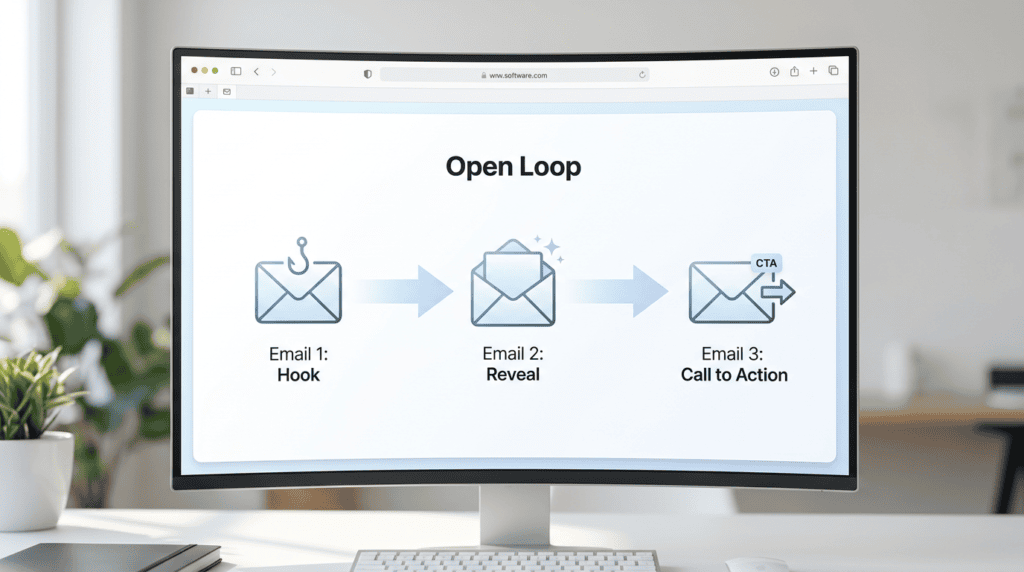
This template creates suspense and keeps subscribers opening your emails by teasing information across a short series. It’s a powerful email marketing strategy because it taps into natural human curiosity, making your audience eager for the next piece of the puzzle. This approach trains your subscribers to anticipate and open your emails, which is crucial for maximizing visibility when the cart officially opens for your product.
- Template Breakdown:
- Email 1 (The Hook): Start with a compelling story, a surprising statistic, or a thought-provoking question related to the problem your product solves. The key is to introduce an intriguing element without revealing the full solution. End this email with a cliffhanger, promising more details in the next message. The goal is to pique interest and ensure they look forward to your next email.
- Email 2 (The Reveal): This email connects the story or statistic from Email 1 directly to your product’s unique mechanism or “secret sauce.” Explain *how* your product offers a new, effective way to solve the problem. Focus on the core innovation or methodology that sets your offer apart.
- Email 3 (The Call to Action): With the stage set and curiosity high, this email announces that the solution is now available. Guide readers directly to the sales page, making it easy for them to learn more and make a purchase. This is where the anticipation built in the previous emails pays off with clicks and conversions.
> Critical Warning: Don’t make the “open loop” too long or complex; a 2-3 email sequence is most effective. Stretching it out too much can lead to subscriber fatigue and drop-offs.
I’ve used this sequence many times for digital product launches, and I’ve seen firsthand how it can significantly boost open rates leading up to a launch day. For one course launch, we saw a 15% higher click-through rate on the final sales email compared to a standard announcement, simply because people were already primed and expecting the solution. It’s about building a narrative, not just sending a series of promotional emails.
3. The “Social Proof & FOMO” Template for Mid-Launch Sales
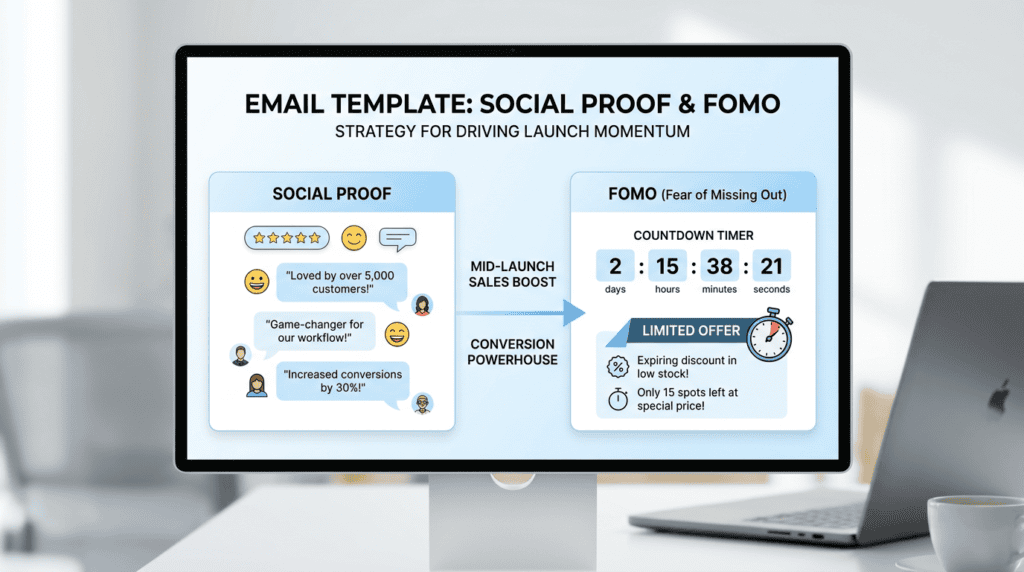
This template leverages testimonials and the fear of missing out (FOMO) to persuade subscribers who are still on the fence. By this point in your product launch, the initial rush might have subsided, and some potential customers need an extra nudge. Integrating social proof helps build trust, while FOMO creates a sense of urgency, encouraging immediate action.
- Template Breakdown:
- Subject Line: Craft a subject line that combines urgency with social proof. Examples include: “See what [Customer Name] achieved with [Product Name] – Limited Time Offer!” or “Don’t miss out: [Number] people are already seeing results!”
- Opening: Feature a powerful, results-oriented testimonial from a beta tester or an early customer. This isn’t just a quote; it’s a story of transformation. Focus on the specific problem they had and the tangible outcome they achieved using your product.
- Body: Connect the testimonial back to a key benefit of the product. Explain *how* the product enabled that specific result. This reinforces the value proposition and makes the testimonial more relatable to your audience. You might highlight a specific feature that made the difference for the featured customer.
- Closing (FOMO): Remind them of a deadline, a limited-time bonus, or the limited quantity available. Clearly state what they stand to lose if they don’t act now. This could be a price increase, the removal of a valuable bonus, or simply missing the opportunity to solve their problem sooner.
This template is best deployed 2-3 days into your launch, after the initial excitement has settled and you’re looking to convert those who need a bit more convincing.
Example (SaaS Product Launch):
Imagine launching a new project management SaaS tool. Your email might feature a small business owner who struggled with team coordination.
- Subject Line: “How [Company Name] boosted efficiency by 30% with [Your SaaS Product] – Offer Ends Soon!”
- Opening: “Meet Sarah, owner of ‘Creative Designs Co.’ Before [Your SaaS Product], her team spent hours each week just trying to get on the same page. Projects often missed deadlines, and client communication was a mess. But after implementing our new software…”
- Body: “…Sarah reported a 30% increase in project completion efficiency within the first month. Our intuitive task automation and real-time collaboration features meant her team could focus on design, not administrative headaches. This isn’t just about saving time; it’s about delivering better results to her clients and growing her business.”
- Closing (FOMO): “This special launch pricing, which includes our premium support package, disappears in just 48 hours. Don’t let your team fall behind. Join Sarah and hundreds of other businesses streamlining their workflow today.”
4. The “Benefit-Driven, Feature-Deep-Dive” Template for Educating Prospects
This template moves beyond initial hype to provide tangible reasons why your product is the right choice, focusing on outcomes over technical specifications. It’s designed for the analytical buyer who needs to understand the “how” and “why” before committing to a purchase. These prospects aren’t swayed by flashy claims; they want concrete evidence of value.
- Template Breakdown:
- Headline: Start with a clear, powerful benefit that speaks directly to a desired outcome. For example, “How to Get [Desired Outcome] in Half the Time” or “Achieve [Specific Goal] with Our New [Product Category].”
- Benefit 1 -> Feature: Describe a major benefit your product offers, then immediately explain the specific feature that delivers it. This creates a direct link between the problem solved and the tool that solves it.
- Benefit 2 -> Feature: Repeat this pattern for another key benefit-feature pair.
- Benefit 3 -> Feature: Continue for a third crucial benefit. For clarity and readability, especially when detailing multiple points, use bullet points for these benefit-feature pairings. This makes it easy for readers to scan and grasp the core value.
- Call to Action: Link directly to a specific section of your sales page that details these features. This allows interested prospects to dive deeper into the technical aspects or see demonstrations.
> Tactical Takeaway: Always lead with the benefit. People buy solutions to their problems, not just a list of features.
This template is particularly effective for those who are evaluating options and need to justify their decision with solid reasoning. It helps them visualize the practical application of your product. When I’m writing sales copy for a new software tool, I always make sure to translate every technical capability into a direct user advantage. For instance, instead of just saying “AI-powered content generation,” I’d write, “Generate high-quality blog posts in minutes, freeing up hours of your week for strategic planning.” This approach resonates much more with prospects looking for real-world impact.
5. The “Objection Handling & FAQ” Template to Overcome Buyer Hesitation
This template proactively addresses the most common questions and doubts that prevent customers from buying. It’s designed to clear up confusion and build confidence before they even have to ask.
- Template Breakdown:
- Subject Line: Frame it as a helpful Q&A (e.g., “Your top questions about [Product Name], answered”). Other options include “Still on the fence about [Product Name]?” or “Let’s clear up any doubts about [Product Name].”
- Opening: Acknowledge that it’s smart to have questions before investing in a new solution. You can say something like, “It’s natural to have questions when considering a new tool or program. We want you to feel completely confident in your decision.”
- Question 1 (e.g., Price): State the objection clearly (“Is it worth the price?”) and reframe it around value, ROI, or the cost of inaction. For instance, “While [Product Name] is an investment, consider the cost of *not* solving [problem]. Many of our users see a return on investment within [timeframe] by [specific benefit].”
- Question 2 (e.g., Time): Address concerns about implementation (“Will this take too long to set up?”) and provide a realistic, manageable timeline. You might write, “Worried about the time commitment? [Product Name] is designed for quick integration. Most users are up and running in under [X] hours, thanks to our [specific feature, e.g., guided setup].”
- Question 3 (e.g., Skill Level): Tackle doubts about their ability to succeed (“Do I need to be an expert to use this?”). Reassure them with support or ease of use. “No advanced skills needed! We built [Product Name] to be intuitive for beginners, and our comprehensive [resource, e.g., video tutorials, support team] is here to help every step of the way.”
- Call to Action: Reiterate the main benefit and encourage them to purchase or learn more.
> Pro Tip: Don’t just answer the question; use each objection as an opportunity to highlight another key benefit or feature of your product.
- How to Gather Objections: Look at past customer support tickets, survey your audience, or analyze comments on your social media posts. I’ve found that running a quick poll on Instagram Stories or sending a simple email asking “What’s holding you back from [achieving X]?” can uncover goldmines of common hesitations. These insights are crucial for crafting effective email copywriting templates.
6. The “Last Chance” Urgency Sequence for Closing the Cart
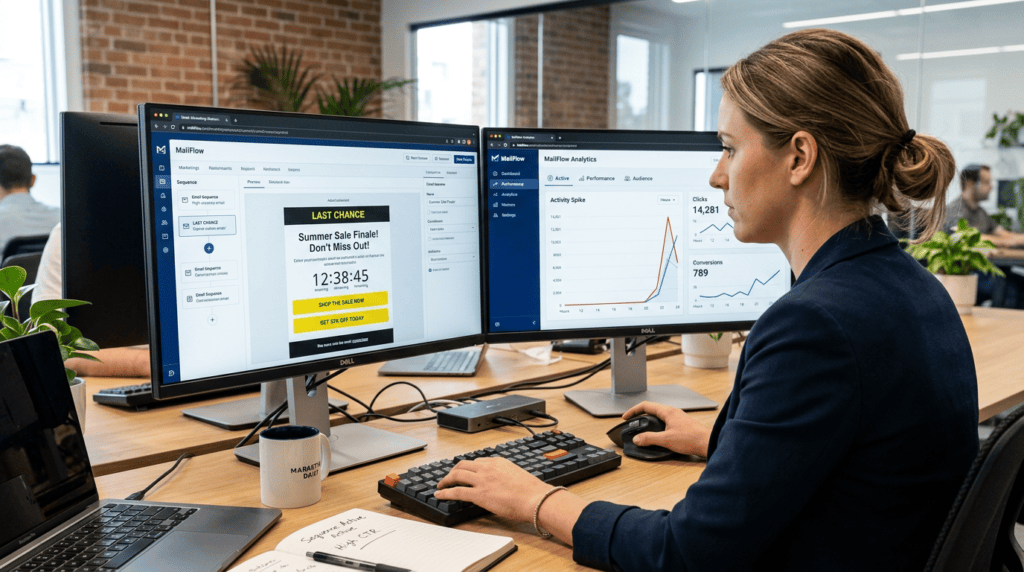
This is a critical, multi-part template for the final 24 hours of your launch to maximize last-minute sales. It’s about creating a clear deadline and motivating those who’ve been procrastinating.
- Template Breakdown:
- Email 1 (24 Hours Left): Announce the deadline clearly. Remind them of the core transformation the product offers and list any expiring bonuses. The subject line could be “24 Hours Left: Don’t Miss Out on [Product Name] + [Bonus]!” In the body, reinforce the main value proposition and explicitly state when the cart closes.
- Email 2 (8-12 Hours Left): Shift the focus to the pain of missing out. What will they lose if they don’t act? Use a final, powerful testimonial or a quick recap of the biggest benefit. A subject line like “Going, Going, GONE: [Product Name] Closes Tonight!” works well. This email should be shorter and more direct, emphasizing scarcity and urgency.
- Email 3 (1-2 Hours Left): The final call. Keep it short and direct. Subject line: “Final notice” or “Closing in 1 hour.” Body: A simple sentence reminding them this is the last chance, followed by a direct link to the checkout page. This email is purely functional, designed to drive immediate clicks.
- Honest Take: This sequence may feel aggressive, but it’s highly effective because it respects your stated deadline and forces a decision from procrastinators. When I’ve run product launches, I’ve seen a significant spike in sales during these final hours. It’s not about being pushy; it’s about honoring the commitment you made to your audience about the launch window.
7. The “Downsell / Next Steps” Template for Post-Launch Segmentation
This template is for the people who didn’t buy, allowing you to segment your list and present a relevant alternative. It’s a smart way to maintain engagement and potentially convert them into customers down the line, even if they missed this specific offer.
- Template Breakdown:
- Subject Line: “Is [Product Name] not the right fit for you?” or “What’s next after [Product Name]?” This invites an honest response.
- Opening: Acknowledge the launch is over and they didn’t purchase. State that it’s okay and you want to ensure they get the right content. For example, “The launch for [Product Name] has wrapped up, and we noticed you didn’t join us this time. That’s perfectly fine! We want to make sure we’re still sending you valuable content that truly helps.”
- The “Why”: Ask for feedback with a one-click survey (e.g., “Why didn’t you buy? A) Price, B) Timing, C) Not the right solution”). Tools like SurveyMonkey or even simple email links can make this easy. This feedback is invaluable for future product development and marketing.
- The Downsell (Optional): If applicable, offer a lower-priced product, a free resource, or a tripwire that addresses one of their primary objections (e.g., a smaller workshop if the full course was too expensive). This could be a mini-course, a detailed guide, or a free trial of a related service.
- Segmentation: Based on their survey response or downsell engagement, you can then segment these subscribers into different lists for future, more targeted email marketing campaigns.
- Long-Term Value: This builds goodwill and helps you understand your audience better for the next launch, preventing unsubscribes. Instead of just letting them go cold, you’re offering continued value and learning from their choices. Understanding why someone *didn’t* buy is often as important as knowing why they *did*.
How to Adapt These Templates for Your Specific Product and Audience
The email copywriting templates we’ve explored provide a solid foundation, but their true power comes from how you customize them. Think of them as proven frameworks, not rigid scripts. Your goal is to make each email feel like it was written just for your audience, not pulled from a generic template.
- Inject Your Brand Voice: Replace generic placeholders with your unique personality, humor, and tone. A template is a skeleton; your brand is the soul. This is where your writing truly shines, making your email marketing campaigns distinct.
- Focus on Transformation, Not Just Features: Instead of saying “10 video modules,” say “The 10-step system to achieve [Desired Outcome].” Always connect features to the end result, emphasizing the benefit your product delivers. This approach resonates more deeply with your target audience.
- A/B Test Your Subject Lines: The subject line is the most critical element for open rates. Test a benefit-driven subject line against a curiosity-driven one to see what your audience responds to. Small tweaks here can significantly impact your email open rates and overall conversion.
- Segment Your Email List: Don’t send every email to everyone. Tailor your messages based on engagement (e.g., send a more aggressive follow-up to those who clicked the sales page link but didn’t buy). Personalized email marketing through segmentation ensures your messages are relevant, boosting engagement and sales.
Final Recommendation: Which Template Should You Start With?

For any product launch, the most crucial emails are the ones that build initial momentum and close the sale. Choosing the right email copywriting templates at the right time can make or break your results.
- If you are in the pre-launch phase: Start with the “Open Loop” Sequence Template (#2) to build maximum hype and anticipation. This strategy primes your subscribers, making them eager for your official launch announcement.
- If your launch is live and sales are slowing: Immediately deploy the “Social Proof & FOMO” Template (#3) to reinvigorate interest. Leveraging testimonials and creating a sense of urgency can push fence-sitters toward a purchase.
- On the final day of your launch: The “Last Chance” Urgency Sequence (#6) is non-negotiable. It will almost always be your highest-grossing day, converting procrastinators into customers.
Ultimately, a successful launch uses a combination of these high-converting email templates. Map them to your launch timeline to create a comprehensive campaign that guides your subscriber from awareness to purchase.
> Don’t let a poorly structured email sequence leave money on the table; strategically deploying these proven email copywriting templates is your fastest path to maximizing launch revenue.
The cost of inaction here is significant: without a clear email marketing strategy, you’re leaving potential sales and customer engagement on the table, limiting your product’s reach and impact. I’ve personally seen launches double their initial projections simply by optimizing their email sequence templates with these frameworks.
Frequently Asked Questions (FAQs)
How many emails should be in a product launch sequence?
A typical launch sequence includes 5-9 emails over 7-10 days, including pre-launch hype, an open cart announcement, mid-launch content (objection handling, social proof), and a closing sequence. This comprehensive email strategy ensures consistent communication.
Can I use these email templates for a service-based business?
Absolutely. Adapt the language to focus on the transformation or outcome your service provides. For example, instead of a “product,” you’re launching new “client spots” or a “consulting package,” using these proven email copywriting templates to attract leads.
What’s the most common mistake when using email copywriting templates?
Failing to personalize them. If your email reads like a generic template, it will be ignored. You must inject your brand’s voice, specific customer pain points, and unique product benefits to create high-converting email templates.
How do I get testimonials if this is my first product launch?
Offer a free or heavily discounted “beta” version of your product to a small group of ideal customers in exchange for honest feedback and a testimonial. This provides invaluable social proof for your official launch email marketing campaigns.