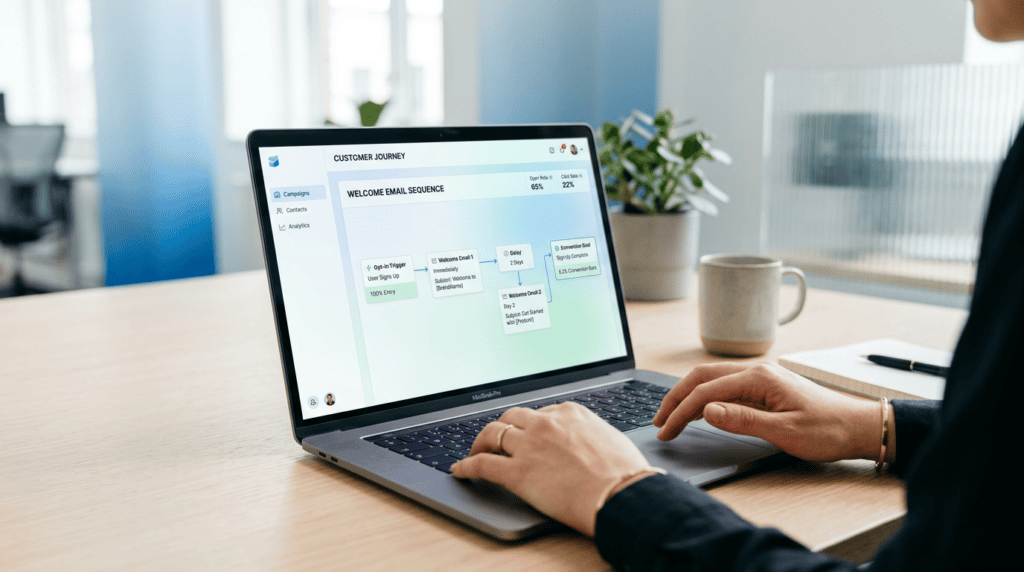
Are your new subscribers ghosting you? Many businesses focus heavily on getting new leads, but then drop the ball right when those leads are most engaged. A single “thanks for signing up” email just doesn’t cut it anymore. This guide will walk you through building a powerful welcome email sequence designed to engage new subscribers from day one and turn them into loyal customers. We’ll provide a clear, step-by-step framework, real-world strategies, and practical advice to help you craft an effective automated welcome series from scratch.
The common mistake isn’t a lack of effort, but a misunderstanding of what a welcome email sequence truly needs to accomplish. It’s not just about saying hello; it’s about setting expectations, delivering immediate value, and guiding your audience through their initial journey with your brand. By the end of this article, you’ll understand how to implement a strategic welcome sequence that nurtures your audience and drives measurable results, ensuring your efforts to grow your email list actually pay off.
What is a Welcome Email Sequence (and Why It’s Non-Negotiable)?
Defining the Welcome Sequence
A welcome email sequence isn’t just one email; it’s a carefully planned, automated series of messages sent to new subscribers immediately after they opt-in to your email list. Think of it as your brand’s digital handshake, a structured workflow designed to introduce your business, deliver promised content (like a lead magnet), and begin building a relationship. This automated email workflow is triggered by a specific action, like signing up for a newsletter or downloading a free guide, ensuring every new subscriber receives a consistent onboarding experience.
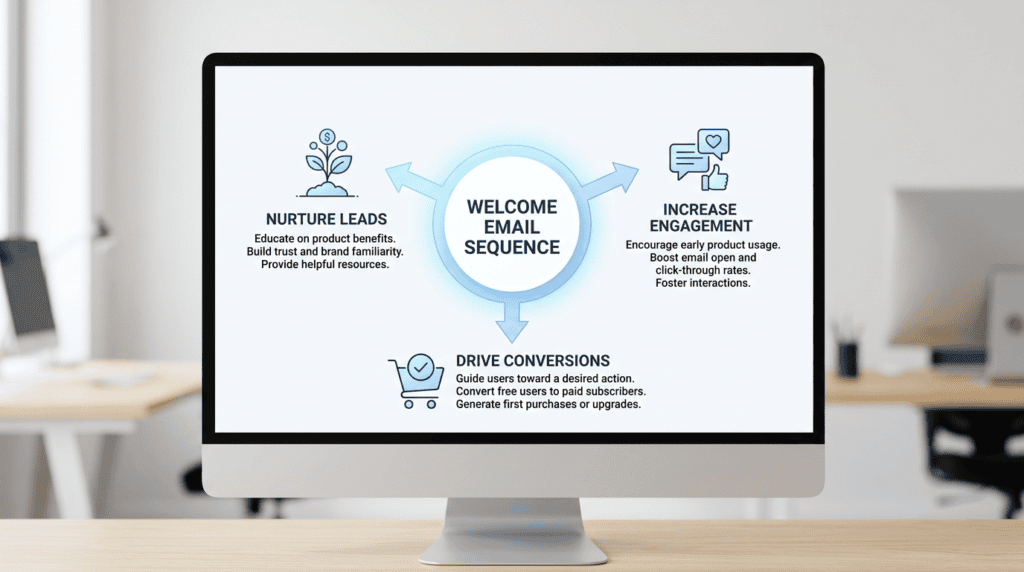
The Core Goals
The primary purpose of any good welcome email sequence is multi-faceted. First, it nurtures new leads by providing immediate value and setting the stage for future interactions. Second, it aims to increase engagement, encouraging subscribers to open your emails, click on links, and explore your content. Finally, and crucially for many businesses, it drives initial conversions, whether that’s a first purchase, a demo sign-up, or deeper engagement with your core offer. I’ve personally seen welcome sequences boost initial conversion rates by 15-20% simply by guiding new subscribers through a clear value proposition and a low-friction call to action in the first few emails. This strategic approach builds trust and brand awareness, moving new subscribers further down your sales funnel.
The Cost of Skipping It
Ignoring the importance of a well-crafted welcome email sequence is a costly oversight. Without a proper welcome series, new subscribers often experience apathy, quickly forgetting why they signed up in the first place. This leads to low open rates on future campaigns, higher unsubscribe rates, and ultimately, missed revenue opportunities. You’ve invested time and money to acquire these leads; letting them go cold immediately is like leaving money on the table.
> Failing to implement a strategic welcome email sequence is one of the fastest ways to devalue your entire email list and waste your lead generation efforts.
When subscribers don’t feel connected or valued from the start, they’re more likely to mark your emails as spam, which can negatively impact your sender reputation and email deliverability for your entire list.
Key Metrics to Track
To ensure your welcome email sequence is performing effectively, you need to monitor specific metrics. The most important include:
- Open Rates: This tells you how many subscribers are actually opening your emails. Strong subject lines are key here.
- Click-Through Rates (CTR): Measures how many subscribers click on the links within your emails. This indicates engagement with your content and calls to action.
- Conversion Rates: The percentage of subscribers who complete a desired action (e.g., make a purchase, download a resource) after going through your sequence. This is often the ultimate goal.
- Unsubscribe Rates: While some unsubscribes are normal, a high rate in your welcome sequence can signal issues with your content, timing, or audience targeting.
Regularly analyzing these metrics through your email marketing automation software allows you to identify areas for improvement and optimize your sequence for better results.
The Anatomy of a High-Converting Welcome Sequence: A 5-Email Framework
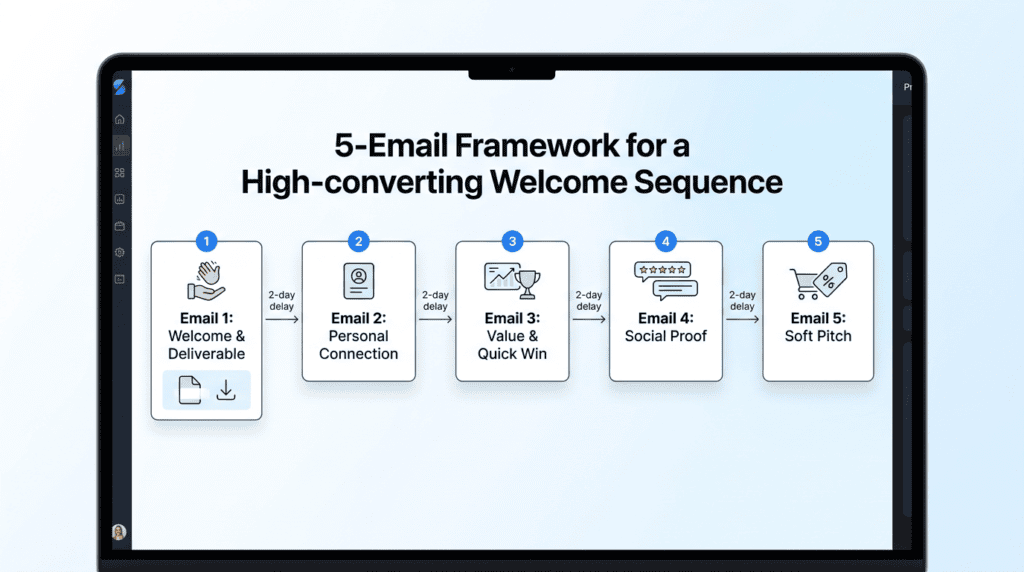
Building an effective welcome email sequence isn’t just about sending a few emails; it’s about crafting a strategic journey for your new subscribers. This framework outlines a proven structure, detailing the specific purpose and content for each message to maximize engagement and drive conversion. Think of it as a carefully choreographed dance designed to build trust and move your audience closer to your brand.
- Email 1: The Welcome & Deliverable (Day 0)
The very first email in your welcome sequence is arguably the most important. Its primary objective is to fulfill the promise you made when the subscriber opted in, whether that was a lead magnet, a newsletter subscription, or access to exclusive content. This immediate gratification confirms their decision was a good one and sets a positive tone for future interactions. Beyond delivering the promised item, this email should clearly confirm their subscription, thank them for joining your list, and briefly set expectations for the type of content they’ll receive and how often. For instance, if they signed up for a “10-Step SEO Checklist,” the email should deliver that checklist prominently. We’ve seen that a clear, concise subject line like “Your [Lead Magnet Name] is Here!” often leads to higher open rates. This initial message is your chance to make a strong first impression and establish your brand’s value proposition right away.
- Email 2: The Personal Connection & Brand Story (Day 2)
After delivering the initial value, the second email aims to build rapport and humanize your brand. This isn’t the time for a hard sell. Instead, share your origin story, the mission behind your business, or a personal anecdote that resonates with your target audience. People connect with stories, not just products. Explain *why* you do what you do. For example, “How [Your Brand] started with a single, frustrating problem…” can draw subscribers in and make them feel like they’re part of your journey. This personal touch helps build trust and makes your brand more relatable, moving beyond a transactional relationship.
- Email 3: The Value & Quick Win (Day 4)
The third email in the sequence focuses on providing immediate, actionable value. This demonstrates your expertise and shows subscribers that you’re genuinely committed to helping them. Share a popular blog post, a helpful tutorial video, or a simple tip that solves a common problem your audience faces. The goal is to give them a “quick win” – something they can implement right away to see a small, positive result. This reinforces your authority and keeps them engaged. For instance, “A 5-minute trick to [achieve a specific outcome]” can be incredibly compelling. This email solidifies your position as a valuable resource.
- Email 4: The Social Proof & Community (Day 6)
By this point, you’ve delivered on your promise, built some rapport, and offered valuable content. Now it’s time to build trust by showcasing social proof. This email’s objective is to show new subscribers they’re in good company. Share testimonials, case studies, or user-generated content that highlights the positive experiences others have had with your brand or products. You can also invite them to join your community, such as a private Facebook group or Discord server, to foster a sense of belonging. An example might be, “See what happened when [Client Name] used this strategy,” linking to a success story. This collective validation can be a powerful motivator.
- Email 5: The Soft Pitch or Next Step (Day 8)
The final email in this core welcome sequence guides the subscriber toward a desired action or a low-commitment offer. This is your first opportunity for a “soft pitch.” Avoid pushing a high-ticket item immediately. Instead, introduce a core product or service, suggest a free consultation, or offer an entry-level product, sometimes called a tripwire offer. The goal is to move them further down your sales funnel without overwhelming them. For example, “Ready to take the next step? Here’s how we can help” could lead to a free webinar sign-up or a discounted starter pack. The key is to make this next step feel like a natural progression, not an abrupt sales pitch. I’ve found that offering a small, relevant discount on a first purchase can significantly boost conversion rates at this stage.
> A common mistake is trying to sell too aggressively too soon; the welcome sequence is primarily for building a relationship and demonstrating value before asking for a commitment.
How to Set Up Your Welcome Sequence: A Technical Walkthrough
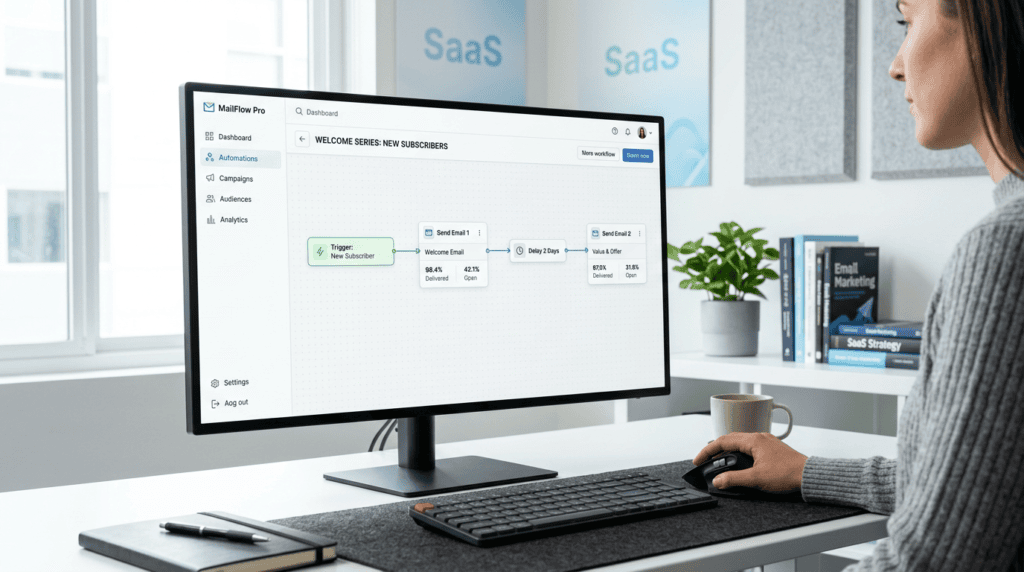
Once you’ve mapped out the content and timing for your welcome email sequence, the next step is to bring it to life using email marketing automation software. This section provides a practical, step-by-step guide to setting up your automated email workflow, applicable to most popular platforms.
- Step 1: Choosing Your Email Marketing Platform
Selecting the right email service provider (ESP) is foundational for a successful welcome sequence. You need a tool that offers robust automation workflows, allowing you to easily schedule emails and set triggers. Key features to look for include:
- Automation Workflows: The ability to create multi-step sequences based on subscriber actions.
- Tagging and Segmentation: Essential for organizing your audience and sending targeted content later.
- Analytics and Reporting: To track open rates, click-through rates, and conversion goals.
- Deliverability: A strong reputation for getting your emails into inboxes, not spam folders.
Popular options like Mailchimp, ConvertKit, and ActiveCampaign each offer these core capabilities, though their interfaces and advanced features vary. For instance, if you’re just starting, Mailchimp offers a free tier for smaller lists, while ConvertKit is often favored by creators for its intuitive automation builder and tagging system. ActiveCampaign provides more advanced segmentation and CRM features, ideal for complex sales funnels. When I first started building my email list, I spent too much time trying to manually send follow-up emails, which was a huge time sink. Investing in a platform with reliable email marketing automation was a game-changer for my productivity and subscriber engagement.
- Step 2: Defining Your Automation Trigger
The trigger is the action that starts your welcome sequence for a new subscriber. This is typically set as “When a subscriber joins [Specific List/Form].” For example, if someone opts in through a form on your website to download a free guide, that action becomes the trigger for your automated welcome series. Ensure your opt-in form is clearly linked to the correct list or tag within your ESP so the automation fires reliably.
- Step 3: Building the Automation Workflow
Most email marketing software platforms feature a visual workflow builder. This allows you to drag and drop elements to create your sequence. You’ll add each email you’ve planned, setting specific time delays between them. For our 5-email framework, you’d typically set:
- Email 1: Send immediately (Day 0).
- Email 2: Delay 2 days, then send.
- Email 3: Delay 2 days, then send.
- Email 4: Delay 2 days, then send.
- Email 5: Delay 2 days, then send.
This visual representation helps ensure the flow and timing are correct. You can also add conditional logic here, like “If subscriber clicks Link X, then send them to a different nurture sequence.”
- Step 4: Writing and Designing Your Emails
This step involves crafting the actual email copy and design for each message in your welcome sequence template. Focus on writing compelling subject lines that encourage high open rates. Use personalization tokens (e.g., `{{first_name}}`) to address subscribers by name, which can significantly boost engagement. Keep your email copy concise, scannable, and focused on a single call to action (CTA) per email. While visually appealing email design is good, don’t underestimate the power of plain text emails, which can sometimes feel more personal and less like marketing. Ensure your brand voice is consistent across all messages.
- Step 5: Testing and Activating Your Sequence
Before you set your welcome sequence live, thorough testing is crucial. Send a test sequence to yourself and a few trusted colleagues. Check for:
- Typos and grammatical errors: A professional image is key.
- Broken links: Every link, especially your CTA, must work.
- Correct personalization: Ensure `{{first_name}}` pulls in the right data.
- Timing and delays: Confirm emails arrive at the scheduled intervals.
- Mobile responsiveness: Most people check email on their phones.
> Always run a full test of your automated welcome series from start to finish to catch any overlooked issues before new subscribers experience them.
Once you’re confident everything is working as intended, activate your automated welcome workflow.
Common Mistakes to Avoid When Building Your Welcome Sequence
Even with a solid framework, it’s easy to stumble when setting up your automated welcome sequence. Avoiding these common pitfalls can significantly improve your subscriber engagement and conversion rates.
Mistake #1: The Single, Lonely Welcome Email
Many businesses think sending just one welcome message is enough. They might send an email with a lead magnet and call it a day. However, a single email doesn’t build momentum or truly onboard new subscribers. It’s a missed opportunity to introduce your brand, share value, and guide them through your initial customer journey. A true welcome email sequence is a series of communications designed to nurture, not just inform.
Mistake #2: Selling Too Hard, Too Soon
It’s tempting to push your products or services right away, especially if you’re eager for sales. But hitting new subscribers with a hard sell in the first few emails often backfires. People sign up for value, not an immediate sales pitch. Your welcome sequence should prioritize building trust and demonstrating your expertise first. I’ve seen many brands rush to sell, only to watch their unsubscribe rates climb. Focus on providing genuine value before making an offer.
Mistake #3: Ignoring Segmentation and Personalization
Sending generic emails to everyone on your list is a surefire way to reduce engagement. If you’re not using the data you collect at sign-up (like their interests or how they joined your list), you’re missing out. Segmentation allows you to tailor your welcome experience. For instance, if someone opted in for an SEO guide, sending them follow-up emails about social media marketing might not resonate. Personalization, like using their first name, also makes a big difference in how subscribers perceive your brand.
> Tactical Takeaway: Use hidden fields in your opt-in forms to capture subscriber interests or their entry point, then use this data to segment your welcome sequence for more relevant content.
Mistake #4: Forgetting Mobile Optimization
With so many people checking their email on smartphones, neglecting mobile optimization is a critical error. An email that looks great on a desktop might be unreadable or poorly formatted on a smaller screen. This leads to frustration and quick deletions. Always ensure your email design is responsive, your images load quickly, and your call to action (CTA) buttons are easy to tap on any device. Test your welcome sequence on various phones and tablets before activating it.
Advanced Welcome Sequence Strategies for Higher Engagement
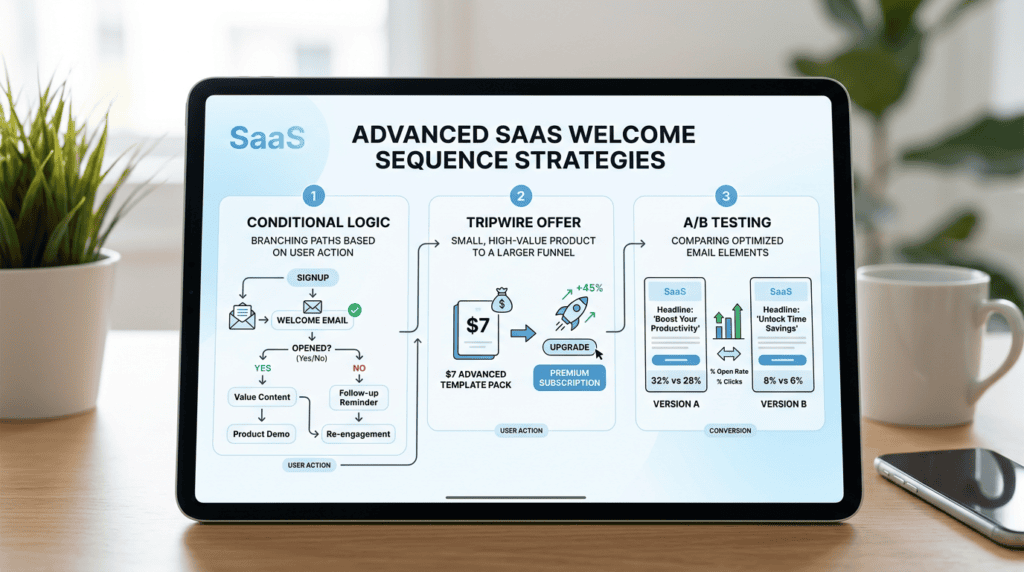
Once you’ve mastered the basics of your welcome email sequence, you can implement more sophisticated strategies to boost engagement and drive even better results. These tactics leverage automation and data to create a more dynamic and effective subscriber onboarding experience.
Using Conditional Logic for a Personalized Path
Conditional logic takes personalization beyond just using a first name. It allows your email marketing automation software to send different emails or branches of your sequence based on a subscriber’s behavior.
- How it works: Your email service provider (ESP) monitors actions within your emails, such as which links a subscriber clicks. Based on these clicks, the system can then trigger specific follow-up emails or even entire sub-sequences. This creates a highly relevant journey for each individual.
- Example: Imagine your third welcome email offers links to different content categories (e.g., “Learn about SEO,” “Explore Affiliate Marketing,” “Discover AI Tools”). If a subscriber clicks the “SEO” link, your automation workflow can then send them a second email specifically about advanced SEO strategies or a relevant product, rather than a generic follow-up. This deepens their engagement with topics they’ve already shown interest in.
Incorporating a Tripwire Offer
A tripwire offer is a low-cost, high-value product or service designed to convert a new subscriber into a paying customer quickly. The goal isn’t massive profit, but rather to change the relationship from free content consumer to paying client.
- What it is: Typically, a tripwire is priced between $7 and $47. It could be a mini-course, a premium template pack, a detailed checklist, or a small software tool. The perceived value should be much higher than its price.
- Where to place it in your sequence for maximum impact: I’ve found the sweet spot for a tripwire offer is usually in the fourth or fifth email of a welcome sequence, after you’ve delivered significant free value and built some rapport. By this point, subscribers have received enough value to trust your brand, making them more receptive to a low-risk purchase. It acts as a bridge to your higher-ticket offers in your broader sales funnel.
A/B Testing Your Subject Lines and Content
You can always improve your welcome email sequence. A/B testing, also known as split testing, is a systematic way to compare two versions of an email element to see which performs better.
- How to systematically improve your sequence’s performance over time:
- Subject Lines: Test different subject lines to see which ones generate higher open rates. Try varying length, using emojis, asking questions, or creating curiosity.
- Call to Action (CTA): Experiment with different CTA button text, colors, or placement to improve click-through rates.
- Email Copy: Test different introductions, body paragraphs, or even the tone of your email copy to see what resonates most with your target audience.
- Timing and Delay: While less common for A/B testing, you can also experiment with the spacing between emails in your sequence to see if a 2-day delay performs better than a 3-day delay for engagement.
By continuously testing and optimizing, you can refine your welcome sequence to maximize its effectiveness, leading to better engagement and higher conversion goals.
Final Recommendation: Your First Step to a Better Welcome Sequence

If you’re collecting emails, building a robust welcome email sequence isn’t just a good idea; it’s a fundamental requirement for any serious online business. This automated asset works tirelessly, 24/7, to transform new subscribers into engaged leads and, ultimately, loyal customers. The initial effort you put into crafting this welcome sequence pays long-term dividends in subscriber loyalty, brand awareness, and conversions.
For anyone with an email list, regardless of its size, prioritize setting up your welcome email sequence immediately. Don’t view it as a luxury; it’s a critical part of your email marketing automation strategy. If you’re currently relying on a single welcome message or nothing at all, you’re leaving significant engagement and revenue on the table. The cost of inaction here is tangible: cold leads, higher unsubscribe rates, and missed opportunities to build trust and offer value from day one.
> A well-executed welcome sequence is your most powerful automated sales and relationship-building tool.
I’ve personally seen how a well-tuned welcome sequence can transform a cold lead into a loyal customer, simply by delivering consistent value and guiding them through a thoughtful journey. Start with the 5-email framework we discussed, get it live, and then iterate based on your audience’s response.
Frequently Asked Questions (FAQs)
How long should a welcome email sequence be?
A welcome email sequence typically ranges from 3 to 7 emails, with our recommended 5-email framework being a strong starting point. The ideal length depends on your audience, the complexity of your offer, and how much value you need to deliver to build trust and guide new subscribers.
What is the ideal time delay between emails in a welcome sequence?
The ideal time delay between emails in a welcome sequence is usually 2-3 days. This spacing allows subscribers enough time to consume the content of each email without feeling overwhelmed, while still maintaining momentum and keeping your brand top of mind.
Can I add more than 5 emails to my sequence?
Yes, you can absolutely add more than 5 emails to your welcome sequence, especially if you have a longer sales cycle or a lot of educational content to share. Some advanced welcome email series can extend to 7-10 emails, often incorporating conditional logic to personalize the subscriber’s journey even further.
What should I do after the welcome sequence ends?
After the welcome sequence ends, you should transition your new subscribers into your regular email newsletter or a more general nurture sequence. This ensures they continue to receive valuable content and offers, maintaining engagement and preventing your email list from going stale.
How do I measure the success of my welcome email sequence?
You measure the success of your welcome email sequence by tracking key metrics like open rates, click-through rates (CTR), conversion rates, and unsubscribe rates for each email. Analyzing these metrics in your email marketing software will show you what’s working and where to optimize your automated email workflow.
Should I use plain text or HTML emails for my welcome sequence?
For your welcome email sequence, a mix of plain text and HTML emails often works best. Plain text emails can feel more personal and improve deliverability, while HTML emails allow for stronger branding and visual appeal. Consider using plain text for more personal messages and HTML for emails showcasing products or requiring specific design elements.