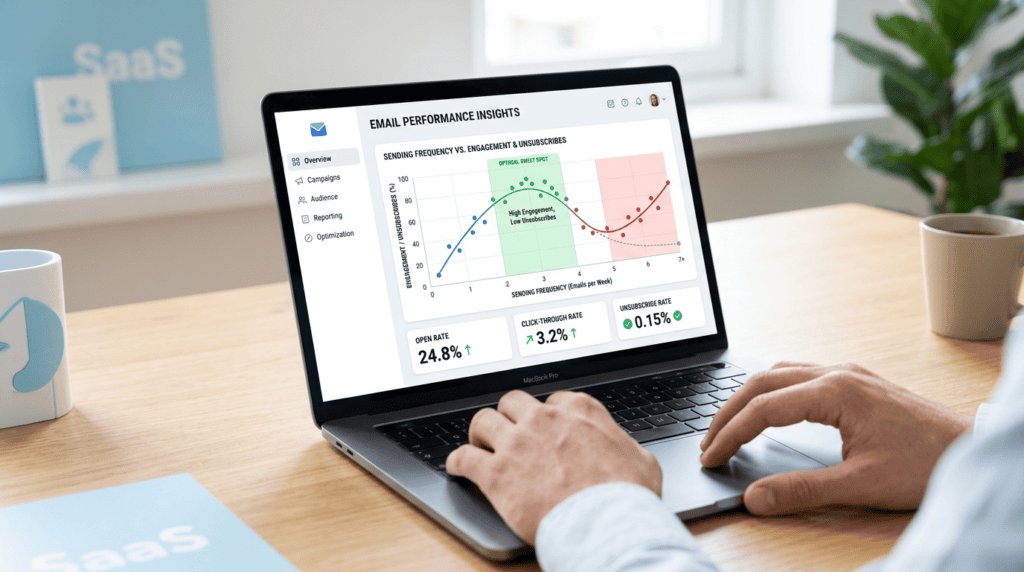
Most businesses guess their email frequency. Many marketers struggle with how often to send marketing emails. They fear over-sending and annoying their subscribers, leading to unsubscribes or being marked as spam. On the flip side, under-sending means missed opportunities for engagement and sales. This balancing act is a common challenge, and getting it wrong directly impacts your email marketing strategy and ROI.
This guide provides a clear, actionable framework for determining the ideal email sending frequency for your business. We’ll move beyond generic advice to help you find the sweet spot that maximizes engagement and revenue without overwhelming your subscribers. You’ll learn to tailor your email marketing campaigns to your unique audience and business model, ensuring your messages always land with value.
Quick Answer: The “It Depends” Framework
What’s the Ideal Email Sending Frequency?
It’s the question every marketer asks: how often should you send marketing emails? The honest answer is, there’s no magic number. The optimal sending frequency isn’t a universal benchmark; it’s a dynamic target that shifts based on your specific audience, industry, business model, and your capacity to produce quality content. Most businesses find a sweet spot somewhere between 1 and 4 emails per week. This range allows for consistent communication without typically leading to over-sending.
> Many marketers obsess over their internal sending calendar, but the critical factor is your audience’s receiving habits and expectations. Ignoring this leads to missed opportunities or, worse, subscriber fatigue.
Starting Point Recommendations by Business Type
While the “it depends” answer is true, we can still provide some industry benchmarks as a starting point. These recommendations reflect common email marketing best practices for different business types, assuming you’re delivering genuine value with each send.
- Ecommerce (Fashion, Electronics, etc.): Aim for 2-4 times per week, especially during promotional periods or sales campaigns. Your subscribers often expect frequent updates on new products, discounts, and limited-time offers.
- SaaS & Software: Typically 1-2 times per week. Focus on product updates, educational content, new feature announcements, or valuable tutorials. The goal is to nurture users and highlight the software’s utility.
- Media/Publishers (Blogs, Newsletters): This can vary widely, from daily to weekly, depending on your content volume and the nature of your newsletters. If you publish daily news, a daily digest makes sense. For deeper analysis, weekly might be better.
- B2B Services: Often weekly to monthly. Your audience here values in-depth insights, case studies, industry reports, and thought leadership. Quality and relevance trump quantity.
- Local Businesses (Restaurants, Salons, etc.): Weekly to bi-weekly works well for communicating specials, events, or booking reminders. The goal is to stay top-of-mind for local customers.
The Core Principle: Value Over Volume
Regardless of your industry or how often you choose to send, remember this fundamental truth: value over volume. You should only send marketing emails when you have something genuinely useful, interesting, or beneficial to share with your subscribers. Consistency in your email marketing campaigns is crucial for building brand awareness and trust, but it should never come at the expense of content quality. A single, highly relevant email can drive more engagement and conversion than five generic ones. I’ve personally seen open rates and click-through rates plummet when businesses prioritize filling a quota over delivering real insight.
Key Factors That Determine Your Ideal Email Cadence
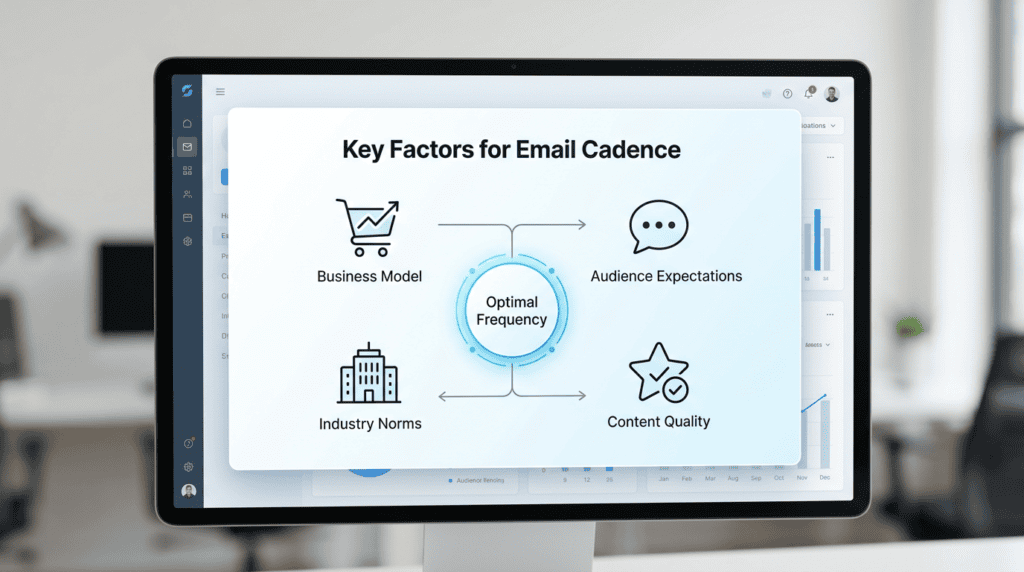
This section explores the variables you must consider to set your initial sending frequency.
How Your Business Model Dictates Frequency
Your business model is a primary driver of your optimal email sending frequency. Different models naturally support varying levels of communication, largely based on the typical customer journey and the type of content you generate.
- Ecommerce & Retail: These businesses often have a high-frequency tolerance among their subscribers. With new product launches, seasonal sales, flash deals, and inventory updates, there’s a constant stream of fresh, conversion-focused content. Many successful ecommerce brands send promotional emails 3-5 times a week, sometimes even daily during peak sales periods. The key is that each campaign offers a clear value proposition, like a discount or access to exclusive items.
- Content-Driven Businesses (Blogs, Media): For publishers, bloggers, or news sites, email newsletter frequency is directly tied to your publishing schedule. If you publish daily articles, a daily digest makes sense. Weekly roundups are common for those with a less frequent publishing cadence. The expectation here is consistent, valuable information, not necessarily direct sales pitches. The goal is to drive traffic back to your platform and build subscriber engagement.
- B2B & High-Ticket Services: This sector typically thrives on a lower frequency but demands higher value per send. Think monthly or bi-weekly newsletters packed with industry insights, case studies, whitepapers, or invitations to webinars. The sales cycle is often longer, and the focus is on nurturing leads and building authority. Sending too many emails here can quickly overwhelm busy professionals and lead to high unsubscribe rates.
- SaaS Companies: Software-as-a-Service businesses need to balance educational content (tutorials, feature spotlights, use cases) with important product updates and announcements. A common schedule might involve a weekly educational newsletter and separate, less frequent updates for new features or critical service information. The aim is to keep users informed and engaged with the product without constant sales pressure.
The Role of Audience Expectations and Lifecycle Stage
Understanding your audience’s expectations is critical for setting an effective email marketing strategy. What one group considers helpful, another might find annoying. This is where segmentation becomes invaluable, allowing you to tailor email sending frequency based on where subscribers are in their journey with your brand.
- New Subscribers (Welcome Sequence): When someone first opts-in, they’re highly engaged and curious. This is your window to build momentum. A welcome email sequence often involves a higher frequency, perhaps daily for 3-5 days. These initial campaigns introduce your brand, set expectations, and deliver immediate value. I’ve seen welcome sequences with a strong call to action convert at significantly higher rates than regular promotional emails, simply because the audience is primed for information.
- Engaged Customers: Your most active customers and loyal subscribers can generally tolerate a higher frequency. They’ve shown consistent engagement by opening emails, clicking links, and making purchases. You can often send them more frequent updates, special offers, or exclusive content without risking high unsubscribe rates.
- Lapsed or Inactive Subscribers: For those who haven’t opened an email in months, a lower frequency is usually best. The goal isn’t to bombard them, but to gently re-engage them with highly relevant, value-driven content. Sometimes, a dedicated re-engagement campaign with a clear value proposition can bring them back without pushing them to the spam folder.
> Tactical Takeaway: Use your email service provider’s analytics to identify your most engaged segments. These are the subscribers who are most receptive to higher email sending frequency and can provide valuable insights into what content resonates.
Industry Norms and Competitive Landscape
While your unique audience and business model are paramount, it’s also smart to consider industry norms and what your direct competitors are doing. This isn’t about blindly copying, but about understanding the established benchmarks and identifying opportunities.
- Analyzing what your direct competitors are doing: Sign up for their newsletters. Observe their email sending frequency, the types of campaigns they run, and their content quality. This gives you a baseline for what’s considered acceptable in your niche. Are they sending daily deals, or monthly digests?
- Understanding what’s standard in your niche: Some industries, like daily deal sites or news outlets, have a higher inherent frequency. Others, like specialized B2B software, tend to be more conservative. Knowing these general patterns helps you set realistic subscriber expectations.
- Identifying opportunities to stand out: Sometimes, the best strategy is to differentiate. If everyone in your industry is sending daily, perhaps you can stand out by sending less frequently but with exceptionally high-quality, in-depth content that provides more value. This can improve your open rates and click-through rates by making your emails feel more exclusive and less like noise.
The Risks of Sending Too Often vs. Too Infrequently
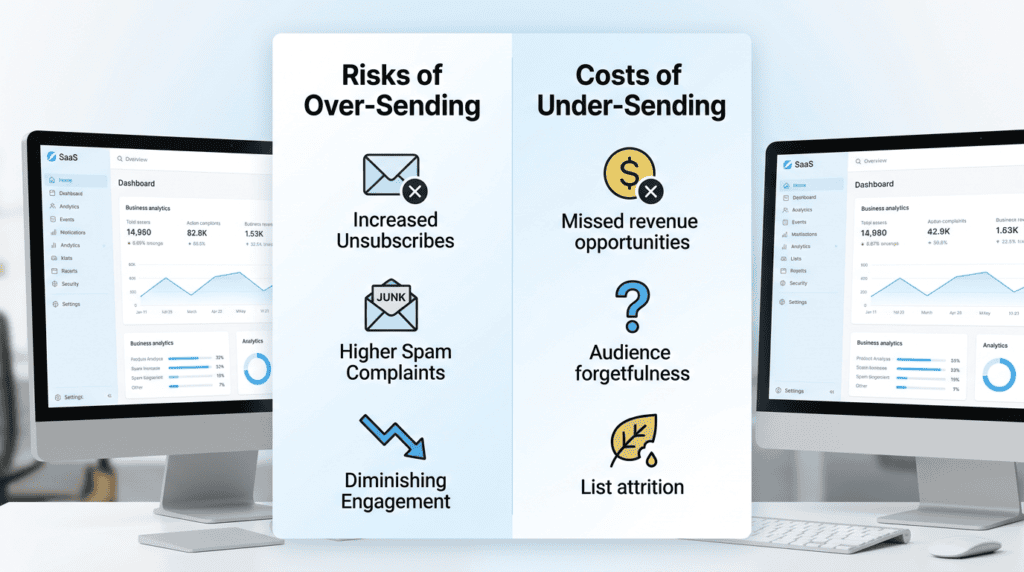
Understanding the trade-offs is crucial for finding the right balance and avoiding common pitfalls in your email marketing strategy. Both over-sending and under-sending carry significant risks that can impact your subscriber engagement, deliverability, and ultimately, your return on investment (ROI).
The Dangers of Over-Sending (High Frequency)
Sending marketing emails too often is a common mistake that can quickly erode your email list health and brand reputation. The consequences are often immediate and measurable.
- Increased Unsubscribe Rates: This is the most obvious and direct sign of list fatigue. When subscribers feel bombarded, they’ll opt out. A rising unsubscribe rate is a clear indicator that your email sending frequency is too high for a segment of your audience.
- Higher Spam Complaints: Beyond unsubscribes, frustrated subscribers might mark your emails as spam. This is far more damaging. High spam complaints signal to Internet Service Providers (ISPs) that your emails are unwanted, severely hurting your sender reputation and overall deliverability. Even if your emails aren’t technically spam, enough complaints can land you in the spam folder for legitimate subscribers.
- Diminishing Engagement: Even if people don’t unsubscribe or report spam, they might simply stop opening your emails. Your open rates and click-through rates will decline as subscribers tune you out. This means your valuable content isn’t being seen, and your marketing campaigns become less effective, leading to missed conversion opportunities.
- Brand Dilution: Constantly pushing promotional emails can make your brand feel desperate or spammy. It dilutes the perceived value of your communications and can damage the trust you’ve built with your audience. Instead of being seen as a helpful resource, you become just another sender in a crowded inbox.
The Hidden Costs of Under-Sending (Low Frequency)
While over-sending has clear, immediate consequences, under-sending also carries significant, often overlooked, costs. It’s not just about avoiding annoyance; it’s about maintaining relevance and maximizing your email marketing ROI.
- Missed Revenue Opportunities: If you’re not consistently communicating with your list, you’re leaving money on the table. Each email campaign is an opportunity to drive sales, promote new products, or nurture leads. Infrequent sending marketing emails means fewer chances to convert subscribers into customers.
- Audience Forgetfulness: In the digital age, attention spans are short. If you only email once a month or less, your subscribers might forget who you are and why they signed up. When an email finally arrives, it might feel out of context, leading to lower open rates and less engagement.
- List Attrition: Email lists naturally decay over time due to changing email addresses, loss of interest, or job changes. Infrequent sending accelerates this decay because you’re not actively engaging and retaining active subscribers. A healthy email list hygiene requires consistent interaction.
- Poor Deliverability: ISPs prefer consistent senders. If you send emails sporadically, your sending patterns can look suspicious, potentially flagging your emails for the spam folder. Regular, consistent email delivery rates help build a positive sender reputation and ensure your messages reach the inbox.
A Practical Method for Finding Your Optimal Frequency
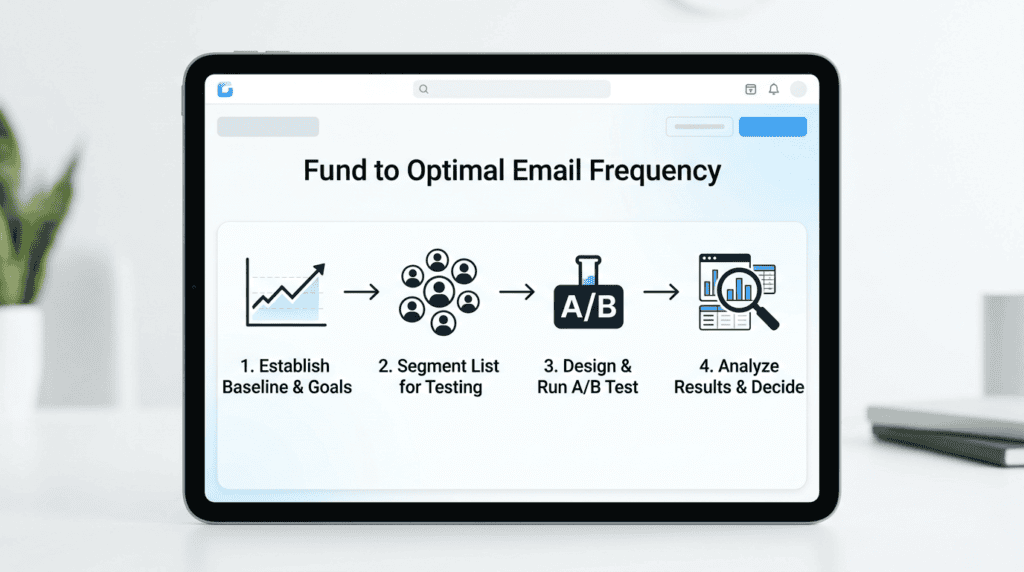
Guessing your optimal email sending frequency is a recipe for disaster. Instead, a data-driven approach allows you to test, learn, and adapt your cadence to what your audience truly prefers. This method helps you avoid both the dangers of over-sending and the hidden costs of under-sending, ensuring your email marketing efforts are always working for you, not against you.
Step 1: Establish Your Baseline and Goals
Before you change anything, you need to know where you stand and what you’re aiming for. This foundational step is often overlooked, but it’s crucial for measuring success.
- Analyze Current Performance: Pull up your email service provider’s analytics and document your current open rate, click-through rate (CTR), conversion rate, and most importantly, your unsubscribe rate. These are your benchmarks. Also, note your current email sending frequency.
- Define Success: What specific outcomes are you trying to achieve with your email marketing campaigns? Are you looking for more sales, higher website traffic, better engagement with your content, or improved brand awareness? Clear goals will guide your testing and interpretation of results.
Step 2: Segment Your List for Targeted Testing
Not all subscribers are created equal. Their tolerance for email frequency varies widely, which is why segmentation is a non-negotiable part of effective testing.
- Create a Test Segment: Don’t experiment with your entire email list. Isolate a representative portion of your most engaged subscribers – perhaps those who have opened an email in the last 60-90 days or made a recent purchase. This group is more likely to provide meaningful feedback without risking your entire list’s health.
- Why Segmentation is Non-Negotiable: Different audience segments have different tolerances and expectations. A new lead might appreciate a daily welcome sequence, while a long-term customer might prefer a weekly digest. Testing on a broad, unsegmented list can give you misleading results because you’re averaging out diverse preferences. I’ve seen businesses make the mistake of applying a blanket frequency change, only to see their most valuable customers opt out because the new cadence didn’t suit them.
Step 3: Design and Run Your A/B Test
This is where the rubber meets the road. You’ll set up a controlled experiment to compare different email sending frequency levels.
- Hypothesis: Formulate a clear, testable statement. For example: “Increasing our email marketing frequency from 1x/week to 2x/week for our engaged segment will increase total clicks without significantly raising the unsubscribe rate.” This gives you a specific metric to watch.
- Execution: Send to your control group (using your current schedule) and your test group (using the new, proposed frequency) for a consistent period. I recommend running these tests for at least 4-6 weeks. This duration allows enough data to accumulate and smooth out any day-to-day fluctuations, giving you a reliable picture of subscriber engagement over time. Ensure the content quality remains consistent across both groups.
Step 4: Analyze the Results and Make a Decision
Once your test period is complete, it’s time to crunch the numbers and draw conclusions.
- Key Metrics to Watch: Beyond just open rates and click-through rates, pay close attention to your unsubscribe rate and any increases in spam complaints. Also, track the conversion or sales generated by each group. Did the higher frequency lead to more revenue, or did the increased unsubscribes negate any gains?
- Interpreting the Data: Did the increase in sends lead to a net positive outcome? If your click-through and conversion numbers went up significantly, and your unsubscribe rate remained stable or only saw a minor, acceptable bump, then you likely found a sweet spot. If unsubscribes spiked or engagement plummeted, the higher frequency was too much.
- Iterate and Refine: Based on your findings, you can roll out the winning frequency to a larger segment of your list, or if the test was inconclusive or negative, design a new test with a different hypothesis. This iterative process is key to continuous optimization.
> Tactical Takeaway: Always prioritize the unsubscribe rate and spam complaints as primary indicators of list health during frequency testing. A slight dip in open rates might be acceptable if conversions increase, but a significant rise in unsubscribes signals you’re pushing too hard.
How to Increase Sending Frequency Without Burning Out Your List
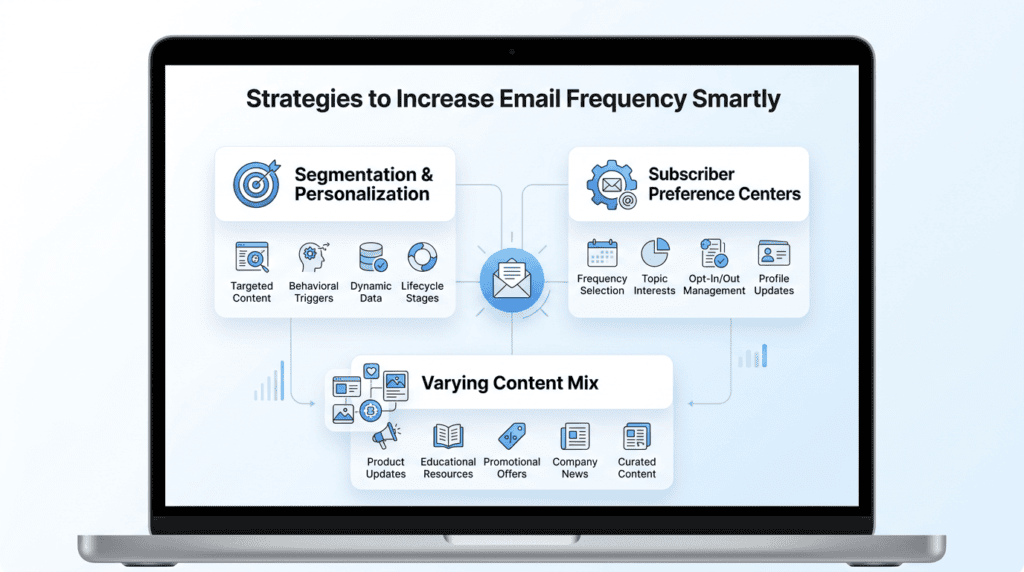
If your data from the previous steps suggests your audience can handle more emails, or if you’re looking to proactively increase your email marketing frequency, there are smart ways to do it without risking list fatigue or higher opt-out rates. The goal is to provide more value, not just more volume.
The Power of Segmentation and Personalization
This is your secret weapon for sending more emails without annoying your subscribers. When emails are highly relevant, people are more receptive.
- Sending Targeted Offers to Specific Segments: Instead of blasting everyone with every promotion, segment your email list based on past purchases, browsing behavior, demographics, or expressed interests. For example, send a discount on pet supplies only to customers who’ve bought pet products before. This ensures your promotional emails reach the right people.
- Using Behavioral Triggers for Timely, Relevant Messages: Implement marketing automation to send emails based on specific actions (or inactions) your subscribers take. This includes cart abandonment reminders, browse abandonment emails for specific product categories, or follow-ups after a content download. These are often transactional emails or highly personalized messages that feel helpful, not intrusive. I’ve personally seen conversion rates skyrocket for clients who moved from generic weekly blasts to highly targeted, behavior-triggered sequences.
Letting Subscribers Choose Their Own Frequency
Empowering your subscribers to control their inbox experience is one of the most effective ways to prevent over-sending and reduce unsubscribe rates.
- Implementing an Email Preference Center: This is a dedicated page where users can manage their email preferences. Allow them to select topics they’re interested in (e.g., product updates, sales, educational content, newsletters) or choose their desired email newsletter frequency (e.g., daily, weekly, monthly digests).
- How this Reduces Unsubscribes: Giving users control often prevents them from unsubscribing completely. If someone feels overwhelmed, they’ll likely choose a less frequent option rather than opting out entirely. This maintains your email list growth and keeps them in your ecosystem, even if they hear from you less often. It’s a win-win for subscriber engagement and deliverability.
> Critical Warning: A well-designed preference center is a powerful tool for list hygiene and maintaining subscriber expectations. Don’t just offer an “unsubscribe” link; offer options.
Varying Your Content to Maintain Interest
If you’re going to send more emails, you need to ensure each one offers something fresh and valuable. Repetitive content is a fast track to list fatigue.
- The Content Mix: Don’t just send promotional emails. Diversify your content to provide different types of value. Mix in engaging newsletters, helpful blog updates, educational content (like how-to guides or tutorials), and community highlights (user-generated content, customer stories). This keeps your audience interested and reinforces your brand consistency.
- Example Weekly Cadence:
- Tuesday: New Blog Post / Educational Content (focus on value proposition, thought leadership)
- Thursday: Weekly Promotion / Sale Announcement (direct sales focus)
- Saturday: Customer Story / User-Generated Content (community building, social proof, brand awareness)
This varied approach ensures that even with a higher email sending frequency, each message feels distinct and provides a different reason to open.
Final Recommendation: Start Conservatively, Test Aggressively

There’s no magic number for email frequency. The most successful brands treat their sending cadence not as a fixed rule, but as a dynamic variable that is constantly tested and optimized. For most businesses, the best practice is to start with a conservative email sending frequency, perhaps once a week, focusing on high-quality content and delivering genuine value. This approach helps build trust and strong subscriber engagement without risking high unsubscribe rates.
Once you have a baseline, you should test aggressively by methodically increasing your marketing email frequency on engaged segments of your audience. Use the A/B testing methods we discussed to measure the impact on your open rates, click-through rates, and ultimately, conversion. Let your subscribers’ actions – their opens, clicks, and purchases – tell you what they want.
- Who should start conservatively: Most businesses, especially those new to email marketing or with a limited content pipeline. Prioritize relevance and quality over quantity to protect your sender reputation and list growth.
- Who can explore higher frequency: Businesses with a constant stream of fresh, valuable content, daily deals, or those in fast-paced industries where audience expectations are higher. You must maintain exceptional content quality to prevent unsubscribe rates from soaring and ensure positive subscriber engagement.
- The Cost of Inaction: Not actively optimizing your email sending frequency means you’re either leaving sales and conversion on the table (by under-sending) or actively damaging your brand awareness and list growth (by over-sending). Both scenarios directly impact your ROI.
> Your subscribers will tell you their optimal sending frequency through their actions; your job is to listen to the metrics and adapt your email marketing strategy.
I’ve seen firsthand how a data-driven approach to email frequency can transform a list from stagnant to highly profitable, driving consistent leads and sales.
FAQ: Common Questions About Email Sending Frequency
How do I know if I’m sending too many emails?
A rising unsubscribe rate, an increase in spam complaints, and a steady decline in your email open rates and click-through rates per campaign are clear indicators you’re sending too many emails. These metrics signal subscriber fatigue and a need to adjust your frequency.
Can sending daily emails ever work?
Yes, sending daily emails can work for specific business models like news publishers or daily deal sites where the audience has explicitly opted-in for and expects frequent updates. It requires a consistent supply of fresh, high-quality content every single day to maintain engagement.
Should my email frequency change during holidays like Black Friday?
Absolutely, your email sending frequency should increase during peak shopping seasons like Black Friday, as subscribers generally expect more promotional emails. However, it’s crucial to return to your regular schedule afterward to avoid over-sending and maintain subscriber engagement.
Does email frequency affect my sender reputation?
Yes, email frequency significantly impacts your sender reputation; a sudden, massive increase in sending volume can trigger ISP flags, and consistently low engagement or high spam complaints due to sending too many emails will degrade your deliverability.