
You’ve decided to launch a website and start comparing tools late at night. One tab shows a website builder with drag-and-drop features. Another tab shows a web host with lower monthly pricing. Both say they’re “easy,” and both claim to be the right choice. That’s when the confusion starts.
This guide breaks down Website Builder vs Web Hosting by cost, features, and long-term value. By the end, you’ll understand which option fits your goals and what kind of control you really get.
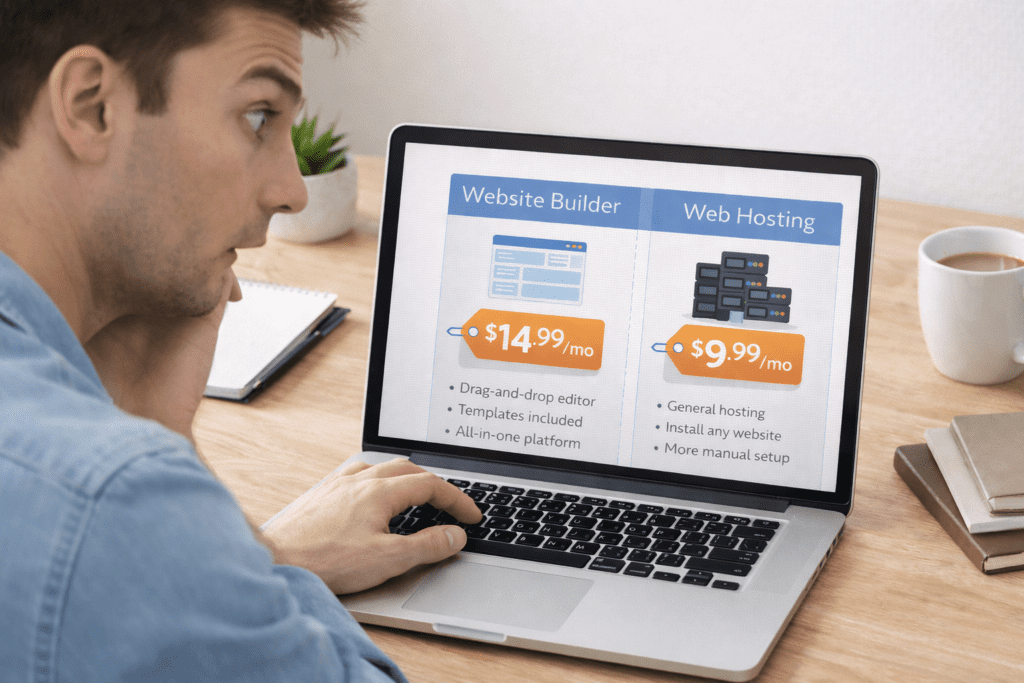
This guide explains the real differences, the hidden costs, and the control each option offers. By the end, you will know which path fits your goals, your budget, and your comfort level.
A builder plan at $16 per month includes hosting and design tools, while a $4 hosting plan requires buying a domain, installing software, and managing updates later.
What Is Website Builder vs Web Hosting
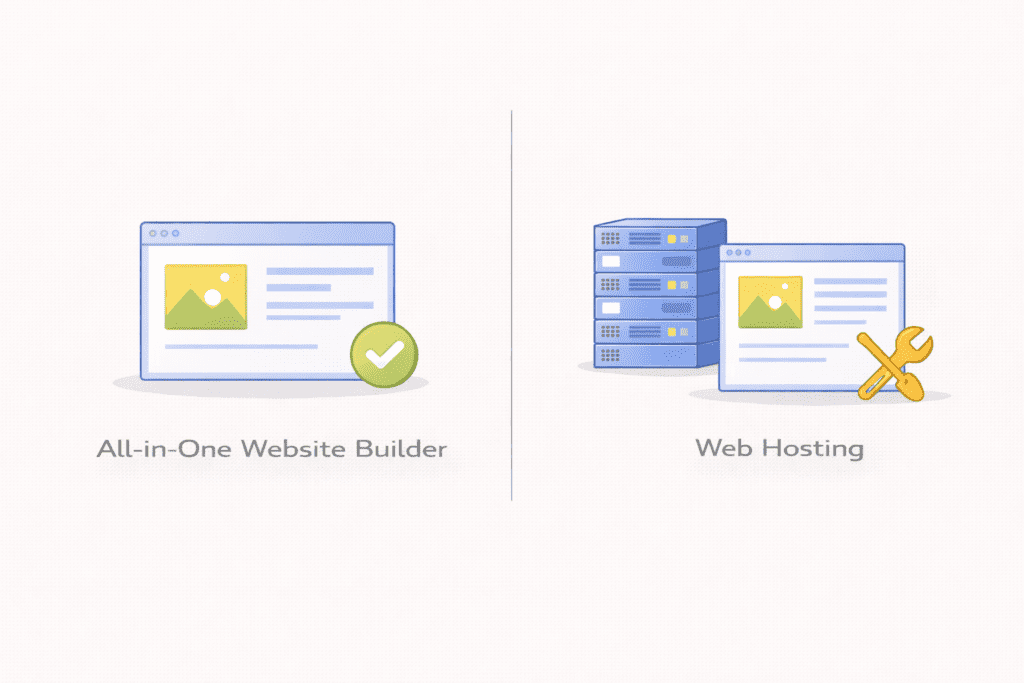
Website Builder vs Web Hosting compares two ways to build a website and keep it live. One uses an all-in-one platform. The other uses a server-based hosting setup.
Understanding this difference helps beginners avoid choosing the wrong tool.
What Is a Website Builder? (Beginner Guide)
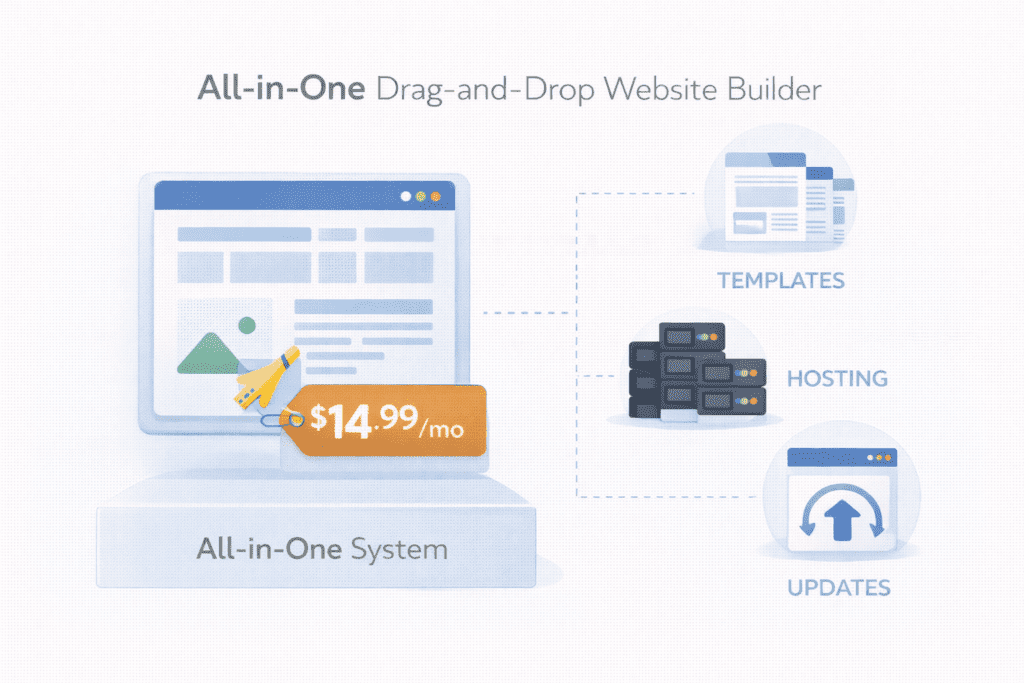
A website builder is an all-in-one platform. It lets you create a website without coding. The builder provides templates, drag-and-drop tools, and built-in hosting.
Most website builders include design tools, updates, and storage in one monthly price. You do not manage servers or software. Everything runs inside the platform.
This makes a website builder appealing for beginners who want speed and simplicity.
What Web Hosting Means (In Simple Terms)
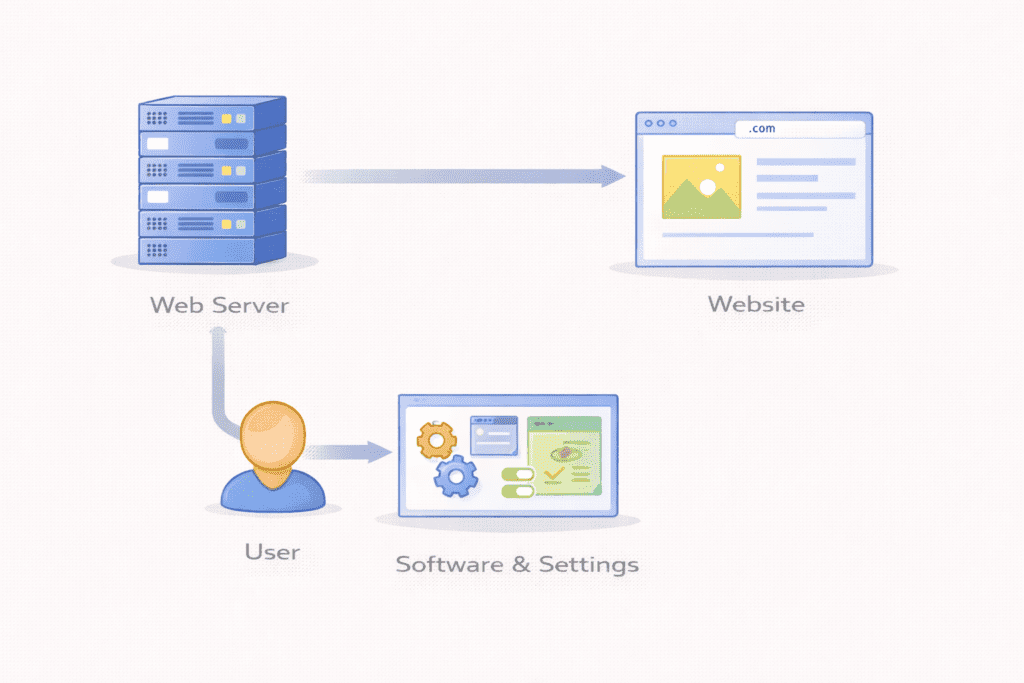
A web host stores your website files on a server so your website stays online. Web hosting is a service that connects your site to the internet.
With hosting, you install software, manage updates, and control settings. You may use a content management system like WordPress or other tools.
This option gives more control but requires learning.
Core Differences Beginners Should Understand
The main difference is control.
A website builder controls design, hosting, and tools inside one system.
A web host gives you space and freedom, but you manage the rest.
Both can work. The right choice depends on your goals and how much control you want.
Why Website Builder vs Web Hosting Matters in 2026
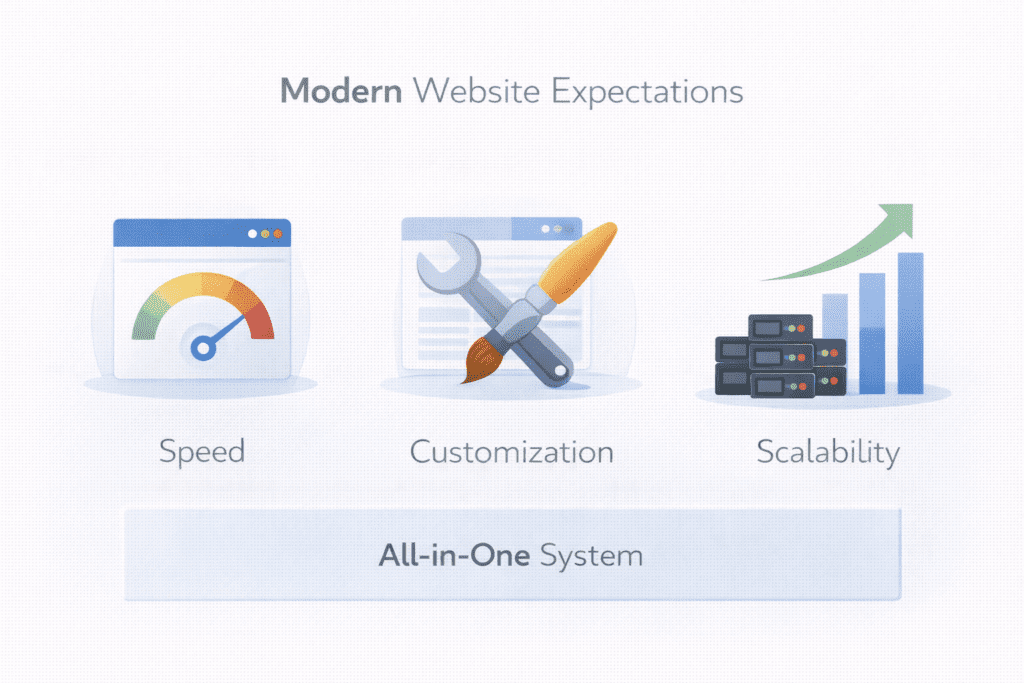
The choice between Website Builder vs Web Hosting matters more now because websites are expected to load fast, look professional, and grow with your goals. What worked a few years ago may now feel limiting.
Beginners today want tools that save time but also allow growth. This is where the difference becomes clear.
How website creation has changed
Website creation is faster and more visual. Many website builders usually focus on drag-and-drop design and instant setup. This helps beginners launch quickly.
At the same time, traditional web hosting has evolved. Hosting now supports more apps, better performance, and flexible tools. This makes web hosting a strong long-term option.
These two paths now serve different needs.
Why cost, flexibility, and control matter more
Cost is no longer just the monthly fee. Long-term hosting costs and feature limits affect real value.
A website builder may seem cheaper at first, but add-ons raise the website cost over time.
A web host often starts lower. As your site grows, upgrades offer more power.
Flexibility matters when you want changes. Builders limit customization. Hosting gives full control.
Why beginners should think long-term
Many beginners focus on speed to launch. That is fine at first.
But as your site grows, you may want more tools, better performance, or custom features. Switching later takes time and money.
Understanding Website Builder vs Web Hosting early helps beginners choose a path that fits both today and tomorrow.
Key Factors Beginners Should Consider in Website Builder vs Web Hosting
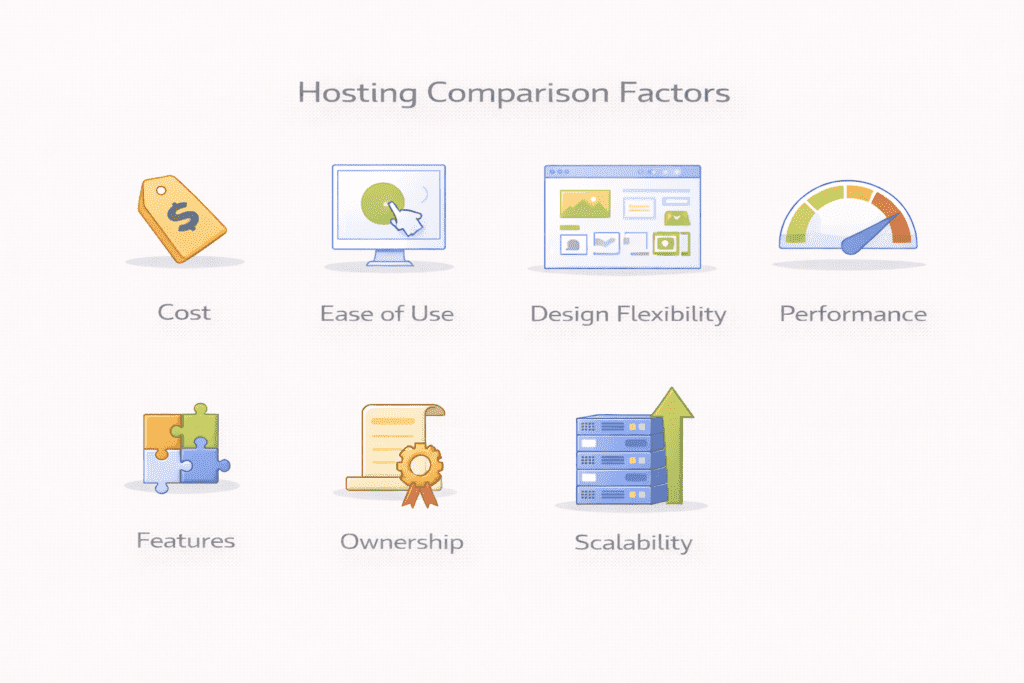
This section focuses on the real differences that affect daily use. These points help beginners compare Website Builder vs Web Hosting based on cost, control, and growth.
Cost structure and pricing
A website builder usually charges a monthly subscription. That price may include hosting, templates, updates, and basic tools.
A web host sells hosting plans separately. You often pay less per month, but you buy a domain and tools on your own.
Over time, builder subscriptions can cost more. Hosting can stay cheaper if you manage upgrades carefully.
Ease of use
A website builder is designed for beginners. Drag-and-drop tools help you build a website quickly without technical setup.
With a web host, setup takes longer. You install software, connect domains, and configure settings. This learning curve is real.
Beginners who want speed prefer builders. Those willing to learn prefer hosting.
Design flexibility
Most website builders offer templates. These look clean but limit deep changes.
With web hosting, you can fully customize design using themes, code, or tools like WordPress. This supports unique layouts.
Builders trade flexibility for simplicity. Hosting offers freedom.
Performance and speed
A website builder manages performance for you. You cannot adjust server settings.
A web host gives control over performance. You can choose shared hosting, managed hosting, or stronger setups later.
Performance control matters as traffic grows.
Features and integrations
Builders include built-in tools like forms and basic analytics. App choices are limited.
With hosting, you can add plugins, scripts, and integrations freely. This supports growth and customization.
This difference affects long-term capability.
Ownership and control
A website builder owns the platform. Moving content later can be hard.
With a web host, you own your files and data. You can move hosts or upgrade without platform lock-in.
Ownership matters for long-term projects.
Scalability and growth
Builders scale within platform limits. Advanced features may not be available.
Hosting scales through upgrades like managed hosting, cloud hosting, or even dedicated hosting later.
Growth flexibility is stronger with hosting.
Why These Factors Matter Together
No single factor decides everything.
Cost, ease, control, and growth all work together. Ignoring one leads to frustration later.
Understanding these points helps beginners choose confidently between Website Builder vs Web Hosting.
Types of Website Builders and Web Hosting Options in Website Builder vs Web Hosting
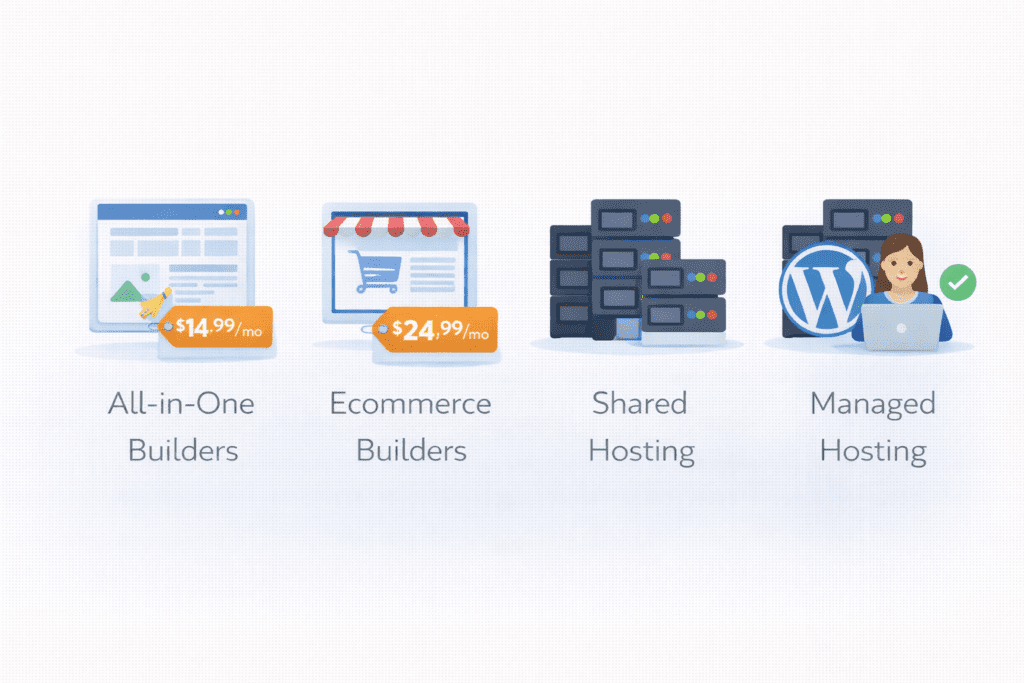
Knowing the main options helps beginners see where Website Builder vs Web Hosting fits in real use.
All in one website builders
An all-in-one builder combines design, hosting, and updates in one place. A website builder handles the technical side while you focus on content.
Most builders usually include hosting and security. This is why beginners can launch fast.
This type fits users who want simplicity.
E-commerce website builders
Some builders focus on online stores. They add product tools, payments, and inventory.
A website builder with e-commerce features works for small stores. Larger stores may need hosting for flexibility.
This option fits sellers starting out.
Shared web hosting
Shared hosting is the most common hosting type. A web host places many sites on one server.
It is affordable and works for small projects. Setup takes more steps, but control is higher.
This fits beginners who want flexibility.
Managed web hosting
Managed hosting handles updates, security, and performance for you.
A web host still gives control, but reduces workload. This option fits users who want hosting without heavy management.
Website Builder vs Web Hosting: Cost and Features Comparison
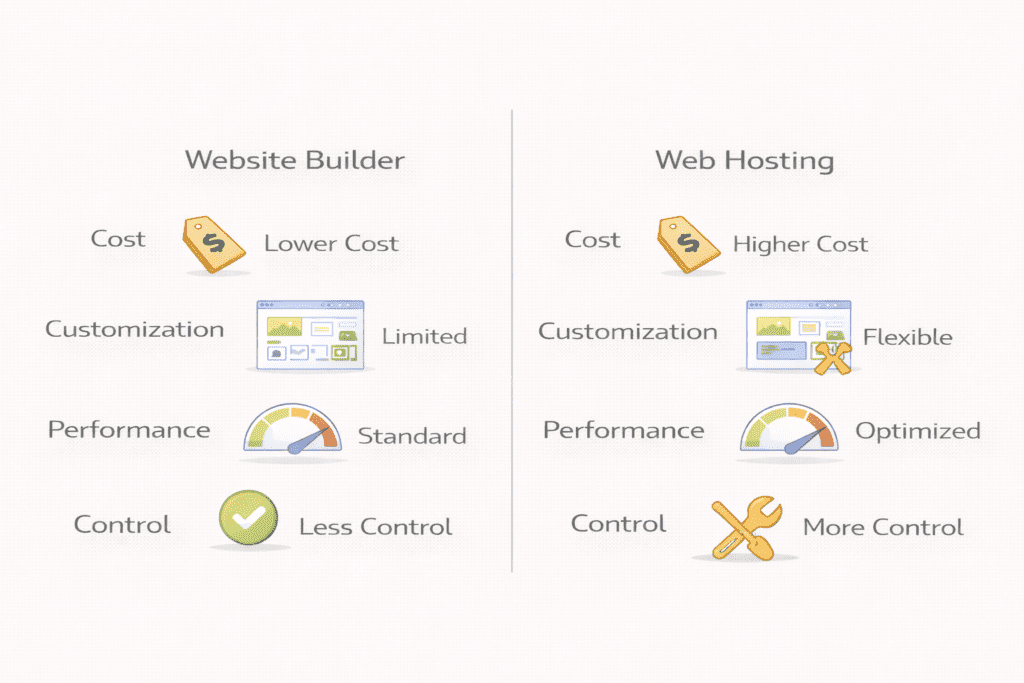
Comparing features side by side clarifies value.
Overview of what each option includes
A website builder includes design tools, updates, and hosting.
A web host provides server space and access to tools. You choose how to use them.
This is the base difference.
Ease of use
Builders offer instant setup and drag tools.
Hosting requires installing software and learning basic management.
Ease favors builders. Control favors hosting.
Cost over time
Builders charge monthly. Costs add up.
Hosting may start cheaper. Upgrades happen as your site grows.
Long-term cost depends on growth.
Performance and reliability
Builders manage performance internally.
With hosting, performance depends on your plan and setup. You can upgrade as needed.
Pros and cons for beginners
Builders are fast and simple but limited.
Hosting is flexible but requires learning.
Both work when matched to the right goal.
Why These Options Matter
Choosing between builder and hosting affects how your site grows.
Understanding the trade-offs helps beginners avoid regret later.
That is why Website Builder vs Web Hosting matters.
Website Builder vs Web Hosting Comparison Table
This table compares cost and features side by side so beginners can see real differences without guessing.
| Factor | Website Builder | Web Hosting |
|---|---|---|
| Setup difficulty | Very easy with guided tools | Moderate with manual setup |
| Monthly cost | $12 to $25 per month | $3 to $10 per month |
| Yearly cost | $150 to $300 per year | $40 to $120 per year |
| Customization level | Limited to templates | Full control with themes and code |
| Performance control | Platform managed | User controlled |
| Best beginner use case | Quick personal or small business site | Long term growth and flexibility |
This comparison shows why Website Builder vs Web Hosting is not just about ease, but also about cost over time.
How to Choose Between Website Builder vs Web Hosting
Step 1: Define your website goal
If you want a simple site online fast, a website builder fits well.
If you plan to grow, customize, or add features later, a web host gives more control.
Step 2: Decide how much control you want
A website builder limits access to settings and files.
A web host lets you control structure, design, and tools fully.
Control matters as your site evolves.
Step 3: Set a realistic budget
Builders bundle everything but cost more long term.
Hosting starts cheaper, but you manage tools and upgrades.
Think beyond the first month.
Step 4: Think about long term growth
Builders scale within platform limits.
Hosting scales with upgrades like managed or cloud setups.
Growth plans should guide the choice.
Step 5: Choose the option that fits your skills
If you want fewer technical steps, use a website builder.
If you are willing to learn basics, web hosting pays off over time.
Why This Step by Step Choice Works
Looking at goals, control, budget, growth, and skills removes confusion.
This approach helps beginners choose confidently between Website Builder vs Web Hosting.
Common Beginner Mistakes in Website Builder vs Web Hosting
Many beginners choose a website builder only because it looks easier. Later, they feel limited by design and features.
Others choose a web host and then feel overwhelmed by setup, updates, and security tasks.
Some ignore long-term cost and only look at monthly pricing. Over time, subscriptions and add-ons raise the total spend.
Locking into one platform without thinking about growth also creates problems.
Understanding your needs first avoids these mistakes.
Website Builder vs Web Hosting vs Managed Platforms
Managed platforms mix builder simplicity with hosting flexibility.
They offer tools, updates, and support, but still allow some control.
Website builders are ideal for fast launches.
Web hosting is better for control and growth.
Managed platforms sit between the two.
Choosing depends on how much control and simplicity you want.
Frequently Asked Questions About Website Builder vs Web Hosting
What does Website Builder vs Web Hosting mean
It compares all-in-one builders with traditional hosting that requires setup.
Is a website builder better than web hosting for beginners
It can be, if speed and simplicity matter more than control.
Which is cheaper: website builder vs web hosting
Web hosting usually costs less over time.
Can beginners switch from a website builder to web hosting later
Yes, but moving content may take effort.
Does Website Builder vs Web Hosting affect website speed
It can. Hosting allows more performance control.
Which option offers more customization
Web hosting offers more freedom.
Are website builders good for small businesses
Yes, for simple sites and quick setup.
Is web hosting harder to manage than website builders
Yes, but it offers more control.
Does Website Builder vs Web Hosting affect SEO
Indirectly. Speed and structure matter for rankings.
How do beginners choose between website builder vs web hosting
By comparing goals, control needs, budget, and growth plans.
Final Verdict: Website Builder vs Web Hosting for Beginners
Website builders are best for quick, simple websites.
Web hosting is better for long-term growth, control, and customization.
There is no single right choice. The best option depends on what you want to build and how much control you need.
Understanding Website Builder vs Web Hosting helps beginners choose with confidence and avoid future frustration.