
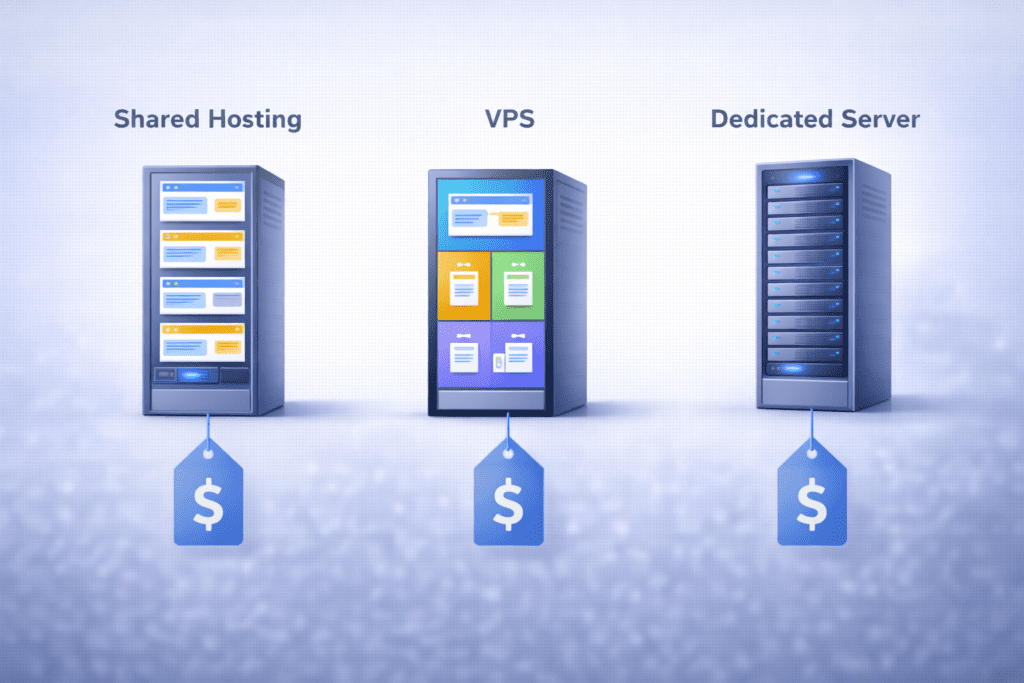
Some website owners upgrade to a VPS too early. Others avoid it because they assume the VPS Hosting Cost is always expensive.
Both reactions usually come from misunderstanding how pricing actually works.
VPS Hosting Cost isn’t random. It depends on server resources, management level, and infrastructure quality. If you’re moving from shared hosting, the price difference can feel confusing at first.
In this guide, we’ll break down what affects VPS Hosting Cost, what hidden fees to watch for, and what you should realistically expect to pay in 2026.
What Is a Virtual Private Server?
A virtual private server is a virtual environment created inside one physical server.
Instead of sharing everything like shared hosting, a virtual private setup divides the physical server into multiple isolated sections. Each section becomes a virtual server with its own allocated resources.
Think of it as having your own private apartment inside a larger building. You’re still on one physical server, but your space is separated.
A virtual private server sits between shared hosting and a dedicated server in terms of performance and price. It gives more control and stability without the full cost of a dedicated server.
How a VPS Server Works
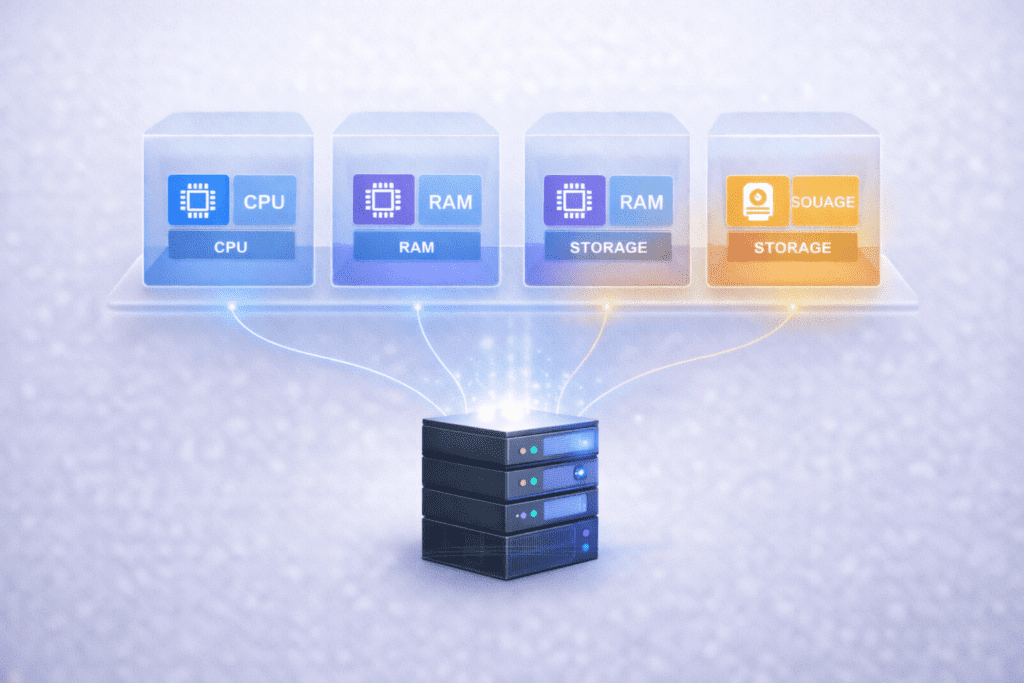
A VPS server uses virtualization technology to split one physical server into multiple virtual private environments.
Each virtual server receives dedicated CPU, RAM, and storage allocations. These resources are isolated, which improves server performance and stability.
Unlike shared hosting, your VPS isn’t directly affected if another user consumes excessive RAM or CPU.
You also gain root access to your server. This means you can configure the operating system, install applications, and adjust configuration settings.
That added control is one reason VPS Hosting Cost is higher than shared hosting.
What Determines VPS Hosting Cost?
Several technical factors directly impact VPS Hosting Cost.
• CPU allocation – More CPU cores increase processing power and price
• RAM allocation – Higher RAM improves multitasking and stability
• NVMe vs SSD storage – Faster nvme storage increases cost
• Bandwidth limits – Higher traffic allowances raise pricing
• Data center location – Premium regions may cost more
• Operating system choice – Linux is usually cheaper than Windows server
• Server management level – Managed VPS plans cost more than unmanaged
The more resources and management you require, the higher the VPS Hosting Cost.
In most cases, pricing reflects resource allocation rather than branding. A reliable vps host charges based on the server resources you’re using.
That’s why understanding resource needs before choosing a VPS hosting plan is so important.
CPU, RAM, and NVMe: How Resources Affect VPS Hosting Cost

The biggest driver of VPS Hosting Cost is server resources.
When you rent a virtual private server, you’re paying for guaranteed allocations inside a physical server. More power means higher pricing.
CPU Allocation
CPU determines how many tasks your server can process at once.
More CPU cores allow better performance for websites, databases, and web applications. If your site handles heavy traffic or complex queries, higher CPU allocation improves server performance.
But here’s the thing. Extra CPU increases VPS Hosting Cost quickly. For small projects, overpaying for unused cores isn’t necessary.
Storage Type: NVMe vs SSD
Storage type also impacts VPS Hosting Cost.
Traditional SSD storage is fast. NVMe is faster. NVMe storage reduces latency and improves read and write speeds compared to standard SSD.
Many vps host providers now use NVMe because it improves server responsiveness. However, NVMe storage costs more than SSD storage due to performance gains.
If you’re hosting dynamic content or large databases, NVMe can make a noticeable difference. For smaller websites, SSD storage may be sufficient.
RAM and Scalability
RAM controls how many processes your server can handle simultaneously.
Low RAM limits performance. Higher RAM supports better multitasking, smoother database queries, and improved stability.
Scalable infrastructure often raises VPS Hosting Cost because it allows you to increase RAM without migrating to a new server.
From what I’ve seen, many vps hosts encourage upgrades by promoting scalability. It’s useful, but only if your site truly needs it.
Understanding your RAM requirements prevents unnecessary expenses.
Operating System Choice: Linux vs Windows Server
Your operating system directly affects VPS Hosting Cost.
Linux VPS
Linux is typically cheaper.
It’s open source, which means no licensing fees. Most vps host providers include Linux at no additional cost.
Linux supports popular web applications and databases efficiently. For most websites, Linux works perfectly fine.
Windows Server VPS
Windows server requires a paid license.
That license increases VPS Hosting Cost automatically. Windows VPS servers are useful when specific applications require Microsoft technologies.
If you don’t need Windows server, choosing Linux reduces overall pricing.
Managed vs Unmanaged VPS Hosting
Server management significantly changes VPS Hosting Cost.
What Server Management Includes
Managed hosting usually covers:
• Security patches – Regular OS updates
• Monitoring – Resource tracking and uptime alerts
• Backup configuration – Automated backup setup
• Technical support – Assistance from a support team
Managed VPS hosting removes technical complexity. The hosting provider handles configuration and maintenance.
Why Managed Plans Cost More
Managed plans cost more because server management requires staff time and monitoring tools.
Unmanaged VPS gives full root access and full control, but you’re responsible for security, updates, and configuration.
If you’re comfortable managing a server environment yourself, unmanaged hosting reduces VPS Hosting Cost.
If not, paying extra for managed VPS can prevent costly mistakes later.
VPS Hosting Cost Overview (2026 Pricing Snapshot)
| VPS Tier | CPU Cores | RAM | Storage Type | Typical Monthly Cost | Best For |
|---|---|---|---|---|---|
| Entry-Level VPS | 1-2 cores | 1-2 GB | SSD / NVMe | $8 - $20 | Blogs, small websites |
| Mid-Tier VPS | 2-4 cores | 4-8 GB | NVMe | $20 - $60 | Growing sites, agencies |
| High-Performance VPS | 4+ cores | 8-16+ GB | NVMe | $60 - $150+ | eCommerce, high traffic apps |
VPS Hosting Plan Pricing Tiers: What to Expect in 2026
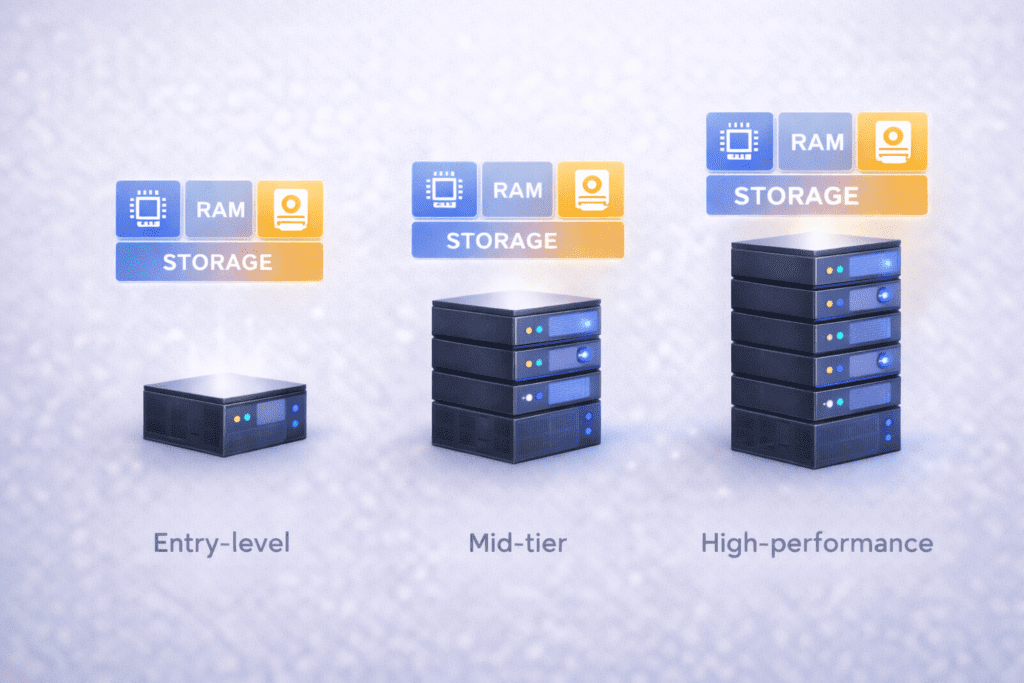
VPS Hosting Cost varies based on resource tiers.
Most vps host providers structure pricing into three main levels.
Entry Level VPS Hosting Plan
Entry plans include limited CPU and RAM.
These are suitable for small websites moving from shared hosting. Basic server configurations often include 1 to 2 CPU cores, modest RAM, and SSD or NVMe storage.
This level keeps VPS Hosting Cost relatively affordable while providing better isolation than shared hosting.
In 2026, entry-level VPS hosting plans typically range between $8 and $20 per month, depending on RAM, CPU cores, storage type, and data center location.
Mid Tier VPS Hosting Plan
Mid tier plans balance performance and scalability.
They include higher RAM, more CPU allocation, and faster NVMe storage. These server environments support growing traffic and heavier database usage.
For agencies hosting multiple websites and applications, this is often the practical starting point.
Mid-tier VPS hosting plans usually cost between $20 and $60 per month, offering higher RAM allocation, additional CPU cores, and faster NVMe storage for growing websites.
High Performance VPS Server
High performance plans include advanced server resources.
Large RAM allocations, multiple CPU cores, and high capacity NVMe storage increase server performance significantly.
These VPS server hosting options are designed for high traffic applications or demanding workloads.
Naturally, VPS Hosting Cost increases with these dedicated resources.
High-performance VPS server plans generally range from $60 to $150+ per month, depending on resource allocation, infrastructure quality, and whether the plan is managed or unmanaged.
Hourly vs Monthly VPS Pricing Models
Pricing structure affects long term VPS Hosting Cost.
Pay As You Go VPS
Some vps services offer hourly billing.
This model works well for temporary projects or development environments. You pay only for the time your server is active.
However, for long term hosting websites, hourly pricing may exceed a fixed monthly rate.
Monthly Billing Plans
Most vps hosting providers use a monthly rate structure.
Monthly pricing offers predictable costs. Many vps plans provide discounted rates for annual commitments.
Over a year, annual contracts often reduce VPS Hosting Cost compared to month to month billing.
It depends on stability. If your project is long term, monthly or annual plans usually make more financial sense.
VPS Hosting Cost by Location
Server location influences VPS Hosting Cost more than people expect.
Data centers in major US cities often cost more than smaller regions due to infrastructure and electricity expenses.
European and Asian data centers may vary depending on local regulations and power costs.
Choosing a location closer to your audience improves server performance through lower latency. But premium regions may raise your monthly rate.
Sometimes paying slightly more for the right location improves user experience enough to justify the difference.

Not all VPS Hosting Cost appears in the headline price.
Common hidden expenses include:
• Control panel licensing – cPanel or Plesk adds extra cost
• Backup storage fees – Automated backup services may be separate
• Extra IP addresses – Additional IP allocation increases pricing
• Premium support charges – Faster support tiers cost more
For example, a VPS hosting plan may look inexpensive at checkout. After adding control panel, backup, and extra resources, the total monthly rate increases significantly.
Review the full pricing breakdown before committing to a vps host.
Control Panel Costs: Do You Need One?
A control panel makes it easier to manage your server.
Without a control panel, you configure everything through command line access. That requires technical experience and confidence with server configuration.
Paid control panel software like cPanel or Plesk increases VPS Hosting Cost because of licensing fees. These tools simplify database setup, backup management, and file configuration.
Free control panel alternatives exist, but they may lack advanced features.
If you’re comfortable using full root access and manual configuration, you can skip it and reduce VPS Hosting Cost. If not, the extra expense can save time and mistakes.
Cheap VPS hosting often reduces costs by limiting resources or using older server hardware.
Some providers oversell one physical server by placing many virtual private environments on it. That can impact server performance during peak usage.
Premium vps host options typically offer better hardware, stronger network infrastructure, and faster NVMe storage.
However, cheap doesn’t always mean unreliable.
For a small blog with modest traffic, a cheapest vps option may perform just fine. But for business critical websites and applications, infrastructure quality matters more than price.
From my experience reviewing many vps providers, the difference often shows in uptime consistency and support responsiveness.
Long Term VPS Cost: Intro Price vs Renewal Price
Introductory rates can look attractive.
But renewal pricing often increases after the first billing term. This is common across many hosting companies.
A plan advertised at a low monthly rate may double after the initial contract ends.
To calculate true VPS Hosting Cost, multiply the renewal monthly rate by 12 months instead of focusing only on the intro price.
Long term planning prevents surprises and helps you choose a vps host with transparent pricing.

Understanding cost differences helps justify VPS Hosting Cost.
VPS vs Shared Hosting
Shared hosting places multiple websites on one server with limited isolation.
VPS offers dedicated resources inside a virtual private environment. This improves stability and performance.
Shared hosting is cheaper. VPS Hosting Cost is higher but provides more control and scalability.
VPS vs Dedicated Server
A dedicated server gives you all resources of one physical server.
VPS provides isolated resources but still shares the underlying hardware.
Dedicated server pricing is significantly higher. VPS offers a middle ground between cost and performance.
VPS vs Cloud Hosting Options
Cloud hosting uses distributed infrastructure across multiple servers.
VPS relies on one physical server divided into multiple virtual servers.
Cloud hosting can scale dynamically, while VPS hosting provides predictable resource allocation.
Cost predictability is usually stronger with VPS. Cloud pricing can fluctuate based on usage.
Choosing between these hosting options depends on flexibility needs and budget stability.
Security Features That Affect VPS Hosting Cost
Security directly impacts VPS Hosting Cost.
Basic VPS plans include minimal protection. Advanced security features add to your monthly rate.
Common add-ons include:
• DDoS protection – Shields your server from traffic attacks
• Firewall configuration – Filters harmful requests
• Automated backup services – Protects data regularly
• Extra IP allocation – Useful for SSL or private network setups
DDoS protection is especially important for public websites and applications. Without it, traffic spikes can overwhelm your server and reduce uptime.
Higher security standards usually increase VPS Hosting Cost, but they also protect long-term stability.
Hosting Options That Influence Pricing
Your selected hosting options change total VPS Hosting Cost.
Add-ons and enhancements may include:
• Email hosting – Separate email infrastructure
• Additional storage – Expands SSD or NVMe capacity
• Frequent backup schedules – Daily or hourly backup plans
• Advanced monitoring tools – Real-time server tracking
For example, a small agency hosting multiple client websites and applications might start with a mid-tier vps plan. Over time, increased RAM, backup frequency, and extra IP allocation raise the monthly rate beyond the original estimate.
That’s why planning ahead matters.
VPS Hosting Cost for Different Use Cases
Different projects require different server resources.
A content blog often runs efficiently on a lower RAM configuration with moderate CPU allocation.
An eCommerce store handling payments and database queries requires more RAM, stronger CPU, and reliable backup systems.
Agencies hosting websites and applications for clients typically choose scalable environments to prevent resource bottlenecks.
Development environments may prioritize flexibility and root access to your server rather than maximum server performance.
Matching server configurations to actual usage keeps VPS Hosting Cost under control.
How to Choose a VPS Without Overpaying
Choosing the best vps doesn’t mean choosing the most expensive plan.
Start by evaluating:
• Traffic levels
• Application complexity
• Database usage
• Expected growth
If your project is small, a modest vps server hosting setup works fine.
As traffic increases, scalable infrastructure allows seamless upgrades without migrating to a new physical server.
When selecting a vps host, review hardware specs, support team quality, and renewal pricing.
Competitive pricing matters, but reliability and support responsiveness matter more in the long term.
Understanding your vps needs prevents overspending on unused server resources.
When Should You Upgrade Your Hosting Server?
Upgrading isn’t about chasing bigger numbers. It’s about performance limits.
If your server consistently runs high CPU usage or RAM utilization, it may be time to scale. Slow database queries and delayed responses are early warning signs.
Traffic spikes can also expose resource shortages. When your virtual private server struggles during peak visits, that’s a signal your VPS Hosting Cost should increase because your resource needs have grown.
Monitoring tools inside your hosting environment help track these trends. Watching server performance over time gives you data instead of guessing.
How to Get Started with VPS Hosting
Getting started with VPS hosting is simpler than it sounds.
First, choose a vps provider that offers transparent pricing and clear server configurations. Look at CPU, RAM, NVMe storage, and management options.
Next, select your operating system. Linux is typically more affordable. Windows server is required only for certain applications.
Then configure your server environment. Decide whether you need a control panel, automated backup setup, and DDoS protection.
Once your new VPS is live, migrate websites and applications carefully. Testing performance after migration ensures everything runs smoothly.
Most vps hosting providers offer setup guidance through their support team if needed.
Common Mistakes That Increase VPS Hosting Cost
Some mistakes make VPS Hosting Cost higher than necessary.
• Overestimating RAM and CPU requirements
• Choosing Windows server without needing it
• Paying for managed vps when you don’t require full server management
• Ignoring scalability planning
From what I’ve seen, overestimating server resources is common. People assume more RAM automatically means better performance, even when their website traffic is modest.
Choosing the right balance prevents unnecessary expenses.
What Most Blogs Don’t Tell You About VPS Hosting Cost
Introductory rates rarely reflect long-term pricing.
Renewal costs are often higher, and add-ons like backup or control panel licensing increase the total monthly rate.
Server location also impacts VPS Hosting Cost. Data centers in major regions may charge more due to infrastructure expenses.
Scalability pricing varies widely among vps hosts. Some charge predictable upgrade rates. Others require moving to a new server plan entirely.
Support quality matters more than many realize. A responsive support team can prevent downtime and configuration errors that cost more in the long run.
Frequently Asked Questions About VPS Hosting Cost
What is the average VPS Hosting Cost in 2026?
VPS Hosting Cost in 2026 depends on RAM, CPU allocation, NVMe storage, and management level. Entry-level plans are lower, while high-performance server configurations cost more.
Why does VPS Hosting Cost vary so much?
It varies because different vps hosts offer different hardware, security features, and server management options.
Is cheap VPS hosting reliable?
Cheap VPS hosting can work for small websites. However, infrastructure quality and uptime consistency vary by provider.
Is Linux cheaper than Windows server for VPS?
Yes. Linux typically costs less because it does not require licensing fees, unlike Windows server.
What affects VPS Hosting Cost the most?
RAM, CPU cores, NVMe storage, and whether the plan is managed or unmanaged influence pricing the most.
Is managed VPS worth the extra cost?
Managed VPS is worth it if you don’t want to handle server management, security updates, and configuration yourself.
How do I choose a VPS hosting plan?
Match your server resources to traffic levels, application complexity, and growth expectations.
Can I upgrade my VPS server later?
Yes. Most vps hosts allow scalable upgrades without moving to a new physical server.
Final Thoughts: Is VPS Hosting Cost Worth It?
VPS Hosting Cost reflects resource allocation, management level, and infrastructure quality.
Upgrading from shared hosting makes sense when performance limits start affecting your website.
If your traffic is low and your needs are simple, shared hosting may still be sufficient.
But when you need isolated resources, root access, and better scalability, a virtual private server becomes a practical step.
Evaluate your server requirements honestly. Choose a vps host based on long-term value rather than just the lowest monthly rate.