

You’ve just decided to launch a WordPress site. You compare plans, click through a few hosting companies, and suddenly you’re stuck between two options: shared hosting and a managed wordpress host.
That’s where shared vs managed WordPress hosting starts to feel overwhelming.
In 2026, the difference isn’t just about price. It’s about performance, maintenance, support level, and long-term growth. A shared hosting plan may cost less upfront, while a managed wordpress host promises speed and hands-off updates.
So how do you choose wisely?
In this guide, we’ll break down shared vs managed WordPress hosting clearly. You’ll see how each hosting option works, what it costs, how providers like Bluehost, Hostinger, WP Engine, and Kinsta compare, and how to decide based on your real needs.
Quick Recommendation (2026 Snapshot)
If you just want the short version, here it is.
Best for Beginners & Budget Users: Shared Hosting (Bluehost or Hostinger)
Best for: First-time site owners, bloggers, and side projects on a tight budget
Best for Growing Businesses: Managed WordPress Hosting (WP Engine or Kinsta)
Best for: Established sites that need speed, security, and hands-off maintenance
Best Low-Cost Entry: Hostinger Shared Hosting
Best for: Users who want the lowest upfront investment to get started
Best Hands-Off Premium Option: WP Engine
Best for: Business owners who want a fully managed, worry-free WordPress environment
That’s the high-level view.
Now let’s break down the key difference between these two types of hosting.
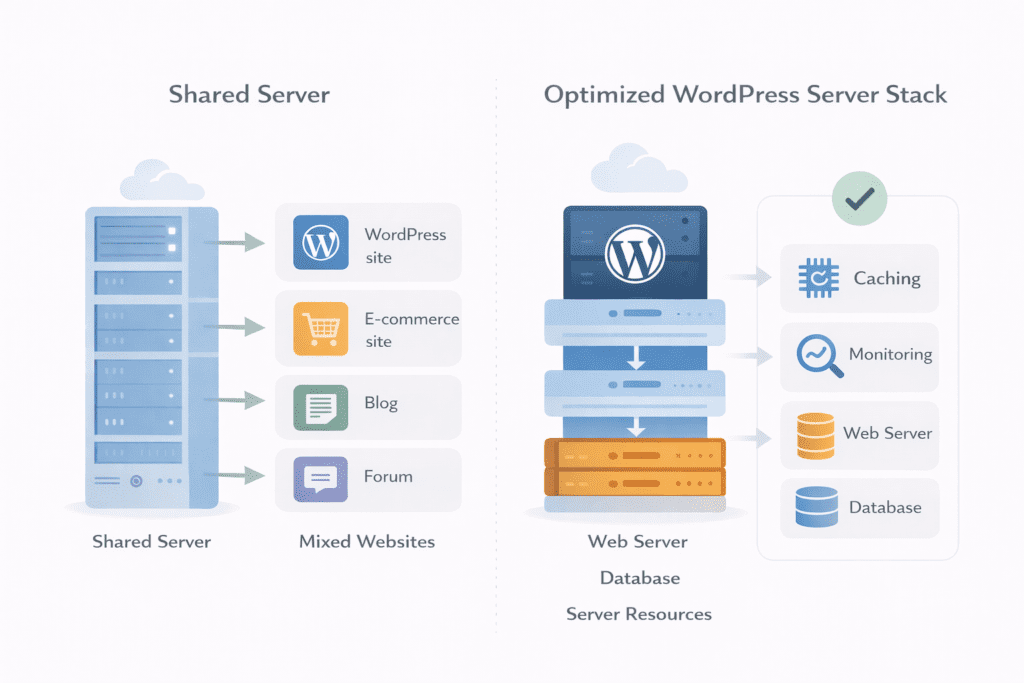
Here’s a quick comparison to make shared vs managed WordPress hosting easier to understand.
| Feature | Shared Hosting (Bluehost, Hostinger) | Managed WordPress Hosting (WP Engine, Kinsta) |
|---|---|---|
| Starting price | $2.99-$5.99/month | $20-$35/month |
| Server environment | Shared server with mixed websites | Servers optimized for WordPress performance |
| Performance level | Moderate | High and consistent |
| Updates | Manual WordPress updates | Automatic core WordPress updates |
| Security | Basic security tools | Advanced security monitoring |
| Backup system | Weekly or manual backup | Daily automated backup |
| Staging feature | Usually not included | Built-in staging environment |
| Support type | General hosting support | WordPress experts |
| Best for | Personal blogs, small sites | Business and high-growth WordPress site |
This table shows how shared vs managed WordPress hosting differs in structure, not just cost.
Shared hosting offers affordability and simplicity. A managed wordpress host focuses on performance, security, and maintenance.
From here, we’ll look at each option in detail so you can choose between shared and managed with confidence.

Shared hosting is the most common type of hosting for beginners.
In a shared hosting environment, multiple websites live on the same shared server, which is a common web hosting plan. That means your wordpress site shares CPU, memory, and storage with other users.
A typical shared hosting plan includes storage space, bandwidth, a control panel, and one-click wordpress installation. The web host manages the main server, while you manage your own website.
Shared web hosting keeps costs low because resources are divided among many users.
It’s simple. It’s affordable. And for small projects, it often works just fine.
There’s a reason shared hosting is so popular.
• Low cost – One of the most affordable ways to launch a wordpress site
• Beginner friendly – Simple dashboard and easy setup
• Quick wordpress installation – Most shared hosting providers offer one-click install
• Minimal technical knowledge required – The web host handles core server management
For someone starting a blog or personal wordpress website, a shared hosting plan removes complexity.
From what I’ve noticed, shared hosting gives new site owners confidence because everything feels straightforward.
Now let’s talk honestly about the cons of shared.
Shared hosting may create performance limitations.
• Resource limitations – CPU and memory are shared
• Traffic spikes affect performance – Heavy usage on the shared server can slow your site
• Limited optimization – Not always optimized specifically for WordPress
• Basic security tools – Advanced protection may cost extra
If another WordPress site on your shared server experiences high traffic, your performance may temporarily drop, highlighting the differences in managed WordPress hosting vs shared options.
That’s one reason some users eventually compare shared hosting and managed wordpress options.
Shared hosting works well for low traffic websites. But as your WordPress site grows, its limits become more noticeable, making a transition to managed WordPress hosting vs shared hosting necessary.
That’s where a managed wordpress host starts to look appealing.
What Is Managed WordPress Hosting?

A managed wordpress host is built specifically for WordPress.
Instead of placing your site on a general shared server, a managed wordpress hosting provider creates an environment designed for WordPress performance, security, and stability.
Managed wordpress hosting provides automatic wordpress updates, daily backup systems, built-in caching, and security monitoring. The server stack is optimized for wordpress sites from the ground up.
In simple terms, a managed wordpress host handles the technical work so you can focus on content and growth.
It usually comes with a higher price tag than shared hosting, but the trade-off is convenience and performance.
The differences between managed wordpress hosting and shared hosting go deeper than pricing.
Shared hosting and managed wordpress use different infrastructure philosophies.
A shared hosting plan runs multiple types of websites on one shared server. It’s flexible, but not specifically optimized for WordPress.
A managed wordpress host uses a dedicated WordPress stack. The environment is designed for WordPress databases, themes, and plugins.
Managed wordpress hosting provides advanced monitoring and proactive security. Many managed wordpress hosting providers include performance tuning and expert wordpress support.
That’s a structural difference, not just a feature list.
Infrastructure Differences: What Actually Powers Each Option?
Infrastructure is where shared vs managed WordPress hosting truly separates.
Shared hosting often uses standard server configurations. Some shared web environments run Apache or LiteSpeed with general-purpose settings.
A managed wordpress host typically uses NGINX or custom caching layers specifically optimized for wordpress performance. Many include object caching, database optimization, and integrated CDN support.
For example, a growing WooCommerce store built on WordPress might start on shared hosting. During a seasonal sale, traffic increases suddenly. On a shared server, performance may fluctuate. On a managed wordpress host with built-in caching and monitoring, traffic handling tends to be more stable.
That’s not about marketing. It’s about server architecture.
Some shared hosting providers are improving infrastructure, and not all managed wordpress hosting providers are equal. But overall, managed wordpress hosting is designed specifically for WordPress.
Understanding this infrastructure layer helps clarify the real difference between shared wordpress hosting and a managed wordpress hosting plan.
People often mix up wordpress hosting vs shared hosting.
Here’s the simple truth.
Shared hosting is a type of hosting. WordPress hosting is a version of hosting built specifically for WordPress.
You can run WordPress on shared hosting. That’s called shared wordpress hosting. It works because WordPress doesn’t require special hardware.
But wordpress hosting vs shared hosting becomes different when optimization enters the picture. A managed wordpress host fine tunes the server environment for WordPress themes, plugins, and database performance.
So when comparing wordpress hosting and shared hosting, remember this: shared hosting is general purpose. Managed WordPress hosting is designed for WordPress.
That’s the key difference between shared hosting and managed WordPress hosting.

Performance is one of the biggest reasons people compare shared vs managed WordPress hosting.
Shared hosting can deliver decent load times for small WordPress sites, but managed WordPress hosting offers better performance for growing sites. But performance may vary during peak traffic because resources are shared.
A managed wordpress host isolates your WordPress site within a more controlled environment. Built-in caching, object cache layers, and optimized database queries improve consistency.
Server response time is usually faster with managed hosting. Uptime reliability also tends to be more stable because the hosting provider monitors performance actively.
If speed directly impacts revenue, managed wordpress hosting is often the safer choice.
That said, not every wordpress site needs enterprise-level speed. For personal blogs or low-traffic projects, shared hosting may perform well enough.
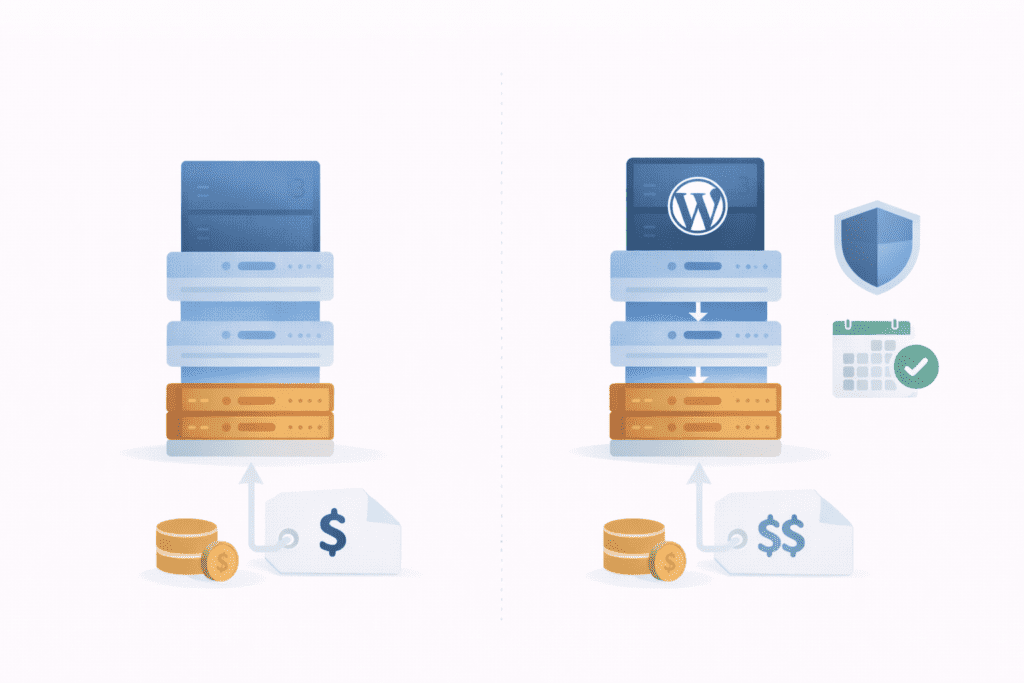
Let’s compare real costs.
| Cost Factor | Shared Hosting (Bluehost, Hostinger) | Managed WordPress Hosting (WP Engine, Kinsta) |
|---|---|---|
| Introductory price | $2.99-$5.99/month | $20-$35/month |
| Renewal price | $8.99-$14.99/month | $25-$45/month |
| Included security tools | Basic firewall | Advanced monitoring + malware scanning |
| Backup system | Weekly backup | Daily automated backup |
| Support level | General hosting support | WordPress specialists |
| Total yearly cost estimate | $120-$180/year | $300-$540/year |
The cost of managed wordpress hosting is clearly higher.
Why?
Because the managed wordpress host includes performance optimization, daily backup automation, stronger security, and expert WordPress support.
The higher price is justified when downtime, speed, and maintenance directly affect business performance.
For hobby projects, shared hosting often makes more financial sense.
Renewal Pricing Reality Check
Introductory pricing can be misleading.
Shared hosting renewals usually increase after the first year. A shared hosting plan that starts at $2.99/month may renew at $10/month or more.
Managed wordpress hosting pricing tends to be more stable. While it’s higher from the start, renewal jumps are often smaller.
When comparing shared vs managed WordPress hosting, think long term.
It’s not just about the first year. It’s about total cost over three to five years.
Understanding this pricing mindset helps you choose the right hosting plan with fewer surprises later.
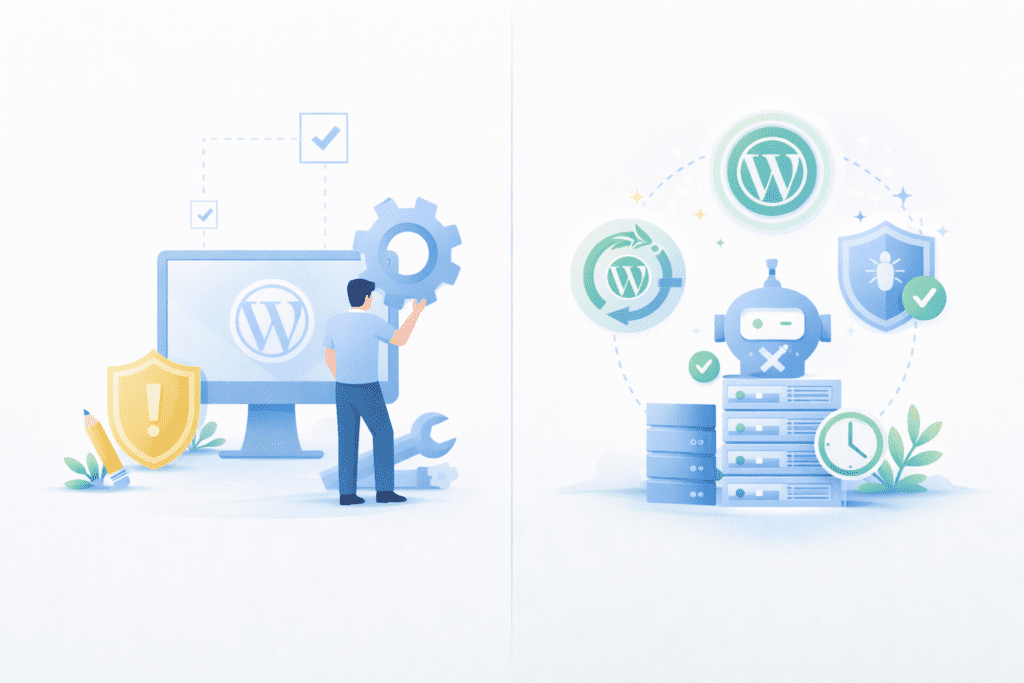
Security is where shared vs managed WordPress hosting becomes more noticeable.
Shared hosting typically includes basic firewall protection and manual wordpress updates. You’re responsible for plugin updates, security checks, and routine maintenance.
A managed wordpress host automates most of that.
Managed wordpress hosting provides automatic core wordpress updates, proactive malware scanning, daily backup systems, and server-level optimizations. Some managed hosting services even monitor plugin vulnerabilities.
DDoS protection and real-time threat detection are more common with a managed wordpress host.
If you prefer not to manage security tasks yourself, managed hosting removes that burden.
Control & Flexibility: Which Hosting Gives You More Freedom?
Now let’s talk control.
Shared hosting gives you general access within your shared server environment. You can install themes, plugins, and adjust settings freely.
A managed WordPress host may limit certain plugins or configurations to protect server stability, which is a crucial aspect of a managed hosting plan. Some restrict low-level server access.
If you want deep customization, shared hosting may feel more flexible.
If you prefer a controlled environment optimized for WordPress sites, a managed hosting plan may feel safer than a basic shared hosting solution.
It depends on how hands-on you want to be.
Scalability Comparison: Which Grows With You Better?
Scalability matters when traffic increases.
Shared hosting may struggle during traffic spikes because resources are shared among multiple users. Upgrading usually means moving to a higher-tier hosting plan or switching to VPS hosting.
A managed wordpress host typically offers smoother upgrade paths. Many managed wordpress hosting providers include scalable infrastructure designed for wordpress performance.
Traffic growth is easier to handle because the environment is specifically optimized for WordPress.
If long-term growth is part of your plan, scalability should influence your choice.
Let’s look at practical examples.
A personal blog with low monthly traffic can run comfortably on a shared hosting plan, but for better reliability, consider a managed WordPress plan.
A local business wordpress site that relies on lead generation may benefit from managed hosting for uptime and performance stability.
A growing WooCommerce store built on wordpress often performs better on a managed wordpress host due to database optimization and caching layers.
A high-traffic content site monetized through ads usually requires the consistent performance that managed wordpress hosting provides.
These real-world use cases show how shared vs managed WordPress hosting fits different needs.
At this point, shared vs managed WordPress hosting comes down to priorities.
If you’re trying to choose between shared and managed options, start with your goals.
Choose Shared Hosting If:
• You are just starting out
• Your budget is limited
• Traffic is low
• You are comfortable handling wordpress updates and basic security
A shared hosting plan works well for personal blogs and small WordPress site projects, but it may not be the best hosting solution for larger sites.
Choose Managed WordPress Hosting If:
• You run a business website
• Speed directly affects revenue
• You want hands-off maintenance
• You expect traffic growth
A managed wordpress host reduces technical stress and improves performance consistency.
When choosing between shared and managed wordpress hosting, think long term rather than just monthly cost.
There’s another layer to this discussion.
Shared hosting may feel limiting once traffic grows significantly. If your wordpress site experiences frequent slowdowns, upgrading becomes necessary.
On the other hand, a managed wordpress host may become expensive for very high-traffic projects.
In those cases, VPS hosting can act as a middle step between shared hosting and dedicated infrastructure.
Shared hosting vs higher-tier options is really about resource allocation and scalability.
Yes, migration is possible.
Most hosting companies allow you to move from shared hosting to a managed wordpress host with minimal downtime.rong shared hosting plan from a reliable web host can outperform a po
The process usually involves transferring files, migrating the database, and updating DNS settings.
There may be short downtime during the switch. Plugin compatibility should also be reviewed before migration.
Switching later is common. Many people start with shared hosting and move to managed wordpress hosting as their wordpress site grows.
Cost isn’t always obvious.
Shared hosting may require paid add-ons for daily backup, advanced security tools, or premium plugins.
A managed wordpress host often bundles features like staging environments and automated backup into the price.
Email hosting is another factor. Some shared hosting providers include it. Some managed wordpress hosting plans charge separately.
When comparing shared vs managed WordPress hosting, review the full feature list, not just the headline price.
Not all shared hosting is slow.
Some shared hosting providers use modern infrastructure that performs well for small sites.
And not all managed wordpress hosting is premium. Infrastructure and support quality vary among hosting companies.
The hosting provider matters more than the label.
A strong shared hosting plan from a reliable web host can outperform a poorly optimized managed wordpress host.
Infrastructure transparency, support quality, and real-world performance should guide your decision.
What is the main difference between shared vs managed WordPress hosting?
The main difference is optimization and maintenance. Shared hosting is general-purpose, while a managed wordpress host is optimized for WordPress performance and automatic maintenance.
Is managed WordPress hosting faster than shared hosting?
In most cases, yes. Managed wordpress hosting provides server-level optimizations and caching designed for WordPress.
Is shared WordPress hosting good for beginners?
Yes. Shared wordpress hosting is often the most affordable and beginner-friendly way to launch a wordpress site.
Is managed wordpress hosting and shared hosting the same thing?
No. Managed wordpress hosting and shared hosting use different infrastructure approaches and maintenance levels.
Which hosting plan is better for small businesses?
If uptime and speed impact revenue, a managed wordpress host is usually better. For simple informational sites, shared hosting may be enough.
Can I upgrade later?
Yes. Most hosting providers offer migration paths from shared hosting to managed wordpress hosting or even VPS hosting.
Is wordpress hosting vs shared hosting just marketing?
Not entirely. There are real infrastructure and optimization differences, but quality depends on the specific hosting provider.
Why might choosing a hosting plan matter for a WordPress site?
Choosing a hosting plan matters because the type of hosting you choose affects speed, security, and how easy it is to use WordPress.
Does managed wordpress hosting gives better performance than shared plans?
Yes, managed WordPress hosting is better for performance because servers and caching are tuned for WordPress only.
Can I use WordPress on cloud hosting or shared hosting?
You can use WordPress on cloud hosting or shared hosting, but cloud or managed options often scale and run faster for busy sites.
How do hosting providers differ in helping with updates and backups?
A hosting provider may handle core updates and daily backups on managed plans, while shared plans usually leave that to you.
Are managed WordPress hosting is like having a website team?
In a way, managed WordPress hosting is like having a small website team because it often includes support, security scans, and maintenance tasks.
When is shared hosting a great choice for WordPress?
Shared hosting is a great choice for new or low-traffic sites because it is cheaper and good for learning how to use WordPress.
What are the best managed wordpress hosting providers known for?
The best managed WordPress hosting providers are known for fast load times, strong security, and expert WordPress support.
Does hosting for WordPress give access to developer tools?
Managed WordPress hosting gives you access to staging sites, WP-CLI, and backups that help developers work safely.
How do I decide if hosting is perfect for my site’s needs of WordPress?
Look at traffic, budget, and needed features—managed hosting is ideal for speed and support, while shared hosting is cheaper for small sites.
The core difference in shared vs managed WordPress hosting is responsibility.
Shared hosting keeps costs low but requires you to manage updates and security. A managed wordpress host handles optimization and maintenance for you.
Budget-first decision? Shared hosting makes sense.
Growth-focused and performance-driven? A managed wordpress host is usually the better long-term investment.
Think about where your wordpress site will be in two years, not just today.
Shared vs managed WordPress hosting isn’t about which is better overall. It’s about which fits your current goals and future plans.
Compare real hosting providers carefully before choosing your hosting plan.