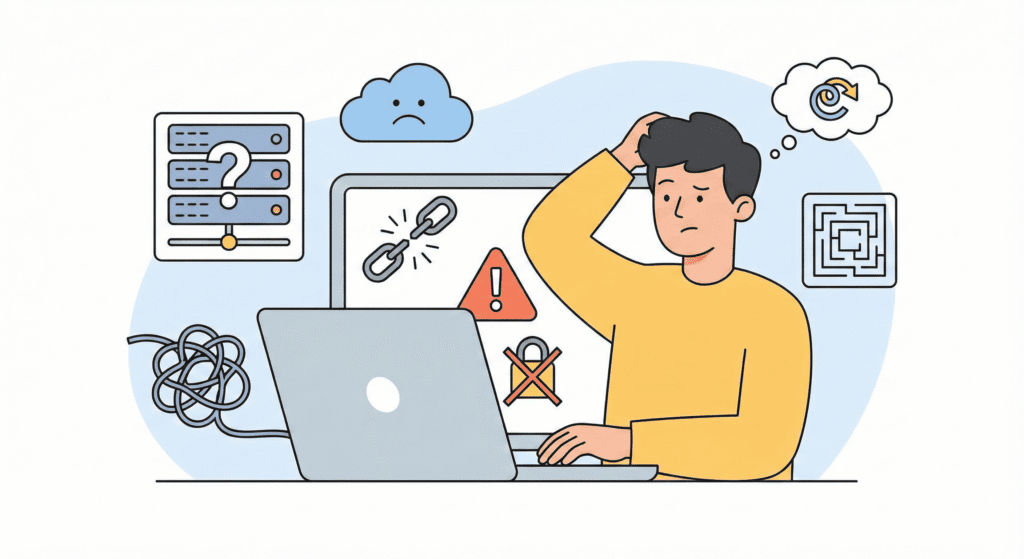
If you’re building a website for the first time, web hosting can feel confusing. That’s exactly why web hosting myths spread so easily.
This guide will cover the 5 common web hosting myths you need to stop believing, especially if you’re a beginner in the US. These hosting myths sound convincing, but they often lead to poor decisions, wasted money, and performance problems.
From my research, many US beginners fall prey to common misconceptions because:
- Hosting companies market aggressively
- Reviews online are mixed or misleading
- First time web hosting users don’t know what really matters
In the world of web hosting, it’s easy to confuse price with quality, or features with results.
Let’s debunk these myths one by one and replace them with facts that actually help your website’s success.


Myth 1: Cheap Hosting Is Always Bad
This is one of the biggest myths beginners believe.
Many people think a cheap web host must be slow, unreliable, or unsafe. That’s not always true.
Why people believe this myth
- Cheap hosting plans often get negative reviews
- Some low cost providers oversell servers
- People assume high prices mean better performance
Because of this, many website owners skip budget-friendly hosting without checking what’s included.
What’s actually true
Cheap hosting isn’t automatically bad. In fact, budget-friendly hosting can work well for:
- Small websites
- Personal blogs
- New WordPress sites
- Testing ideas
Many hosting providers offer affordable plans with:
- Decent uptime
- Enough bandwidth
- Basic security measures
- SSL included
The real issue isn’t cheap hosting. It’s unrealistic expectations.
If you expect a low-cost shared hosting plan to handle massive traffic or multiple websites, you’ll be disappointed. But for small and medium-sized websites, cheap hosting can deliver reliable performance.
The key is choosing a good web hosting provider, not just the lowest price.
Myth 2: Expensive Hosting Guarantees Top Performance
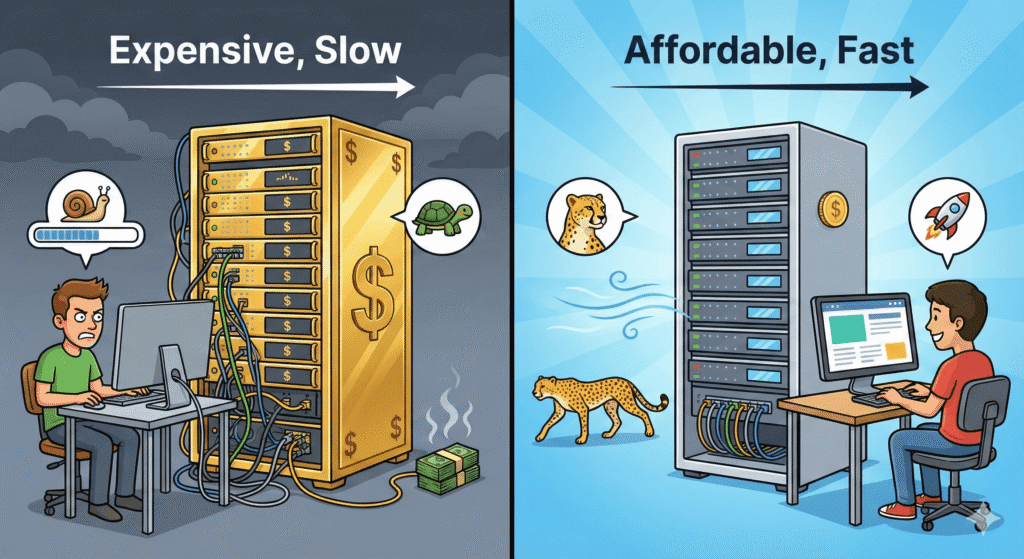
This myth is just as dangerous as the first one.
Some beginners believe expensive hosting automatically means better performance, better SEO, and fewer problems.
Common misunderstanding
High prices don’t always mean:
- Faster load times
- Better uptime
- Better customer support
Some expensive hosting plans charge more for features you may not even need.
Reality vs expectations
Performance depends on:
- Server resources
- Hosting provider reliability
- Server configuration
- How your website is built
Expensive hosting can still have slow response time if the setup is poor. Meanwhile, a well-optimized shared hosting plan can sometimes outperform overpriced packages.
High prices alone don’t ensure your website’s success.
Myth 3: You Need Technical Skills to Manage Web Hosting

This myth scares a lot of beginners away from starting a website.
Many people believe you must understand servers, code, or server management just to use a web host. That idea comes from how hosting worked years ago.
Fear beginners have
First time web hosting users often worry about:
- Managing servers
- Handling errors
- Breaking their site by mistake
Because of this fear, many website owners delay building an online presence or pay for services they don’t really need.
How hosting has changed
Here’s the truth: most modern hosting providers design their platforms to be user-friendly.
Today, a good web hosting provider offers:
- Simple dashboards
- One-click WordPress installs
- Built-in features like backups and SSL
- Helpful customer support
You don’t need deep technical skills to run a WordPress site, Joomla site, or basic business website.
In fact, many hosting companies focus on beginners. Their hosting packages are built so you can manage your site without touching code.
So no, you don’t need to be technical. You just need to choose the right hosting provider.
Myth 4: Free Web Hosting Is Good Enough for Any Website
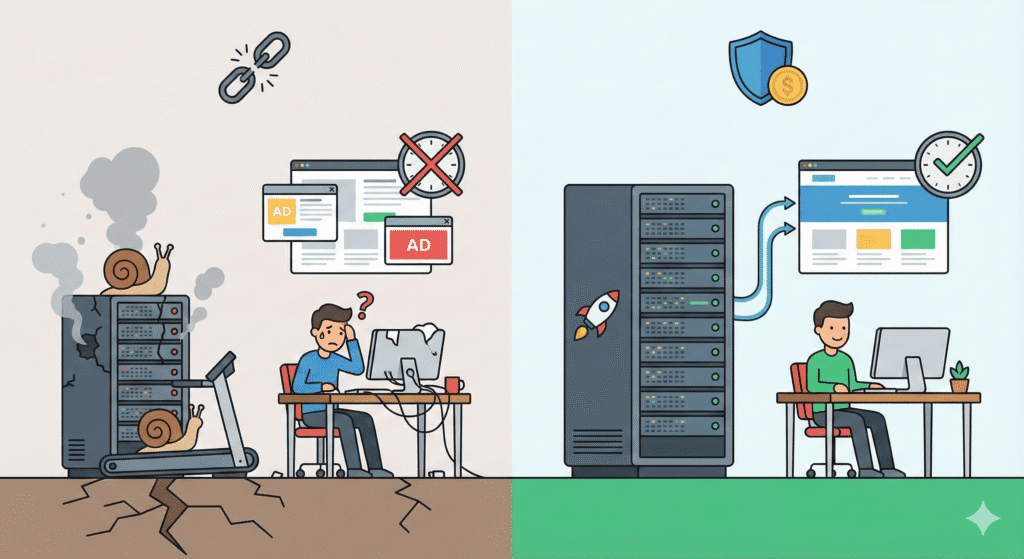
Free hosting sounds appealing. No bills. No risk. No commitment.
But this is one of the most misleading web hosting myths.
Where free hosting works
Free web hosting can work for:
- Learning
- Testing ideas
- Temporary projects
If you’re experimenting or building something private, free hosting may be fine.
Where it fails
Free hosting usually comes with limits:
- Slow load times
- Limited disk space
- Weak uptime
- Forced ads
- No real customer support
Many providers that offer free hosting restrict resources heavily. Multiple websites share limited servers, which leads to downtime and poor reliability.
For any serious website-especially one meant to earn income or build trust-free hosting creates long-term problems.
A website is often a source of income or brand growth. Free hosting rarely supports that goal.
Myth 5: Switching Hosts Will Instantly Fix SEO Problems
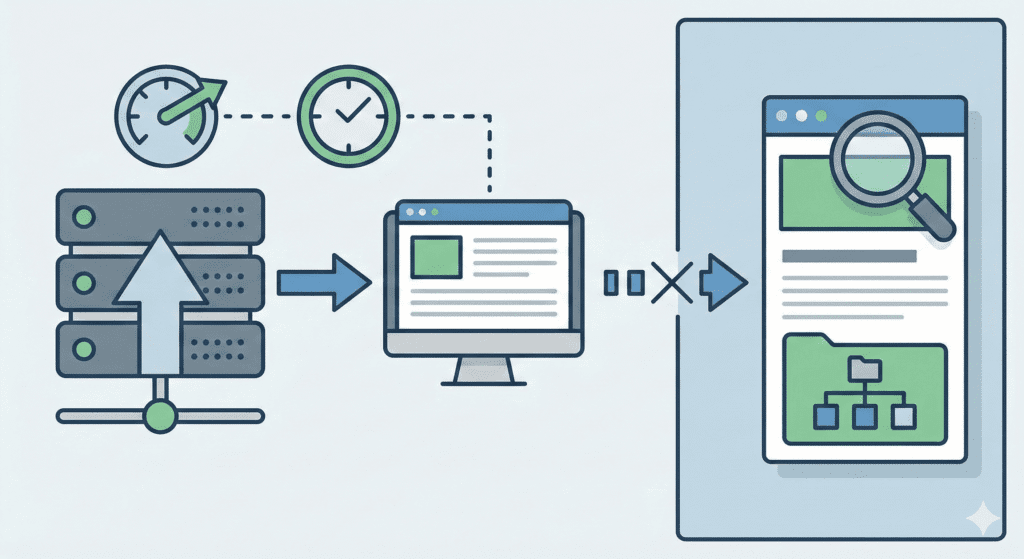
This is one of the most common misconceptions.
Some website owners believe moving to a new web host will suddenly fix SEO, rankings, and traffic.
Why this myth is misleading
Hosting affects performance, uptime, and reliability. Those are important. But hosting alone doesn’t create content, backlinks, or authority.
SEO depends on:
- Content quality
- User experience
- Website structure
- Search engine trust
A hosting provider can help ensure that your website is hosted in a fast and secure environment, but it can’t replace SEO work.
What hosting can and can’t fix
Hosting can help by:
- Improving load times
- Reducing downtime
- Supporting better performance
But hosting cannot:
- Fix poor content
- Recover penalties instantly
- Guarantee rankings
Believing this myth leads to unrealistic expectations and frustration.
Why Believing These Myths Can Hurt Your Website
Believing web hosting myths doesn’t just confuse beginners. It can actively hurt your website.
From my research, many website owners make long-term mistakes because they trust common misconceptions instead of facts.
Poor decisions from the start
When you believe hosting myths, you may:
- Overpay for expensive hosting you don’t need
- Choose free hosting that limits growth
- Avoid good budget-friendly hosting options
- Switch hosting providers too often
These decisions affect your online presence early, and fixing them later costs more time and money.
Performance and cost issues
Picking the wrong web host often leads to:
- Slow load times
- Unexpected downtime
- Limited bandwidth
- Poor reliability
Some hosting providers oversell resources. Others hide limits inside cheap plans. When this happens, your website struggles even if your content is good.
That’s why uptime, reliability, and realistic expectations are crucial factors – not just price.
Long-term problems
The biggest damage is long-term.
A website is not just a project. For many website owners, it’s:
- A brand
- A business asset
- A source of income
If hosting choices are based on myths, your website’s success becomes harder to achieve.
What Beginners in the US Should Focus On Instead

Instead of believing myths, US beginners should focus on what actually matters.
Reliability first
A good web hosting provider should offer:
- Stable uptime (often advertised as 99.9)
- Consistent performance
- Fewer outages
Reliability matters more than fancy features.
Support that helps
Customer support is often ignored, but it’s critical.
A strong hosting provider offers:
- Fast responses
- Clear explanations
- Help during downtime
Many hosting companies advertise support, but not all deliver it well.
Realistic performance needs
Not every website needs VPS or expensive hosting.
For many small and medium-sized websites:
- Shared hosting works
- Budget-friendly plans are enough
- Performance is acceptable
The key is choosing a hosting plan that fits your current needs and allows growth later.
Common Hosting Facts Beginners Should Know
Let’s replace myths with facts.
Hosting is the foundation, not the whole house
Hosting provides the base. Content, design, and SEO still matter most.
Even the best hosting provider can’t save a website with poor content or weak structure.
Price doesn’t equal quality
High prices don’t guarantee better performance.
Low cost doesn’t always mean bad hosting.
Good web hosting comes from balance:
- Fair pricing
- Reliable performance
- Helpful support
Hosting choices should evolve
Many website owners start small and upgrade later. That’s normal.
Your hosting should grow with your website, not hold it back.
FAQs – Web Hosting Myths
Let’s answer the most common questions beginners in the US ask after learning about web hosting myths you need to stop believing.
Is cheap hosting always bad?
No. This is one of the biggest hosting myths.
Cheap or budget-friendly hosting can work well for:
- Personal blogs
- New websites
- Small online projects
Many hosting providers offer low-cost plans with good uptime, SSL, and basic security measures. The key is to avoid unrealistic expectations and read the hosting plan details carefully.
Does hosting alone improve rankings?
No. Hosting does not directly control search engine rankings.
Good hosting supports:
- Better load times
- Stable uptime
- A fast and secure site
But SEO still depends on content, structure, and user experience. Hosting helps, but it doesn’t replace SEO work.
Do I need to manage servers myself?
Not at all.
Modern web hosting services are very user-friendly. Many providers offer:
- One-click WordPress installs
- Automatic updates
- Built-in features like backups and SSL
You don’t need server management skills to run a website today.
Is paid hosting always better than free hosting?
Paid hosting is usually more reliable, but free hosting has limited use cases.
Free web hosting may work for:
- Testing ideas
- Learning web hosting basics
But it often comes with downtime, ads, limited bandwidth, and weak reliability. That’s why most website owners move away from free hosting as their site grows.
What Should You Do Next After Understanding These Myths?
Now that you understand these 5 common web hosting myths, here’s what to do next.
Review your current hosting choice
Ask yourself:
- Is my web host reliable?
- Am I paying for features I don’t use?
- Is uptime consistent?
Many website owners stay with bad hosting simply because they don’t review it.
Learn basic hosting terms
You don’t need to become an expert, but knowing basics helps:
- Hosting plan types
- Shared hosting vs VPS
- Bandwidth and disk space
This knowledge helps you make informed decisions instead of falling for myths.
Make informed decisions going forward
Instead of believing marketing claims:
- Compare hosting providers
- Read realistic reviews
- Focus on reliability and support
This is how smart website owners avoid poor hosting choices.
Final Thoughts
Let’s recap the key takeaway.
Web hosting myths create confusion, not success
Many beginners fall prey to common misconceptions because hosting sounds technical and confusing. But most myths come from misunderstanding, not facts.
Hosting supports your website – it doesn’t replace effort
A good web hosting provider helps with:
- Better performance
- Stable uptime
- Secure website access
But your content, SEO, and consistency still matter most.
Choose hosting wisely, not emotionally
Don’t chase high prices.
Don’t fear budget-friendly hosting.
Don’t expect hosting to fix everything.
Choose hosting based on:
- Your website’s size
- Your goals
- Your realistic needs
That’s how you stop believing hosting myths – and start building a website that actually works.