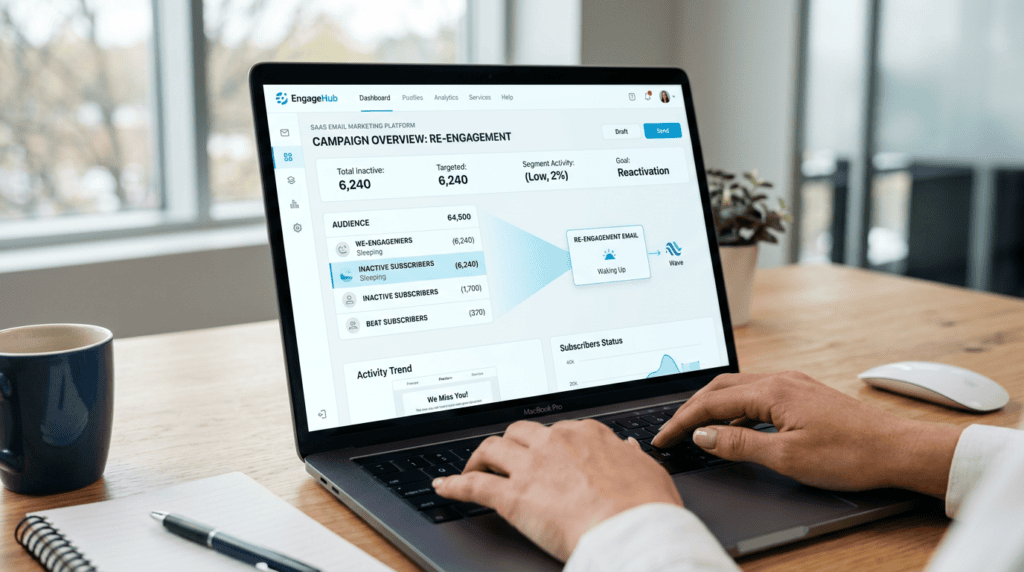
Are dormant subscribers silently killing your email deliverability? Many email marketers treat inactive subscribers like a sunk cost, ignoring the slow, corrosive damage they inflict on sender reputation and overall campaign performance. This guide provides a step-by-step process for writing effective re-engagement emails that win back inactive subscribers. We’ll move beyond generic templates to cover the strategy, copywriting techniques, and real-world examples you need to reactivate your audience and clean your email list.
Most advice on re-engagement email campaigns focuses purely on getting a click, but the real goal is often more nuanced: to get a clear decision from the subscriber. Sometimes, that decision is to re-engage, and other times, it’s to gracefully opt-out, which is just as valuable for maintaining a healthy email list. Understanding this distinction is key to a successful re-engagement strategy.
What Is a Re-Engagement Email and Why Is It Critical for Your List Health?
A re-engagement email is a targeted message sent to subscribers who haven’t interacted with your emails in a significant period. This could mean they haven’t opened, clicked, or otherwise engaged with your content for weeks, months, or even longer. These campaigns are a strategic effort to encourage inactive subscribers to become active again, or to confirm their desire to remain on your list. Without a solid re-engagement strategy, your email list can quickly become bloated with disengaged contacts, hurting your overall email marketing efforts.
Defining the “Inactive Subscriber”
An inactive subscriber isn’t just someone who missed your last email. It’s a subscriber who consistently shows no signs of life over a predefined period. This timeframe varies by industry and email frequency, but a common benchmark is 90 days without an open or click. For a daily newsletter, inactivity might be 30 days. For a monthly update, it could stretch to 180 days. Defining your inactivity threshold is the first critical step in identifying who needs a re-engagement email. You’re looking for patterns of non-engagement, not just a single missed message.
The High Cost of a Disengaged Email List: Deliverability and Open Rates
A large segment of inactive email subscribers can severely damage your email deliverability. Internet Service Providers (ISPs) like Gmail and Outlook track how recipients interact with your emails. If a significant portion of your list consistently ignores your messages, ISPs interpret this as a sign that your content isn’t relevant or wanted. This can lead to your emails being routed directly to the spam folder, or even blocked entirely, impacting your open rates and the success of all future email campaigns.
We once saw a client’s open rates drop from 25% to under 10% because they refused to clean their list for over a year, convinced every subscriber was gold. It took months of dedicated list hygiene and targeted re-engagement to recover their sender reputation.
How Re-Engagement Campaigns Improve Your Sender Reputation
Running a well-executed re-engagement campaign shows ISPs that you’re actively managing your email list and trying to send relevant content to an engaged audience. When inactive subscribers either re-engage or unsubscribe, it signals to ISPs that you’re maintaining a healthy, permission-based email marketing strategy. This positive signal can significantly improve your sender reputation, which in turn boosts your email deliverability for all future emails. It’s about demonstrating good list hygiene and respect for the inbox.
> Don’t view unsubscribes from a re-engagement email as a failure; consider them a necessary step toward a cleaner, more engaged email list that will ultimately perform better.
The Goal Isn’t Just to Get an Open – It’s to Get a Decision
While getting an open is a good first step, the true goal of a re-engagement email is to prompt a decision from the subscriber. Do they still want to receive your emails? Do they want to change their preferences? Or do they want to unsubscribe? A successful re-engagement email campaign provides clear options for the subscriber to take action. This clarity helps you segment your list effectively, ensuring you’re only sending emails to people who genuinely want them. It’s about respecting their inbox and refining your audience for better overall engagement metrics.
Before You Write: The 3-Step Strategic Foundation for Your Campaign
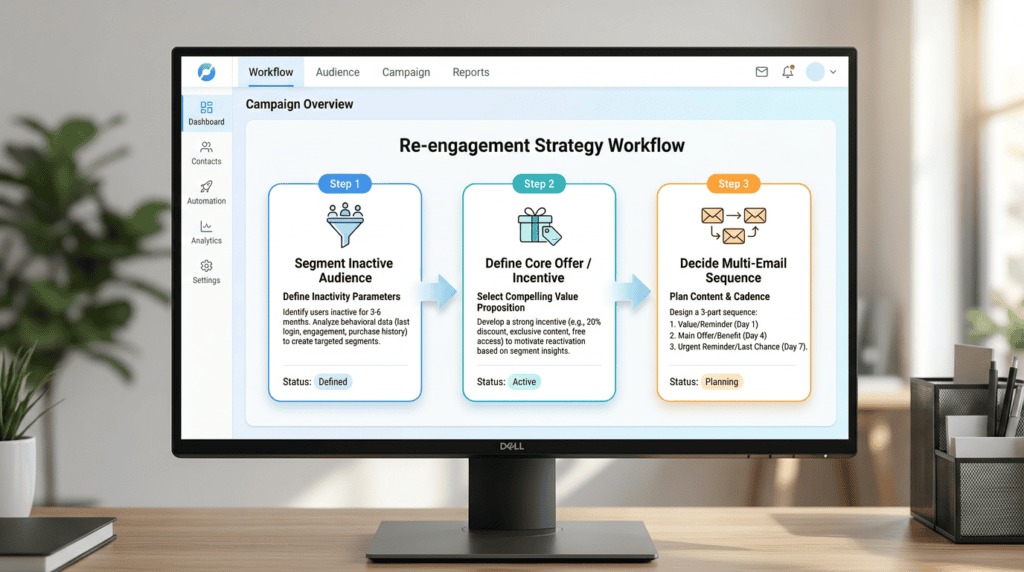
Before you even think about writing the first word of your re-engagement email, you need a solid plan. A well-thought-out strategy makes the difference between a forgotten message and a successful win-back campaign. This foundational work ensures your efforts are targeted and effective, helping you reactivate inactive subscribers rather than just sending more emails into the void.
Step 1: Segmenting Your Inactive Audience (e.g., 90, 120, 180+ days)
The first crucial step is to define who you’re trying to re-engage. Not all inactive subscribers are the same. Someone who hasn’t opened an email in 90 days might respond differently than someone who’s been silent for over a year. Your email service provider (ESP) should allow you to segment your list based on engagement metrics like open rates and click rates.
Common segmentation benchmarks for inactivity include:
- 90 days: These subscribers are often “cold” but not entirely lost. They might have just gotten busy or missed a few emails. A gentle nudge or a reminder of your value can often bring them back.
- 120-180 days: This group is more deeply disengaged. Your re-engagement email needs to be more compelling, perhaps with a stronger offer or a direct question about their preferences.
- 180+ days (or even 365+ days): These are your truly inactive email subscribers. For this segment, the goal shifts slightly. While you still want to win them back, you also need to consider cleaning your email list. If they don’t respond, it’s often better for your email deliverability to remove them.
> Tactical Takeaway: Segmenting your inactive audience allows for personalized email content and offers, significantly boosting the chances of a successful re-engagement campaign.
I’ve found that a 120-day segment often yields the best balance for a first re-engagement attempt. It’s long enough to identify true inactivity but not so long that the subscriber has completely forgotten about us. Targeting these segments with tailored messages is key to improving overall subscriber engagement metrics.
Step 2: Defining the Core Offer or Incentive for Re-Engagement
Once you know *who* you’re targeting, you need to decide *what* you’ll offer them to encourage a response. A re-engagement email needs a clear value proposition. This isn’t just about sending another newsletter; it’s about giving them a reason to pay attention again.
Consider these types of incentives:
- Exclusive Content: Offer a link to a new guide, a private video, or an upcoming webinar that’s highly relevant to their past interests.
- Discount or Promotion: A limited-time discount on a product or service can be a powerful motivator, especially if it’s personalized.
- Feedback Request: A simple survey asking what kind of content they’d like to receive can re-engage them by making them feel heard. This also helps you refine your content strategy.
- Preference Update: Direct them to an email preference center where they can adjust their email frequency or topic interests. This shows you respect their inbox.
The best offer aligns with your brand and provides genuine value to the subscriber. Don’t just offer a discount if your brand isn’t typically discount-driven. Think about what made them opt-in in the first place and try to rekindle that interest.
Step 3: Deciding on a Single Email vs. a Multi-Email Sequence
Your re-engagement strategy also needs to consider the number of emails you’ll send. Will it be a one-off message, or a win-back email sequence?
- Single Email: This works best for highly targeted, urgent offers or for segments that are only mildly inactive (e.g., 90 days). It’s simpler to set up and monitor. The risk is that if the subscriber misses that one email, your chance is gone.
- Multi-Email Sequence: A series of 2-3 emails is often more effective. This allows for different approaches, offers, and subject lines.
- Email 1: A gentle check-in, reminding them of your value.
- Email 2: A stronger offer or a direct question about their engagement.
- Email 3: A “last chance” message, informing them that they’ll be removed from the list if they don’t respond. This is critical for email list hygiene.
An automated email workflow for a re-engagement email series can significantly improve your chances. I’ve personally seen better results with a short, three-email win-back sequence. The first email is a soft reminder, the second offers a clear incentive, and the third explicitly states the consequence of continued inactivity. This approach gives subscribers multiple opportunities to re-engage before you clean your list.
The Anatomy of a High-Converting Re-Engagement Email
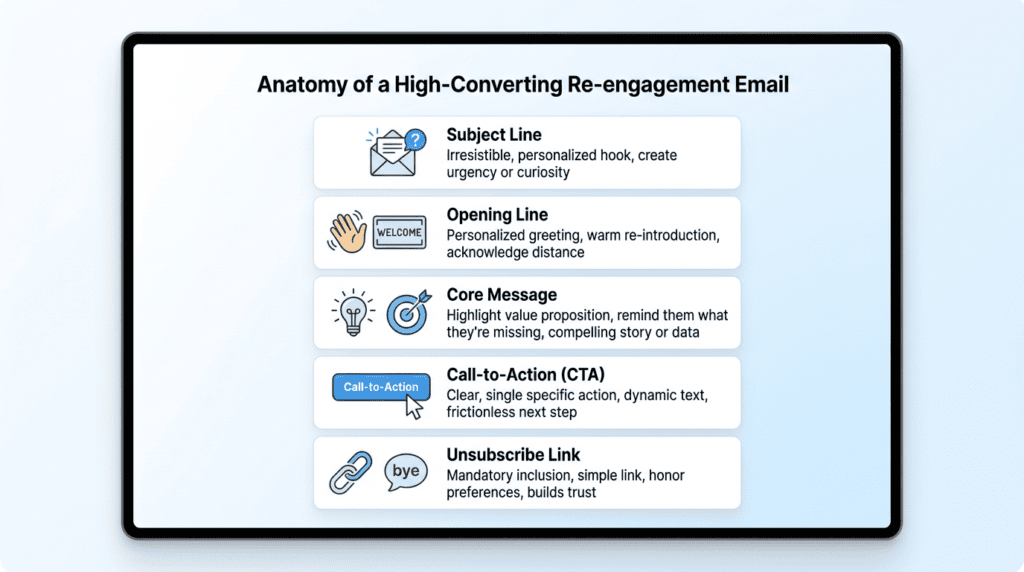
Crafting a re-engagement email isn’t just about sending a message; it’s about constructing a compelling narrative that encourages action. Each part of the email plays a specific role in drawing the inactive subscriber back into your fold.
Part 1: Crafting a Subject Line They Can’t Ignore
The subject line is arguably the most critical component of your re-engagement email. It’s the gatekeeper to your message. Without a strong subject line, your email won’t get opened, and all your other efforts are wasted. The goal is to pique curiosity, create urgency, or offer clear value.
Here are some effective strategies for re-engagement email subject lines, using the examples provided:
- Question-Based: “Is This Goodbye?” This type of subject line directly addresses their inactivity and prompts an emotional response. It’s personal and implies a potential loss.
- Value-Oriented: “A Special Offer Just For You” or “Your Exclusive Discount Inside.” This immediately communicates a benefit, making the open worthwhile. It works well when you have a tangible incentive.
- Relevance-Focused: “Still Interested in [Your Topic]?” This reminds them why they joined your list in the first place. It’s a gentle reminder of shared interests and allows them to reaffirm their preferences.
- Urgency/Scarcity: “Don’t Miss Out: Your [Offer] Expires Soon” or “Last Chance to Stay Connected.” These create a fear of missing out, encouraging immediate action.
When writing email subject lines, keep them concise, clear, and personalized where possible. Emojis can also boost open rates if they fit your brand’s tone, but use them sparingly. The best subject lines are often short enough to be fully visible on mobile devices.
Part 2: The Opening Line – Acknowledge the Silence
After a compelling subject line gets the open, your opening line needs to acknowledge the elephant in the room: their inactivity. Do this gently, without being accusatory. The tone should be empathetic and understanding.
Instead of “Why haven’t you opened our emails?”, try:
- “It looks like we haven’t heard from you in a while, and we miss you!”
- “We noticed you haven’t been engaging with our emails lately.”
- “Just checking in – we haven’t seen you around.”
This approach sets a friendly tone and shows you’re paying attention. It transitions smoothly into reminding them of your value.
Part 3: The Core Message – Remind Them of Your Value
This is where you re-sell your brand, content, or product. Briefly remind them why they subscribed to your email list in the first place. What problems do you solve? What unique value do you offer?
Focus on benefits, not just features. If you’re a blog, highlight the kind of valuable content delivery they’ve been missing. If you sell products, remind them of the solutions your products provide. This section should be concise and impactful, reinforcing your brand’s relevance. You might mention recent popular articles, new product launches, or key benefits they might have forgotten.
Part 4: The Call-to-Action (CTA) – Make the Next Step Obvious
Every re-engagement email needs a clear, single call to action. Don’t overwhelm them with choices. What’s the one thing you want them to do?
Examples of clear CTAs include:
- “Click here to update your preferences.”
- “Visit our latest blog post.”
- “Claim your exclusive discount now.”
- “Tell us what you want to see.”
The CTA should be prominent, easy to understand, and ideally, a single button or link. Make the next step as frictionless as possible. The goal is to get a click, which signals renewed engagement and helps improve your open rates and click rates.
Part 5: The Unsubscribe Link – Make It Easy to Leave
While it might seem counterintuitive, including a clear and easy-to-find unsubscribe link is crucial. Not only is it legally required in many regions, but it also benefits your email deliverability. If inactive subscribers can easily opt-out, they won’t mark your emails as spam. This protects your sender reputation and ensures your emails reach the inboxes of your engaged audience.
Position the unsubscribe link clearly, usually in the footer of the email. You can even frame it positively, such as “Not interested anymore? No problem, click here to unsubscribe.” This transparency builds trust, even with those who choose to leave.
5 Proven Re-Engagement Email Angles with Examples
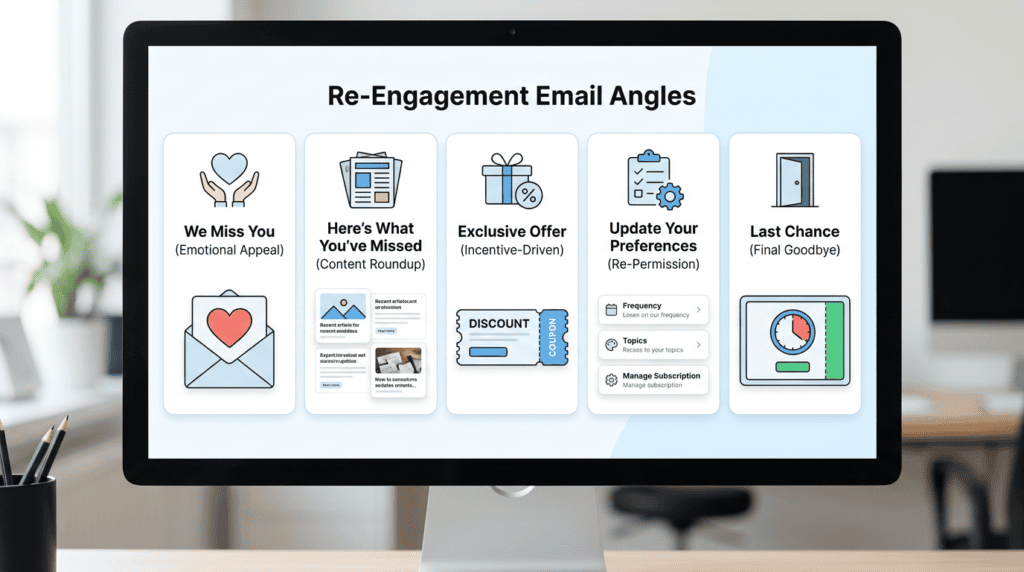
Crafting the right message for your re-engagement email campaign is crucial. It’s not just about sending *an* email; it’s about sending the *right* email that resonates with your inactive subscribers. Different angles work for different audiences and business models. Here are five proven approaches, each with an example to spark your creativity.
1. The “We Miss You” / Emotional Appeal
This angle taps into the human desire for connection. It’s effective when you have a strong brand identity or a community aspect. The goal is to remind subscribers of the relationship you once had and the value they’re missing.
- *Example for a blogger or creator community*
Subject: We’ve Missed You, [Subscriber Name]!
Hey [Subscriber Name],
It’s been a little while since we last heard from you, and we’ve genuinely missed seeing you around. We remember how much you enjoyed our [mention a specific type of content, e.g., weekly productivity tips / behind-the-scenes stories].
Since you’ve been gone, we’ve shared some really exciting stuff, like [mention a popular recent blog post or project]. We’d love to have you back in the loop!
If you’re still interested in getting our updates and exclusive content, just click here:
[Button: Catch Up on What You’ve Missed]
Otherwise, no worries at all. We understand if things change.
Best,
[Your Name/Brand]
2. The “Here’s What You’ve Missed” Content Roundup
This approach works best for content-heavy brands, newsletters, or publishers. It highlights the valuable content your inactive subscribers have missed, reminding them of the quality and relevance of your offerings.
- *Example for a content-heavy brand or newsletter*
Subject: You’ve Missed Out! See Our Latest [Topic] Insights
Hi [Subscriber Name],
We noticed you haven’t opened our emails in a while, and we wanted to make sure you didn’t miss some of our best work. We’ve been busy publishing deep dives into [mention 2-3 key topics, e.g., AI tools for creators, affiliate marketing strategies, SEO updates].
Here are a few highlights you might find useful:
- [Link to Article 1 Title]
- [Link to Article 2 Title]
- [Link to Article 3 Title]
If you’d like to keep receiving these insights and stay ahead in the [Your Niche] space, confirm your interest below. If not, we’ll understand.
[Button: Keep Me Updated!]
Thanks,
The [Your Brand] Team
3. The “Exclusive Offer” / Incentive-Driven Approach
A direct incentive can be a powerful motivator for inactive email subscribers. This angle is particularly effective for e-commerce stores, SaaS companies, or anyone with a product or service to sell. The offer should be compelling enough to warrant a click.
- *Example for an ecommerce store or SaaS company*
Subject: A Special 20% Off Just For You, [Subscriber Name]!
Hey [Subscriber Name],
It looks like we haven’t seen you around lately, and we wanted to offer a little something to welcome you back. We value your presence on our list, and we’d love for you to experience [mention a new feature, product line, or benefit].
As a thank you for being a past subscriber, enjoy 20% off your next purchase with code WELCOMEBACK20. This offer is exclusive to you and expires in 7 days!
[Button: Shop Now & Save!]
We’ve also added [mention a new product category or feature] since you last visited.
Hope to see you soon,
[Your Brand]
> Always prioritize value over guilt when trying to re-engage. An exclusive offer or genuinely helpful content will always outperform a message that tries to shame subscribers into action.
4. The “Update Your Preferences” / Re-Permission Angle
This angle empowers the subscriber by giving them control over the type and frequency of emails they receive. It’s a great way to clean your list while also potentially retaining subscribers who just need a different experience. I’ve personally seen this approach significantly reduce unsubscribe rates while improving overall engagement metrics.
- *Example for giving subscribers more control over email frequency*
Subject: Still Want to Hear From Us? Update Your Preferences!
Hi [Subscriber Name],
We noticed you haven’t been opening our emails much lately. We want to make sure we’re sending you content that you truly value, at a frequency that works for you.
Would you like to update your email preferences? You can choose to receive [mention options, e.g., only monthly newsletters, specific topic updates, or special offers].
[Button: Update My Preferences]
If we don’t hear from you, we’ll assume you’re no longer interested in our updates and will remove you from our list to keep things tidy.
Thanks for your understanding,
The [Your Brand] Team
5. The “Last Chance” / Final Goodbye Email
This is the final email in a win-back email sequence, sent just before you remove an inactive contact from your list. It’s direct, clear, and gives the subscriber one last opportunity to confirm their interest. This email is critical for email list hygiene.
- *Example for the final step before list cleaning*
Subject: Final Notice: We’re Cleaning Our Email List
Hey [Subscriber Name],
This is the last email you’ll receive from us unless you tell us otherwise. We’re currently cleaning our email list to ensure we’re only sending valuable content to people who truly want it.
Since you haven’t engaged with our recent emails, we’ll be removing your address from our database in 48 hours.
If you still want to receive [mention your content/offers], please click the button below to stay subscribed:
[Button: Yes, Keep Me Subscribed!]
If you don’t take action, you’ll be automatically unsubscribed. You can always re-join our list anytime on our website.
Sincerely,
[Your Brand]
Writing Clinic: Common Mistakes That Cause Re-Engagement Emails to Fail
Even with the best intentions, re-engagement email campaigns can fall flat if common pitfalls aren’t avoided. These mistakes often lead to continued inactivity, higher unsubscribe rates, or even spam folder delivery.
Mistake 1: Using a Generic, Uninspired Subject Line
A re-engagement email subject line needs to stand out. If it looks like every other marketing email, inactive subscribers won’t open it. Avoid bland phrases like “Check out our latest news” or “An update from us.” As discussed earlier, your subject line is your first and often only chance to grab attention. A generic subject line ensures your re-engagement email never even gets a chance to be read.
Mistake 2: Failing to Remind Subscribers Who You Are
Inactive subscribers might have forgotten who you are or why they signed up in the first place. Jumping straight into an offer or a “we miss you” message without a brief reminder of your brand and its core value can be confusing. Briefly re-establish your identity and purpose early in the email.
Mistake 3: Sounding Demanding or Guilt-Tripping the Reader
No one likes to feel guilty. Phrases like “Why haven’t you opened our emails?” or “You’re missing out!” can come across as accusatory and push people further away. Focus on offering value and choice, not on making them feel bad for their inactivity. The tone should be helpful and understanding, not demanding.
Mistake 4: Offering a Weak or Irrelevant Incentive
If your re-engagement offer isn’t compelling or doesn’t align with why the subscriber initially joined your list, it won’t work. A 5% discount might not be enough to reactivate someone who hasn’t opened an email in six months. The incentive needs to be strong and relevant to their past interests or the value you provide.
Mistake 5: Hiding the Unsubscribe Link
While it might seem counterintuitive, making the unsubscribe link hard to find is a critical mistake. If subscribers can’t easily opt-out, they’re more likely to mark your emails as spam. This hurts your sender reputation and overall email deliverability. As mentioned in previous sections, a clear unsubscribe option is a sign of respect for your audience and essential for maintaining a healthy email list. I’ve always found that a clean list, even if smaller, performs much better than a bloated one full of disengaged contacts.
What Happens After You Hit Send? Measuring Success and Next Steps

Sending your re-engagement email campaign is just the beginning. The real work involves tracking its performance and deciding on the next steps for your subscriber list. This process is vital for optimizing your email marketing strategy and maintaining good email list hygiene.
Key Metrics to Track: Open Rate, Click-Through Rate, and Unsubscribe Rate
To understand the effectiveness of your re-engagement efforts, you must monitor specific metrics:
- Open Rate: This tells you how many inactive subscribers opened your re-engagement email. A higher open rate indicates your subject line and sender name were compelling enough to grab their attention.
- Click-Through Rate (CTR): This metric measures how many people clicked on a link within your email. A good CTR suggests your content, offer, or call-to-action was relevant and persuasive.
- Unsubscribe Rate: While you want to re-engage, some unsubscribes are inevitable and even healthy. A higher unsubscribe rate on a “last chance” email, for instance, means your list is getting cleaner. However, a high unsubscribe rate on an earlier re-engagement email might signal issues with your content or targeting.
What to Do with Subscribers Who Re-Engage
When a subscriber re-engages, it’s a win! Don’t treat them like a brand new subscriber. Instead:
- Segment them: Move them into an “active re-engaged” segment. This allows you to monitor their activity closely.
- Send a welcome-back email: A short, personalized email thanking them for re-engaging and reminding them of what to expect can reinforce their decision.
- Continue providing value: Ensure your regular email content remains relevant and valuable to keep them engaged long-term. Consider their updated preferences if you used that angle.
The Importance of Removing Subscribers Who Remain Inactive
For those who don’t re-engage after your win-back email sequence, it’s time to let them go. Removing these inactive contacts is not a failure; it’s a critical step in email list hygiene.
> Your email list hygiene directly impacts your sender reputation and future deliverability. Regularly cleaning your list by removing truly inactive subscribers helps ensure your emails reach the inbox of those who *do* want to hear from you, rather than ending up in spam folders.
Continuing to send emails to disengaged subscribers can lead to:
- Lower open and click rates: This signals to email service providers (ESPs) that your content isn’t relevant, potentially hurting your deliverability for active subscribers.
- Higher spam complaints: Frustrated inactive users might mark your emails as spam.
- Increased costs: Many email service providers charge based on the number of subscribers, so you’re paying to email people who aren’t listening.
By cleaning your list, you improve your overall email marketing strategy, boost your sender reputation, and ensure your efforts are focused on an audience that genuinely values your content.
Final Thoughts: Integrating Re-Engagement Into Your Email Marketing Workflow

This isn’t a one-time fix. A successful re-engagement strategy is an ongoing process of list hygiene. By regularly identifying and reaching out to inactive subscribers, you maintain a healthier, more engaged, and more profitable email list over the long term. Think of it as routine maintenance for your most valuable asset. Incorporating automated re-engagement email campaigns into your overall email marketing strategy ensures that your subscriber database remains clean, improving your email deliverability and overall open rates. This proactive approach helps you avoid the pitfalls of a stale list, like higher spam complaints and reduced inbox placement. Consistent list hygiene is key to sustained email success.
FAQs About Re-Engagement Emails
How often should I run a re-engagement campaign?
You should run re-engagement campaigns on an ongoing basis, often triggered by subscriber inactivity thresholds, such as 90, 120, or 180 days without an open or click. Setting up an automated workflow for these inactive email subscribers ensures continuous list health.
What’s a good open rate for a re-engagement email?
A good open rate for a re-engagement email can vary, but generally, anything above 10-15% is considered a positive sign, especially given the audience consists of inactive subscribers. The goal is to get any engagement, indicating a potential win-back.
Should I send one re-engagement email or a series?
A multi-email sequence is generally more effective than a single re-engagement email. A series allows you to test different subject lines, offers, and angles, giving inactive subscribers multiple opportunities to re-engage before you consider removing them from your list.
Is it better to offer a discount or just ask if they want to stay?
It depends on your business model and audience, but a combination often works best. Start by reminding them of your value and asking for their preference, then consider a small, exclusive offer or discount as a final incentive within a win-back email sequence.
What’s the risk of not sending re-engagement emails?
The primary risk of not sending re-engagement emails is a decaying email list filled with inactive subscribers, which hurts your email deliverability, open rates, and sender reputation. This can lead to more of your emails landing in the spam folder, even for active readers.