
Your email open rates are probably lower than you’d like. Inboxes are a battleground, and getting your message seen feels tougher every day. Many marketers pour hours into crafting perfect email content, only to see their efforts wasted because the subject line fails to grab attention. The truth is, even the most valuable email is useless if it never gets opened.
This guide isn’t just about theory; it’s about giving you actionable strategies to write email subject lines that stand out. We’ll cover proven tips, real-world examples, and a framework to consistently increase your open rates and boost engagement across all your email marketing campaigns. You’ll learn how to write compelling subject lines that pique curiosity, create urgency, and ultimately drive more clicks and conversions.
Introduction
In today’s crowded digital space, your subscribers’ inboxes are overflowing. Every day, they’re bombarded with messages, making it incredibly challenging for your email to even get noticed, let alone opened. The subject line is the gatekeeper to your valuable content. If it doesn’t compel a click, all the effort you put into writing the email itself goes to waste. This guide will equip you with the strategies to write email subject lines that cut through the noise, maximize your open rates, and ensure your message reaches its intended audience.
Part 2: Actionable Formulas & Frameworks for Writing Subject Lines
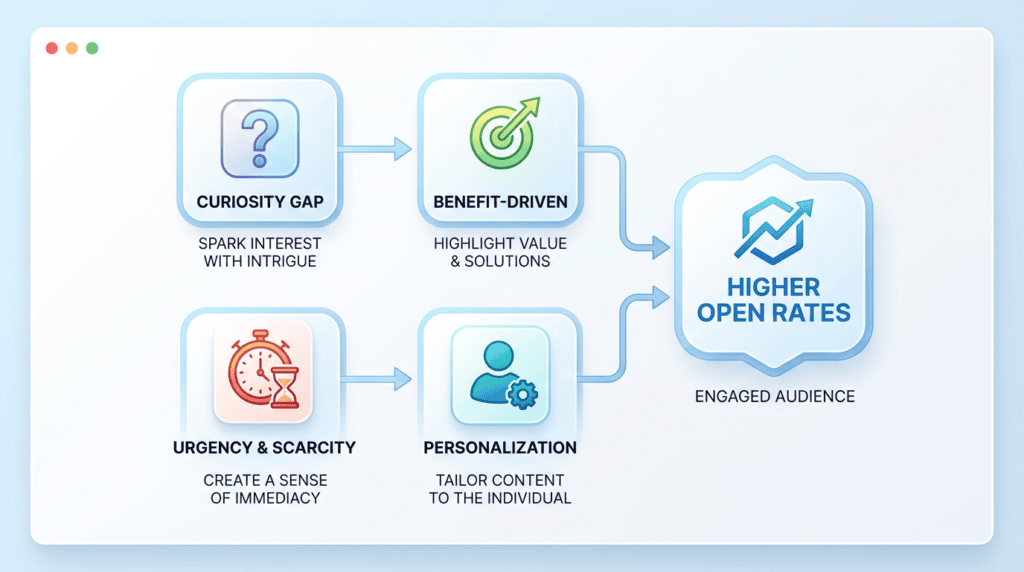
Once you understand the core purpose of a subject line and the psychology driving email opens, the next step is to apply proven formulas. These aren’t rigid rules but flexible frameworks that guide your copywriting, helping you consistently write email subject lines that resonate with your audience and maximize your open rates. Think of them as starting points that you can adapt and refine for any email marketing campaign. We’ll explore several effective strategies, each designed to tap into different psychological triggers.
The “Curiosity Gap” Formula
This formula works by creating a small information void that your readers feel compelled to fill. The idea is to pique your readers curiosity without giving away the entire message in the subject line. You hint at something interesting, surprising, or valuable, making them want to click to learn more. It’s a delicate balance; too vague, and it feels like clickbait; too specific, and there’s no reason to open.
- How It Works: Piquing Interest Without Giving Everything Away
You present a question, a surprising statement, or an incomplete thought that suggests there’s a valuable answer or insight inside the email. The goal is to make the reader think, “I need to know what that’s about.” This approach leverages a natural human desire for resolution.
- Examples for Different Niches (e.g., B2B, Ecommerce, Creators)
- B2B: “The #1 mistake most businesses make with client retention.” (Implies a solution or insight)
- Ecommerce: “Did you forget something important?” (References a cart or recent browsing)
- Creators: “My secret to writing content that actually converts.” (Promises a valuable, exclusive tip)
- Newsletter: “You won’t believe what happened next…” (Classic cliffhanger)
- Common Mistake: Turning Curiosity into Vague Clickbait
The line between genuine curiosity and frustrating clickbait is thin. Avoid subject lines like “You HAVE to see this!” or “OMG!” without any context. These might get an initial open, but they damage subscriber trust if the email content doesn’t deliver on the implied promise. When I’ve tested overly vague subject lines in the past, I’ve seen a temporary spike in open rates, but then a noticeable dip in subsequent campaign engagement and an increase in spam reports. It’s a short-term gain for a long-term loss.
> Tactical Takeaway: Use the curiosity gap to hint at a specific benefit or insight, not just to create a generic mystery. The content inside must always deliver on the promise.
The “Benefit-Driven” Formula
Sometimes, the most effective way to increase email open rates is to be direct. The benefit-driven formula clearly states the value or solution the email offers to the reader. It answers the “What’s In It For Me?” question immediately, making it ideal for promotions, announcements, or educational content where the value is straightforward.
- How It Works: Clearly Stating the Value Inside the Email
This approach focuses on the positive outcome or advantage the subscriber will gain by opening the email. It’s about solving a problem, offering a discount, providing useful information, or delivering something they explicitly want. These subject lines often use active verbs and focus on results.
- Examples: “Learn X,” “Get Y,” “Save Z”
- “Learn how to boost your website traffic by 30%.”
- “Get your exclusive 25% off coupon inside!”
- “Save $100 on our new course – ends Friday.”
- “Your weekly digest of top marketing tips.”
- When to Use Benefits Over Curiosity
This formula shines when your audience is already looking for a specific solution, when you’re running a clear promotion, or when you have a strong, undeniable offer. For instance, if you’re sending a sales email or a welcome email with a discount code, a benefit-driven subject line ensures the reader immediately understands the value proposition. It’s also excellent for transactional emails or updates where clarity is paramount.
The “Urgency & Scarcity” Formula
This formula taps into the psychological principle that people are more likely to act when faced with a limited-time opportunity or a limited quantity of something desirable. It creates a sense of urgency, encouraging immediate action to avoid missing out.
- How It Works: Using Time or Quantity Limits to Drive Action
By clearly stating that an offer, opportunity, or resource is expiring soon or is in short supply, you motivate subscribers to open the email and engage with the content quickly. This can significantly boost your click-through rates and conversions, especially for time-sensitive promotions or event registrations.
- Examples: “Last chance,” “Ends tonight,” “Only 3 spots left”
- “Flash Sale: 24 Hours Left to Save 40%!”
- “Your Free Trial Expires Tomorrow – Don’t Miss Out!”
- “Only 5 Seats Left for Our Live Webinar!”
- “Price Increase Coming Soon: Lock in Your Rate Now.”
- The Risk of Overusing Urgency and Causing “Urgency Fatigue”
While powerful, this formula must be used judiciously. If every email marketing campaign screams “urgent” or “last chance,” your audience will quickly become desensitized. This “urgency fatigue” can lead to lower open rates, increased unsubscribes, and even damage your email deliverability as subscribers start marking your emails as spam. Reserve true urgency for genuinely time-sensitive offers to maintain its impact and build subscriber trust.
The “Personalization” Formula
Personalization goes beyond simply inserting a first name into the subject line. It involves using data about your subscribers to make the email feel uniquely relevant to them, significantly increasing engagement and open rates.
- How It Works: Going Beyond Just Using the Recipient’s First Name
True personalization involves segmenting your email list and tailoring subject lines based on a subscriber’s past behavior, preferences, demographics, or stage in the customer journey. This could mean referencing a recent purchase, a browsing history, their location, or specific interests they’ve indicated. The goal is to make the email feel like a one-to-one conversation.
- Examples: Referencing Past Purchases, Location, or On-Site Behavior
- “New arrivals based on your recent [Product Category] purchase!”
- “Your cart is waiting, [First Name] – complete your order now.”
- “Exclusive events in [City] this weekend.”
- “A special offer just for [Loyalty Program Tier] members.”
- “We noticed you checked out [Specific Product]…”
- Tools and Techniques for Advanced Personalization
Modern email marketing platforms and CRM systems offer robust tools for advanced personalization. These allow you to segment your audience based on a wide range of data points and dynamically insert relevant information into your subject lines and email copy. Look for features that support custom fields, behavioral triggers, and dynamic content blocks. This allows you to create highly targeted email subject lines that resonate deeply with individual subscribers, leading to higher engagement and conversions.
Part 3: Advanced Tactics to Elevate Your Subject Lines
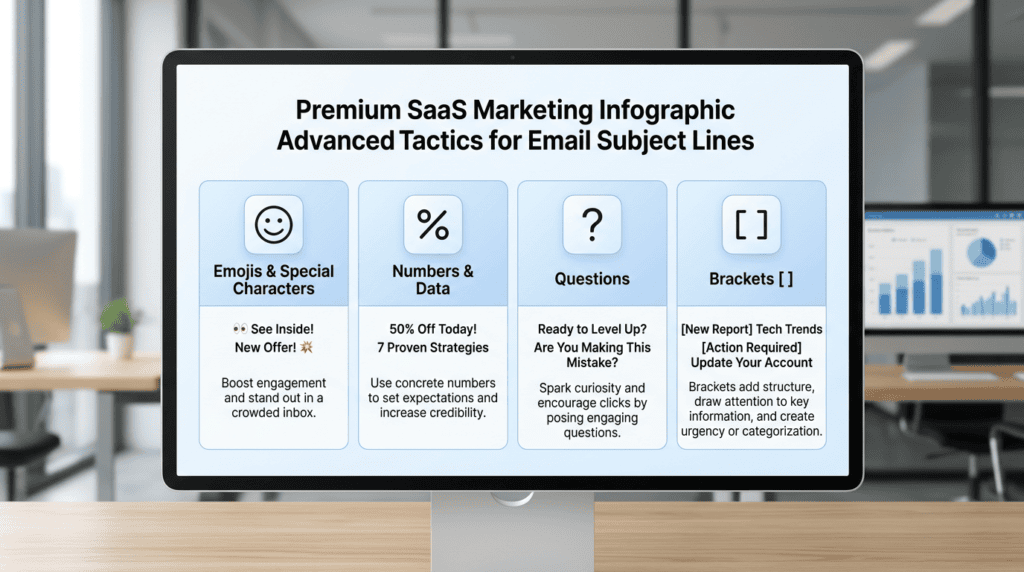
Moving beyond the basic formulas, truly effective email marketing campaigns require a more nuanced approach to subject lines. These advanced tactics can help you stand out in a crowded inbox and significantly boost your open rates.
How to Effectively Use Emojis and Special Characters
Emojis and special characters can be powerful tools to grab attention and convey emotion in your subject lines, but they need to be used strategically. Data suggests that emojis can indeed increase open rates, often by making your email appear more friendly and less formal. However, this isn’t a universal truth; it heavily depends on your audience and brand.
The best practices for using emojis involve relevance, moderation, and audience fit. An emoji should complement your message, not replace it. For example, a travel company might use an airplane emoji (✈️) for a flight deal, while a finance newsletter might stick to more professional language. It’s also wise to test emoji placement – sometimes at the start of the subject line works best for visibility, other times at the end for emphasis.
Common pitfalls include rendering issues across different email clients and tone mismatches. An emoji that looks great on an iPhone might appear as a broken box on an older desktop client, and a playful emoji can undermine a serious message. I’ve found that A/B testing different emojis and placements is crucial; what works for one segment of my audience might not work for another.
> Always test emojis across various email clients and devices to avoid rendering issues that can make your subject line look unprofessional.
Mastering Subject Line Length for Mobile and Desktop
The idea of an “ideal character count” for subject lines is more myth than reality. While shorter subject lines often perform better, the true goal is optimization for how different email clients display your message. What appears perfectly readable on a desktop might be severely truncated on a mobile device, where character limits are much stricter.
Email clients like Gmail, Outlook, and Apple Mail each have their own rules for how many characters they show before cutting off the subject line. Mobile devices, in particular, often display only 30-50 characters. This means your most compelling words and the core message need to be front-loaded.
Beyond the subject line itself, writing for the “preview text” is like having a second subject line. This snippet of text, often pulled from the first line of your email body, appears right next to or below your subject line in the inbox. Optimizing your email preview text can provide additional context or a stronger call to action, significantly increasing the chances of your email being opened. Think of it as a valuable extension to pique your readers’ curiosity.
The Power of Numbers, Questions, and Brackets
These three elements are excellent for making your subject lines more engaging and informative.
- Numbers and Data: People are naturally drawn to specifics. Subject lines that include numbers, like “7 Ways to Boost Your Productivity” or “Save 25% This Week,” tend to grab attention because they promise concrete value or a clear benefit. They set an expectation for what’s inside the email.
- Questions: Posing a question in your subject line can immediately engage the reader’s mind. Questions like “Are you making this common mistake?” or “Ready for a new challenge?” invite interaction and encourage the recipient to open the email to find the answer. This taps into a psychological trigger for curiosity.
- Brackets [ ]: Using brackets can help categorize your email and add a professional touch. They’re great for clarity and emphasis, signaling the type of content within. Examples include “[New Guide] Your Ultimate SEO Checklist,” “[Video] How We Doubled Our Traffic,” or “[Webinar] Master Affiliate Marketing.” This helps subscribers quickly understand the email’s purpose and decide if it’s relevant to them.
Part 4: What to Avoid: Common Subject Line Mistakes That Kill Open Rates
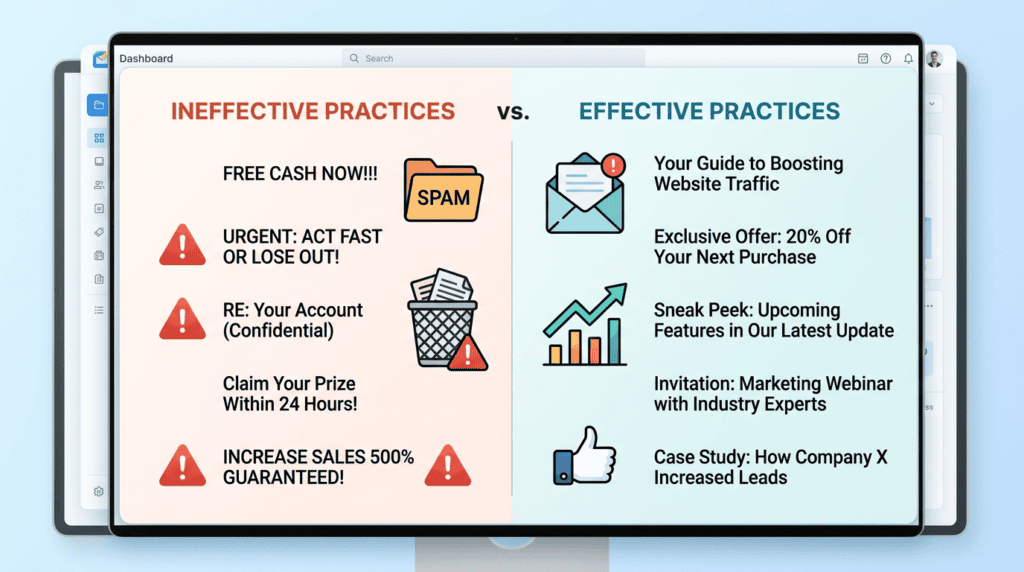
While knowing what to do is important, understanding what *not* to do can be equally critical for the success of your email marketing strategy. Avoiding these common pitfalls will help you maintain a good sender reputation, improve deliverability, and keep your subscribers engaged.
The Dangers of Using Spam Trigger Words
Spam filters are constantly evolving, but they still flag certain words and phrases that are commonly associated with unsolicited emails. Understanding how spam filters think is key to avoiding the spam folder. They look for patterns, not just individual words.
Examples of words to use with caution include “Free,” “Sale,” “Win,” “Cash,” “Discount,” and phrases like “Act now” or “Limited time offer.” While these aren’t inherently bad, using too many, or combining them with other spammy characteristics, can trigger filters. The best approach is to focus on value instead of hype. Instead of “FREE Money,” try “Your Guide to Smart Investing.” This shifts the focus from a potential spam trigger to a genuine benefit for your audience.
> Prioritize delivering genuine value and relevance in your subject lines to build subscriber trust and avoid the spam folder, rather than relying on hype.
The Trap of Deceptive or Misleading Subject Lines
One of the quickest ways to damage your brand and reduce long-term engagement is through deceptive or misleading subject lines. Using “Re:” or “Fwd:” when your email isn’t actually a reply or a forwarded message is a classic example. While it might trick someone into opening an email once, it quickly erodes trust.
The long-term cost of a single deceptive email on subscriber trust is immense. People feel tricked, and they’ll be less likely to open your future emails, or worse, they’ll mark you as spam. I’ve seen brands try this tactic, and while they might see a temporary spike in open rates, their unsubscribe rates skyrocket, and their overall email engagement plummets. It’s a short-sighted strategy that ultimately harms your deliverability and reputation. Always ensure your subject line accurately reflects the content of your email.
The Problem with All Caps, Over-Punctuation, and Hype
Imagine someone shouting at you every time they spoke. That’s essentially what “SHOUTING AT YOUR SUBSCRIBERS” with all caps in your subject lines feels like. It’s aggressive, unprofessional, and often triggers spam filters. While you might think it makes your email stand out, it usually just annoys recipients.
Similarly, the impact of excessive exclamation points!!! or other punctuation marks is negative. A single exclamation point can convey excitement, but three or more often look desperate and unprofessional. These tactics scream “spam” to both human readers and automated filters. Maintaining a professional and trustworthy tone is paramount for building a loyal subscriber base and ensuring your email marketing campaigns are successful.
Part 5: Building a System for Continuous Improvement
Once you’ve mastered the art of writing compelling email subject lines, the next step is to build a system that ensures you’re always getting better. This isn’t a “set it and forget it” game; continuous improvement is how you truly maximize your open rates and overall email marketing campaign performance.
How to A/B Test Your Subject Lines the Right Way

A/B testing is your secret weapon for understanding what truly resonates with your audience. It’s about more than just trying two different subject lines; it’s about conducting a controlled experiment. To get a statistically significant result, you need to test one variable at a time. For example, if you want to know if emojis increase your open rate, test a subject line with an emoji against the exact same subject line without one. Don’t change the length, the offer, or the tone simultaneously.
Most popular Email Service Providers (ESPs) like ConvertKit, ActiveCampaign, or Mailchimp have built-in A/B testing tools that make this process straightforward. They’ll help you split your audience, send variations, and report on the winner based on your chosen metric, usually open rates or clicks. This data is gold for refining your email marketing strategy.
Creating a “Swipe File” of High-Performing Subject Lines
A swipe file is a collection of marketing materials that have caught your eye or performed well. For email subject lines, this means keeping a running log of what works. Start by analyzing your own past email campaigns. Which subject lines led to the highest open rates and clicks? Look for patterns in length, tone, use of numbers, or specific power words.
Beyond your own data, actively study what others are doing. Subscribe to newsletters in your niche and even unrelated industries. When a subject line makes you open an email, save it. Note why you opened it. Over time, you’ll build a valuable resource of email subject line examples and proven email copywriting formulas that you can adapt for your own audience. Organizing your swipe file by category (e.g., urgency, curiosity, benefit-driven) makes it a quick reference for when you need to write catchy subject lines fast.
Final Checklist: 7 Questions to Ask Before Hitting ‘Send’
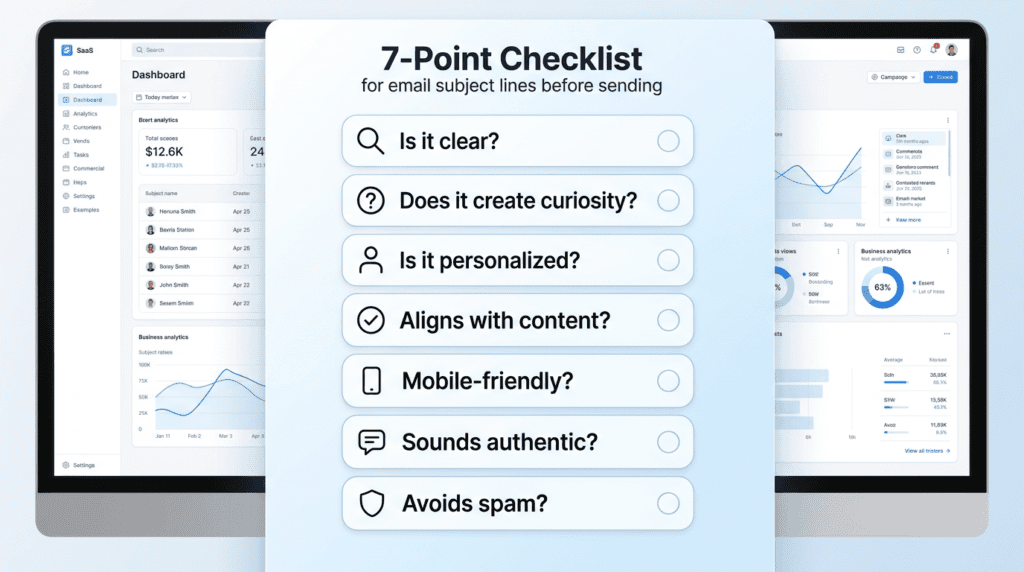
Before your email campaign goes out, run your subject line through this quick checklist to boost your chances of success:
- Is it clear and specific? Does the reader immediately understand what the email is about, or at least what kind of value they’ll get?
- Does it create curiosity or state a clear benefit? Is there a compelling reason for someone to open this email?
- Is it personalized for the recipient? Have you used their name, referenced a past action, or segmented your email list effectively to make it relevant?
- Does it align with the email’s content and CTA? Avoid deceptive subject lines that promise one thing but deliver another, as this damages subscriber trust.
- How will it look on a mobile device? Remember the subject line character limit and optimize for mobile devices, ensuring the most important words aren’t truncated.
- Does it sound human and authentic? Steer clear of overly corporate jargon or spammy language.
- Could it be misinterpreted or seen as spammy? Double-check for spam trigger words to avoid the spam folder and maintain good email deliverability rates.
Frequently Asked Questions
How long should an email subject line be?
There’s no single “perfect” length for an email subject line, but generally, shorter is better, especially for mobile-friendly subject lines. Aim for around 40-50 characters to ensure your message isn’t cut off on most devices, but focus more on impact and clarity than a strict character count.
Is it okay to use emojis in B2B subject lines?
Using emojis in B2B subject lines can be effective, but it depends heavily on your specific audience and industry norms. If your brand’s tone is more formal, use them sparingly or not at all; for more modern or casual B2B audiences, testing their impact on your open rates is key.
How often should I use urgency in my subject lines?
You should use urgency in your subject lines only when there’s a genuine, time-sensitive offer or deadline. Overusing urgency creates “urgency fatigue” among your subscribers, making them less likely to respond when a truly urgent situation arises.
What is the best way to A/B test subject lines?
The best way to A/B test subject lines is to form a clear hypothesis, test only one variable at a time (e.g., a different power word or an emoji), use a statistically significant sample size, and then analyze the results to see which version performs better for your specific goals, like increasing email open rates or click-through rates.