
Are your email open rates actually good? Many marketers obsess over this single metric, often missing the bigger picture. While a good email open rate is a core indicator of campaign health, defining “good” isn’t as straightforward as a single number.
You’re likely here because you want clear benchmarks and a solid understanding of what constitutes a good open rate in today’s digital landscape. The truth is, relying on outdated or generalized statistics can lead you down the wrong path, causing you to misinterpret your email marketing performance.
This guide will provide up-to-date industry benchmarks, explain the critical factors that truly influence your open rates, and offer actionable strategies to improve them. We’ll cut through the noise so you can make informed decisions about your email marketing strategy.
What Is a Good Email Open Rate? (The Quick Answer)
Across all industries, the current average email open rate typically hovers around 20-25%. This general benchmark gives you a starting point, but it’s crucial to understand that this average can be highly misleading. Simply comparing your campaign performance to this number won’t tell you much about your actual success.
A truly “good” rate depends heavily on several factors: your specific industry, the quality and engagement of your subscriber list, and the type of email you’re sending. A transactional email, for instance, will almost always see higher open rates than a weekly newsletter.
> Don’t fixate on generic industry averages; they often obscure the real story behind your email performance.
Understanding *why* your emails are opened (or not opened) is far more valuable than simply knowing a number. For example, I’ve run highly segmented campaigns where a 19% open rate generated significantly more sales than a broader newsletter with a 35% open rate because the audience was perfectly targeted. It’s about the quality of the engagement, not just the quantity of opens.
Email Open Rate Benchmarks by Industry (2026 Data)
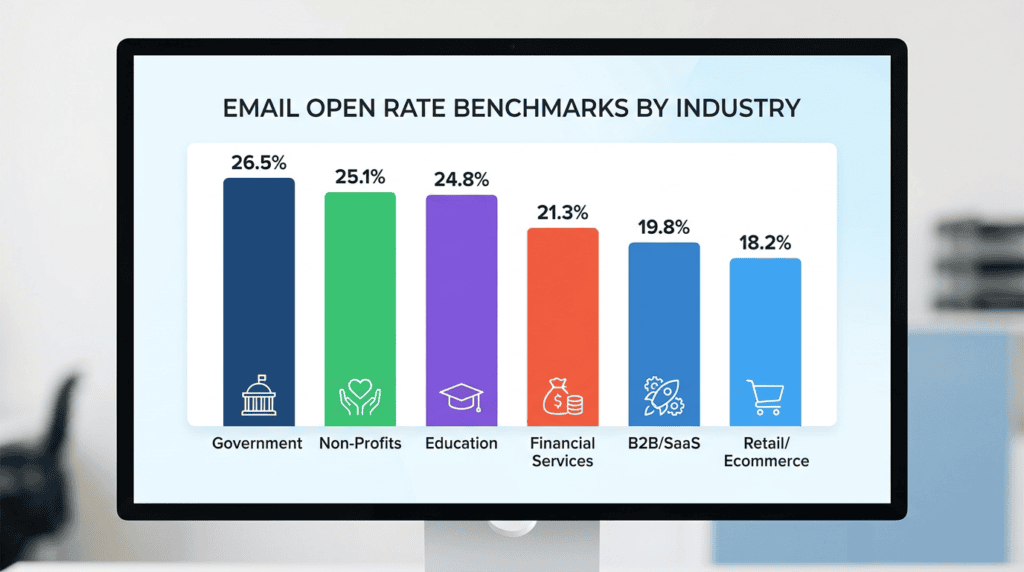
Understanding what constitutes a good email open rate requires looking beyond a single, global average. Your industry plays a huge role in setting realistic expectations for your email marketing campaigns. Different sectors have different audience behaviors, content types, and sending frequencies, all of which impact how subscribers engage with your messages.
Based on an analysis of billions of emails sent via major platforms and aggregated industry reports from early 2026, we’ve compiled a snapshot of current performance. This data helps contextualize your own email performance, allowing you to compare your results against relevant peers rather than a broad, often misleading, overall average. When I’m evaluating a client’s email strategy, the first thing I do is check their open rates against their specific industry benchmarks. It immediately tells me if we’re dealing with a list quality issue, a subject line problem, or a broader deliverability challenge.
Industry Benchmark Table
Here’s a comparison of average email marketing metrics across various industries:
| Industry | Average Open Rate (%) | Average Click-Through Rate (%) | Average Unsubscribe Rate (%) |
|---|---|---|---|
| Government | 32.5% | 4.1% | 0.15% |
| Non-Profits | 29.8% | 3.8% | 0.18% |
| Education | 28.1% | 3.5% | 0.20% |
| Financial Services | 24.7% | 2.9% | 0.25% |
| Real Estate | 23.9% | 2.8% | 0.27% |
| B2B/SaaS | 22.5% | 2.7% | 0.30% |
| Health & Wellness | 21.8% | 2.6% | 0.32% |
| Media & Publishing | 20.5% | 2.4% | 0.35% |
| Travel & Hospitality | 19.2% | 2.2% | 0.38% |
| Retail/Ecommerce | 18.7% | 2.1% | 0.40% |
| Marketing & Advertising | 17.5% | 1.9% | 0.45% |
Key Takeaways from the Data
Observing these email marketing benchmarks reveals distinct patterns in subscriber engagement. Some sectors consistently achieve higher open rates, while others face more significant challenges.
- Highlight the Highest Performers: Industries like Government, Non-Profits, and Education consistently show higher engagement. This often stems from a few key factors:
- High Trust & Authority: Communications from these sectors are often perceived as essential or highly credible.
- Specific Audience Needs: Subscribers often opt-in for very specific, critical updates or information that directly impacts them.
- Less Commercial Intent: The emails are typically less sales-driven, leading to a higher perceived value.
This combination often results in a good email open rate that’s well above the overall average, alongside healthy click-through rates and low unsubscribe rates.
- Highlight the Lowest Performers: Conversely, competitive industries such as Retail/Ecommerce and Marketing & Advertising tend to have lower average open rates. This isn’t necessarily a sign of poor performance but rather a reflection of the market dynamics:
- High Volume & Competition: Consumers receive a high volume of emails from these sectors, making it harder to stand out.
- Promotional Focus: Many emails are promotional, which can lead to lower engagement if not highly personalized or timely.
- Audience Fatigue: Subscribers can quickly become fatigued by frequent sales or marketing messages, impacting their willingness to open.
For these industries, even a slightly lower open rate might still represent a strong performance given the competitive landscape. The focus here often shifts to optimizing the click-to-open rate (CTOR) and ultimate conversion.
> Critical Warning: While benchmarks provide context, never chase an “average” open rate blindly. Your unique audience, list quality, and content strategy are more important indicators of success than simply matching an industry average.
How Is Email Open Rate Actually Calculated?
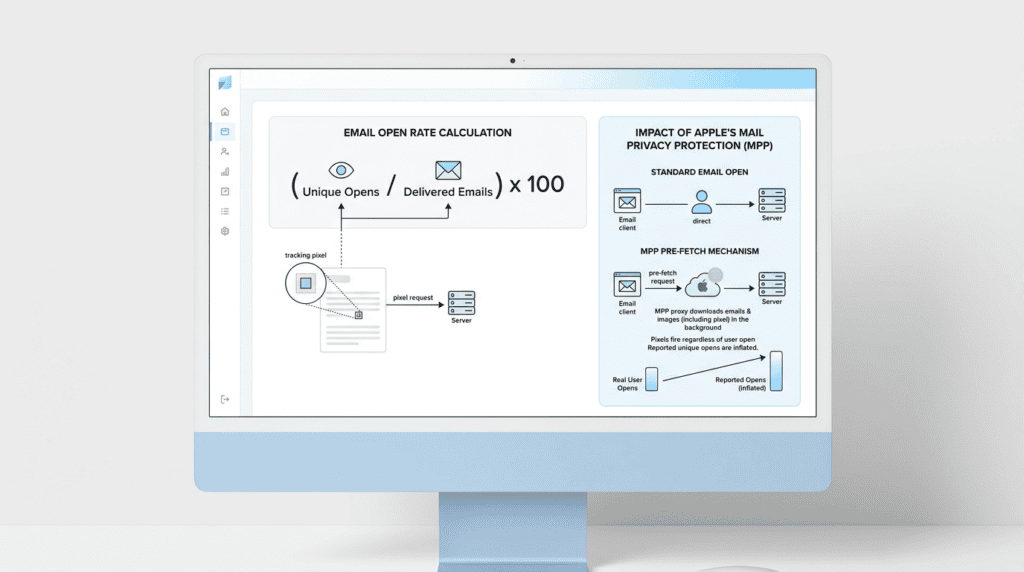
Understanding the mechanics behind the email open rate is crucial for interpreting your email marketing metrics accurately. It’s not just a simple count; there are technical nuances that can significantly influence the reported figures.
The Technical Definition
The standard formula for calculating the email open rate is straightforward:
`(Number of Unique Opens / Number of Delivered Emails) x 100`
“Unique Opens” means that if a subscriber opens the same email multiple times, it only counts as one open. “Delivered Emails” refers to the total number of emails sent minus any bounces (emails that couldn’t be delivered). This calculation gives you a percentage that represents how many unique subscribers opened your email out of those who actually received it.
The Impact of Apple’s Mail Privacy Protection (MPP)
One of the most significant changes impacting email open rate tracking in recent years is Apple’s Mail Privacy Protection (MPP), introduced in late 2021.
- What MPP Is: MPP allows Apple Mail users to prevent senders from knowing when they’ve opened an email or seen their IP address. When MPP is enabled, Apple’s servers pre-fetch and cache email content, including tracking pixels, before the user even opens the email.
- How It Inflates Data: This pre-fetching action automatically triggers the tracking pixel, registering an “open” even if the user never actually views the email. This means that for a significant portion of your audience (Apple Mail users), your reported open rates are artificially inflated. It’s no longer a true measure of human engagement for those subscribers.
- Advising Readers: Due to MPP, the open rate has become a less reliable standalone metric for measuring true engagement. While it still offers directional insights and helps identify major issues, it shouldn’t be the sole indicator of campaign success. Instead, focus more on click-through rates (CTR), click-to-open rates (CTOR), and ultimately, conversion rates, as these metrics are less affected by MPP.
What Counts as an “Open”?
An “open” is typically registered when an email client loads a tiny, invisible image pixel (often 1×1 pixel) embedded in the email. This tracking pixel is unique to each email sent.
- Role of Tracking Pixels: When the email client requests this pixel from the sending server, the server records it as an open. This is how email service providers (ESPs) track engagement.
- Why Some Opens May Not Be Counted:
- Image Blocking: Many email clients, by default, block images from unknown senders. If a subscriber doesn’t enable images, the tracking pixel won’t load, and the open won’t be recorded.
- Plain-Text Emails: Emails sent purely in plain text (without any HTML) cannot embed tracking pixels, so opens for these emails are generally not trackable.
- Network Latency/Firewalls: In rare cases, network issues or strict firewalls might prevent the pixel from loading, even if the email is viewed.
These factors mean that your actual human open rate might be slightly higher than what’s reported, even before considering MPP. It’s a reminder that email analytics, while powerful, are not always perfectly precise.
7 Key Factors That Directly Influence Your Open Rates
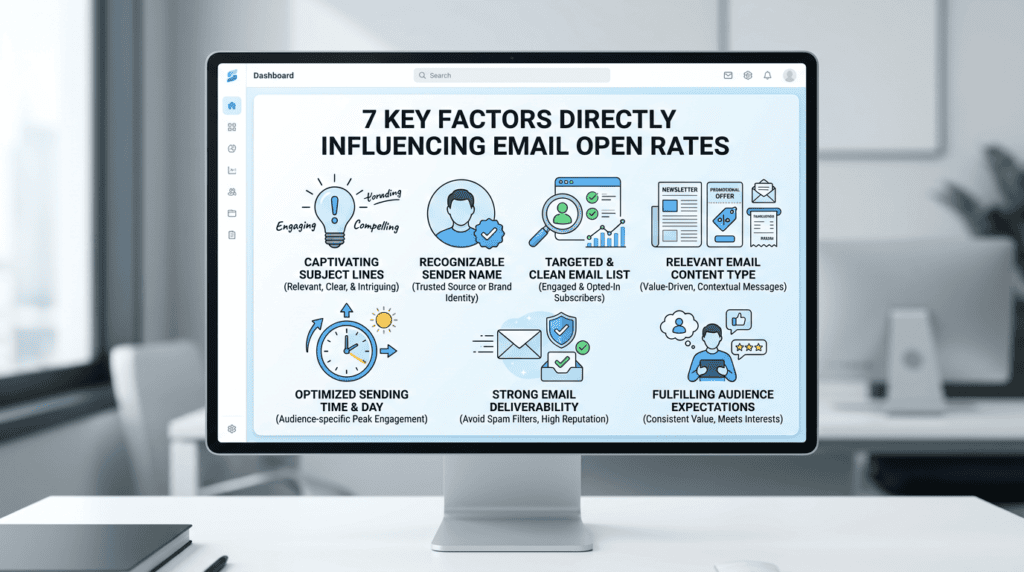
Understanding what drives your email open rates means looking beyond just the numbers. Several critical factors work together to determine whether your subscribers even consider clicking on your message. Ignoring any of these can significantly impact your email marketing campaign performance.
- Factor 1: Subject Line Quality and Personalization: Your subject line is the first impression, and often the only thing a subscriber sees before deciding to open or delete. A compelling, relevant, and personalized subject line can dramatically increase your chances. Using the subscriber’s name or referencing their past behavior makes the email feel more tailored and less like a mass broadcast.
- Factor 2: Sender Name and “From” Address Recognition: People open emails from senders they know and trust. If your “from” name is recognizable and consistent (e.g., “Your Brand Name” or “John from [Company]”), subscribers are far more likely to engage. A generic or unfamiliar sender name often leads straight to the trash or, worse, the spam folder.
- Factor 3: List Quality and Segmentation: A clean, engaged, and well-segmented email list is gold. Sending to a large list full of inactive or uninterested subscribers will drag down your average open rate. Segmenting your audience based on interests, demographics, or past interactions ensures that the content you send is highly relevant to each group, leading to higher engagement.
- Factor 4: Email Type and Purpose (e.g., Newsletter vs. Transactional): The nature of your email plays a huge role. Transactional emails, like order confirmations, shipping updates, or password resets, typically boast near-perfect open rates because they contain essential information the recipient expects and needs. Marketing newsletters or promotional campaigns, while valuable, naturally have lower open rates as they are often less urgent.
- Factor 5: Sending Time and Day of the Week: The timing of your email can impact its visibility in a crowded inbox. Sending when your audience is most likely to check their email can make a difference. This isn’t a one-size-fits-all rule; the optimal sending time varies greatly by audience and industry.
- Factor 6: Email Deliverability and Sender Reputation: This factor is often overlooked but is fundamental. Deliverability refers to whether your email actually reaches the inbox, rather than being blocked by spam filters or routed to the junk folder. Your sender reputation, built on factors like bounce rates, spam complaints, and engagement, directly influences this. A poor reputation means fewer emails even get the chance to be opened.
- Factor 7: Audience Expectations and Brand Loyalty: A loyal following that values your content or products is inherently more likely to open your emails. If you consistently provide value, your audience will come to expect and look forward to your communications. This builds trust and makes them more receptive to future campaigns.
> Critical Warning: You can have the best subject line in the world, but if your email doesn’t land in the inbox, it has a 0% chance of being opened. Prioritize deliverability above all else.
I’ve personally seen how a strong, consistent sender name combined with a clear value proposition in the subject line can make a 5-10% difference in open rates for a new product launch campaign. It’s not just about clever words; it’s about building trust before they even click.
Beyond the Open Rate: Which Metrics Matter More in 2026?

With the widespread adoption of Apple’s Mail Privacy Protection (MPP), relying solely on the email open rate as your primary performance indicator is a significant mistake. As discussed earlier, MPP inflates open rate data, making it a less reliable standalone metric for true engagement. In 2026, a more holistic view of your email marketing strategy requires looking at a broader set of metrics that reflect actual subscriber interaction and business impact.
Primary Engagement Metrics to Track
These metrics give you a clearer picture of how engaged your audience is with your content and offers.
- Click-Through Rate (CTR): This is arguably a much stronger signal of genuine interest than an open. CTR measures the percentage of delivered emails that resulted in at least one click on a link within the email. A high click-through rate indicates your content is relevant and compelling enough to drive action.
- Conversion Rate: The ultimate measure of whether your email achieved its business goal. This metric tracks how many subscribers completed a desired action after clicking a link in your email, such as making a purchase, signing up for a webinar, or downloading a resource. This directly ties your email campaign performance to your bottom line.
- Reply Rate: While not applicable to every campaign, for sales-oriented outreach, customer service, or feedback requests, the reply rate is a powerful indicator of direct engagement and interest. It shows that your message resonated enough for the recipient to take the time to respond.
List Health Metrics to Monitor
Maintaining a healthy email list is crucial for long-term success and deliverability. These metrics help you keep your list clean and engaged.
- Unsubscribe Rate: This metric tells you the percentage of subscribers who opted out of your list after receiving an email. A rising unsubscribe rate can signal content irrelevance, email frequency issues, or a mismatch between what subscribers expected and what they’re receiving.
- Bounce Rate (Hard vs. Soft):
- Hard Bounces occur when an email cannot be delivered due to a permanent reason, like an invalid email address. These addresses should be removed immediately from your list.
- Soft Bounces are temporary delivery failures, such as a full inbox or a server issue. While less critical, consistently high soft bounce rates can still indicate problems. Monitoring bounce rates is essential for email list hygiene and maintaining a good sender reputation.
> Strategic Insight: While open rates offer a glance, the click-through rate and conversion rate provide the real story of your email marketing ROI. Focus your optimization efforts here.
For my own affiliate campaigns, I stopped obsessing over open rates years ago. Instead, I built dashboards that prominently display CTR and conversion rate for every email marketing campaign. It quickly became clear that a lower open rate with a high CTR and conversion was far more valuable than a high open rate with no clicks.
How to Realistically Improve Your Email Open Rate
Improving your email open rate isn’t about chasing vanity metrics; it’s about building a stronger connection with your audience and ensuring your messages consistently land in their inbox and capture their attention. Here are practical strategies to boost your email campaign performance.
Strategy 1: Master the Art of the Subject Line
Your subject line is your email’s headline. It needs to be compelling.
- Use curiosity, urgency, and direct value propositions. A subject line like “Your order is on its way!” creates urgency, while “Discover the secret to higher conversions” sparks curiosity. “Save 20% on all software this week” offers direct value.
- Incorporate personalization tokens (e.g., `[First Name]`). Addressing subscribers by name or referencing their past actions makes the email feel more personal and relevant. Most email marketing software makes this easy.
- A/B test different subject line styles. Don’t guess what works. Test short vs. long, emoji vs. no emoji, question vs. statement. Over time, your data will reveal what resonates best with your specific audience. This is crucial for subject line optimization.
Strategy 2: Aggressively Clean and Segment Your List
A smaller, engaged list is always better than a large, unresponsive one.
- Regularly remove inactive subscribers. If someone hasn’t opened or clicked an email in 6-12 months, consider a re-engagement campaign. If they still don’t respond, remove them. This improves your deliverability and overall email open rates.
- Segment users based on behavior, purchase history, or interests. Instead of sending the same email to everyone, tailor your messages. For example, send product updates only to customers who own that product, or send content about SEO tools to subscribers who’ve shown interest in that topic. This targeted approach significantly improves relevance and engagement.
Strategy 3: Optimize Your “From” Name and Preview Text
These elements appear alongside your subject line and are critical for initial engagement.
- Use a recognizable sender name (e.g., “Dave at SEO Company” instead of “Info”). Consistency and clarity build trust. People are more likely to open an email from a person or brand they recognize.
- Craft preview text that complements the subject line. The preview text (the snippet of text that appears after the subject line in the inbox) is a valuable piece of real estate. Use it to expand on your subject line, create more intrigue, or offer an additional reason to open.
Strategy 4: Find Your Audience’s Optimal Sending Time
Timing can make a difference in a crowded inbox.
- Use your email service provider’s data to identify peak engagement windows. Most modern email marketing software provides analytics that show when your subscribers are most active. Leverage this data.
- Test unconventional sending times to stand out. While Tuesdays at 10 AM are popular, sometimes sending on a Sunday evening or a weekday afternoon can yield better results if your audience is less distracted then. Experiment to find what works for your specific audience.
Strategy 5: Authenticate Your Domain (SPF, DKIM, DMARC)
These technical configurations are non-negotiable for email deliverability.
- Briefly explain what these are and why they are critical for deliverability and avoiding the spam folder. SPF (Sender Policy Framework), DKIM (DomainKeys Identified Mail), and DMARC (Domain-based Message Authentication, Reporting & Conformance) are email authentication protocols. They verify that your emails are legitimately coming from your domain, preventing spammers from impersonating you and significantly improving your reputable sender score. Without proper authentication, your emails are far more likely to be flagged as spam, regardless of content quality.
> Tactical Takeaway: Invest time in setting up SPF, DKIM, and DMARC. This technical step is foundational for ensuring your emails bypass spam filters and actually reach your subscribers’ inboxes.
I once worked with a client whose emails were consistently landing in spam folders, despite having a clean list. After implementing proper SPF and DKIM records, their deliverability rates jumped from 60% to over 95% within weeks, directly leading to a noticeable increase in their average email open rate. It’s often the invisible infrastructure that makes the biggest difference.
Final Verdict: What Should You Aim For?

Forget chasing a single, universal percentage for a good email open rate. The goal isn’t to hit some arbitrary number, but to achieve consistent improvement over your own baseline. A truly good open rate is one that is stable or trending upward over time for a specific audience segment, indicating your email marketing campaigns are resonating.
The real goal of any email marketing strategy is driving action, not just getting an email opened. The best email campaigns are ultimately measured by clicks and conversions, not just opens. A high open rate with zero clicks is a failure; it means your subject line worked, but your content or call to action didn’t.
So, who should focus on what?
- If you’re building brand awareness or nurturing leads: Prioritize a healthy open rate alongside click-through rates. Your subject lines need to be compelling enough to get attention, but your content must deliver on that promise to encourage engagement.
- If your primary goal is sales or direct action: Focus heavily on your click-through rate and conversion rate. An open is just the first step; the subsequent actions are what drive your business results.
- Avoid focusing on open rate alone. This metric, especially post-Apple Mail Privacy Protection, can be misleading. Relying solely on it can lead to misinformed decisions about your email campaign performance and divert attention from the metrics that truly impact your bottom line.
The cost of misinterpreting your email marketing metrics or delaying optimization is significant. You could be spending resources on campaigns that appear successful but aren’t generating leads or sales, or worse, alienating your audience with irrelevant content. Your time and effort are better spent optimizing for genuine engagement and conversion.
> A good email open rate isn’t a static number; it’s a dynamic indicator of your audience’s interest, measured against your own historical performance and industry benchmarks.
From my experience, the teams that win aren’t obsessing over a 1% open rate difference. They’re constantly testing, segmenting, and refining their approach to ensure every email sent serves a clear purpose and moves subscribers closer to a desired action.
Frequently Asked Questions (FAQs)
What is a bad email open rate?
A bad email open rate is typically anything consistently below your industry average, or a rate that shows a downward trend over time without a clear explanation. It often signals issues with list quality, sender reputation, or subject line effectiveness.
Do emojis in subject lines increase open rates?
Emojis in subject lines can increase open rates by making your email stand out, but their effectiveness varies greatly by audience and industry. Test them with your specific subscribers to see if they improve your email campaign performance or appear unprofessional.
How often should I clean my email list?
You should aim to clean your email list at least once every six months, or more frequently if you notice a significant drop in engagement or an increase in bounce rates. Regular list hygiene improves deliverability and ensures you’re only sending to active subscribers.
Is a 40% open rate good?
A 40% open rate is generally considered excellent for many industries, significantly above the average email open rate across most sectors. However, its “goodness” still depends on your specific industry benchmarks and the type of email campaign.
Why are my email open rates suddenly so high? (Addressing MPP)
Your email open rates might be suddenly high due to Apple’s Mail Privacy Protection (MPP), which automatically pre-fetches and “opens” emails for users on Apple devices. This inflates reported open rates, making them less reliable as a standalone metric for engagement.
What’s more important: open rate or click-through rate?
The click-through rate (CTR) is generally more important than the open rate because it indicates genuine engagement and interest in your email’s content, leading to further action. While a good email open rate gets your message seen, CTR measures if your message was compelling enough to act on.