
In today’s crowded digital landscape, it’s easy to get caught up chasing the latest social media trends or pouring money into paid ads. Yet, amidst all the noise, one classic digital marketing channel consistently outperforms many others, quietly driving significant results for businesses of all sizes. That channel is email marketing. If you’re wondering why email marketing is important for your business’s growth, you’re asking a crucial question that can unlock serious potential.
This guide isn’t about rehashing old theories; it’s about providing a clear, practical look at the tangible benefits and strategic value email marketing brings to modern businesses. We’ll cut through the fluff and show you exactly why investing in a solid email strategy isn’t just a good idea – it’s often the smartest move you can make for sustainable growth and direct customer connection.
Why Email Marketing Delivers the Highest ROI of Any Digital Channel
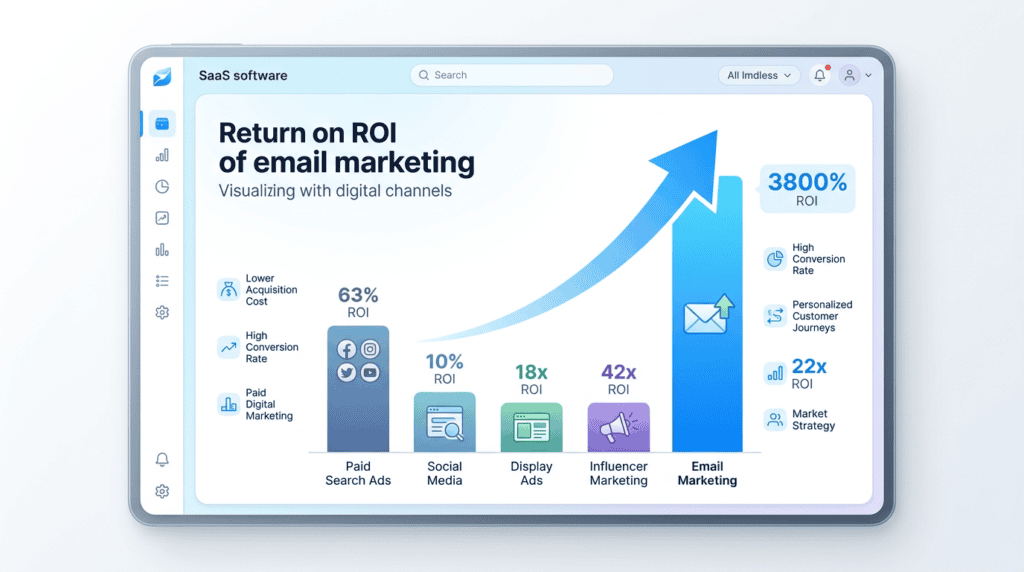
When you’re running a business, every dollar you spend on marketing needs to work hard. That’s where Return on Investment (ROI) comes in. Simply put, ROI measures how much money you get back for every dollar you put in. For email marketing, these numbers are consistently impressive. Industry reports frequently show that for every $1 spent on email marketing, businesses average a return of approximately $36 to $42. That’s a return most other digital channels can only dream of, making it a critical answer to why email marketing is important for your bottom line.
One of the biggest reasons for this stellar ROI is its inherent cost-effectiveness. Think about it: setting up an email service provider (ESP) like Mailchimp, ConvertKit, or ActiveCampaign can start around $9–$15/month for smaller lists, scaling up as your subscriber count grows. Compare that to the often unpredictable and rapidly escalating costs of paid advertising platforms like Google Ads or Facebook Ads, where you’re constantly bidding for attention. With email, once you’ve captured a subscriber’s interest (and permission!), you have a direct line to them without paying for every single impression or click. This significantly lowers your ongoing communication costs, allowing your marketing budget to stretch much further.
Email campaigns also excel at direct revenue generation. Whether you’re launching a new product, running a flash sale, or promoting a special offer, a well-crafted email can drive immediate traffic and conversions. For an ecommerce store, a promotional email announcing a 20% off sale can see sales spike within hours. For a SaaS company, a targeted email about a new feature or a limited-time upgrade offer can lead directly to increased subscriptions or higher-tier plan adoptions. These are not indirect brand-building efforts; they are direct calls to action that translate into sales, making it a powerful tool for any business looking to move the needle.
Beyond immediate sales, email marketing builds incredible long-term value. When someone opts into your email list, they’re not just a temporary visitor; they’re a potential long-term customer. A single subscriber can generate revenue over months or even years through repeat purchases, upgrades, and referrals. Think of a loyal customer who buys from your online store four times a year, or a client who renews their SaaS subscription annually. Email nurtures these relationships, keeping your brand top-of-mind, sharing valuable content, and offering relevant promotions. This compounding effect means your initial investment in acquiring that subscriber continues to pay dividends, making email a foundational pillar for sustainable business growth rather than a one-off marketing tactic.
How Email Marketing Builds a Direct, Owned Audience
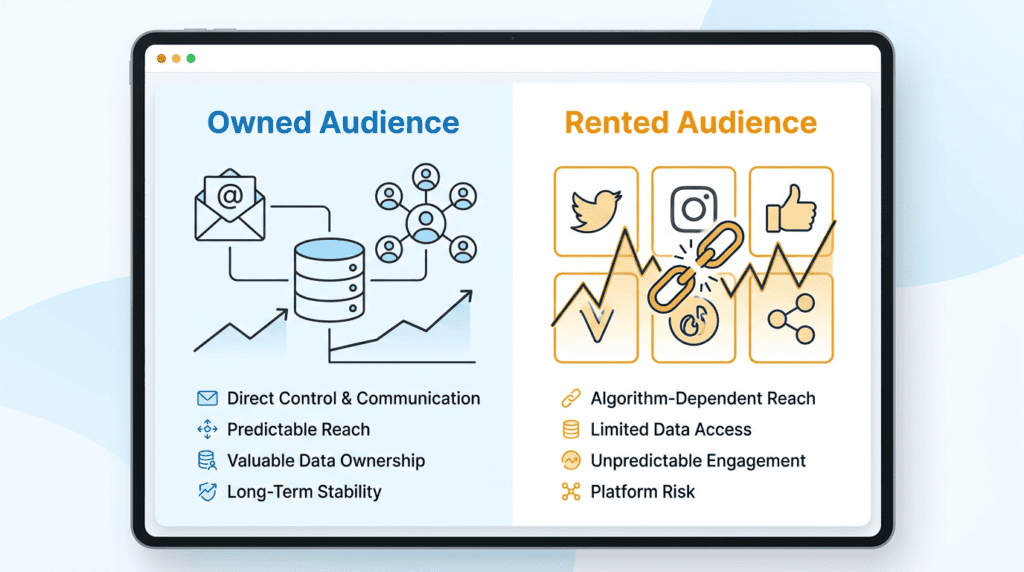
In the ever-shifting landscape of digital marketing, one of the most critical distinctions for any business owner is understanding the difference between an “owned” audience and a “rented” one. This fundamental concept is a core reason why email marketing is important for long-term stability and growth.
Define “owned” vs. “rented” audiences
Think of it this way: when you build an email list, you own that list. It’s a direct line of communication to your subscribers, a database of people who have explicitly given you permission to contact them. This is an owned audience. You control the relationship, the content, and the timing. In contrast, platforms like Facebook, Instagram, TikTok, or even LinkedIn, host rented audiences. Your followers on these platforms aren’t truly yours; they belong to the platform. You’re essentially borrowing space and access to those users, and the platform dictates the terms.
The risk of algorithm changes
The biggest hidden frustration with rented audiences is their inherent instability. Social media platforms are notorious for their frequent and often unannounced algorithm changes. One day, your posts might reach 30% of your followers; the next, that reach could plummet to 5% or less, all without you changing a thing. We’ve seen countless businesses, from small creators to large brands, suddenly lose significant organic reach on platforms like Facebook and Instagram, forcing them to pay for ads to connect with the very audience they spent years building. This isn’t just an inconvenience; it’s a direct threat to your business model if you rely solely on these channels.
The stability of the inbox
The email inbox, however, offers a level of stability and directness that other channels simply can’t match. When someone opts into your email list, you gain a direct, reliable line of communication. While deliverability rates can vary, the core principle remains: you have permission to send messages directly to their inbox. There’s no intermediary algorithm deciding if your message is “worthy” of being seen by your audience. This direct access means your important announcements, promotions, and valuable content are far more likely to land directly in front of the people who want to hear from you. This makes email marketing a foundational pillar for consistent communication.
Building a portable business asset
An email list isn’t just a communication channel; it’s a valuable, portable business asset. Should a social media platform disappear, change its rules drastically, or even if you decide to pivot your business entirely, your email list comes with you. You can export it, import it into a new email service provider, and continue communicating with your audience without interruption. This portability means your hard-earned audience isn’t locked into a single ecosystem. For entrepreneurs, bloggers, and small business owners, this asset provides a crucial layer of security and flexibility, ensuring that your connection with your audience remains intact, regardless of external platform shifts. This long-term value is a key reason why email marketing is important for sustainable growth.
Driving Customer Loyalty and Lifetime Value Through Personalization
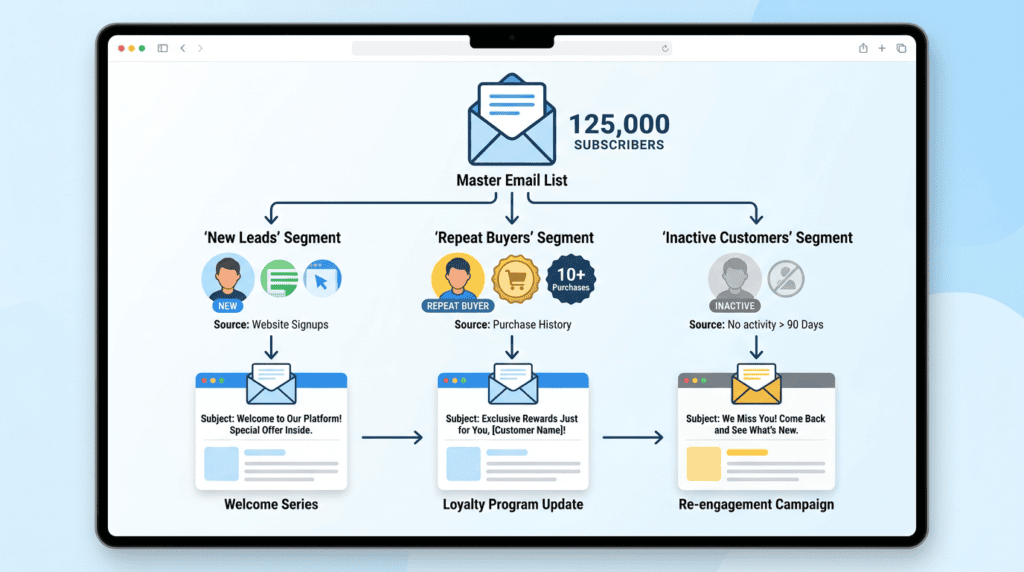
Beyond simply reaching your audience, the true power of modern email marketing lies in its ability to foster deep connections and drive repeat business through personalization. This isn’t about sending generic messages; it’s about making every subscriber feel seen and understood.
The days of sending one-size-fits-all “blast” newsletters to your entire list are largely over, or at least, they should be. While a general update might still have its place, the real magic happens when you move beyond generic communication. Modern email marketing is about delivering targeted, relevant content and offers that resonate deeply with individual subscribers. This shift from mass communication to tailored experiences is a significant factor in why email marketing is important for building lasting customer relationships.
The power of segmentation
Segmentation is the cornerstone of effective personalization. It involves dividing your larger email list into smaller, more specific groups based on shared characteristics or behaviors. Instead of treating all subscribers the same, you can categorize them by:
- Purchase history: What products have they bought? How recently?
- Engagement level: Are they frequent openers and clickers, or have they been inactive?
- Demographics/Location: Where are they located? What’s their age range (if known)?
- Interests: What topics have they shown interest in based on their clicks or content consumption?
- Stage in the customer journey: Are they new leads, first-time buyers, or loyal customers?
By segmenting your audience, you can ensure that the messages you send are highly relevant, increasing open rates, click-through rates, and ultimately, conversions.
Real-world personalization examples
The practical implications of personalization are vast and impactful:
- An e-commerce store can send a “we miss you” discount code to customers who haven’t purchased in 60 days, or recommend complementary products based on their last order. For example, if a customer bought a coffee maker, they might receive an email about gourmet coffee beans or cleaning supplies for their machine.
- A SaaS company can send targeted tips and tutorials based on a user’s specific feature usage within their software. If a user frequently uses the project management module but hasn’t touched the reporting tools, the company could send an email highlighting the benefits and how-to’s of the reporting features. This helps users get more value from the product, reducing churn.
- A blogger or course creator can send content recommendations based on which articles or course modules a subscriber has already engaged with. If a subscriber consistently reads posts about SEO, they won’t receive emails about social media marketing, but rather deeper dives into keyword research or link building. This keeps the content fresh and relevant to their specific interests.
How personalization increases customer lifetime value (CLV)
Personalization isn’t just about making customers feel good; it directly impacts your bottom line by increasing Customer Lifetime Value (CLV). When customers receive content and offers that are highly relevant to their needs and interests, they feel understood and valued. This fosters a sense of loyalty and trust. Loyal customers are more likely to make repeat purchases, spend more over time, and even become advocates for your brand. By consistently delivering personalized experiences, businesses can significantly extend the relationship with each customer, turning one-time buyers into long-term, high-value clients. This strategic approach to customer relationships is a powerful argument for why email marketing is important for sustainable revenue growth.
Using Email Automation to Nurture Leads and Save Time
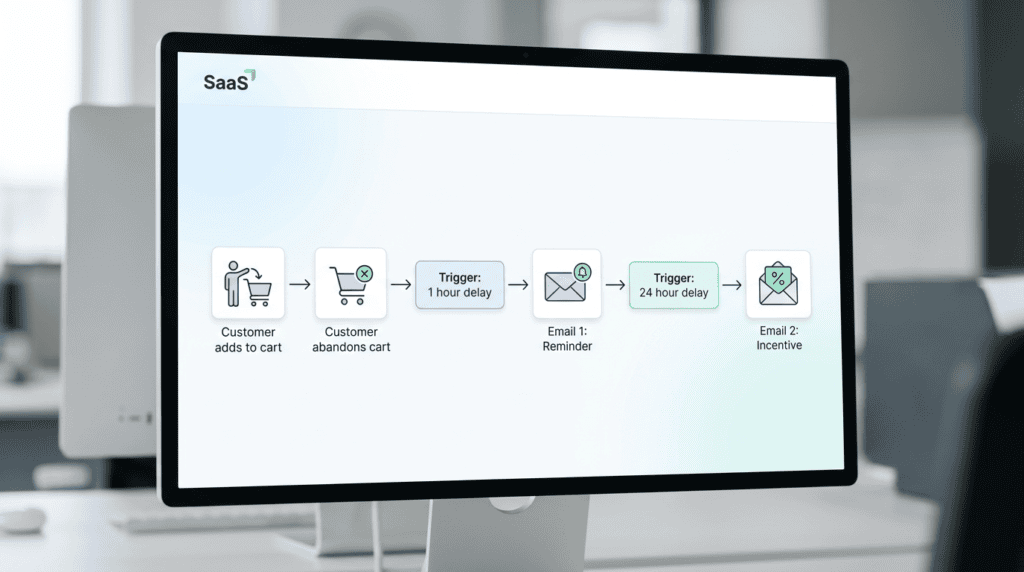
One of the most powerful aspects of modern email marketing, and a key reason why email marketing is important for efficiency, is automation. Instead of manually sending every email, automation lets you set up a series of pre-written messages that trigger based on specific user actions or time intervals. Think of it as having a tireless assistant who knows exactly what to say and when to say it, all without you lifting a finger after the initial setup.
The Welcome Sequence
For any business, the welcome sequence is arguably the most critical automation you’ll ever implement. When someone new signs up for your email list, they’re showing immediate interest. A welcome sequence capitalizes on this by delivering a series of emails over a few days or weeks. The first email might thank them for subscribing and offer a quick win, like a discount code or a valuable piece of content. Subsequent emails can introduce your brand story, highlight popular products or services, or share testimonials. This isn’t just about making a sale; it’s about setting expectations, building initial trust, and guiding new subscribers through their first steps with your brand. Without it, many new sign-ups might forget about you before they even get a chance to engage.
The Abandoned Cart Sequence
E-commerce businesses know the pain of abandoned carts all too well. A customer adds items to their cart, gets distracted, and leaves without completing the purchase. This is where an abandoned cart sequence shines. Triggered automatically when a customer leaves items in their cart, these emails gently remind them about their selections. Often, the first email is a simple reminder, while a second or third might include a small incentive, like free shipping or a percentage off, to nudge them toward conversion. This automation directly recovers lost sales, turning potential revenue into actual revenue, and it’s a prime example of why email marketing is important for boosting your bottom line with minimal ongoing effort.
Lead Nurturing for Service Businesses
For B2B companies, consultants, or service providers, lead nurturing sequences are invaluable. When someone downloads a lead magnet (like an ebook or checklist) or requests more information, they’re a warm lead, but they might not be ready to buy immediately. A lead nurturing drip campaign can send a series of educational emails over several weeks. These emails might share case studies, offer expert tips, address common pain points, or invite them to a webinar. The goal isn’t to hard-sell, but to build authority, demonstrate value, and keep your business top-of-mind until the lead is ready to engage with a sales representative or make a purchase. It transforms cold leads into qualified prospects, streamlining your sales pipeline.
The Benefit of “Set It and Forget It” Systems
The true magic of email automation lies in its “set it and forget it” nature. Once you’ve designed and implemented your sequences, they work tirelessly in the background, 24/7. This frees up your time to focus on other aspects of your business, knowing that your audience is constantly being engaged, educated, and moved closer to a purchase. It’s a powerful way to scale your communication efforts without scaling your manual workload, making it a cornerstone of any effective digital marketing strategy.
What Are the Hidden Benefits Most Businesses Overlook?
Beyond the obvious advantages of sales and direct communication, email marketing offers several less-talked-about benefits that can significantly impact a business’s long-term success. Understanding these hidden perks further clarifies why email marketing is important for a holistic growth strategy.
Gathering Direct Customer Feedback
Your email list is a goldmine for direct customer insights. Instead of relying solely on analytics or social media comments, you can send out simple, targeted surveys to your subscribers. Ask them about new product ideas, what they love or dislike about your service, or what content they’d like to see next. You can also encourage direct replies to your newsletters. This direct line of communication provides invaluable qualitative data that can inform product development, improve customer service, and refine your overall business strategy. It’s a way to truly listen to your audience and make them feel heard.
Driving Traffic to Other Content
While email is a powerful channel on its own, it’s also an excellent amplifier for your other content platforms. Got a new blog post, a YouTube video, or a podcast episode? Send an email to your list announcing it. This provides an immediate surge of traffic, which can help boost initial engagement metrics, signal to search engines that your content is valuable, and increase its overall reach. For content creators, this means less reliance on unpredictable algorithms from social media or search engines to get eyes on their latest work.
Testing Business Ideas and Messaging
Your email list can serve as a highly effective, low-cost testing ground for new ideas. Want to see if a new product concept resonates? Send a survey or a soft launch announcement to a segment of your list. Curious which headline or offer performs best? A/B test different subject lines or call-to-actions within your emails. This allows you to gather real-world data and refine your messaging or product before investing heavily in a wider launch or paid advertising. It’s like having a built-in focus group that’s already invested in your brand.
When Does It Make Sense to Start with Email Marketing?
The question isn’t *if* you should start with email marketing, but *when*. The simple answer for almost every business is: as soon as possible. The longer you wait, the more opportunities you miss to build a valuable asset and connect with your audience. This is a crucial aspect of understanding why email marketing is important for long-term growth.
The “Day One” Argument
Even if your business isn’t fully launched, or you’re just starting to build a website, you should begin collecting emails. This is the “Day One” argument. Set up a simple landing page with an opt-in form offering a future discount, early access, or a valuable piece of content related to your upcoming launch. By the time you’re ready to go live, you’ll already have a warm audience eager to hear from you. This initial list provides built-in momentum for your launch, reducing the pressure of starting from zero.
For Bloggers & Content Creators
If you’re a blogger, podcaster, or video creator, starting an email list is essential from the outset. While social media and search engines can bring traffic, they don’t give you ownership of your audience. An email list allows you to build a direct community, ensuring that your most loyal followers never miss your latest content, regardless of algorithm changes. It’s your insurance policy against platform shifts and a direct line to your most engaged readers or viewers.
For E-commerce Stores
For e-commerce, email marketing isn’t just important; it’s non-negotiable from day one. As discussed, abandoned cart sequences alone can recover significant revenue. Beyond that, welcome sequences, post-purchase follow-ups, and promotional campaigns are vital for driving repeat purchases and building customer loyalty. Every day you delay is a day you’re leaving money on the table and missing opportunities to convert browsers into buyers and one-time customers into loyal advocates.
For Local & Service-Based Businesses
Even local businesses like restaurants, salons, or service providers (e.g., plumbers, accountants) benefit immensely from email marketing. As soon as you have a website or even a physical location, start collecting email addresses. Use it to announce special offers, new services, seasonal promotions, or simply to share valuable local content. It keeps your business top-of-mind for potential clients and encourages repeat visits or bookings. For service businesses, it’s a powerful tool for lead capture and nurturing, helping you stay connected with prospects until they’re ready to hire you.
The Cost of Waiting
The biggest cost of waiting to start email marketing is the opportunity cost. Every visitor to your website, every social media follower, every potential customer you interact with, represents a missed chance to capture their contact information and build a direct relationship. This means you’re constantly relying on external platforms and algorithms to reach them, which can be unpredictable and expensive. Building an email list takes time, and the sooner you start, the larger and more valuable that asset becomes.
Final Verdict: Is Email Marketing Still Important in 2026?

Considering the enduring power of an owned audience, the unmatched potential for personalization, the significant return on investment demonstrated through various use cases, and the efficiency gained from “set it and forget it” automation, the answer is a resounding yes. Email marketing remains a cornerstone of digital strategy.
The notion that “email is dead” is a persistent myth that fundamentally misunderstands its evolution. Far from being obsolete, email has matured into a sophisticated, permission-based communication channel that allows businesses to build deep relationships, gather direct feedback, and drive traffic to other content effectively. It’s not about mass blasts anymore; it’s about targeted, valuable interactions.
For any business serious about sustainable growth, building an email list is not just important – it is a non-negotiable strategic priority. It provides a direct line to your most engaged audience, insulated from algorithm changes and platform shifts, ensuring you always have a way to connect with your customers and prospects.
Frequently Asked Questions (FAQs)
How much does email marketing cost for a small business?
Email marketing costs for a small business can range from completely free (for basic plans with limited subscribers offered by many providers) to tens or hundreds of dollars per month, primarily depending on the number of subscribers and advanced features required.
Isn’t email marketing just spam? How do I do it ethically?
Email marketing is not spam when done ethically, which means always obtaining explicit permission from subscribers before sending them messages and consistently providing value in your communications.
How long does it take to see results from email marketing?
The time it takes to see results from email marketing varies widely, but consistent effort in building your list and sending valuable content can yield initial engagement within weeks, with significant ROI often becoming apparent over several months.
A small, engaged email list is generally more valuable than a large social media following because you own the direct communication channel, control the messaging, and are not subject to platform algorithms or potential account suspensions.
What are the first steps to getting started with email marketing?
The first steps to getting started with email marketing involve choosing an email service provider, creating a compelling lead magnet to encourage sign-ups, and integrating a sign-up form prominently on your website.