
Are you trying to build or test projects and feeling limited by regular hosting? That question comes up a lot when people move beyond simple sites. Hosting for Developers exists because coding projects need more control than standard setups.
Here’s what I noticed from research and user feedback. Developers care less about flashy features and more about speed and flexibility. This guide compares fast platforms that developers can try today without locking themselves into risky choices.
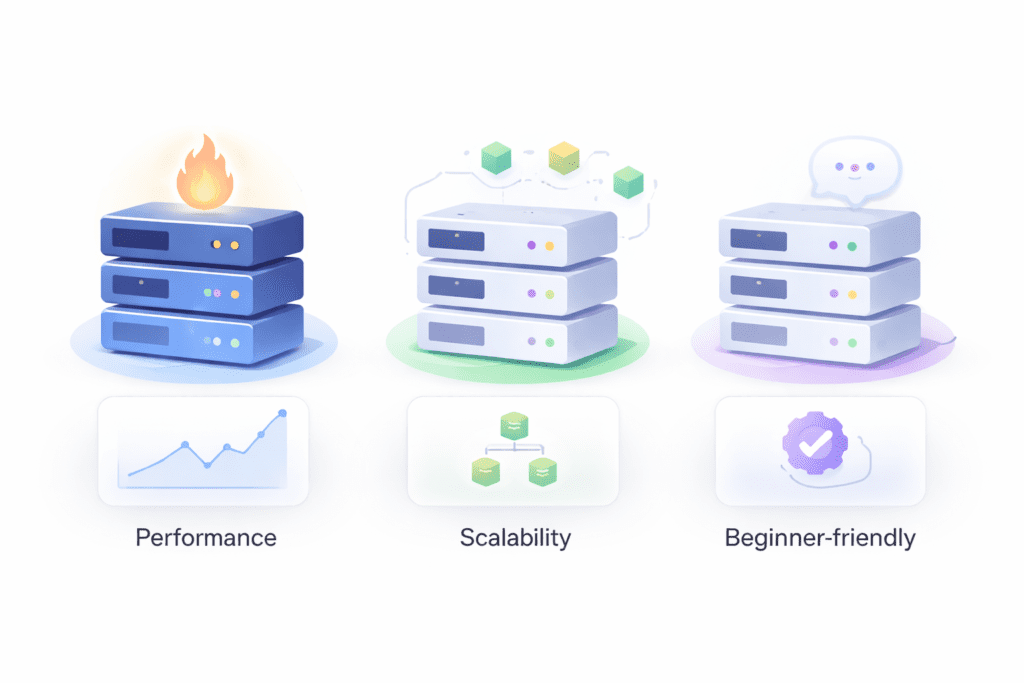
Quick Recommendation: Hosting for Developers Snapshot
Best Overall: Liquid Web
Best for: Developers managing client projects or business-critical applications
Best for Scalability: DigitalOcean
Best for: Modern web apps with unpredictable traffic or long-term growth plans
Best for Beginners: InMotion Hosting
Best for: Freelancers and small teams moving beyond basic hosting
You can review current developer plans on InMotion Hosting, Liquid Web, or DigitalOcean to compare today’s available configurations.
If you are exploring options right now, this comparison quietly points you toward trusted platforms that fit real development work, not just marketing promises.
What Is Hosting for Developers
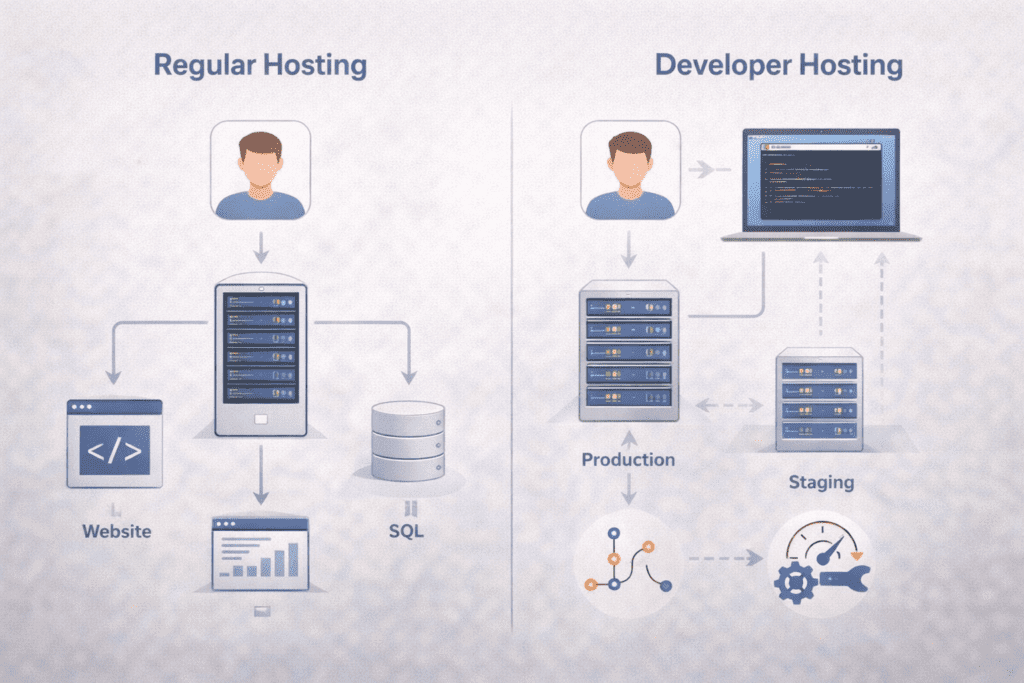
Hosting for developers is built for people who write, test, and deploy code. Unlike basic plans, it gives more access and fewer restrictions. That difference matters once projects grow past simple pages.
Regular hosting focuses on ease and limits. Hosting for developers focuses on control and tools. You usually get access to server settings, developer friendly environments, and better performance tuning.
Most developers look for three things first. Speed during testing. Flexibility for frameworks. And reliability when pushing updates. These needs shape how developer focused hosting works.
This type of hosting fits beginners learning to code, freelancers building client projects, and small teams shipping updates often. It usually works best when you want fewer limits and clearer outcomes.
Who Should Use Hosting for Developers And Who Should Avoid It
Hosting for developers makes sense if you are writing code regularly. That includes side projects, client work, or testing web applications. The big benefit is freedom to configure things your way.
For beginners who only want a simple site, this may feel like too much. Extra features come with responsibility, and not everyone needs that early on.
In most cases, developers who want growth choose this path sooner. Those who want zero setup and no learning curve may prefer simpler hosting until needs change.
Why Hosting for Developers Is Important in 2026
Development work moves faster now than it used to. Short release cycles and frequent updates are normal. That shift makes performance a daily concern, not a nice extra.
Here’s the thing. Slow environments break focus and waste time. In most cases, developers notice better outcomes when builds, tests, and deployments run without friction.
Modern projects rely on frameworks, APIs, and cloud tools more than ever. These tools expect hosting that can keep up. Using the wrong setup increases risk when traffic or complexity grows.
Choosing the right Hosting for Developers matters more in 2026 because expectations are higher. Downtime and lag are no longer tolerated, even for small projects.
Basic shared hosting often struggles here. Limited resources and strict limits create bottlenecks that slow development and introduce avoidable problems.
Key Features to Look for in Hosting for Developers
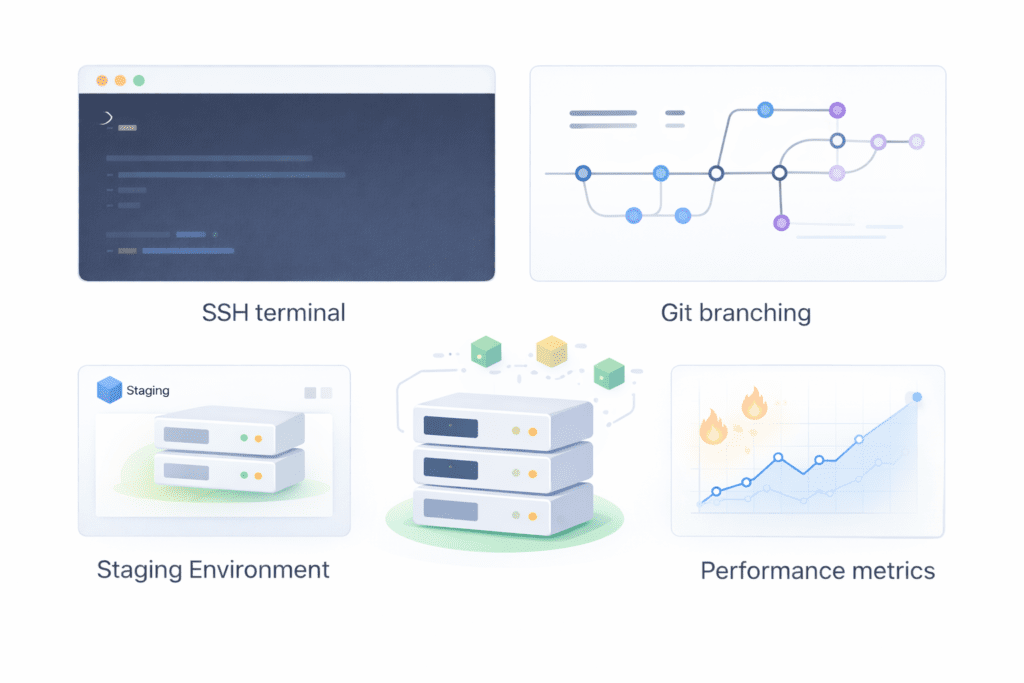
Server performance shapes daily work. Faster servers mean quicker feedback during testing. That speed directly affects decisions developers make under pressure.
Language and framework support also matters. A good setup works smoothly with modern stacks. Missing support adds friction that most developers want to avoid.
SSH access and command line tools give real control. Without them, managing files and processes becomes harder. That limitation increases risk as projects scale.
Git integration helps keep changes organized. Version control reduces mistakes and supports teamwork. The result is more predictable outcomes.
Staging environments are another quiet advantage. They let you test safely before going live. This step lowers costs tied to fixing public errors.
Scalability and resource control protect future growth. You may not need them today, but growth happens fast. Planning ahead avoids painful decisions later.
Security features like certificates and isolation protect code and data. These safeguards reduce risks that beginners often overlook.
Clear pricing matters more than people admit. Developers want to understand what they pay for. Transparent plans lead to better choices.
Good documentation and support save time. When answers are easy to find, progress stays steady. That support improves long term outcomes.
Types of Hosting for Developers
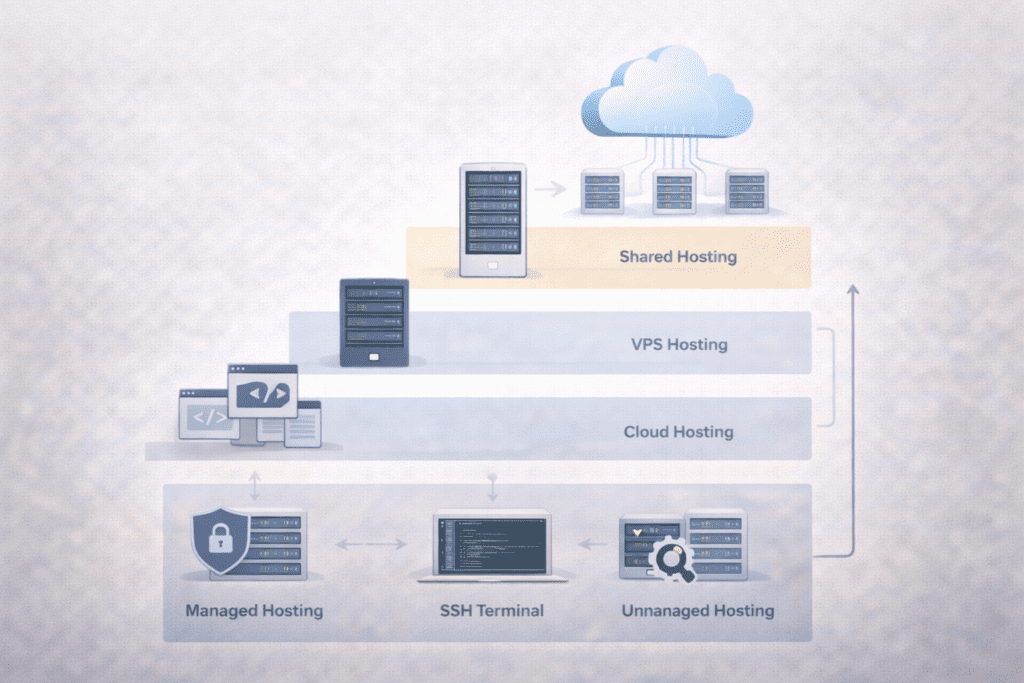
Shared hosting with developer tools is usually the entry point. It looks simple on the surface, but some plans include SSH and basic controls. The main difference is limited resources, which can slow work during busy periods.
VPS hosting gives more isolation and flexibility. You control more settings and resources. That extra control reduces risk when projects grow or traffic spikes.
Cloud hosting platforms focus on scalability. Resources adjust as demand changes. This option improves outcomes for apps with unpredictable usage.
Managed hosting removes much of the technical overhead. The provider handles updates and security. The trade off is less control, which affects decisions advanced developers might care about.
Unmanaged hosting gives full control but demands experience. You handle setup and maintenance yourself. For some, that freedom is worth the costs in time and effort.
Choosing the right type depends on skill level. Beginners often start small, while experienced teams need flexibility. Matching skills to hosting avoids poor outcomes.
Is Hosting for Developers More Expensive Real Cost vs Value in 2026
At first glance, hosting for developers looks pricier. Monthly fees are higher than basic plans. The real cost shows up in time saved and fewer problems.
Here’s what most people miss. Faster tools mean less waiting and fewer fixes. That usually improves outcomes over the long run.
In some cases, cheaper plans cost more later. Limits force upgrades or migrations. Those changes add hidden risks and downtime.
For many developers, paying a bit more early brings clarity. Better tools support growth without stress. That balance often leads to smarter decisions.
8 Best Hosting for Developers in 2026
1. Liquid Web
Liquid Web is known for high performance environments built for serious development projects. It focuses heavily on infrastructure reliability rather than beginner-focused marketing.
It works best for developers managing client projects or business-critical applications. The biggest difference here is strong infrastructure and consistent uptime backed by managed support.
Supported languages and frameworks cover most modern stacks, including PHP, Node.js, and Python. You get flexibility without handling deep server maintenance, which improves workflow stability.
Key features include SSH access, staging environments, managed security, and dedicated resources. These features reduce deployment risks during frequent updates.
Performance remains stable under load. Applications stay responsive during traffic spikes, which supports long-term scaling decisions.
Pros:
• Strong performance consistency
• Experienced support team
Cons:
• Higher monthly costs
• May feel advanced for early beginners
Pricing starts at $20.00 per month. This hosting for developers option fits teams that prioritize reliability and managed performance.
If you manage growing projects, reviewing current developer plans on Liquid Web helps confirm infrastructure and support options.
2. InMotion Hosting

InMotion Hosting balances flexibility and usability. It provides developer-friendly tools without overwhelming users with unnecessary complexity.
It is a solid choice for freelancers and growing teams. The difference lies in practical developer tools paired with accessible documentation.
Languages and frameworks such as PHP, Python, Node.js, and Ruby are supported. This helps developers launch projects quickly without compatibility concerns.
Developer features include SSH access, Git integration, staging environments, and VPS scalability. These tools support clean workflows and controlled deployments.
Performance is dependable for most workloads. Resource allocation remains steady under moderate traffic conditions.
Pros:
• Clear documentation
• Flexible upgrade paths
Cons:
• Scaling requires higher-tier plans
• Shared plans can have resource limits
Pricing starts at $8.99 per month. This platform suits developers who want flexibility without enterprise pricing.
You can review developer-focused plans directly on InMotion Hosting to compare scalability options.
3. A2 Hosting

A2 Hosting is known for speed-focused infrastructure. It emphasizes optimized servers that reduce testing and deployment delays.
It works best for developers who prioritize fast iteration cycles and performance-driven builds.
The platform supports multiple modern stacks, including PHP, Python, Node.js, and MySQL environments. Setup remains straightforward for small to mid-size projects.
Key features include SSH access, Git integration, Turbo server options, and developer-friendly configurations.
Performance is fast on optimized plans, especially for applications requiring rapid response times.
Pros:
• Strong speed optimization
• Good developer tool availability
Cons:
• Turbo features cost extra
• Interface can feel busy
Plans start at $2.99 per month. This option works well when speed is the main decision factor.
You can explore performance-focused plans on A2 Hosting to evaluate developer tools.
4. SiteGround

SiteGround focuses on managed hosting environments with developer support built in. It combines performance optimization with structured management.
It works well for developers handling client sites who prefer reduced server maintenance.
Supported stacks include PHP, Git workflows, and staging tools within managed environments.
Developer features include SSH access, staging environments, automated backups, and strong security layers.
Performance is optimized through caching systems and controlled server environments, which supports stable deployments.
Pros:
• Strong uptime record
• Reliable managed support
Cons:
• Limited deep server customization
• Higher renewal pricing
Pricing starts around $3.99 per month. This platform suits developers who want managed reliability with built-in tools.
You can review managed developer plans directly on SiteGround to evaluate staging tools and scalability.
5. DigitalOcean

DigitalOcean is a cloud infrastructure provider built for developers who prefer control and scalability.
It fits developers building modern applications, APIs, and container-based systems.
The platform supports full stack environments, Docker, Kubernetes, and custom server configurations.
Key features include SSH access, scalable droplets, API access, and flexible resource allocation.
Performance depends on configuration, but properly set environments deliver strong speed and scaling capacity.
Pros:
• Full infrastructure control
• Excellent scalability
Cons:
• Requires server management knowledge
• No traditional shared hosting
Plans often start at $6.00 per month. This hosting for developers option suits teams comfortable managing cloud servers.
Explore configuration options on DigitalOcean before deploying production apps.
6. Vultr

Vultr offers cloud VPS hosting designed for developers who need predictable pricing and global server locations.
It works best for developers running scalable web apps and backend services.
Supported stacks include Linux-based environments, custom OS installs, and containerized deployments.
Developer features include SSH access, custom ISO support, and flexible resource scaling.
Performance is consistent when properly configured, with strong network throughput across regions.
Pros:
• Global data center coverage
• Transparent pricing
Cons:
• Requires technical setup
• Limited managed support
Pricing starts near $5.00 per month. This option works for developers comfortable configuring their own environments.
Review Vultr’s server options to match workload needs.
7. Linode (Akamai Cloud)
Linode provides cloud VPS hosting built around developer flexibility and predictable infrastructure.
It suits developers building scalable services without relying on shared hosting limitations.
Supported environments include Linux stacks, Kubernetes, and full server customization.
Developer features include SSH access, scalable resources, and API-driven deployments.
Performance is stable with consistent compute performance across plans.
Pros:
• Reliable cloud infrastructure
• Developer-focused tools
Cons:
• Requires hands-on configuration
• No beginner-managed plans
Plans start around $5.00 per month. This hosting for developers solution fits experienced teams.
You can review cloud compute plans directly on Linode to compare scaling options.
8. Bluehost VPS
Bluehost VPS offers a beginner-accessible VPS option for developers moving beyond shared hosting.
It works well for early-stage developers who want more control without moving to unmanaged cloud providers.
Supported stacks include PHP, MySQL, and Linux-based server environments.
Developer features include SSH access, root access on VPS plans, and scalable resources.
Performance improves compared to shared hosting, though it is not enterprise-grade infrastructure.
Pros:
• Easier transition from shared hosting
• Managed VPS support
Cons:
• Limited deep customization
• Not ideal for large-scale applications
Plans start around $29.99 per month. This option suits developers stepping into VPS environments.
Review Bluehost VPS plans to evaluate resources and upgrade paths.
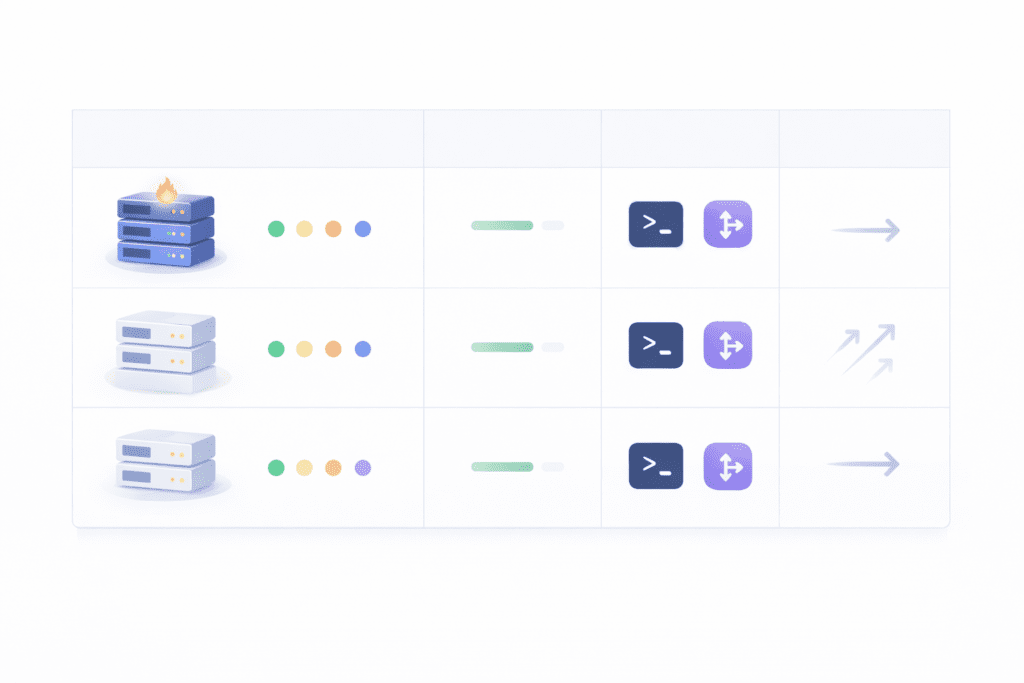
Hosting for Developers Comparison Table
| Hosting Provider | Hosting Type | Performance Level | Developer Tools Support | SSH & Git Access | Scalability | Starting Price | Best Use Case |
|---|---|---|---|---|---|---|---|
| Liquid Web | Managed VPS | High | Advanced | Yes | High | $20/month | Business-critical apps |
| InMotion Hosting | Shared & VPS | Medium | Strong | Yes | Medium | $8.99/month | Freelancers & small teams |
| A2 Hosting | Shared & VPS | High | Moderate | Yes | Medium | $2.99/month | Speed-focused projects |
| SiteGround | Managed Hosting | High | Strong | Yes | Medium | $3.99/month | Managed developer environments |
| DigitalOcean | Cloud VPS | High | Advanced | Yes | Very High | $6/month | Custom cloud applications |
| Vultr | Cloud VPS | High | Advanced | Yes | High | $5/month | Global scalable apps |
| Linode | Cloud VPS | High | Advanced | Yes | High | $5/month | Developer-focused infrastructure |
| Bluehost VPS | Managed VPS | Medium | Moderate | Yes | Medium | $29.99/month | Beginner VPS users |
You can compare developer-focused plans on Liquid Web, DigitalOcean, and InMotion Hosting to see how real configurations differ.
How to Choose the Right Hosting for Developers
Step 1 starts with knowing your development needs. That clarity affects every decision afterward, from performance to team workflows.
Step 2 is about picking the right hosting type for your skill level. A mismatch here can create risk and slow progress later.
Step 3 focuses on language and framework support. Not all platforms support every stack. Matching support improves outcomes once projects grow.
Step 4 checks performance and scalability. Faster environments and room to grow usually mean fewer headaches down the road.
Step 5 reviews pricing and upgrade options. Transparent costs help you avoid surprises as requirements change.
Step 6 tests documentation and developer support. Clear guides often save time during setup and troubleshooting.
Step 7 is selecting a platform and getting started. Taking action matters more than finding a perfect option.
If you want a balanced starting point, reviewing developer plans on InMotion Hosting is a practical first step.
Common Mistakes Beginners Make When Choosing Hosting for Developers
• Using basic shared hosting for development projects can create limitations early on.
• Ignoring scalability and resource limits leads to frustration later.
• Choosing unmanaged hosting without experience adds unnecessary risk.
• Overpaying for advanced features not needed increases overall costs.
• Skipping performance and uptime checks can slow development cycles.
• Not planning for future growth limits project potential.
Hosting for Developers vs Other Hosting Options
Hosting for developers differs from regular shared hosting. The main difference is access and tools that support development workflows.
Website builders are easy to use but lack flexibility for custom projects. Developers often find these setups too restrictive.
Traditional VPS hosting provides more power, but not all plans include tools developers want. This affects overall value for coding workflows.
Developer focused platforms typically offer a better balance of control and performance, especially as projects become more complex.
FAQs About Hosting for Developers
What is hosting for developers?
It’s a setup tailored to coding needs, with tools that support frameworks, SSH, and version control.
Is hosting for developers beginner-friendly?
Yes, many platforms include simple tools, but a learning curve exists.
What features matter most in hosting for developers?
Performance, language support, SSH access, and scalability are top priorities.
Is hosting for developers faster than shared hosting?
In most cases, yes. Better resource access leads to faster testing and deployment.
How much does hosting for developers cost in the US?
Prices vary, but expect stronger performance and support at slightly higher costs.
Can beginners use hosting for developers without coding experience?
Yes, some platforms walk you through tools while you learn.
Does hosting for developers support Git and SSH?
Most do, and these tools are essential for modern workflows.
Which hosting for developers is best for small projects?
Entry level developer platforms work well for early stages with acceptable performance.
Can I scale my site with hosting for developers?
Yes. Scalable options like cloud VPS adapt to growth smoothly.
Is hosting for developers worth it in 2026?
Usually, yes. Better outcomes and growth support outweigh early complexities.
Can You Start Simple and Upgrade Later
Let’s keep it simple. Starting with a basic developer friendly plan and upgrading later is often the smartest move.
That flexibility reduces risk early on and lets you grow into complexity. You avoid paying for tools you don’t need yet while still building skills.
Final Verdict Best Hosting for Developers to Use in 2026
Choosing the right hosting for developers makes a noticeable difference in development workflows and project outcomes. A strong foundation leads to fewer headaches and better productivity.
For most developers aiming for balanced performance and value, options like Liquid Web and Cloud VPS hosting stand out. These platforms give speed and flexibility without overly complicated setups.
If you’re just starting or moving past beginner projects, consider entry level options paired with scalable plans. That combo often becomes the best choice as needs grow.
If you’re ready to move forward, reviewing developer hosting plans on Liquid Web or exploring scalable cloud configurations on DigitalOcean can help clarify your next step.